
📢 Gold and silver fall to two-week lows; global bond yields surge, weighing on precious metals
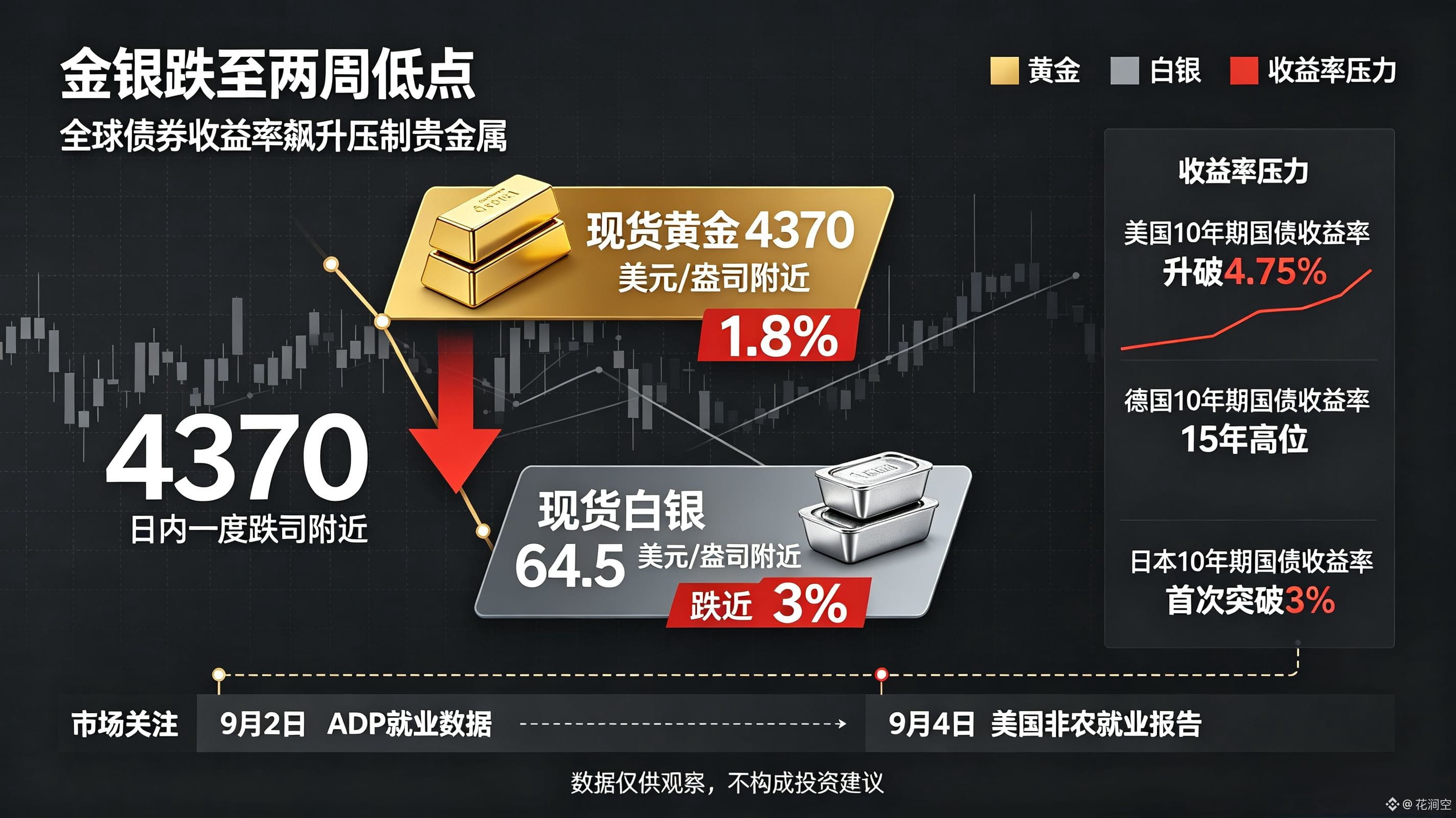
On September 1, according to Binance market data, gold and silver prices continued their recent downtrend. Amid widespread selloffs in major global bond markets and a rapid rise in long-term yields, safe-haven demand for precious metals was temporarily suppressed by the pressure of high interest rates. Spot gold fell intraday by nearly 1.8% at one point to around $4,370 per ounce, marking a new low since August 19; spot silver dropped by nearly 3% to around $64.5 per ounce.
That day, the yield on the U.S. 10-year Treasury note rose above 4.75%, Germany’s 10-year Treasury yield climbed to a 15-year high, and Japan’s 10-year Treasury yield broke above 3% for the first time since 1996. With market worries over an escalation in the situation in the Middle East pushing oil prices higher and stoking inflation, major central banks may be forced to maintain tightening policies—or even raise rates further—thereby continuously increasing the opportunity cost of holding non-yielding assets such as gold.
The market will next focus on the ADP employment data on September 2 and the U.S. nonfarm payrolls report on September 4 to gauge the Federal Reserve’s rate-hike expectations and the subsequent trend in bond yields.
$XAUT
$XAG
On September 1, according to Binance market data, gold and silver prices continued their recent downtrend. Amid widespread selloffs in major global bond markets and a rapid rise in long-term yields, safe-haven demand for precious metals was temporarily suppressed by the pressure of high interest rates. Spot gold fell intraday by nearly 1.8% at one point to around $4,370 per ounce, marking a new low since August 19; spot silver dropped by nearly 3% to around $64.5 per ounce.
That day, the yield on the U.S. 10-year Treasury note rose above 4.75%, Germany’s 10-year Treasury yield climbed to a 15-year high, and Japan’s 10-year Treasury yield broke above 3% for the first time since 1996. With market worries over an escalation in the situation in the Middle East pushing oil prices higher and stoking inflation, major central banks may be forced to maintain tightening policies—or even raise rates further—thereby continuously increasing the opportunity cost of holding non-yielding assets such as gold.
The market will next focus on the ADP employment data on September 2 and the U.S. nonfarm payrolls report on September 4 to gauge the Federal Reserve’s rate-hike expectations and the subsequent trend in bond yields.
$XAUT
$XAG