

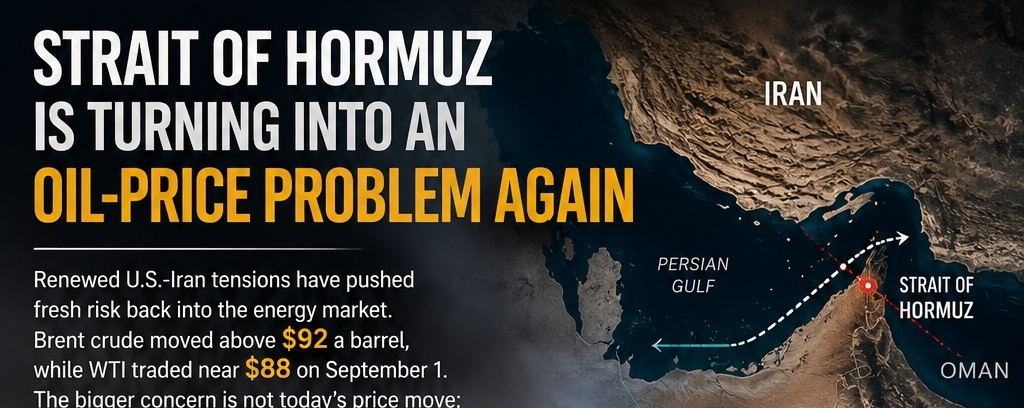

Markets rarely move on headlines alone. They move when a headline changes the supply-demand equation and that is exactly what is happening with oil around the Strait of Hormuz.
Renewed U.S.Iran fighting has pushed fresh risk back into the energy market. Brent crude moved above $92 a barrel, while WTI traded near $88 on September 1. The bigger concern is not today's price move; it is how long the disruption can last.
The Strait of Hormuz matters because an enormous amount of energy passes through it. The IEA estimates that nearly 15 million barrels per day of crude oil moved through the Strait in 2025 around 34% of global crude-oil trade. And the problem is no longer limited to crude.
Asian refined fuel imports fell sharply in August, while diesel margins surged as transportation and supply chains became increasingly difficult to manage. Even if producers have the capacity to supply more barrels, getting those barrels safely to buyers is becoming the real challenge.
Why traders should care
Higher oil prices can become an inflation problem.More expensive crude → higher transport costs → higher production costs → pressure on consumer prices.That can complicate central-bank decisions and keep interest rates higher for longer.
For crypto, this creates a difficult environment. Bitcoin can benefit from liquidity and inflation narratives, but a serious geopolitical shock can initially trigger risk-off positioning, stronger demand for cash and volatility across markets.So I wouldn't simply look at rising oil and assume BTC must fall.
The key variable is duration.
If Hormuz disruption remains temporary, the oil spike can fade quickly. If shipping remains restricted for weeks or months, the story changes completely.My view: watch Brent, tanker traffic, Hormuz developments and BTC's reaction to risk off moves together.The next major market move may not start on a crypto chart.
It may start in the Strait of Hormuz.
#StraitofHurmuz $BTC #Oil #Brent #CrudeOil #Macro #Inflation #Crypto #Bitcoin #TradingBooms