🚨 Central Banks on Alert: Andrew Bailey Flags Artificial Intelligence as a Global Systemic Risk
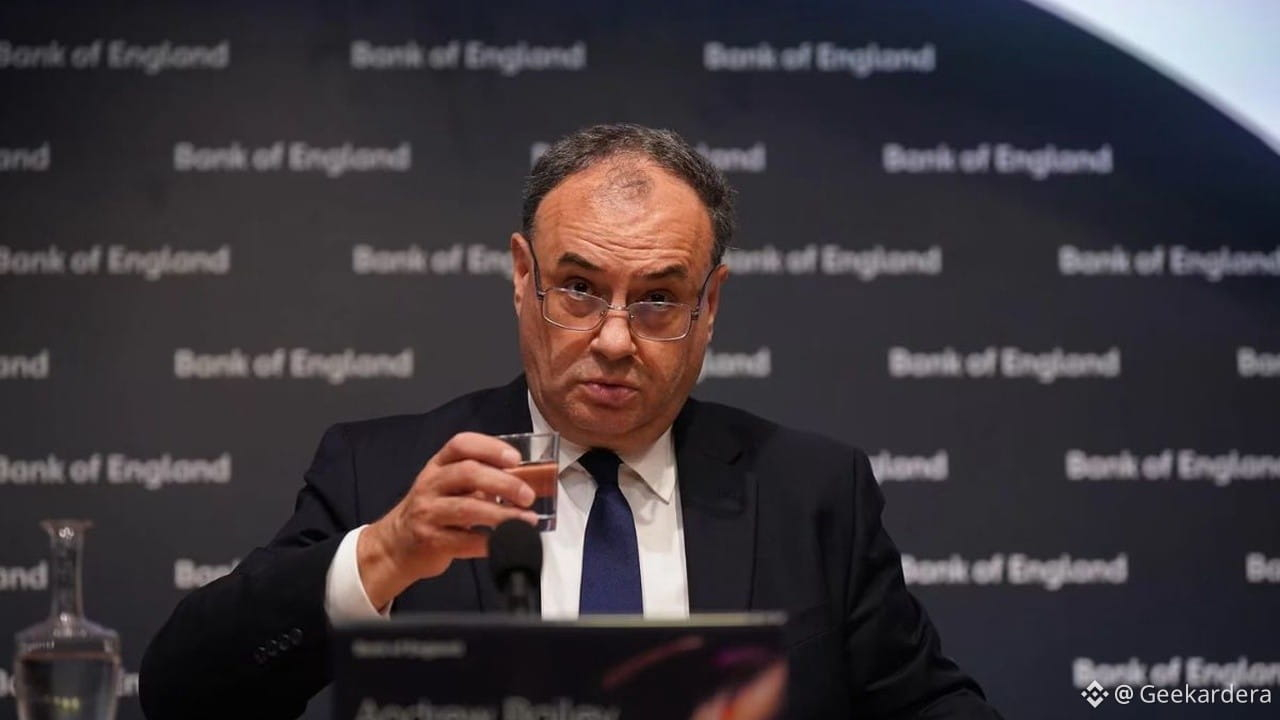
In an official communication addressed to the finance ministers and central bank presidents of the G20, Andrew Bailey, Governor of the Bank of England and Chair of the Financial Stability Board (FSB), issued a stern warning. According to the monetary authority, the proliferation of advanced artificial intelligence systems has the potential to destabilize the global financial system, acting as an unprecedented vector for enabling large-scale cyberattacks.
The FSB leadership’s central assessment indicates that the technology drastically changes speed, reduces operating costs, and expands the scale of possible digital offensives. For Bailey, AI-amplified cyber risk represents today the most immediate threat to international financial integrity and stability, with real capacity for instantaneous cross-border propagation between critical banking infrastructures.
In the current context of risk aversion and a *bearish* sentiment in trading desks, the traditional financial market and the digital assets sector are absorbing the warning with heightened caution. Institutional investors and networks of decentralized liquidity—$BTC e—are closely monitoring how global regulators plan to tighten security protocols, which may restrict capital flows and impose new compliance costs on custodians and Web3 infrastructure bridges.
How should DeFi protocols and asset security—$BTC e $ETH —adapt in the face of the scale of cyber vulnerabilities flagged by the FSB? Share your analysis below.
$BTC $ETH $SOL #Mercado #Economia #Crypto
In an official communication addressed to the finance ministers and central bank presidents of the G20, Andrew Bailey, Governor of the Bank of England and Chair of the Financial Stability Board (FSB), issued a stern warning. According to the monetary authority, the proliferation of advanced artificial intelligence systems has the potential to destabilize the global financial system, acting as an unprecedented vector for enabling large-scale cyberattacks.
The FSB leadership’s central assessment indicates that the technology drastically changes speed, reduces operating costs, and expands the scale of possible digital offensives. For Bailey, AI-amplified cyber risk represents today the most immediate threat to international financial integrity and stability, with real capacity for instantaneous cross-border propagation between critical banking infrastructures.
In the current context of risk aversion and a *bearish* sentiment in trading desks, the traditional financial market and the digital assets sector are absorbing the warning with heightened caution. Institutional investors and networks of decentralized liquidity—$BTC e—are closely monitoring how global regulators plan to tighten security protocols, which may restrict capital flows and impose new compliance costs on custodians and Web3 infrastructure bridges.
How should DeFi protocols and asset security—$BTC e $ETH —adapt in the face of the scale of cyber vulnerabilities flagged by the FSB? Share your analysis below.
$BTC $ETH $SOL #Mercado #Economia #Crypto