
520龙行天下
11.5k Posts

520龙行天下
 Square Verified+
21年进入币圈,专注资源整合,承接项目宣发、空投业务,承接项目专场AMA宣发
Open Trade
High-Frequency Trader
5.3 Years
7.4K+ Following
69.8K+ Followers
68.6K+ Liked
Posts
Portfolio
All
Quotes
Live
PINNED
Market conditions change rapidly, and hotspots come and go in rotation ✨ Don’t let the noise of the chart drag you along—avoid impulsive all-in moves. Understand the logic of capital, manage risk, and patiently wait for your own trading window. Trading is a long-term practice: stay grounded, maintain a calm mindset, and make choices with discipline. In life, you don’t have to rush to be first at everything—stay indifferent to gains and losses and keep your own rhythm. Slow down, settle your mind, and silently accumulate value. Wishing your account stays green with every step forward; may you carry strength in your heart and walk toward the sun. Peace and smooth sailing—may everything be worth looking forward to 💰

168

@超人不会飞2020
is speaking[LIVE] 🎙️ Day 19 of DCAing 100U into BTC
5.3k listens
168

@币盈Anna
is speaking[LIVE] 🎙️ Geopolitical tensions + expectations of rate hikes heating up, the broad market faces pressure to fall
BTC: 76400-76600 holds steady for a low long, 77700-77950 faces resistance for a short
ETH: 2380-2395 holds steady
2.4k listens
168

K大宝
·
--
[Ended] 🎙️ Maintain Ecological Balance and Build the Binance Plaza
6.6k listens
168

@Elena神话MUA
is speaking[LIVE] 🎙️ Mythology MUA airdrop continues—everyone is welcome to come claim it
2.9k listens
168

大丽7613
·
--
[Replay] 🎙️ Invest in BNB regularly
02 h 21 m 05 s · 15.3k listens
168

三少00008
·
--
[Ended] 🎙️ 10-minute event contract
4.1k listens
168
Quoted content has been removed
168

必按666 势不可挡
·
--
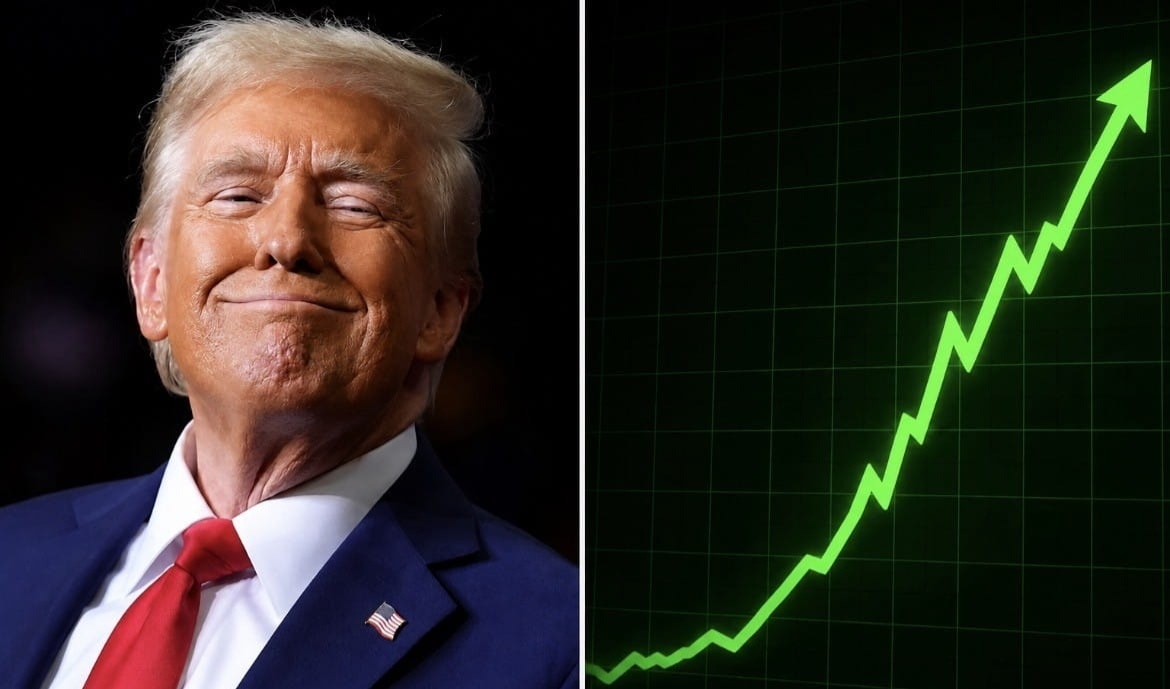
This really makes you feel like this is absolutely insane
President Trump disclosed 1,051 stock trades in June, bringing his total number of trades across two presidential terms to over 25,000.
The last four presidents combined only made 29 trades
Even if a capitalist becomes president, their pursuit of wealth freedom remains undiminished
#MichaelSaylor暗示增持BTC
President Trump disclosed 1,051 stock trades in June, bringing his total number of trades across two presidential terms to over 25,000.
The last four presidents combined only made 29 trades
Even if a capitalist becomes president, their pursuit of wealth freedom remains undiminished
#MichaelSaylor暗示增持BTC
168

听澜321
·
--
[Replay] 🎙️ Build Binance Plaza, Hold BNB|Wednesday, the market is slightly fluctuating. If you don’t know how to place trades, I suggest you watch more and act less. What do you think? Let’s chat~
05 h 14 m 36 s · 9.4k listens
Large package sol

佑子Pomelo
·
--
The smart ones show their value through the way they communicate. They know what value is—hard value and soft value, tangible value and intangible value, the potential to be revealed, and even the value expressed indirectly through the side.


168

远方1688BNB
·
--
Good fortune in the ninth month of the human world!
#DCA BTC DCA SoL DCA BNB to earn 10 million
#DCA BTC DCA SoL DCA BNB to earn 10 million



168

竹竹 YGØZ²
·
--
【Crypto Belief Recharged! Michael Saylor Shouts “We’re Back,” MicroStrategy Blasts $370 Million to Scoop Up 4,603 More Bitcoins】
Michael Saylor, founder and executive chairman of MicroStrategy (the world’s largest corporate Bitcoin holder, Strategy / MicroStrategy), posted on a social media platform shouting “We’re ₿ack!,” officially announcing that the company is restarting its Bitcoin purchase plan and ending a two-month pause during which it had been waiting and watching—again igniting intense market attention.
According to the latest filing MicroStrategy submitted to the U.S. Securities and Exchange Commission (SEC), during the period from August 24 to 30, the company spent $369.7 million to raise funds by issuing new shares and buy 4,603 Bitcoins, with an average acquisition cost of about $80,318 per coin. This marks the first time the company has substantially replenished its holdings since the end of June, when it temporarily reduced its position and paused further buying in response to its asset allocation framework.
After this latest increase, MicroStrategy and its subsidiaries’ total Bitcoin holdings have risen to 845,050 BTC, with total investment costs of approximately $6.373 billion. Market analysts noted that, as Saylor’s real-world actions have crushed prior concerns about corporate liquidity and selling, this major round of additional buying not only reaffirms its steadfast belief in the long-term value of cryptocurrencies, but also injects a shot of confidence into the broader crypto asset market.
Michael Saylor, founder and executive chairman of MicroStrategy (the world’s largest corporate Bitcoin holder, Strategy / MicroStrategy), posted on a social media platform shouting “We’re ₿ack!,” officially announcing that the company is restarting its Bitcoin purchase plan and ending a two-month pause during which it had been waiting and watching—again igniting intense market attention.
According to the latest filing MicroStrategy submitted to the U.S. Securities and Exchange Commission (SEC), during the period from August 24 to 30, the company spent $369.7 million to raise funds by issuing new shares and buy 4,603 Bitcoins, with an average acquisition cost of about $80,318 per coin. This marks the first time the company has substantially replenished its holdings since the end of June, when it temporarily reduced its position and paused further buying in response to its asset allocation framework.
After this latest increase, MicroStrategy and its subsidiaries’ total Bitcoin holdings have risen to 845,050 BTC, with total investment costs of approximately $6.373 billion. Market analysts noted that, as Saylor’s real-world actions have crushed prior concerns about corporate liquidity and selling, this major round of additional buying not only reaffirms its steadfast belief in the long-term value of cryptocurrencies, but also injects a shot of confidence into the broader crypto asset market.
168

周周1688
·
--
🇨🇳 Crypto Morning News | September 1, 2026
$BNB 🧧🧧
📊 Market Pulse
At the start of September, the market is still experiencing high-level consolidation.
$BTC is currently about $77,800–$78,700, $ETH about $2,450–$2,470, and $SOL about $102–$103.
After the strong rally in August, the market began to digest realized profits, but BTC has continued to hold above $77K. Meanwhile, capital is flowing again into certain large altcoins.
🔥 ETF Funds Reflow
U.S. spot Bitcoin ETFs recorded about $217M in net inflows on August 31, with BlackRock IBIT contributing about $206M.
On the same day, spot Ethereum ETFs also saw about $87.7M in net inflows, continuing positive flows for 11 consecutive trading days.
This suggests institutional capital has not completely pulled out due to the late-August adjustment.
🐂 Strategy Rebuys Bitcoin
Michael Saylor’s Strategy ended its nearly two-month pause and bought an additional 4,603 BTC, worth about $369.7M, with an average price around $80,318.
Strategy currently holds about 845,050 BTC, reclaiming its position as one of the most prominent corporate Bitcoin buyers in the market.
🚀 Altcoins Begin to Rotate
What’s worth watching today is not just a BTC move up, but capital starting to look for new breakout directions.
$ARB saw a strong rebound of more than 30%, with trading volume clearly expanding; meanwhile, Bitwise’s spot XRP ETF assets have already surpassed $500M.
💵 Stablecoins Continue to Expand
Ripple’s $RLUSD market cap has exceeded $2B, with more than $1B of the supply located on the XRP Ledger.
This indicates that stablecoins, RWA, and on-chain settlement are continuing to move closer to institutional financial infrastructure.
Bitcoin Foundation
🌍 Macros Risks Heat Up Again
New risks are emerging from escalating U.S.–Iran developments. Supply risks in the Strait of Hormuz are pushing oil prices higher, and Brent briefly rose to about $92.
If energy prices keep climbing, inflation and expectations for Fed rate cuts may be affected again—one of the biggest macro variables for the September market.
👀 What to Watch Next
📌 JOLTS employment data
📌 Friday: U.S. Nonfarm Payrolls
📌 ETF fund flows
📌 CLARITY Act progress
📌 Whether BTC can reclaim and hold above $80K
📌 Capital rotation in the ARB and RWA sectors
One-sentence summary:
The explosive surge in August hasn’t ended the market story—September just changed the battlefield.
ETF reflows → Strategy buys BTC again → XRP ETF breaks $500M → RLUSD breaks $2B → altcoins begin rotating.
#1688家族family
$BNB 🧧🧧
📊 Market Pulse
At the start of September, the market is still experiencing high-level consolidation.
$BTC is currently about $77,800–$78,700, $ETH about $2,450–$2,470, and $SOL about $102–$103.
After the strong rally in August, the market began to digest realized profits, but BTC has continued to hold above $77K. Meanwhile, capital is flowing again into certain large altcoins.
🔥 ETF Funds Reflow
U.S. spot Bitcoin ETFs recorded about $217M in net inflows on August 31, with BlackRock IBIT contributing about $206M.
On the same day, spot Ethereum ETFs also saw about $87.7M in net inflows, continuing positive flows for 11 consecutive trading days.
This suggests institutional capital has not completely pulled out due to the late-August adjustment.
🐂 Strategy Rebuys Bitcoin
Michael Saylor’s Strategy ended its nearly two-month pause and bought an additional 4,603 BTC, worth about $369.7M, with an average price around $80,318.
Strategy currently holds about 845,050 BTC, reclaiming its position as one of the most prominent corporate Bitcoin buyers in the market.
🚀 Altcoins Begin to Rotate
What’s worth watching today is not just a BTC move up, but capital starting to look for new breakout directions.
$ARB saw a strong rebound of more than 30%, with trading volume clearly expanding; meanwhile, Bitwise’s spot XRP ETF assets have already surpassed $500M.
💵 Stablecoins Continue to Expand
Ripple’s $RLUSD market cap has exceeded $2B, with more than $1B of the supply located on the XRP Ledger.
This indicates that stablecoins, RWA, and on-chain settlement are continuing to move closer to institutional financial infrastructure.
Bitcoin Foundation
🌍 Macros Risks Heat Up Again
New risks are emerging from escalating U.S.–Iran developments. Supply risks in the Strait of Hormuz are pushing oil prices higher, and Brent briefly rose to about $92.
If energy prices keep climbing, inflation and expectations for Fed rate cuts may be affected again—one of the biggest macro variables for the September market.
👀 What to Watch Next
📌 JOLTS employment data
📌 Friday: U.S. Nonfarm Payrolls
📌 ETF fund flows
📌 CLARITY Act progress
📌 Whether BTC can reclaim and hold above $80K
📌 Capital rotation in the ARB and RWA sectors
One-sentence summary:
The explosive surge in August hasn’t ended the market story—September just changed the battlefield.
ETF reflows → Strategy buys BTC again → XRP ETF breaks $500M → RLUSD breaks $2B → altcoins begin rotating.
#1688家族family

168
大丽7613
·
--
The arrival of Niu drove the entire primary market
When the contract announcement came out, I thought that under normal trading logic there should be a shakeout, but there wasn’t
I thought the market probably wouldn’t be this fomo-driven; it should have been built by the big players themselves
After the contract came out, the big players ate a wave of short orders too, and then it went down—so they basically got a full fill
This kind of setup doesn’t require heavy control; retail investors are enough, and there’s enough discussion. In fact, it’s the one that makes the most money
When the contract announcement came out, I thought that under normal trading logic there should be a shakeout, but there wasn’t
I thought the market probably wouldn’t be this fomo-driven; it should have been built by the big players themselves
After the contract came out, the big players ate a wave of short orders too, and then it went down—so they basically got a full fill
This kind of setup doesn’t require heavy control; retail investors are enough, and there’s enough discussion. In fact, it’s the one that makes the most money
168

正乾商学--四条2
·
--
🧧🧧🧧Thank you for your support and likes🎁🎁🎁
Ten years of crypto trading experience:
The first lesson of trading isn’t making money—it’s learning not to be eliminated by the market.
The market’s greatest enemy isn’t volatility, but the self without rules.
For those who don’t have a trading system, they search for answers in the market; for those who do have a trading system, they execute their plan.
#SEC拟修订规则纳入区块链与代币化证券
#G20声明关注数字资产吁负责任创新
#日本10年期国债收益率首触3%
Ten years of crypto trading experience:
The first lesson of trading isn’t making money—it’s learning not to be eliminated by the market.
The market’s greatest enemy isn’t volatility, but the self without rules.
For those who don’t have a trading system, they search for answers in the market; for those who do have a trading system, they execute their plan.
#SEC拟修订规则纳入区块链与代币化证券
#G20声明关注数字资产吁负责任创新
#日本10年期国债收益率首触3%

168

静心1688
·
--
💥 In virtue: the nature and conduct of all things that reveal themselves by conforming to the “Dao.”
#以太坊ETF连续11日净流入
#日本10年期国债收益率首触3%
#以太坊ETF连续11日净流入
#日本10年期国债收益率首触3%

168

阿波罗1111
·
--
We have no fear—because from day one, LUCiC was destined to achieve greatness.
Keep pushing forward. The future belongs to those who stand shoulder to shoulder with us.
Every challenge is a stepping stone, and every moment drives us higher.
LUCiC’s best days are still ahead. Forward—let’s move on together!🚀✨
#LUCiC
Keep pushing forward. The future belongs to those who stand shoulder to shoulder with us.
Every challenge is a stepping stone, and every moment drives us higher.
LUCiC’s best days are still ahead. Forward—let’s move on together!🚀✨
#LUCiC

168

白鲨观点
·
--
This morning I checked the market: BTC broke below 77,000, and liquidations across the whole network are almost 240 million yuan—about 80% of them are long positions. Then look at the ETF data: BlackRock’s IBIT bought another 1,400+ BTC, net inflow of over $100 million.
Prices are falling, while institutions are buying. Every time this kind of divergence shows up, the comments section splits into two camps:
One side says, “Institutions are coming in—quick, buy the dip.” The other side says, “Institutions are buying ETF shares, not pulling the spot price directly. Don’t get fooled.”
Both sides have points, but neither quite gets to the core.
What’s really worth thinking about is: why is the market dropping like this, yet institutions keep moving money in?
The answer may not be inside the crypto market, but outside it. Over the past few days, global bond markets have been selling off. U.S. Treasury yields have surged to 4.8%, and Japanese government bond yields hit their highest level in 96 years. The cost of capital for traditional finance is getting more expensive—the money is no longer cheap.
That sounds bearish—higher funding costs mean risk assets will face pressure. And yes, in the short term, it really is pressure. But think about it from another angle: when the operating costs of the traditional financial system keep rising, capital will look for places with lower friction and higher efficiency.
Why have stablecoins been so hot lately? Because 21 banks joined forces to launch their own stablecoin. It’s not because they suddenly believe in decentralization—it’s because they’ve realized that the cost of on-chain settlement is far cheaper than traditional clearing systems.
So the situation right now is rather delicate: short-term macro factors are weighing on prices, while long-term structural capital is positioning. What you see is the candlestick chart falling; what you can’t see is the underlying infrastructure changing.
As for what to do in the short term? Honestly, it’s normal for the 77,000 level to wobble up and down. Geopolitical conflicts plus rate-hike expectations are dual headwinds—of course it wouldn’t drop only a little. But if you think the bull market is over just because it’s down for two days, or if you want to go all-in to catch the dip because it’s dropping, that might be a bit too impatient.
The market is never black and white. It’s more like a balance scale being repriced: one side is macro pressure, the other is structural opportunity. Which side you stand on determines what you do next.
One last thing: for today’s行情, don’t place random orders. First figure out whether you’re making a short-term trade or building a long-term trend. If you mix the two, you’ll get hit from both ends.
$BTC $ETH #行情分析📈 #币圈思考
Prices are falling, while institutions are buying. Every time this kind of divergence shows up, the comments section splits into two camps:
One side says, “Institutions are coming in—quick, buy the dip.” The other side says, “Institutions are buying ETF shares, not pulling the spot price directly. Don’t get fooled.”
Both sides have points, but neither quite gets to the core.
What’s really worth thinking about is: why is the market dropping like this, yet institutions keep moving money in?
The answer may not be inside the crypto market, but outside it. Over the past few days, global bond markets have been selling off. U.S. Treasury yields have surged to 4.8%, and Japanese government bond yields hit their highest level in 96 years. The cost of capital for traditional finance is getting more expensive—the money is no longer cheap.
That sounds bearish—higher funding costs mean risk assets will face pressure. And yes, in the short term, it really is pressure. But think about it from another angle: when the operating costs of the traditional financial system keep rising, capital will look for places with lower friction and higher efficiency.
Why have stablecoins been so hot lately? Because 21 banks joined forces to launch their own stablecoin. It’s not because they suddenly believe in decentralization—it’s because they’ve realized that the cost of on-chain settlement is far cheaper than traditional clearing systems.
So the situation right now is rather delicate: short-term macro factors are weighing on prices, while long-term structural capital is positioning. What you see is the candlestick chart falling; what you can’t see is the underlying infrastructure changing.
As for what to do in the short term? Honestly, it’s normal for the 77,000 level to wobble up and down. Geopolitical conflicts plus rate-hike expectations are dual headwinds—of course it wouldn’t drop only a little. But if you think the bull market is over just because it’s down for two days, or if you want to go all-in to catch the dip because it’s dropping, that might be a bit too impatient.
The market is never black and white. It’s more like a balance scale being repriced: one side is macro pressure, the other is structural opportunity. Which side you stand on determines what you do next.
One last thing: for today’s行情, don’t place random orders. First figure out whether you’re making a short-term trade or building a long-term trend. If you mix the two, you’ll get hit from both ends.
$BTC $ETH #行情分析📈 #币圈思考

Log in to explore more content