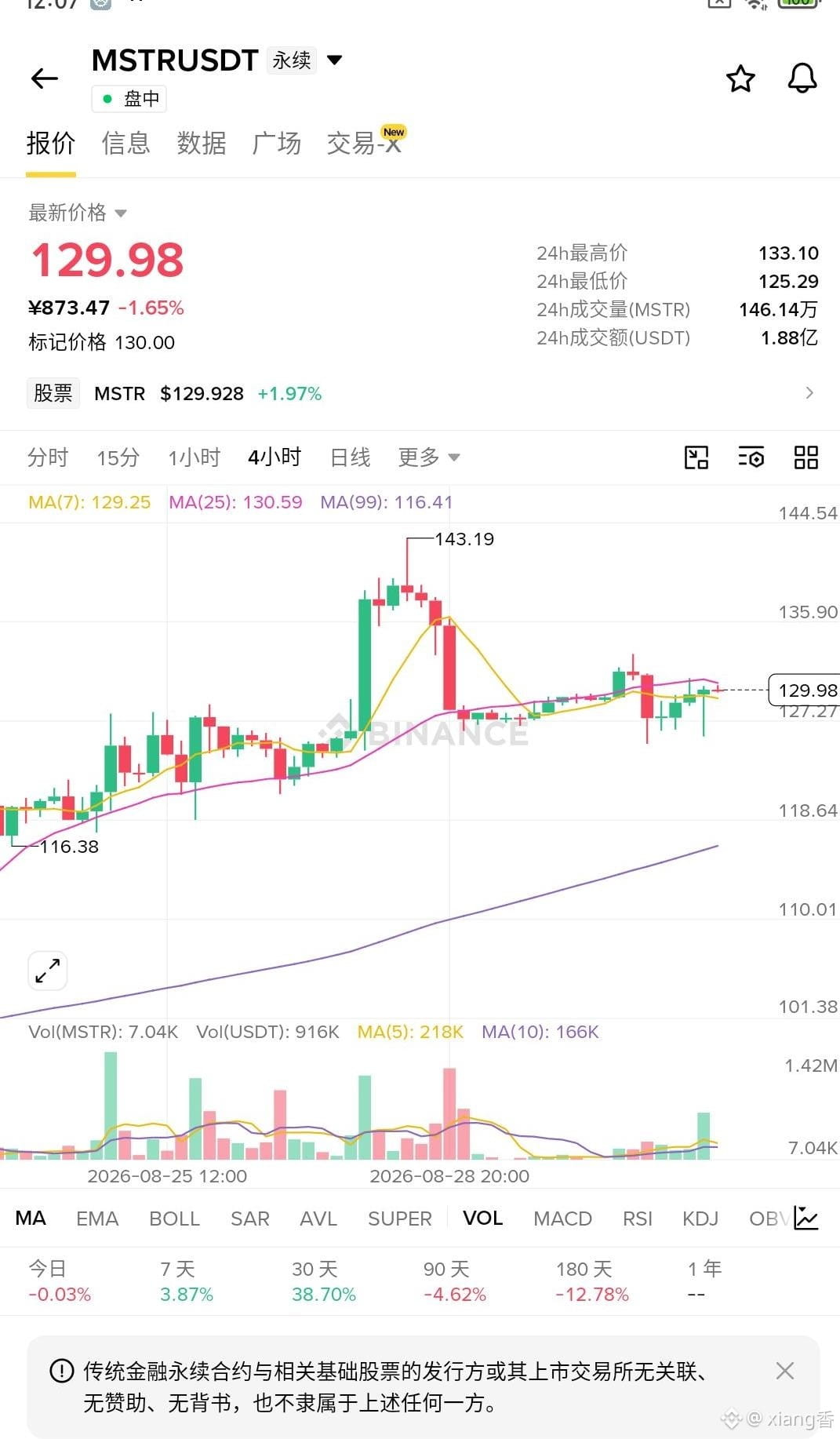
MSTR’s 130-card setup is full of potential: the price is drifting down along the moving averages, active sell orders make up 57%, and the contract position has been rising against the trend by 5% over the past 7 hours—while the sell-off momentum and the direction of adding positions are completely out of sync. This isn’t a retail bottom-picking move. Retail accounts’ long/short ratio is only 1.48, but the whales’ position long/short ratio has surged to 2.7; long positions account for 73%, and they’ve still been adding over the last 7 hours.
The selling pressure looks fierce, but it’s just a paper tiger. The spot order book’s top-20 buy wall is 29% thicker than the sell wall, and the low at 125.3 has been welded shut. The funding rate—based on the average of eight samples—is negative; shorts haven’t made money—they’re actually paying to prop up their shorts. In the last 24 hours, the price is down 2%, yet the position size keeps increasing as it falls—this isn’t panic, it’s quietly accumulating.
The most counterintuitive part: the spot big orders didn’t come in on a single candle. The big money basically didn’t move through the spot channel at all—it’s all sitting on leverage. If this were truly distribution, when prices drop the position should shrink along with it; but now positions and whale long positions are rising together—so the directions don’t match at all.
So in this trade, I stand with the long side. Two moving averages are acting like support underfoot; the selling pressure has been drained by the buy wall. The remaining script is likely short covering and sending people to the slaughter. I’m watching the 125.3 breakdown signal closely: if it breaks on increased volume, or if the whales’ long-position share drops back below 60% and positions simultaneously shrink, my view will flip immediately. #mstr $MSTR
The selling pressure looks fierce, but it’s just a paper tiger. The spot order book’s top-20 buy wall is 29% thicker than the sell wall, and the low at 125.3 has been welded shut. The funding rate—based on the average of eight samples—is negative; shorts haven’t made money—they’re actually paying to prop up their shorts. In the last 24 hours, the price is down 2%, yet the position size keeps increasing as it falls—this isn’t panic, it’s quietly accumulating.
The most counterintuitive part: the spot big orders didn’t come in on a single candle. The big money basically didn’t move through the spot channel at all—it’s all sitting on leverage. If this were truly distribution, when prices drop the position should shrink along with it; but now positions and whale long positions are rising together—so the directions don’t match at all.
So in this trade, I stand with the long side. Two moving averages are acting like support underfoot; the selling pressure has been drained by the buy wall. The remaining script is likely short covering and sending people to the slaughter. I’m watching the 125.3 breakdown signal closely: if it breaks on increased volume, or if the whales’ long-position share drops back below 60% and positions simultaneously shrink, my view will flip immediately. #mstr $MSTR