❓ TWO QUESTIONS EVERY TRADER MUST ANSWER BEFORE OPENING A POSITION
If you want to survive and be profitable in the crypto market long term, you need the answers to two fundamental questions at the tip of your tongue:
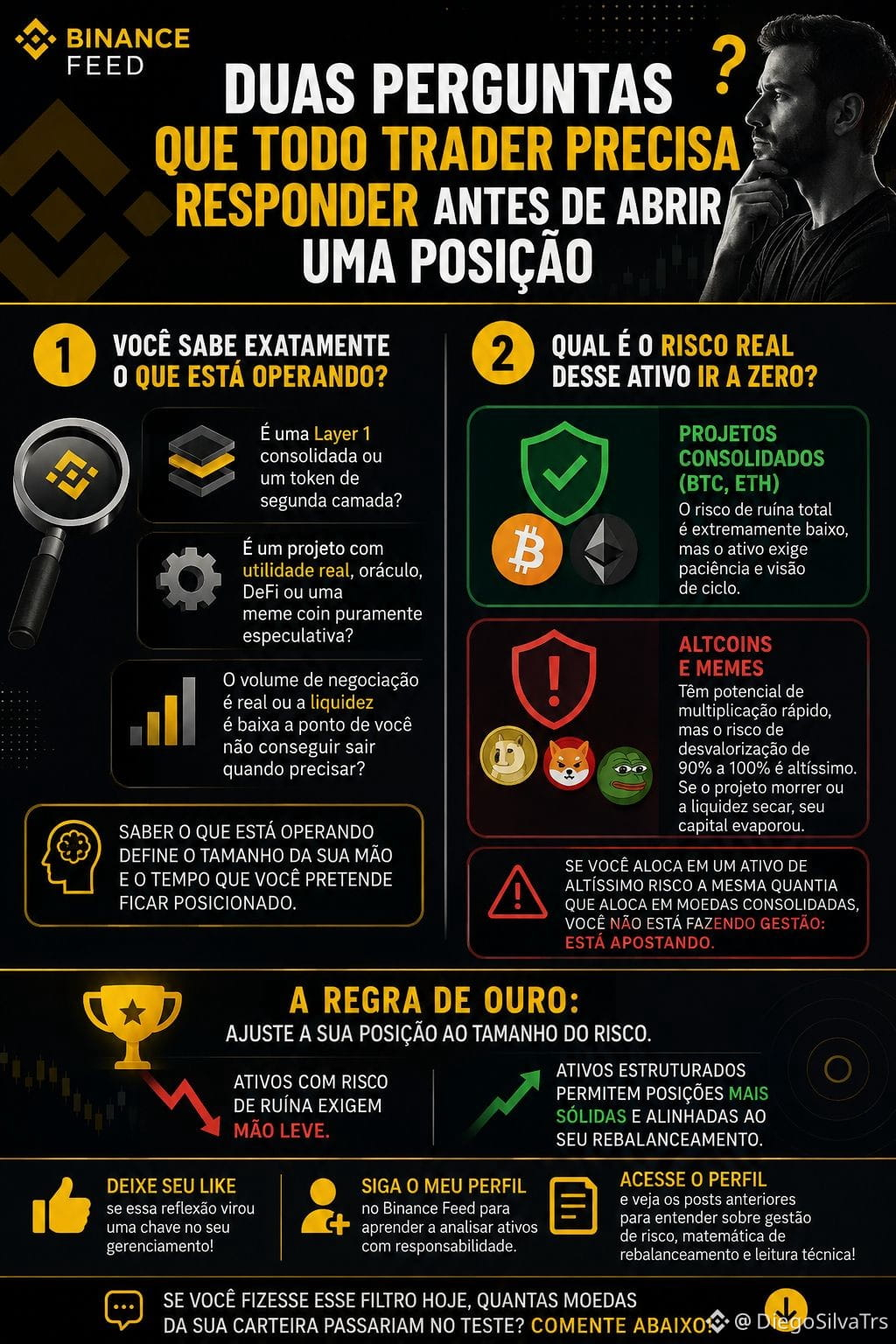
🔍 1. DO YOU KNOW EXACTLY WHAT YOU’RE TRADING? Entering a coin just because you saw someone talking about it on X (Twitter) or because the chart spiked is a recipe for failure.
Is it a consolidated Layer 1 or a second-layer token?
Is it a project with real utility—oracle, DeFi—or is it a purely speculative meme coin?
Is the trading volume real, or is liquidity so low that you can’t exit when you need to?
Knowing what you’re trading determines the size of your “hand” and how long you plan to stay in the position.
💀 2. WHAT IS THE REAL RISK OF THIS ASSET GOING TO ZERO? In the crypto market, asymmetry can be fantastic, but the risk of ruin is real.
Established Projects (BTC, ETH): The risk of total ruin is extremely low, but the asset requires patience and a cycle-focused mindset.
Altcoins and Memes: They have the potential for fast multiplication, but the risk of losing 90% to 100% in value is very high. If the project dies or liquidity dries up, your capital evaporates.
If you allocate the same amount to an extremely high-risk asset as you do to established coins, you’re not doing risk management—you’re gambling.
💡 THE GOLDEN RULE: Adjust your position to the size of the risk. Assets with ruin risk require a light hand. Structured assets allow for more solid positions aligned with your rebalancing.
🔔 STRENGTHEN YOUR TRADING PRACTICE: • Leave your Like if this reflection became a key in your management! • Follow my profile on Binance Feed to learn how to analyze assets responsibly. • Access the profile and check the previous posts to understand risk management, rebalancing math, and technical reading!
If you applied this filter today, how many coins in your portfolio would pass the test? Comment below! 👇
#RiskManagement #Trading #BinanceFeed
If you want to survive and be profitable in the crypto market long term, you need the answers to two fundamental questions at the tip of your tongue:
🔍 1. DO YOU KNOW EXACTLY WHAT YOU’RE TRADING? Entering a coin just because you saw someone talking about it on X (Twitter) or because the chart spiked is a recipe for failure.
Is it a consolidated Layer 1 or a second-layer token?
Is it a project with real utility—oracle, DeFi—or is it a purely speculative meme coin?
Is the trading volume real, or is liquidity so low that you can’t exit when you need to?
Knowing what you’re trading determines the size of your “hand” and how long you plan to stay in the position.
💀 2. WHAT IS THE REAL RISK OF THIS ASSET GOING TO ZERO? In the crypto market, asymmetry can be fantastic, but the risk of ruin is real.
Established Projects (BTC, ETH): The risk of total ruin is extremely low, but the asset requires patience and a cycle-focused mindset.
Altcoins and Memes: They have the potential for fast multiplication, but the risk of losing 90% to 100% in value is very high. If the project dies or liquidity dries up, your capital evaporates.
If you allocate the same amount to an extremely high-risk asset as you do to established coins, you’re not doing risk management—you’re gambling.
💡 THE GOLDEN RULE: Adjust your position to the size of the risk. Assets with ruin risk require a light hand. Structured assets allow for more solid positions aligned with your rebalancing.
🔔 STRENGTHEN YOUR TRADING PRACTICE: • Leave your Like if this reflection became a key in your management! • Follow my profile on Binance Feed to learn how to analyze assets responsibly. • Access the profile and check the previous posts to understand risk management, rebalancing math, and technical reading!
If you applied this filter today, how many coins in your portfolio would pass the test? Comment below! 👇
#RiskManagement #Trading #BinanceFeed