
只会呐喊的尖刀手
208 Posts
只会呐喊的尖刀手
乘风破浪会有时 直挂云帆济沧海

BNB Holder
Occasional Trader
9 Years
365 Following
25.1K+ Followers
12.7K+ Liked
Posts
PINNED

PINNED
May you give yourself a recharge today.
Even if it’s just closing your eyes for ten minutes during your lunch break, or listening to a song you love on your way home from work.
Don’t treat yourself like a perpetual motion machine—you also need to stop and catch your breath.
Only when your battery is fully charged can you take in all the good opportunities life throws your way.
Today, take care of yourself first, and then the whole world.
Even if it’s just closing your eyes for ten minutes during your lunch break, or listening to a song you love on your way home from work.
Don’t treat yourself like a perpetual motion machine—you also need to stop and catch your breath.
Only when your battery is fully charged can you take in all the good opportunities life throws your way.
Today, take care of yourself first, and then the whole world.

May you be happy today for a small thing.
Maybe a flower bloomed by the roadside, or maybe the delivery rider brought an extra pair of chopsticks.
Happiness doesn’t need a reason, nor does it need to be big.
For someone who can pause for a cloud, their luck won’t be too bad.
Today, be someone who’s easy to satisfy.
Maybe a flower bloomed by the roadside, or maybe the delivery rider brought an extra pair of chopsticks.
Happiness doesn’t need a reason, nor does it need to be big.
For someone who can pause for a cloud, their luck won’t be too bad.
Today, be someone who’s easy to satisfy.

May you have the confidence of “there’s still time,” and also the patience to “take it slowly.”
Seeds won’t sprout just because you’re in a hurry,
and fruit won’t ripen early just because you’re anxious.
Everything has its own timing—and so do you.
Today, don’t push yourself, and don’t rush others.
At your own pace, everything is just right.
Seeds won’t sprout just because you’re in a hurry,
and fruit won’t ripen early just because you’re anxious.
Everything has its own timing—and so do you.
Today, don’t push yourself, and don’t rush others.
At your own pace, everything is just right.

Good morning. May you feel a little more relaxed today than you did yesterday.
You don’t have to pack your schedule too tightly—leave a little space for unexpected small surprises.
There’s a seat on the subway, the coffee isn’t too hot, and when you open your phone, it’s all good news.
A new day—no need to rush, only chase happiness.
You don’t have to pack your schedule too tightly—leave a little space for unexpected small surprises.
There’s a seat on the subway, the coffee isn’t too hot, and when you open your phone, it’s all good news.
A new day—no need to rush, only chase happiness.

May your happiness be hidden in the steam of three meals a day.
The soy milk for breakfast is just the right temperature—not too hot to drink. The lunch bento is just the right taste—perfect for your appetite. The lights at dinner are just gentle enough.
Life isn’t elsewhere; it’s right here—in the steady comfort of this bowl of porridge and this plate of rice.
Eat well today too, and live well too.
The soy milk for breakfast is just the right temperature—not too hot to drink. The lunch bento is just the right taste—perfect for your appetite. The lights at dinner are just gentle enough.
Life isn’t elsewhere; it’s right here—in the steady comfort of this bowl of porridge and this plate of rice.
Eat well today too, and live well too.

Not aiming for a leap all at once, but stepping forward one solid step at a time.
Today, read ten pages, walk a thousand steps, and do one small task you’ve been putting off for far too long.
Small actions are the best weapon against anxiety.
May you get moving today—even if it’s only shifting your feet a little.
Today, read ten pages, walk a thousand steps, and do one small task you’ve been putting off for far too long.
Small actions are the best weapon against anxiety.
May you get moving today—even if it’s only shifting your feet a little.

Not seeking to reach the sky in one leap, just taking one step at a time—leaving a footmark with every move.
Today, read ten pages, walk a thousand steps, and do one small task you’ve been putting off for ages.
Small actions are the best weapon to defeat anxiety.
May you get moving today—even if it’s only shifting your feet a little.
Today, read ten pages, walk a thousand steps, and do one small task you’ve been putting off for ages.
Small actions are the best weapon to defeat anxiety.
May you get moving today—even if it’s only shifting your feet a little.

May you be, like a cup of warm water today—neither boiling nor icy, just right.
When you hit traffic, don’t get road-rage. When you face trouble, don’t fall apart.
Emotion stays steady—not that you have none, but that you know how to give your feelings a place to go.
If your heart is calm, the noise of the outside world can’t disturb you.
When you hit traffic, don’t get road-rage. When you face trouble, don’t fall apart.
Emotion stays steady—not that you have none, but that you know how to give your feelings a place to go.
If your heart is calm, the noise of the outside world can’t disturb you.

Stabbing again—how many positions vanished in an instant?
But today, all I can do is wish you well.
Survive this ordeal! Rebirth from the ashes!
But today, all I can do is wish you well.
Survive this ordeal! Rebirth from the ashes!

In one sentence: Trump urged Congress to pass the CLARITY Act—this isn’t another “crypto buy/sell” hype driven by encrypted signals. Instead, the U.S. wants to settle the decade-old mess of whether tokens fall under the SEC or the CFTC by moving from “catch people after the fact” to “write it into law in advance.” It’s stuck at the Senate, the full chamber—mid-September is the deadline for life or death.
1. What exactly does this bill do?
It doesn’t invent any new asset. It does just one thing: it gives tokens a kind of “ID.”
• If it’s sufficiently decentralized → treated as a digital commodity → governed by the CFTC
• If it’s still in fundraising / there’s a team controlling positions → treated as a security → governed by the SEC
• If it’s a payments stablecoin → goes into the banking system (the GENIUS Act already has separate legislation)
Previously, projects would run first and, years later, the SEC would retroactively recognize “actually, it’s a security.” CLARITY wants to do the opposite: draw the lines first, then enter.
2. Where is it at now?
• House: already passed, 294:134 in 2025
• Senate Banking Committee: passed in May 2026
• Full-chamber vote: stalled—August recess; procedural votes around Sept. 15 (needs 60 votes)
• The sticking point isn’t technical—it’s political: Democrats want to add a clause that no president or other officials may profit from crypto projects; Republicans don’t want it. The banking faction also thinks stablecoin interest payments are too loosely regulated.
3. Why Trump is applying public pressure
The SEC / CFTC currently rely on administrative rulemaking to patch things up (for example, the SEC’s crypto funding exemption draft in August, and the CFTC saying it won’t work and will take control itself). But an executive order can be torn up by the next administration.
Only congressional legislation can lock a “pro-crypto” framework into long-term, institutional rules—so what’s driving market growth isn’t just Trump’s mouth, it’s the “probability of legislation” being repriced.
What the market is really watching:
Whether the Senate can get 60 votes in September to pass cloture. If it passes → the crypto market structure is formally codified into law, and exchanges / RWA / mainstream coins get a certainty premium; if it doesn’t → it reverts to the old path of “SEC + CFTC administrative regulation + court battles,” delaying policy tailwinds but not setting them to zero.
#特朗普敦促国会通过Clarity法案
1. What exactly does this bill do?
It doesn’t invent any new asset. It does just one thing: it gives tokens a kind of “ID.”
• If it’s sufficiently decentralized → treated as a digital commodity → governed by the CFTC
• If it’s still in fundraising / there’s a team controlling positions → treated as a security → governed by the SEC
• If it’s a payments stablecoin → goes into the banking system (the GENIUS Act already has separate legislation)
Previously, projects would run first and, years later, the SEC would retroactively recognize “actually, it’s a security.” CLARITY wants to do the opposite: draw the lines first, then enter.
2. Where is it at now?
• House: already passed, 294:134 in 2025
• Senate Banking Committee: passed in May 2026
• Full-chamber vote: stalled—August recess; procedural votes around Sept. 15 (needs 60 votes)
• The sticking point isn’t technical—it’s political: Democrats want to add a clause that no president or other officials may profit from crypto projects; Republicans don’t want it. The banking faction also thinks stablecoin interest payments are too loosely regulated.
3. Why Trump is applying public pressure
The SEC / CFTC currently rely on administrative rulemaking to patch things up (for example, the SEC’s crypto funding exemption draft in August, and the CFTC saying it won’t work and will take control itself). But an executive order can be torn up by the next administration.
Only congressional legislation can lock a “pro-crypto” framework into long-term, institutional rules—so what’s driving market growth isn’t just Trump’s mouth, it’s the “probability of legislation” being repriced.
What the market is really watching:
Whether the Senate can get 60 votes in September to pass cloture. If it passes → the crypto market structure is formally codified into law, and exchanges / RWA / mainstream coins get a certainty premium; if it doesn’t → it reverts to the old path of “SEC + CFTC administrative regulation + court battles,” delaying policy tailwinds but not setting them to zero.
#特朗普敦促国会通过Clarity法案

Do it today, finish it today.
Worry today, give it up today.
Turn off the lights, open your heart.
Tonight, there is no insomnia—only good dreams.
Good night, world and you.
Worry today, give it up today.
Turn off the lights, open your heart.
Tonight, there is no insomnia—only good dreams.
Good night, world and you.

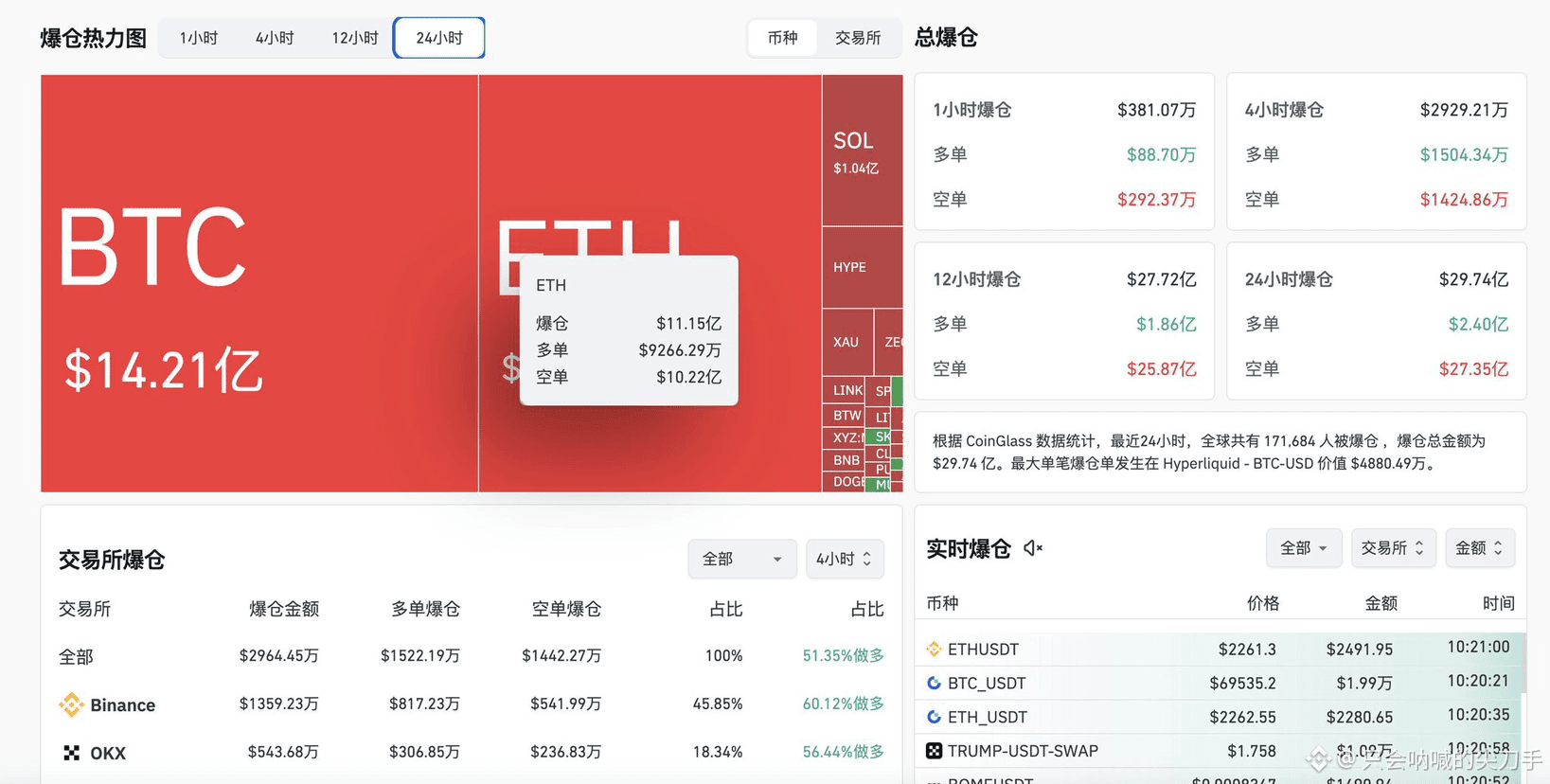
When data shows that BTC breaks above the $69,000 mark, within a short period of time there are short liquidations exceeding $1 billion. Forced short covering becomes an important fuel for the rally.
From open interest and the liquidation heatmap, around 70,000 is the area where large leveraged positions are concentrated. After a breakout, it’s easy to trigger a chain reaction of liquidations.
The market has accumulated a large amount of short leverage
If this is only caused by contract liquidations:
Price rises, but there is no obvious inflow of spot capital—
then the side effects of this rally will appear soon.
So don’t think a bull market is here—
this is just liquidation of capital.
#BTC突破$72000
From open interest and the liquidation heatmap, around 70,000 is the area where large leveraged positions are concentrated. After a breakout, it’s easy to trigger a chain reaction of liquidations.
The market has accumulated a large amount of short leverage
If this is only caused by contract liquidations:
Price rises, but there is no obvious inflow of spot capital—
then the side effects of this rally will appear soon.
So don’t think a bull market is here—
this is just liquidation of capital.
#BTC突破$72000
Good today: smile, welcome new opportunities, and declutter.
Avoid: overthinking, comparison, and self-doubt.
May your kindness have echoes, and your efforts receive responses.
Look up to catch starlight; look down to find the fragrance of flowers.
One small certain joy each day, accumulating into a great stroke of luck over the year.
Avoid: overthinking, comparison, and self-doubt.
May your kindness have echoes, and your efforts receive responses.
Look up to catch starlight; look down to find the fragrance of flowers.
One small certain joy each day, accumulating into a great stroke of luck over the year.

May you have the “courage to be disliked,” and also the “confidence to be liked.”
Don’t waste anger on people who don’t matter, or hurt your mind over pointless things.
Save your energy for growth, and your patience for time.
Today, be a little more clear-eyed than yesterday; tomorrow, be a little more at ease than today.
This is the highest level of returns.
Don’t waste anger on people who don’t matter, or hurt your mind over pointless things.
Save your energy for growth, and your patience for time.
Today, be a little more clear-eyed than yesterday; tomorrow, be a little more at ease than today.
This is the highest level of returns.

May tonight be free of dreams and unrest, without worry or melancholy.
The fatigue of the day is taken away by your pillow, and tomorrow’s troubles will be left to tomorrow.
You only need to close your eyes—the world will gently take care of everything as it turns.
A good night’s sleep is the best full stop for today, and the best opening for tomorrow.
The fatigue of the day is taken away by your pillow, and tomorrow’s troubles will be left to tomorrow.
You only need to close your eyes—the world will gently take care of everything as it turns.
A good night’s sleep is the best full stop for today, and the best opening for tomorrow.

May everything go smoothly, not only today.
Your account stays on the rise, 🔥🔥🔥
May your body stay healthy and your emotions stay at peace.
May every step you take be on an easy path, and may every encounter be kind.
One day goes well, and every day goes well.
Your account stays on the rise, 🔥🔥🔥
May your body stay healthy and your emotions stay at peace.
May every step you take be on an easy path, and may every encounter be kind.
One day goes well, and every day goes well.

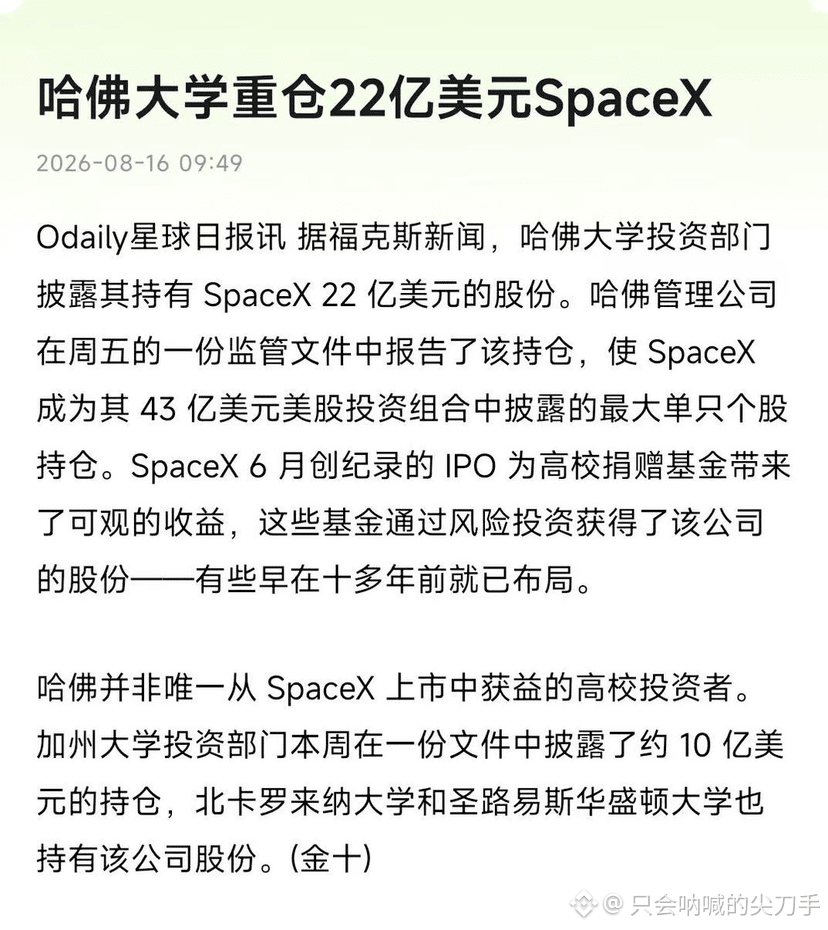
The fuel tank of $SPCX is already full! The US top funds are heavily invested and holding tight—this historical mega-cap with a market value of $3 trillion is destined to be blasted through by this rocket wave. Back to $200? That’s just the first stage booster separation! 🔥
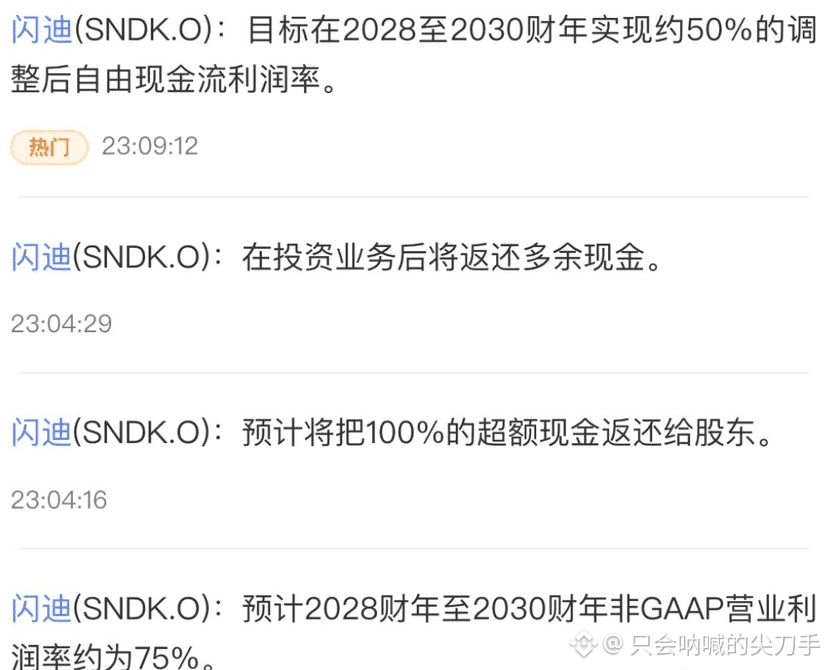
$SNDK Familiar script, familiar formula. They say tonight we have to get past 1800. Is Zhang La Gao not just for harvesting? Praying that this long trade will profit and may those who seek their own fortune be blessed.
Log in to explore more content