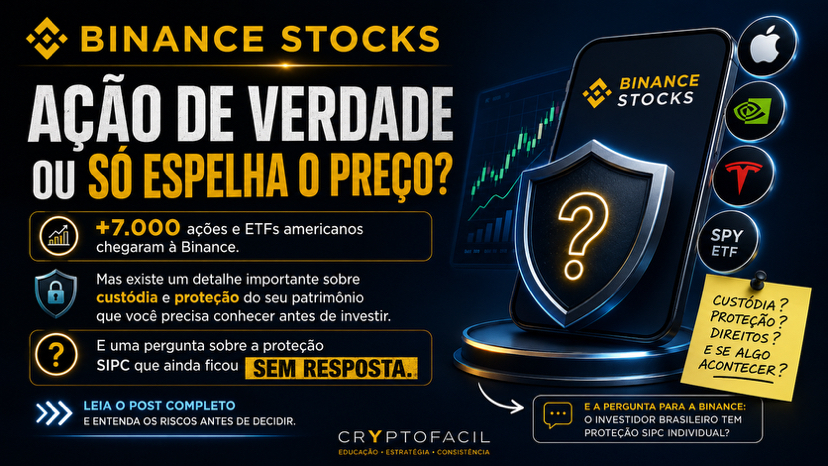
Binance Stocks = real stock/ETF, with custody via Alpaca.
bStocks = last read token in action.
The ease of buying is interesting, but understanding who holds your assets and what protections actually apply is just as important as choosing the asset.
Binance has started offering access to more than 7,000 American stocks and ETFs, including in fractional form. But there are different products within the platform, and they don’t have the same structure or the same risks.
BINANCE STOCKS
Here we’re talking about real stocks and ETFs, not simply a token that follows the price.
The structure works, in simplified terms, like this:
Binance → Nest Trading Limited → Alpaca Securities
Binance is the interface used by the investor.
Nest Trading Limited acts as an intermediary (introducing broker).
Alpaca Securities is the American brokerage firm responsible for executing, settling, and holding the assets in custody.
Alpaca is a regulated institution in the United States: registered with the SEC, supervised by FINRA, and a member of the SIPC.
BUT HERE IS AN IMPORTANT POINT
Alpaca has SIPC protection of up to US$ 500 thousand per eligible customer, including up to US$ 250 thousand in cash, in certain broker insolvency situations.
However, we are unable to clarify in the available documents whether the Brazilian investor who buys through Binance Stocks has this SIPC protection individually, as happens when the investor is directly registered as a client of an American broker.
This is relevant because platforms can use aggregated custody structures, known as omnibus, in which the assets are concentrated in one account and each investor’s control is handled in the platform’s internal records.
Therefore, I don’t consider it correct to claim that the Brazilian client of Binance Stocks is AUTOMATICALLY individually protected up to US$ 500 thousand by the SIPC without Binance explaining this structure.
AND THE bSTOCKS PRODUCT:
You are NOT the direct owner of the stock. You hold an asset-backed token.
*** The asset may even have the same name—Apple, NVIDIA, Tesla, ETFs, etc.—but what you effectively OWN can be completely different.
Before you invest, don’t just look at “what I’m buying.”
Also ask: “where is my wealth held in custody and what protections do I truly have?”
AND HERE IS THE QUESTION FOR THE #BINANCE :
Does the Brazilian investor who buys stocks and ETFs through Binance Stocks have individual SIPC protection? If so, how is this protection structured and where is it documented in the terms applicable to the Brazilian client?