
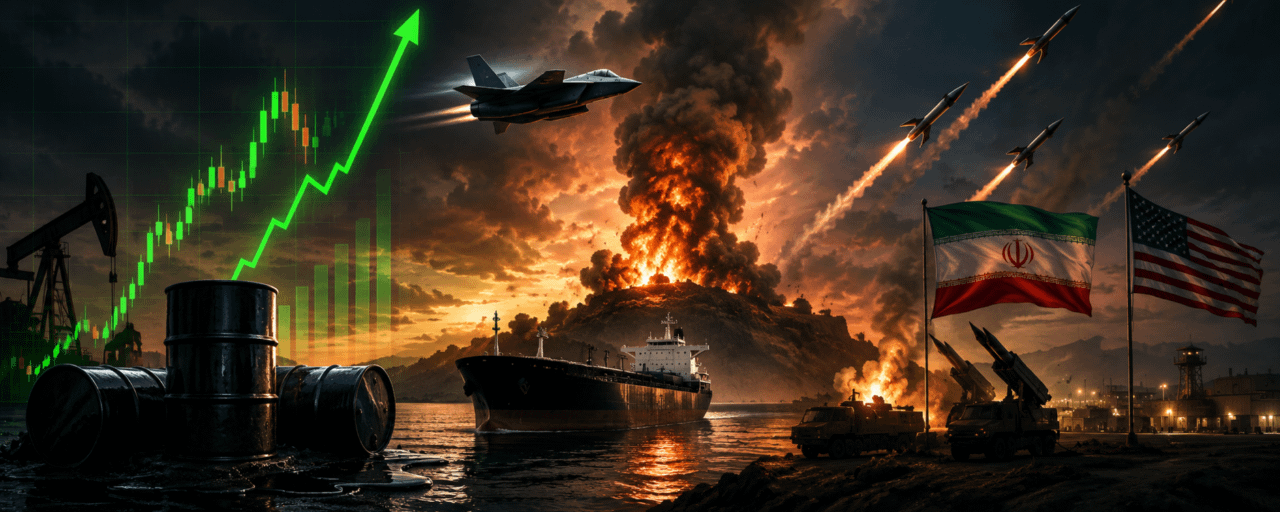

For two weeks, Washington talked about squeezing Iran instead of bombing it. President Donald Trump had promised financial isolation on a scale he called unprecedented, a real shift after five months of military strikes. It didn't last two weeks.
On Sunday, U.S. forces hit two Iranian rocket launchers on Larak Island, a small island at the narrowest point of the Strait of Hormuz. First acknowledged strike on Iranian territory since late July. U.S. Central Command said Islamic Revolutionary Guard Corps crews had been caught preparing to fire rockets loaded with sea mines into the strait, a week after the Navy said it had finished sweeping the waterway's shipping lanes clean.
It's played this part before. Iran has used Larak again and again to harass shipping and test American red lines, and CENTCOM spokesman Navy Capt. Tim Hawkins said forces would keep watching the area closely and stay ready to protect commercial traffic through it.
Tehran didn't deny it happened. Iran's Revolutionary Guards confirmed the strike killed and wounded fighters and civilians, no count offered, and promised to respond. The response came fast. Hours later, the Guards said they'd fired ballistic missiles and drones at two U.S.-linked bases in Jordan, King Hussein and Al-Azraq, under an operation they named Punishment of the Aggressor, claiming to have hit maintenance facilities and areas where fighter jets are based.
Jordan's military said its air defenses caught eight incoming missiles before they did any harm. No injuries. A U.S. source told Fox News correspondent Trey Yingst that nearly all of the incoming fire had been intercepted, with no significant impact reported.
Iran claimed one more scalp: a U.S. MQ-9 Reaper drone, shot down over the strait and dropped into Gulf waters, according to the Revolutionary Guards. Washington hasn't confirmed the loss.
President Masoud Pezeshkian broke his silence Monday. Tehran, he said, has no interest in another war. But it "will never sit still in the face of any aggression." Iran would answer firmly if hit again, he added. It's the sharpest exchange between the two countries since late July, landing just as Washington tries to pivot from bombs to sanctions. The war itself, which began Feb. 28, is now six months old.
Trump had his own contribution to the day. A late post on social media:
"Kharg Island being blown to smithereens!!! President DJT."
Kharg handles roughly 90% of Iran's oil exports. Trump has threatened it before.
This time there was video. Explosions, a bombing run, the works. Reuters ran the clip through software built to catch AI-manipulated footage and came back with a verdict: most likely synthetic. No other evidence surfaced that any actual strike on Kharg had taken place.
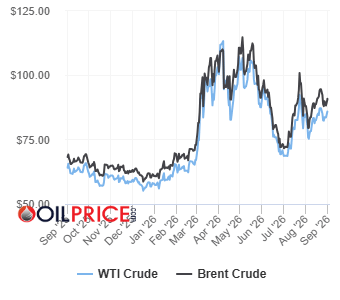
Markets moved anyway, on the parts that were real. The international benchmark Brent crude has jumped more than 3%, to $90.78 a barrel in early European trading. WTI climbed 2.9% to $85.77. Both benchmarks had been drifting toward small monthly losses before the strike changed the conversation.
Washington Rejects the "Aggression" Label
By Monday, CENTCOM wanted the record straight. A post on X called Tehran's framing of the strike false, insisting American forces had taken "limited, precise action against IRGC minelaying forces posing an imminent threat." Iran, the post argued, created the danger. The U.S. just removed it.
None of this happened in a vacuum. Pezeshkian had spent recent days sounding almost conciliatory in public, telling Iranians the door to a negotiated end of the war was still open, even as officials kept resisting what they call American economic strangulation.
Washington, for its part, hasn't stopped pushing ships through. The Navy is escorting vessels along the strait's southern edge, through Omani waters. Officials say Navy ships, Air Force jets and Army helicopters are watching the waterway around the clock, ready to hit any Iranian force that threatens a commercial vessel.
It's working, some of the time. Goldman Sachs put total Gulf oil exports at 15 million to 16 million barrels a day, still 7 million to 8 million bpd short of pre-war levels but 5 million to 6 million bpd above the trough hit in March. Much of that oil now moves after dark. Transponders off, tankers gone dark on the tracking maps, ship-to-ship transfers doing the work satellites can't see.
A Reserve Refill That Could Take Years
Trump has a separate plan for filling America's own tank. Oil from a new Venezuela deal, he says, will replenish the Strategic Petroleum Reserve, which has sunk to its lowest level since the early 1980s. Analysts aren't buying the timeline. Venezuela pumps about 1.25 million barrels a day today, a fraction of what its reserves could theoretically support, the legacy of years of neglected infrastructure and underinvestment. Much of its crude is too heavy for the reserve's storage specifications without extra processing first. Getting there, several analysts said, could take years. Maybe longer. Maybe never.
On paper, Washington now controls more than 65 billion barrels of Venezuela's proven reserves, spread across 17 oil fields, through a joint venture with a private operator. Roughly a fifth of the country's total. Critics on the left and right have called it a throwback to the oil industry's colonial era. Interim President Delcy Rodriguez defends it anyway, pointing to the numbers: $19 for every barrel produced and sold to the U.S., an arrangement she says could be worth $209 billion a year to Venezuela, depending on prices.