
BlackCat Analysis
8.6k Posts

BlackCat Analysis
 Square Verified+
Report
Block User
Trader || X (Twitter): @BlackCatTrader7 |I Binance KOL II Trad e Setups are my Personal Opinions I| DYOR
Frequent Trader
1.9 Years
98 Following
36.9K+ Followers
67.6K+ Liked
Posts
All
Quotes
Videos
🚨 $ETH JUST BOUNCED OFF A 4-YEAR TRENDLINE
Fourth touch of same ascending support since 2022
Every previous touch marked a major low
Above: ~$4,900 - ceiling that rejected price in 2021 and 2025
That's a bullish rectangle 4 years wide
The wider the base, the harder breakout
Rectangle math says $8,000
Everyone sees a dead chart. I see a loaded spring
You're early or you're exit
Turn notifs on - I'll post when breakout confirms
🚨 $ETH JUST BOUNCED OFF A 4-YEAR TRENDLINE
Fourth touch of same ascending support since 2022
Every previous touch marked a major low
Above: ~$4,900 - ceiling that rejected price in 2021 and 2025
That's a bullish rectangle 4 years wide
The wider the base, the harder breakout
Rectangle math says $8,000
Everyone sees a dead chart. I see a loaded spring
You're early or you're exit
Turn notifs on - I'll post when breakout confirms
Fourth touch of same ascending support since 2022
Every previous touch marked a major low
Above: ~$4,900 - ceiling that rejected price in 2021 and 2025
That's a bullish rectangle 4 years wide
The wider the base, the harder breakout
Rectangle math says $8,000
Everyone sees a dead chart. I see a loaded spring
You're early or you're exit
Turn notifs on - I'll post when breakout confirms
1
2
840
Hope you’re ready
61 -> 70 -> 52
$BTC
Turn notification on and remember who told you
Hope you’re ready
61 -> 70 -> 52
$BTC
Turn notification on and remember who told you
61 -> 70 -> 52
$BTC
Turn notification on and remember who told you
1
4
617
Article
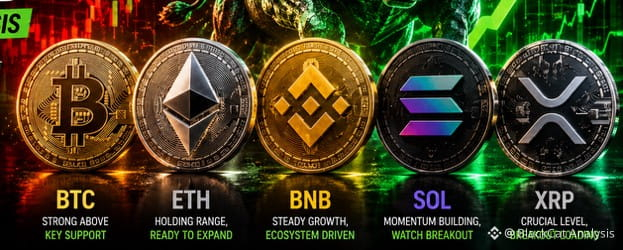
Crypto Market Outlook: BTC, ETH, SOL, XRP & BNB Weekly AnalysisThe most important question this week is not whether Bitcoin can rally.
It is whether Bitcoin can remain stable long enough for capital to move elsewhere.
The crypto market enters the week with cautious optimism as traders prepare for volatility around economic data, institutional flows, and monetary-policy expectations. Bitcoin is trading near $64,400, but its next move will influence far more than BTC alone.
#Bitcoin remains the market’s source of confidence.
$BTC recently defended the $62,700–$63,000 region and recovered towards $64,500. As long as price holds above $63,000, the short-term recovery remains intact.
A confirmed breakout above $65,000 could open the way towards $67,000–$68,000.
But the real value of that breakout may not be the upside itself.
It may be the confidence it gives traders to increase exposure across the broader market.
If BTC loses $62,700, that confidence could disappear quickly, placing renewed pressure on altcoins.
Ethereum continues to lag behind Bitcoin near $1,625.
$ETH does not need another small bounce. It needs to prove that buyers are willing to defend higher prices. A sustained recovery above $1,700 would improve the short-term structure and could signal that capital is beginning to rotate beyond Bitcoin.
Until then, Ethereum remains a market waiting for conviction.
Solana is trading near $78 after another period of sharp volatility.
SOL usually reacts more aggressively when sentiment changes, which makes the mid-$70 region especially important. Holding above this area would preserve the recovery structure, while a breakout above $80 could attract momentum and push the market into a faster expansion.
$XRP is sitting near $1.06, with the $1 level acting as both technical support and a psychological test.
Continued acceptance above $1 could allow XRP to challenge the $1.10–$1.15 region. A breakdown below it, however, would weaken the short-term structure and could trigger further profit-taking.
BNB remains relatively stable near $571.
Buyers are defending the $564 area, while resistance remains concentrated between $574 and $580. A clean breakout above that range could strengthen momentum, but continued rejection would likely keep BNB trapped in consolidation.
The broader market is still waiting for Bitcoin to give it permission to move.
If BTC remains stable, ETH, SOL, XRP, and BNB may finally have room to recover.
If Bitcoin becomes volatile again, altcoin strength may disappear just as quickly.
This week, the advantage will not come from predicting every move.
It will come from recognizing when stability becomes rotation—and when rotation becomes opportunity.
Crypto Market Outlook: BTC, ETH, SOL, XRP & BNB Weekly Analysis
The most important question this week is not whether Bitcoin can rally.
It is whether Bitcoin can remain stable long enough for capital to move elsewhere.
The crypto market enters the week with cautious optimism as traders prepare for volatility around economic data, institutional flows, and monetary-policy expectations. Bitcoin is trading near $64,400, but its next move will influence far more than BTC alone.
#Bitcoin remains the market’s source of confidence.
$BTC recently defended the $62,700–$63,000 region and recovered towards $64,500. As long as price holds above $63,000, the short-term recovery remains intact.
A confirmed breakout above $65,000 could open the way towards $67,000–$68,000.
But the real value of that breakout may not be the upside itself.
It may be the confidence it gives traders to increase exposure across the broader market.
If BTC loses $62,700, that confidence could disappear quickly, placing renewed pressure on altcoins.
Ethereum continues to lag behind Bitcoin near $1,625.
$ETH does not need another small bounce. It needs to prove that buyers are willing to defend higher prices. A sustained recovery above $1,700 would improve the short-term structure and could signal that capital is beginning to rotate beyond Bitcoin.
Until then, Ethereum remains a market waiting for conviction.
Solana is trading near $78 after another period of sharp volatility.
SOL usually reacts more aggressively when sentiment changes, which makes the mid-$70 region especially important. Holding above this area would preserve the recovery structure, while a breakout above $80 could attract momentum and push the market into a faster expansion.
$XRP is sitting near $1.06, with the $1 level acting as both technical support and a psychological test.
Continued acceptance above $1 could allow XRP to challenge the $1.10–$1.15 region. A breakdown below it, however, would weaken the short-term structure and could trigger further profit-taking.
BNB remains relatively stable near $571.
Buyers are defending the $564 area, while resistance remains concentrated between $574 and $580. A clean breakout above that range could strengthen momentum, but continued rejection would likely keep BNB trapped in consolidation.
The broader market is still waiting for Bitcoin to give it permission to move.
If BTC remains stable, ETH, SOL, XRP, and BNB may finally have room to recover.
If Bitcoin becomes volatile again, altcoin strength may disappear just as quickly.
This week, the advantage will not come from predicting every move.
It will come from recognizing when stability becomes rotation—and when rotation becomes opportunity.
It is whether Bitcoin can remain stable long enough for capital to move elsewhere.
The crypto market enters the week with cautious optimism as traders prepare for volatility around economic data, institutional flows, and monetary-policy expectations. Bitcoin is trading near $64,400, but its next move will influence far more than BTC alone.
#Bitcoin remains the market’s source of confidence.
$BTC recently defended the $62,700–$63,000 region and recovered towards $64,500. As long as price holds above $63,000, the short-term recovery remains intact.
A confirmed breakout above $65,000 could open the way towards $67,000–$68,000.
But the real value of that breakout may not be the upside itself.
It may be the confidence it gives traders to increase exposure across the broader market.
If BTC loses $62,700, that confidence could disappear quickly, placing renewed pressure on altcoins.
Ethereum continues to lag behind Bitcoin near $1,625.
$ETH does not need another small bounce. It needs to prove that buyers are willing to defend higher prices. A sustained recovery above $1,700 would improve the short-term structure and could signal that capital is beginning to rotate beyond Bitcoin.
Until then, Ethereum remains a market waiting for conviction.
Solana is trading near $78 after another period of sharp volatility.
SOL usually reacts more aggressively when sentiment changes, which makes the mid-$70 region especially important. Holding above this area would preserve the recovery structure, while a breakout above $80 could attract momentum and push the market into a faster expansion.
$XRP is sitting near $1.06, with the $1 level acting as both technical support and a psychological test.
Continued acceptance above $1 could allow XRP to challenge the $1.10–$1.15 region. A breakdown below it, however, would weaken the short-term structure and could trigger further profit-taking.
BNB remains relatively stable near $571.
Buyers are defending the $564 area, while resistance remains concentrated between $574 and $580. A clean breakout above that range could strengthen momentum, but continued rejection would likely keep BNB trapped in consolidation.
The broader market is still waiting for Bitcoin to give it permission to move.
If BTC remains stable, ETH, SOL, XRP, and BNB may finally have room to recover.
If Bitcoin becomes volatile again, altcoin strength may disappear just as quickly.
This week, the advantage will not come from predicting every move.
It will come from recognizing when stability becomes rotation—and when rotation becomes opportunity.
263
Article
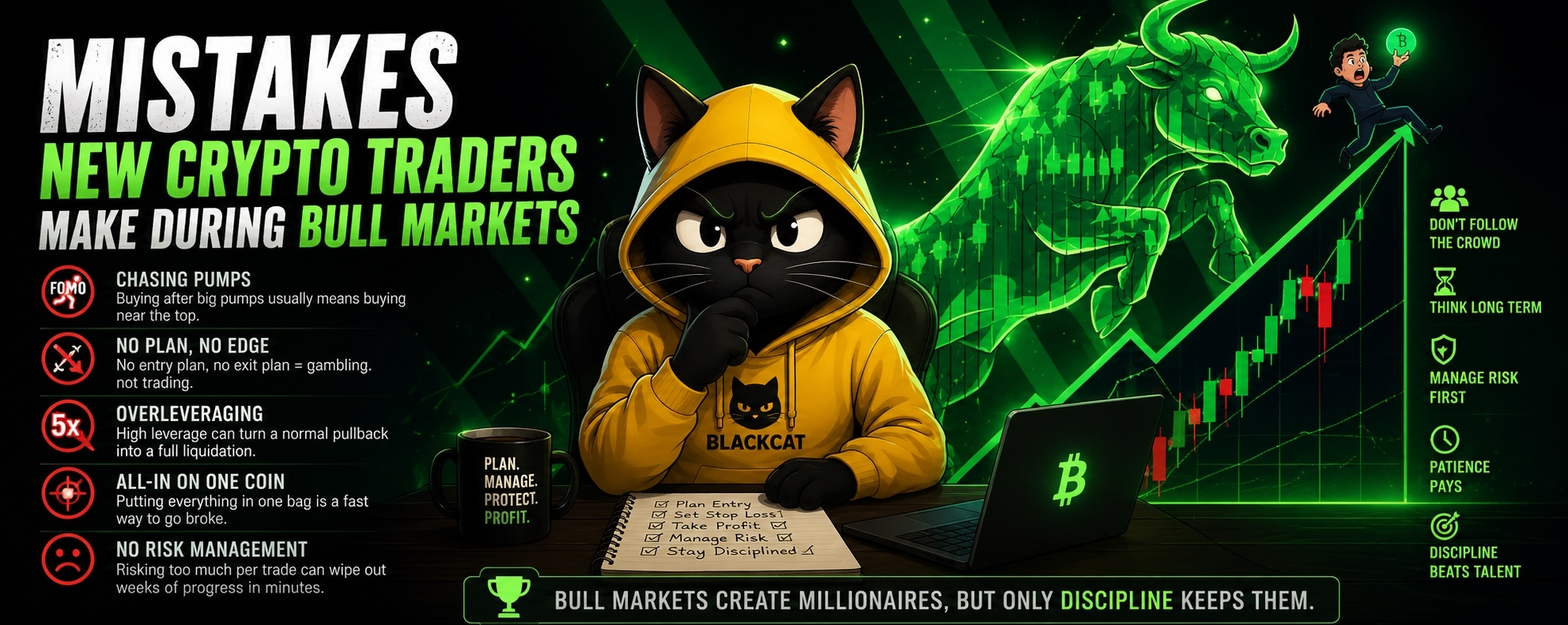
Mistakes New Crypto Traders Make During Bull MarketsBull markets create a dangerous illusion.
When almost every coin is rising, bad decisions can still make money.$BTC $ETH $SOL
A trader chases a rally, ignores risk, uses excessive leverage—and the market rewards them anyway. That temporary success often creates the belief that their strategy is working.
But bull markets do not eliminate mistakes.
They simply delay the consequences.
One of the most common mistakes is buying after a coin has already made a massive move. New traders see green candles, rising volume, and social media excitement, then enter because they fear being left behind.
The problem is not that the coin cannot rise further.
The problem is that the trader is often buying after the risk-to-reward has already deteriorated.
Experienced traders understand that opportunity does not disappear because one move was missed. They wait for pullbacks, consolidation, or a new setup instead of turning urgency into an entry signal.
Another mistake is entering without knowing how the trade should end.
Many beginners choose an entry first and think about profit targets or stop losses later. Once money is involved, every decision becomes emotional.
A plan created before the trade protects the trader from the person they become during the trade.
Leverage makes this problem even more dangerous.
In a strong market, high leverage can make ordinary gains look like exceptional skill. But bull markets still contain violent corrections. A small pullback can liquidate a position even when the larger trend remains bullish.
Being correct about direction means nothing if the position cannot survive the volatility.
Concentration is another hidden risk.
New traders often place too much capital into the coin they believe has the most potential. But conviction does not reduce uncertainty. One unexpected event can damage an entire portfolio if the exposure is too large.
The biggest lesson is simple:
Bull markets rarely punish bad habits immediately.
They allow traders to become confident in them.
That is why the real test is not how much money someone makes while everything is rising.
It is how much of that money remains when the market finally stops rewarding every mistake.
The traders who survive are not always the ones who find the fastest coins.
They are the ones who never confuse a rising market with personal skill.
Mistakes New Crypto Traders Make During Bull Markets
Bull markets create a dangerous illusion.
When almost every coin is rising, bad decisions can still make money.$BTC $ETH $SOL
A trader chases a rally, ignores risk, uses excessive leverage—and the market rewards them anyway. That temporary success often creates the belief that their strategy is working.
But bull markets do not eliminate mistakes.
They simply delay the consequences.
One of the most common mistakes is buying after a coin has already made a massive move. New traders see green candles, rising volume, and social media excitement, then enter because they fear being left behind.
The problem is not that the coin cannot rise further.
The problem is that the trader is often buying after the risk-to-reward has already deteriorated.
Experienced traders understand that opportunity does not disappear because one move was missed. They wait for pullbacks, consolidation, or a new setup instead of turning urgency into an entry signal.
Another mistake is entering without knowing how the trade should end.
Many beginners choose an entry first and think about profit targets or stop losses later. Once money is involved, every decision becomes emotional.
A plan created before the trade protects the trader from the person they become during the trade.
Leverage makes this problem even more dangerous.
In a strong market, high leverage can make ordinary gains look like exceptional skill. But bull markets still contain violent corrections. A small pullback can liquidate a position even when the larger trend remains bullish.
Being correct about direction means nothing if the position cannot survive the volatility.
Concentration is another hidden risk.
New traders often place too much capital into the coin they believe has the most potential. But conviction does not reduce uncertainty. One unexpected event can damage an entire portfolio if the exposure is too large.
The biggest lesson is simple:
Bull markets rarely punish bad habits immediately.
They allow traders to become confident in them.
That is why the real test is not how much money someone makes while everything is rising.
It is how much of that money remains when the market finally stops rewarding every mistake.
The traders who survive are not always the ones who find the fastest coins.
They are the ones who never confuse a rising market with personal skill.
When almost every coin is rising, bad decisions can still make money.$BTC $ETH $SOL
A trader chases a rally, ignores risk, uses excessive leverage—and the market rewards them anyway. That temporary success often creates the belief that their strategy is working.
But bull markets do not eliminate mistakes.
They simply delay the consequences.
One of the most common mistakes is buying after a coin has already made a massive move. New traders see green candles, rising volume, and social media excitement, then enter because they fear being left behind.
The problem is not that the coin cannot rise further.
The problem is that the trader is often buying after the risk-to-reward has already deteriorated.
Experienced traders understand that opportunity does not disappear because one move was missed. They wait for pullbacks, consolidation, or a new setup instead of turning urgency into an entry signal.
Another mistake is entering without knowing how the trade should end.
Many beginners choose an entry first and think about profit targets or stop losses later. Once money is involved, every decision becomes emotional.
A plan created before the trade protects the trader from the person they become during the trade.
Leverage makes this problem even more dangerous.
In a strong market, high leverage can make ordinary gains look like exceptional skill. But bull markets still contain violent corrections. A small pullback can liquidate a position even when the larger trend remains bullish.
Being correct about direction means nothing if the position cannot survive the volatility.
Concentration is another hidden risk.
New traders often place too much capital into the coin they believe has the most potential. But conviction does not reduce uncertainty. One unexpected event can damage an entire portfolio if the exposure is too large.
The biggest lesson is simple:
Bull markets rarely punish bad habits immediately.
They allow traders to become confident in them.
That is why the real test is not how much money someone makes while everything is rising.
It is how much of that money remains when the market finally stops rewarding every mistake.
The traders who survive are not always the ones who find the fastest coins.
They are the ones who never confuse a rising market with personal skill.
188
Article
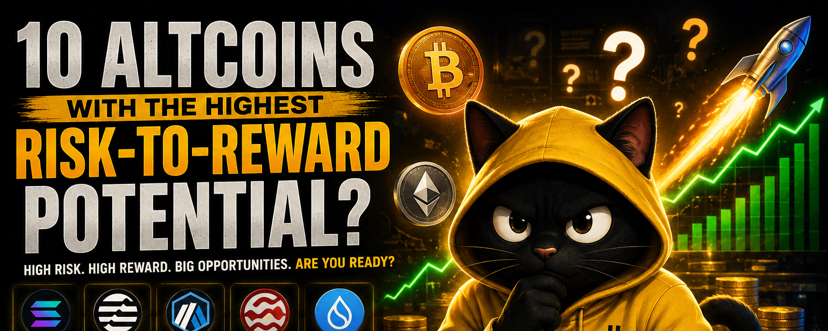
10 qAltcoins With the Highest Risk-to-Reward Potential?10 Altcoins With the Highest Risk-to-Reward Potential
Everyone asks the same question when a bull market begins.$SOL
“Which coin could be the next 100x?”
I think that’s where most investors make their first mistake.
They start by looking for cheap prices.
The market starts by looking for changing expectations.
A coin trading 90% below its all-time high isn’t automatically undervalued.
Sometimes it’s simply where it belongs.
Meanwhile, another project making new highs can still be early if adoption is accelerating faster than the market realizes.$LINK
That’s because price tells you where a coin has been.
Expectations tell you where it could go.
This is why the best risk-to-reward opportunities rarely appear after everyone agrees they’re “good projects.”
They appear while the market is still ignoring them.
Before Video thumbnails call them the next big thing.
Before influencers add them to every watchlist.
Before the narrative becomes obvious.
By then, a large part of the upside has already been priced in.$XRP
The biggest winners of every cycle usually share something in common.
Not the lowest market cap.
Not the cheapest token.
Not the loudest community.
They quietly become more valuable before they become more popular.
Developers keep building.
Users keep arriving.
Liquidity slowly improves.
On-chain activity expands.
Capital begins to accumulate long before attention does.
That’s the sequence that matters.
Most investors chase narratives.
The best investors watch where narratives are forming.
There’s a difference.
One follows headlines.
The other follows behavior.
Of course, higher potential always comes with higher uncertainty.
Some of today’s promising projects won’t survive.
Some will lose momentum.
Others will disappear completely.
That’s why successful investing isn’t about finding the winner.
It’s about building exposure to the few projects capable of changing the market’s expectations.
Because that’s what extraordinary returns really are.
They’re not rewards for buying the cheapest coin.
They’re rewards for recognizing a shift before the crowd recognizes it too.
So when you look at the next ten altcoins…
Don’t ask yourself:
“Which one is the most undervalued?”
Ask yourself:
“Which one is the market still underestimating?”
That’s where the best risk-to-reward opportunities are usually found.
10 qAltcoins With the Highest Risk-to-Reward Potential?
10 Altcoins With the Highest Risk-to-Reward Potential
Everyone asks the same question when a bull market begins.$SOL
“Which coin could be the next 100x?”
I think that’s where most investors make their first mistake.
They start by looking for cheap prices.
The market starts by looking for changing expectations.
A coin trading 90% below its all-time high isn’t automatically undervalued.
Sometimes it’s simply where it belongs.
Meanwhile, another project making new highs can still be early if adoption is accelerating faster than the market realizes.$LINK
That’s because price tells you where a coin has been.
Expectations tell you where it could go.
This is why the best risk-to-reward opportunities rarely appear after everyone agrees they’re “good projects.”
They appear while the market is still ignoring them.
Before Video thumbnails call them the next big thing.
Before influencers add them to every watchlist.
Before the narrative becomes obvious.
By then, a large part of the upside has already been priced in.$XRP
The biggest winners of every cycle usually share something in common.
Not the lowest market cap.
Not the cheapest token.
Not the loudest community.
They quietly become more valuable before they become more popular.
Developers keep building.
Users keep arriving.
Liquidity slowly improves.
On-chain activity expands.
Capital begins to accumulate long before attention does.
That’s the sequence that matters.
Most investors chase narratives.
The best investors watch where narratives are forming.
There’s a difference.
One follows headlines.
The other follows behavior.
Of course, higher potential always comes with higher uncertainty.
Some of today’s promising projects won’t survive.
Some will lose momentum.
Others will disappear completely.
That’s why successful investing isn’t about finding the winner.
It’s about building exposure to the few projects capable of changing the market’s expectations.
Because that’s what extraordinary returns really are.
They’re not rewards for buying the cheapest coin.
They’re rewards for recognizing a shift before the crowd recognizes it too.
So when you look at the next ten altcoins…
Don’t ask yourself:
“Which one is the most undervalued?”
Ask yourself:
“Which one is the market still underestimating?”
That’s where the best risk-to-reward opportunities are usually found.
Everyone asks the same question when a bull market begins.$SOL
“Which coin could be the next 100x?”
I think that’s where most investors make their first mistake.
They start by looking for cheap prices.
The market starts by looking for changing expectations.
A coin trading 90% below its all-time high isn’t automatically undervalued.
Sometimes it’s simply where it belongs.
Meanwhile, another project making new highs can still be early if adoption is accelerating faster than the market realizes.$LINK
That’s because price tells you where a coin has been.
Expectations tell you where it could go.
This is why the best risk-to-reward opportunities rarely appear after everyone agrees they’re “good projects.”
They appear while the market is still ignoring them.
Before Video thumbnails call them the next big thing.
Before influencers add them to every watchlist.
Before the narrative becomes obvious.
By then, a large part of the upside has already been priced in.$XRP
The biggest winners of every cycle usually share something in common.
Not the lowest market cap.
Not the cheapest token.
Not the loudest community.
They quietly become more valuable before they become more popular.
Developers keep building.
Users keep arriving.
Liquidity slowly improves.
On-chain activity expands.
Capital begins to accumulate long before attention does.
That’s the sequence that matters.
Most investors chase narratives.
The best investors watch where narratives are forming.
There’s a difference.
One follows headlines.
The other follows behavior.
Of course, higher potential always comes with higher uncertainty.
Some of today’s promising projects won’t survive.
Some will lose momentum.
Others will disappear completely.
That’s why successful investing isn’t about finding the winner.
It’s about building exposure to the few projects capable of changing the market’s expectations.
Because that’s what extraordinary returns really are.
They’re not rewards for buying the cheapest coin.
They’re rewards for recognizing a shift before the crowd recognizes it too.
So when you look at the next ten altcoins…
Don’t ask yourself:
“Which one is the most undervalued?”
Ask yourself:
“Which one is the market still underestimating?”
That’s where the best risk-to-reward opportunities are usually found.
294

Article
The Trading Mistakes Costing Crypto Investors Millions — And They’re Rarely About the MarketMost traders think they lose money because they made the wrong trade.I think they lose money because they made the right mistake—over and over again.The market doesn’t need a new way to beat you.It simply waits for you to repeat the same behavior.That’s why every cycle creates thousands of new traders…$BTC $ETH $SOL
…and the same old losers.The biggest losses rarely come from a bad chart.They come from a bad reaction.A trader sees a rally and feels they are falling behind.So they buy.Not because the setup improved.Because the emotion became unbearable.Then the market pulls back.Nothing unusual.Nothing abnormal.But now the position feels personal.The stop-loss gets moved.The plan disappears.Hope replaces discipline.And suddenly, what should have been a small loss becomes a portfolio-defining mistake.Most people blame leverage.
I don’t think leverage is the real problem.Leverage doesn’t create bad decisions.It simply makes every bad decision arrive faster.The same is true for stop-losses.The issue isn’t that traders forget to use them.It’s that they stop believing the market can prove them wrong.That’s the moment discipline quietly disappears.One trade becomes an argument with the market.And the market never argues.It simply keeps moving.Perhaps the most expensive mistake of all is confusing activity with progress.
More trades.
More indicators.
More alerts.
More opinions.
None of those guarantee better results.
In fact, professional traders often do the opposite.
They trade less.
Ignore more.
Wait longer.
Because they understand something most people don’t:
The market pays patience far more consistently than it pays prediction.Every cycle creates opportunities.But opportunities only matter if you’re still in the game when they arrive.That’s why the best traders don’t obsess over making the biggest win.They obsess over making sure one mistake never becomes the last trade they’ll ever be able to take.Because in the end…Trading isn’t about finding the perfect setup.It’s about surviving long enough for probability to finally work in your favor.
Trade smarter.
Protect capital first.
The Trading Mistakes Costing Crypto Investors Millions — And They’re Rarely About the Market
Most traders think they lose money because they made the wrong trade.I think they lose money because they made the right mistake—over and over again.The market doesn’t need a new way to beat you.It simply waits for you to repeat the same behavior.That’s why every cycle creates thousands of new traders…$BTC $ETH $SOL
…and the same old losers.The biggest losses rarely come from a bad chart.They come from a bad reaction.A trader sees a rally and feels they are falling behind.So they buy.Not because the setup improved.Because the emotion became unbearable.Then the market pulls back.Nothing unusual.Nothing abnormal.But now the position feels personal.The stop-loss gets moved.The plan disappears.Hope replaces discipline.And suddenly, what should have been a small loss becomes a portfolio-defining mistake.Most people blame leverage.
I don’t think leverage is the real problem.Leverage doesn’t create bad decisions.It simply makes every bad decision arrive faster.The same is true for stop-losses.The issue isn’t that traders forget to use them.It’s that they stop believing the market can prove them wrong.That’s the moment discipline quietly disappears.One trade becomes an argument with the market.And the market never argues.It simply keeps moving.Perhaps the most expensive mistake of all is confusing activity with progress.
More trades.
More indicators.
More alerts.
More opinions.
None of those guarantee better results.
In fact, professional traders often do the opposite.
They trade less.
Ignore more.
Wait longer.
Because they understand something most people don’t:
The market pays patience far more consistently than it pays prediction.Every cycle creates opportunities.But opportunities only matter if you’re still in the game when they arrive.That’s why the best traders don’t obsess over making the biggest win.They obsess over making sure one mistake never becomes the last trade they’ll ever be able to take.Because in the end…Trading isn’t about finding the perfect setup.It’s about surviving long enough for probability to finally work in your favor.
Trade smarter.
Protect capital first.
…and the same old losers.The biggest losses rarely come from a bad chart.They come from a bad reaction.A trader sees a rally and feels they are falling behind.So they buy.Not because the setup improved.Because the emotion became unbearable.Then the market pulls back.Nothing unusual.Nothing abnormal.But now the position feels personal.The stop-loss gets moved.The plan disappears.Hope replaces discipline.And suddenly, what should have been a small loss becomes a portfolio-defining mistake.Most people blame leverage.
I don’t think leverage is the real problem.Leverage doesn’t create bad decisions.It simply makes every bad decision arrive faster.The same is true for stop-losses.The issue isn’t that traders forget to use them.It’s that they stop believing the market can prove them wrong.That’s the moment discipline quietly disappears.One trade becomes an argument with the market.And the market never argues.It simply keeps moving.Perhaps the most expensive mistake of all is confusing activity with progress.
More trades.
More indicators.
More alerts.
More opinions.
None of those guarantee better results.
In fact, professional traders often do the opposite.
They trade less.
Ignore more.
Wait longer.
Because they understand something most people don’t:
The market pays patience far more consistently than it pays prediction.Every cycle creates opportunities.But opportunities only matter if you’re still in the game when they arrive.That’s why the best traders don’t obsess over making the biggest win.They obsess over making sure one mistake never becomes the last trade they’ll ever be able to take.Because in the end…Trading isn’t about finding the perfect setup.It’s about surviving long enough for probability to finally work in your favor.
Trade smarter.
Protect capital first.
172

Article
Is This Really the Last Chance to Buy Bitcoin Before the Next Major Milestone?Every bull market creates one question that dominates the conversation.
“Is this the last chance to buy #Bitcoin this cheap?”
Personally, I think that’s the wrong question.
Because nobody ever knows it’s the “last chance” while they’re living through it.
If they did, there would be no opportunity left.
History has a strange way of making important prices look ordinary.
When Bitcoin traded at $1,000, people waited for $800.
At $10,000, many expected $6,000.
Even after reaching $69,000, countless investors believed another deep collapse would always offer a better entry.
The pattern rarely changes.
The market doesn’t make buying difficult because prices are too high.
It makes buying difficult because uncertainty always feels greatest before the next expansion begins.
That’s what creates opportunity.
Bitcoin’s long-term story has never been built on a single catalyst.
It has been built on the quiet interaction between scarcity, liquidity, and adoption.
The supply keeps slowing.
Institutional access keeps expanding.
Long-term holders continue removing coins from active circulation.
Meanwhile, every new cycle introduces another wave of investors who previously believed Bitcoin was “too risky.”
None of these factors guarantee higher prices tomorrow.
But together, they gradually change the balance between available supply and future demand.
And markets eventually respond to that imbalance.
The biggest mistake investors make is trying to identify the perfect bottom.
In reality, the perfect bottom is only obvious after it has already disappeared.
The better question is not:
“Is this the cheapest Bitcoin I’ll ever see?”
It’s:
“If Bitcoin reaches the next major milestone, will today’s price still look expensive?”
That changes the entire conversation.
Because the investors who build meaningful positions over multiple cycles are rarely the ones who bought the exact bottom.
They’re usually the ones who understood the bigger trend before the crowd finally accepted it.
Maybe this isn’t the last chance.
Maybe it is.
The market won’t tell you today.
It never has.
Trade $BTC here 👇
{future}(BTCUSDT)
Is This Really the Last Chance to Buy Bitcoin Before the Next Major Milestone?
Every bull market creates one question that dominates the conversation.
“Is this the last chance to buy #Bitcoin this cheap?”
Personally, I think that’s the wrong question.
Because nobody ever knows it’s the “last chance” while they’re living through it.
If they did, there would be no opportunity left.
History has a strange way of making important prices look ordinary.
When Bitcoin traded at $1,000, people waited for $800.
At $10,000, many expected $6,000.
Even after reaching $69,000, countless investors believed another deep collapse would always offer a better entry.
The pattern rarely changes.
The market doesn’t make buying difficult because prices are too high.
It makes buying difficult because uncertainty always feels greatest before the next expansion begins.
That’s what creates opportunity.
Bitcoin’s long-term story has never been built on a single catalyst.
It has been built on the quiet interaction between scarcity, liquidity, and adoption.
The supply keeps slowing.
Institutional access keeps expanding.
Long-term holders continue removing coins from active circulation.
Meanwhile, every new cycle introduces another wave of investors who previously believed Bitcoin was “too risky.”
None of these factors guarantee higher prices tomorrow.
But together, they gradually change the balance between available supply and future demand.
And markets eventually respond to that imbalance.
The biggest mistake investors make is trying to identify the perfect bottom.
In reality, the perfect bottom is only obvious after it has already disappeared.
The better question is not:
“Is this the cheapest Bitcoin I’ll ever see?”
It’s:
“If Bitcoin reaches the next major milestone, will today’s price still look expensive?”
That changes the entire conversation.
Because the investors who build meaningful positions over multiple cycles are rarely the ones who bought the exact bottom.
They’re usually the ones who understood the bigger trend before the crowd finally accepted it.
Maybe this isn’t the last chance.
Maybe it is.
The market won’t tell you today.
It never has.
Trade $BTC here 👇
“Is this the last chance to buy #Bitcoin this cheap?”
Personally, I think that’s the wrong question.
Because nobody ever knows it’s the “last chance” while they’re living through it.
If they did, there would be no opportunity left.
History has a strange way of making important prices look ordinary.
When Bitcoin traded at $1,000, people waited for $800.
At $10,000, many expected $6,000.
Even after reaching $69,000, countless investors believed another deep collapse would always offer a better entry.
The pattern rarely changes.
The market doesn’t make buying difficult because prices are too high.
It makes buying difficult because uncertainty always feels greatest before the next expansion begins.
That’s what creates opportunity.
Bitcoin’s long-term story has never been built on a single catalyst.
It has been built on the quiet interaction between scarcity, liquidity, and adoption.
The supply keeps slowing.
Institutional access keeps expanding.
Long-term holders continue removing coins from active circulation.
Meanwhile, every new cycle introduces another wave of investors who previously believed Bitcoin was “too risky.”
None of these factors guarantee higher prices tomorrow.
But together, they gradually change the balance between available supply and future demand.
And markets eventually respond to that imbalance.
The biggest mistake investors make is trying to identify the perfect bottom.
In reality, the perfect bottom is only obvious after it has already disappeared.
The better question is not:
“Is this the cheapest Bitcoin I’ll ever see?”
It’s:
“If Bitcoin reaches the next major milestone, will today’s price still look expensive?”
That changes the entire conversation.
Because the investors who build meaningful positions over multiple cycles are rarely the ones who bought the exact bottom.
They’re usually the ones who understood the bigger trend before the crowd finally accepted it.
Maybe this isn’t the last chance.
Maybe it is.
The market won’t tell you today.
It never has.
Trade $BTC here 👇
190

Article
Why BNB Could Quietly Become One of the Biggest Winners of This CycleMost investors think #BNB rises because Binance is the world’s largest exchange.
I don’t.
I think BNB rises because it sits at the center of where crypto activity becomes economic activity.
That’s a very different idea.
Every market cycle has one asset that quietly benefits from almost everything happening around it.
Not because it’s the loudest project.
Because it captures value every time the ecosystem grows.
BNB has gradually become that asset.
Every new trader paying fees.
Every Launchpool participant.
Every token launch.
Every on-chain transaction.
Every new application built on BNB Chain.
Each one may seem insignificant on its own.
Together, they create something much more powerful:
constant demand that doesn’t depend on hype alone.
Most tokens need attention before they can appreciate.
BNB often benefits simply because people are using the ecosystem.
That’s an advantage very few large-cap assets possess.
There is another dynamic many investors underestimate.
Supply is slowly shrinking.
Every quarterly burn permanently removes BNB from circulation.
Demand doesn’t need to explode overnight.
Sometimes all it takes is a growing ecosystem meeting a gradually shrinking supply.
Markets have rewarded that equation for decades.
Then comes the liquidity cycle.
Bitcoin usually absorbs the first wave of institutional capital.
But once confidence expands beyond BTC, money starts looking for assets that combine deep liquidity, real utility, and proven adoption.
That’s where BNB quietly enters the conversation.
Not because it promises the highest return.
Because it already has one of the strongest foundations in the industry.
The biggest mistake investors make is comparing BNB to other exchange tokens.
BNB stopped being just an exchange token years ago.
Today it’s closer to the economic layer of one of crypto’s largest ecosystems.
And ecosystems tend to become more valuable as activity compounds.
Will BNB be the best-performing asset this cycle?
No one knows.
But I don’t think that’s the right question.
The better question is:
If millions of users continue interacting with the Binance ecosystem every day… who captures the value created by all that activity?
More often than not…
The answer keeps leading back to BNB.
Trade $BNB here 👇
{future}(BNBUSDT)
Why BNB Could Quietly Become One of the Biggest Winners of This Cycle
Most investors think #BNB rises because Binance is the world’s largest exchange.
I don’t.
I think BNB rises because it sits at the center of where crypto activity becomes economic activity.
That’s a very different idea.
Every market cycle has one asset that quietly benefits from almost everything happening around it.
Not because it’s the loudest project.
Because it captures value every time the ecosystem grows.
BNB has gradually become that asset.
Every new trader paying fees.
Every Launchpool participant.
Every token launch.
Every on-chain transaction.
Every new application built on BNB Chain.
Each one may seem insignificant on its own.
Together, they create something much more powerful:
constant demand that doesn’t depend on hype alone.
Most tokens need attention before they can appreciate.
BNB often benefits simply because people are using the ecosystem.
That’s an advantage very few large-cap assets possess.
There is another dynamic many investors underestimate.
Supply is slowly shrinking.
Every quarterly burn permanently removes BNB from circulation.
Demand doesn’t need to explode overnight.
Sometimes all it takes is a growing ecosystem meeting a gradually shrinking supply.
Markets have rewarded that equation for decades.
Then comes the liquidity cycle.
Bitcoin usually absorbs the first wave of institutional capital.
But once confidence expands beyond BTC, money starts looking for assets that combine deep liquidity, real utility, and proven adoption.
That’s where BNB quietly enters the conversation.
Not because it promises the highest return.
Because it already has one of the strongest foundations in the industry.
The biggest mistake investors make is comparing BNB to other exchange tokens.
BNB stopped being just an exchange token years ago.
Today it’s closer to the economic layer of one of crypto’s largest ecosystems.
And ecosystems tend to become more valuable as activity compounds.
Will BNB be the best-performing asset this cycle?
No one knows.
But I don’t think that’s the right question.
The better question is:
If millions of users continue interacting with the Binance ecosystem every day… who captures the value created by all that activity?
More often than not…
The answer keeps leading back to BNB.
Trade $BNB here 👇
I don’t.
I think BNB rises because it sits at the center of where crypto activity becomes economic activity.
That’s a very different idea.
Every market cycle has one asset that quietly benefits from almost everything happening around it.
Not because it’s the loudest project.
Because it captures value every time the ecosystem grows.
BNB has gradually become that asset.
Every new trader paying fees.
Every Launchpool participant.
Every token launch.
Every on-chain transaction.
Every new application built on BNB Chain.
Each one may seem insignificant on its own.
Together, they create something much more powerful:
constant demand that doesn’t depend on hype alone.
Most tokens need attention before they can appreciate.
BNB often benefits simply because people are using the ecosystem.
That’s an advantage very few large-cap assets possess.
There is another dynamic many investors underestimate.
Supply is slowly shrinking.
Every quarterly burn permanently removes BNB from circulation.
Demand doesn’t need to explode overnight.
Sometimes all it takes is a growing ecosystem meeting a gradually shrinking supply.
Markets have rewarded that equation for decades.
Then comes the liquidity cycle.
Bitcoin usually absorbs the first wave of institutional capital.
But once confidence expands beyond BTC, money starts looking for assets that combine deep liquidity, real utility, and proven adoption.
That’s where BNB quietly enters the conversation.
Not because it promises the highest return.
Because it already has one of the strongest foundations in the industry.
The biggest mistake investors make is comparing BNB to other exchange tokens.
BNB stopped being just an exchange token years ago.
Today it’s closer to the economic layer of one of crypto’s largest ecosystems.
And ecosystems tend to become more valuable as activity compounds.
Will BNB be the best-performing asset this cycle?
No one knows.
But I don’t think that’s the right question.
The better question is:
If millions of users continue interacting with the Binance ecosystem every day… who captures the value created by all that activity?
More often than not…
The answer keeps leading back to BNB.
Trade $BNB here 👇
115
Article
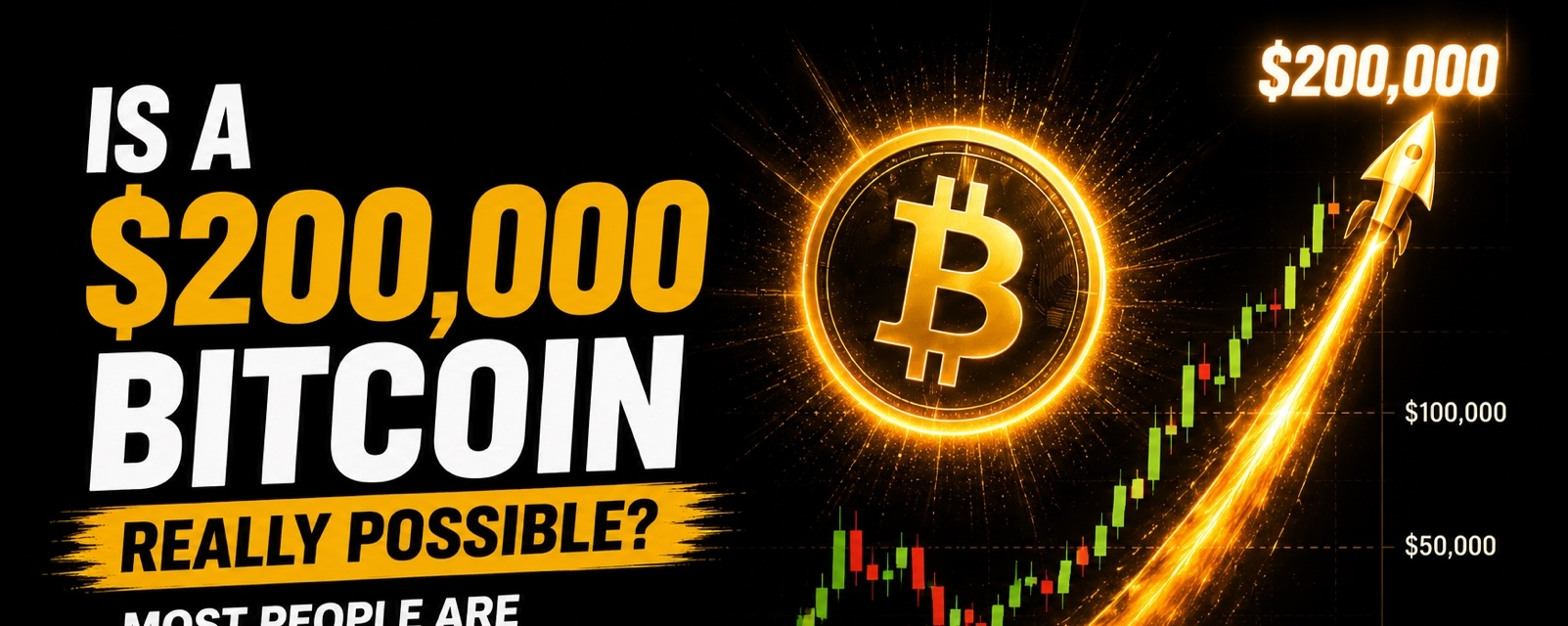
Is a $200,000 Bitcoin Really Possible? Most People Are Looking at the Wrong Number.Whenever Bitcoin starts another major cycle, the same debate returns.
“Can #BTC really reach $200,000?”
Personally, I don’t think that’s the most interesting question.
The market has never struggled with big numbers.
It has always struggled with disbelief.
Think back to every previous cycle.
There was a time when $1,000 sounded impossible.
Then $10,000 felt unrealistic.
Later, people laughed at the idea of $69,000.
Each target looked irrational—until liquidity, adoption, and market psychology quietly made it normal.
That is how every major Bitcoin move begins.
Not with certainty.
With skepticism.
The reason investors keep talking about $200K isn’t because the number itself matters.
It matters because it forces us to ask a deeper question:
Has Bitcoin’s network become valuable enough to justify another step change in market capitalization?
That’s a very different discussion.
Supply is no longer the mystery.
We already know Bitcoin will never exceed 21 million coins.
The real variable is demand.
And demand is changing.
Institutional capital is no longer watching from the sidelines.
Spot ETFs have transformed Bitcoin from an asset that institutions could own into one they can buy with familiar infrastructure.
At the same time, exchange balances continue to trend lower as more coins move into long-term custody.
Less liquid supply.
More patient holders.
Growing access.
That’s not a price prediction.
That’s a structural shift.
History also teaches something many investors overlook.
Bitcoin doesn’t climb because everyone suddenly agrees it’s worth more.
It climbs because the market slowly runs out of people willing to sell.
Price is simply the result of that imbalance.
Could #bitcoin reach $200,000?
Absolutely.
Could it fail to get there this cycle?
Also possible.
Because markets don’t move according to headlines.
They move according to liquidity, positioning, and the willingness of capital to keep flowing in after the crowd starts believing.
Perhaps that’s the biggest mistake investors make.
They spend too much time asking:
“Is $200K realistic?”
Instead of asking:
“What would need to happen for the market to make $200K feel ordinary?”
History suggests that every all-time high begins the same way.
First…
It sounds impossible.
Then…
It becomes inevitable.
And finally…
People wonder why they ever doubted it.
Trade $BTC here 👇
{future}(BTCUSDT)
Is a $200,000 Bitcoin Really Possible? Most People Are Looking at the Wrong Number.
Whenever Bitcoin starts another major cycle, the same debate returns.
“Can #BTC really reach $200,000?”
Personally, I don’t think that’s the most interesting question.
The market has never struggled with big numbers.
It has always struggled with disbelief.
Think back to every previous cycle.
There was a time when $1,000 sounded impossible.
Then $10,000 felt unrealistic.
Later, people laughed at the idea of $69,000.
Each target looked irrational—until liquidity, adoption, and market psychology quietly made it normal.
That is how every major Bitcoin move begins.
Not with certainty.
With skepticism.
The reason investors keep talking about $200K isn’t because the number itself matters.
It matters because it forces us to ask a deeper question:
Has Bitcoin’s network become valuable enough to justify another step change in market capitalization?
That’s a very different discussion.
Supply is no longer the mystery.
We already know Bitcoin will never exceed 21 million coins.
The real variable is demand.
And demand is changing.
Institutional capital is no longer watching from the sidelines.
Spot ETFs have transformed Bitcoin from an asset that institutions could own into one they can buy with familiar infrastructure.
At the same time, exchange balances continue to trend lower as more coins move into long-term custody.
Less liquid supply.
More patient holders.
Growing access.
That’s not a price prediction.
That’s a structural shift.
History also teaches something many investors overlook.
Bitcoin doesn’t climb because everyone suddenly agrees it’s worth more.
It climbs because the market slowly runs out of people willing to sell.
Price is simply the result of that imbalance.
Could #bitcoin reach $200,000?
Absolutely.
Could it fail to get there this cycle?
Also possible.
Because markets don’t move according to headlines.
They move according to liquidity, positioning, and the willingness of capital to keep flowing in after the crowd starts believing.
Perhaps that’s the biggest mistake investors make.
They spend too much time asking:
“Is $200K realistic?”
Instead of asking:
“What would need to happen for the market to make $200K feel ordinary?”
History suggests that every all-time high begins the same way.
First…
It sounds impossible.
Then…
It becomes inevitable.
And finally…
People wonder why they ever doubted it.
Trade $BTC here 👇
“Can #BTC really reach $200,000?”
Personally, I don’t think that’s the most interesting question.
The market has never struggled with big numbers.
It has always struggled with disbelief.
Think back to every previous cycle.
There was a time when $1,000 sounded impossible.
Then $10,000 felt unrealistic.
Later, people laughed at the idea of $69,000.
Each target looked irrational—until liquidity, adoption, and market psychology quietly made it normal.
That is how every major Bitcoin move begins.
Not with certainty.
With skepticism.
The reason investors keep talking about $200K isn’t because the number itself matters.
It matters because it forces us to ask a deeper question:
Has Bitcoin’s network become valuable enough to justify another step change in market capitalization?
That’s a very different discussion.
Supply is no longer the mystery.
We already know Bitcoin will never exceed 21 million coins.
The real variable is demand.
And demand is changing.
Institutional capital is no longer watching from the sidelines.
Spot ETFs have transformed Bitcoin from an asset that institutions could own into one they can buy with familiar infrastructure.
At the same time, exchange balances continue to trend lower as more coins move into long-term custody.
Less liquid supply.
More patient holders.
Growing access.
That’s not a price prediction.
That’s a structural shift.
History also teaches something many investors overlook.
Bitcoin doesn’t climb because everyone suddenly agrees it’s worth more.
It climbs because the market slowly runs out of people willing to sell.
Price is simply the result of that imbalance.
Could #bitcoin reach $200,000?
Absolutely.
Could it fail to get there this cycle?
Also possible.
Because markets don’t move according to headlines.
They move according to liquidity, positioning, and the willingness of capital to keep flowing in after the crowd starts believing.
Perhaps that’s the biggest mistake investors make.
They spend too much time asking:
“Is $200K realistic?”
Instead of asking:
“What would need to happen for the market to make $200K feel ordinary?”
History suggests that every all-time high begins the same way.
First…
It sounds impossible.
Then…
It becomes inevitable.
And finally…
People wonder why they ever doubted it.
Trade $BTC here 👇
1
223

Article
Can Ethereum Really Outperform Bitcoin This Bull Cycle?Most investors are asking the wrong question.
They ask whether #Ethereum will outperform Bitcoin.
I think the better question is:
When does the market decide Bitcoin is no longer enough?
Every bull market begins the same way.
Liquidity doesn’t immediately chase the highest return.
It chases the highest confidence.
That’s why #Bitcoin almost always moves first.
It isn’t because Bitcoin grows faster.
It’s because capital always seeks certainty before it seeks opportunity.
Institutional money understands this.
Large funds rarely begin a new cycle by taking maximum risk. They build exposure through the asset with the deepest liquidity, the strongest brand, and the most established market structure.
That asset is still Bitcoin.
But bull markets don’t end where they begin.
As confidence spreads and volatility becomes opportunity instead of fear, capital starts moving further along the risk curve.
This is where Ethereum enters the conversation.
Not because it’s trying to replace Bitcoin.
Because it represents something Bitcoin was never designed to become.
Bitcoin stores value.
Ethereum creates economic activity.
Every stablecoin settlement, every DeFi protocol, every tokenized asset, every Layer-2 transaction expands the network that $ETH sits at the center of.
{future}(ETHUSDT)
The more crypto becomes an economy instead of simply an investment, the more Ethereum benefits from that transition.
There is another shift many investors underestimate.
Ethereum isn’t just attracting developers anymore.
It’s beginning to attract institutions for a different reason.
Spot ETFs, staking yields, tokenization, and the growing interest from traditional finance are changing how professional capital views ETH.
Not as a speculative altcoin…
But as digital infrastructure.
And infrastructure tends to become more valuable as adoption compounds.
Does that mean Ethereum will outperform Bitcoin?
Not necessarily.
Because performance has never been about which project is “better.”
It’s about where liquidity wants to go next.
Bitcoin usually wins when the market is searching for safety.
Ethereum often accelerates when the market starts pricing in growth.
Different assets.
Different jobs.
The biggest mistake investors make is treating this as a competition between two blockchains.
It isn’t.
It’s a story about capital rotation.
Every cycle follows its own rhythm.
Liquidity enters through conviction.
It expands through confidence.
And it often finishes by chasing opportunity.
Understanding where the market is in that sequence matters far more than trying to guess whether ETH or $BTC will finish with the bigger percentage gain.
{future}(BTCUSDT)
Because the best investors don’t ask:
“Which coin will outperform?”
They ask:
“Where is the next wave of capital most likely to go?”
That’s the question the market rewards.
Can Ethereum Really Outperform Bitcoin This Bull Cycle?
Most investors are asking the wrong question.
They ask whether #Ethereum will outperform Bitcoin.
I think the better question is:
When does the market decide Bitcoin is no longer enough?
Every bull market begins the same way.
Liquidity doesn’t immediately chase the highest return.
It chases the highest confidence.
That’s why #Bitcoin almost always moves first.
It isn’t because Bitcoin grows faster.
It’s because capital always seeks certainty before it seeks opportunity.
Institutional money understands this.
Large funds rarely begin a new cycle by taking maximum risk. They build exposure through the asset with the deepest liquidity, the strongest brand, and the most established market structure.
That asset is still Bitcoin.
But bull markets don’t end where they begin.
As confidence spreads and volatility becomes opportunity instead of fear, capital starts moving further along the risk curve.
This is where Ethereum enters the conversation.
Not because it’s trying to replace Bitcoin.
Because it represents something Bitcoin was never designed to become.
Bitcoin stores value.
Ethereum creates economic activity.
Every stablecoin settlement, every DeFi protocol, every tokenized asset, every Layer-2 transaction expands the network that $ETH sits at the center of.
The more crypto becomes an economy instead of simply an investment, the more Ethereum benefits from that transition.
There is another shift many investors underestimate.
Ethereum isn’t just attracting developers anymore.
It’s beginning to attract institutions for a different reason.
Spot ETFs, staking yields, tokenization, and the growing interest from traditional finance are changing how professional capital views ETH.
Not as a speculative altcoin…
But as digital infrastructure.
And infrastructure tends to become more valuable as adoption compounds.
Does that mean Ethereum will outperform Bitcoin?
Not necessarily.
Because performance has never been about which project is “better.”
It’s about where liquidity wants to go next.
Bitcoin usually wins when the market is searching for safety.
Ethereum often accelerates when the market starts pricing in growth.
Different assets.
Different jobs.
The biggest mistake investors make is treating this as a competition between two blockchains.
It isn’t.
It’s a story about capital rotation.
Every cycle follows its own rhythm.
Liquidity enters through conviction.
It expands through confidence.
And it often finishes by chasing opportunity.
Understanding where the market is in that sequence matters far more than trying to guess whether ETH or $BTC will finish with the bigger percentage gain.
Because the best investors don’t ask:
“Which coin will outperform?”
They ask:
“Where is the next wave of capital most likely to go?”
That’s the question the market rewards.
They ask whether #Ethereum will outperform Bitcoin.
I think the better question is:
When does the market decide Bitcoin is no longer enough?
Every bull market begins the same way.
Liquidity doesn’t immediately chase the highest return.
It chases the highest confidence.
That’s why #Bitcoin almost always moves first.
It isn’t because Bitcoin grows faster.
It’s because capital always seeks certainty before it seeks opportunity.
Institutional money understands this.
Large funds rarely begin a new cycle by taking maximum risk. They build exposure through the asset with the deepest liquidity, the strongest brand, and the most established market structure.
That asset is still Bitcoin.
But bull markets don’t end where they begin.
As confidence spreads and volatility becomes opportunity instead of fear, capital starts moving further along the risk curve.
This is where Ethereum enters the conversation.
Not because it’s trying to replace Bitcoin.
Because it represents something Bitcoin was never designed to become.
Bitcoin stores value.
Ethereum creates economic activity.
Every stablecoin settlement, every DeFi protocol, every tokenized asset, every Layer-2 transaction expands the network that $ETH sits at the center of.
The more crypto becomes an economy instead of simply an investment, the more Ethereum benefits from that transition.
There is another shift many investors underestimate.
Ethereum isn’t just attracting developers anymore.
It’s beginning to attract institutions for a different reason.
Spot ETFs, staking yields, tokenization, and the growing interest from traditional finance are changing how professional capital views ETH.
Not as a speculative altcoin…
But as digital infrastructure.
And infrastructure tends to become more valuable as adoption compounds.
Does that mean Ethereum will outperform Bitcoin?
Not necessarily.
Because performance has never been about which project is “better.”
It’s about where liquidity wants to go next.
Bitcoin usually wins when the market is searching for safety.
Ethereum often accelerates when the market starts pricing in growth.
Different assets.
Different jobs.
The biggest mistake investors make is treating this as a competition between two blockchains.
It isn’t.
It’s a story about capital rotation.
Every cycle follows its own rhythm.
Liquidity enters through conviction.
It expands through confidence.
And it often finishes by chasing opportunity.
Understanding where the market is in that sequence matters far more than trying to guess whether ETH or $BTC will finish with the bigger percentage gain.
Because the best investors don’t ask:
“Which coin will outperform?”
They ask:
“Where is the next wave of capital most likely to go?”
That’s the question the market rewards.
1
209
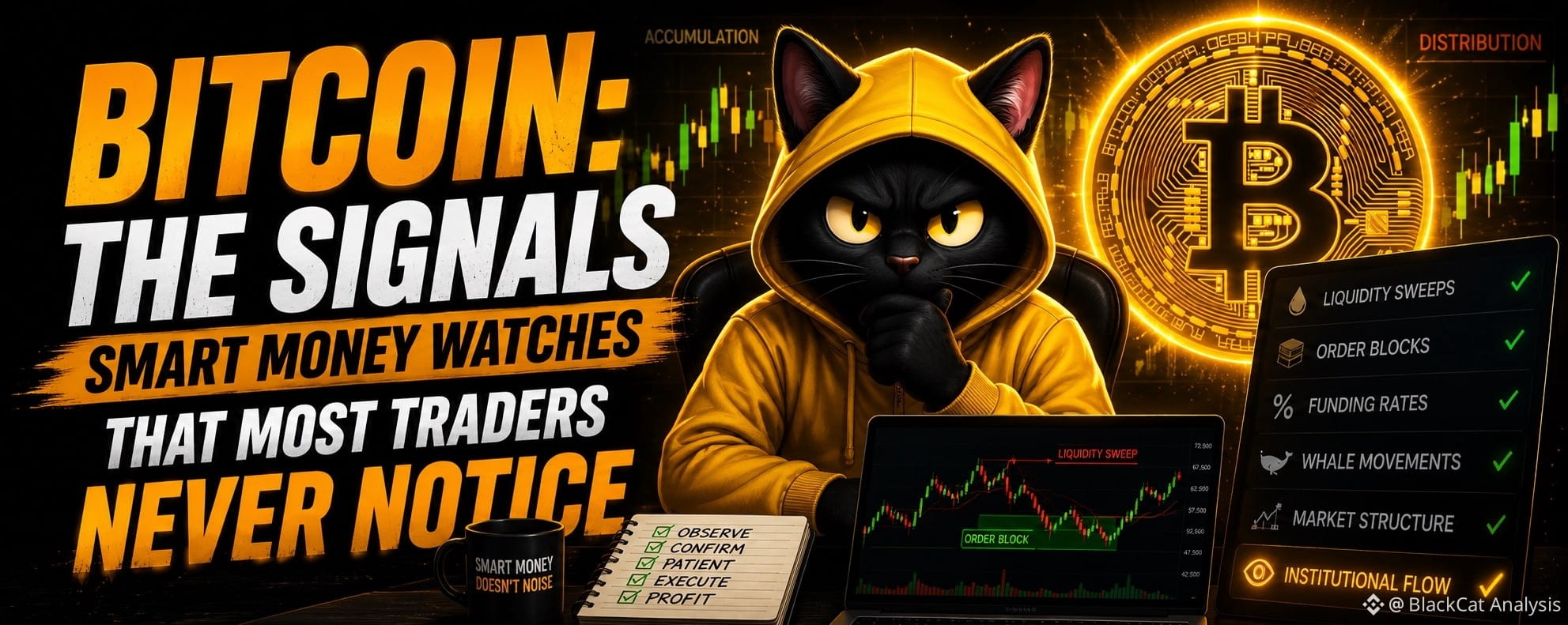
Article
Bitcoin: The Signals Smart Money Watches That Most Traders Never NoticeMost retail traders spend their day watching candles.
Smart money spends its time watching people.
That’s the first difference.
Price is the result.
Positioning is the cause.
Every major #Bitcoin move begins long before it appears on the chart.
It begins with capital quietly changing behavior.
That’s why I rarely ask where Bitcoin is trading today.
I ask what the largest participants are doing while everyone else is watching the price.
One of the first places I look is on-chain activity.
Not because on-chain predicts the future.
But because it reveals intent.
When large amounts of $BTC
{future}(BTCUSDT)
leave exchanges, the market isn’t simply moving coins.
It’s changing liquidity.
Coins sitting on exchanges are available to be sold.
Coins moving into cold storage are becoming harder to buy back.
That difference matters much more than most people realize.
The second signal is institutional positioning.
Most traders only notice institutions after the headlines appear.
By then, the market has usually moved.
The better question isn’t:
“Did institutions buy?”
It’s:
“Are they still buying while retail is arguing?”
That tells a very different story.
Then comes something even more important:
Long-term holders.
Bull markets don’t begin because everyone suddenly becomes bullish.
They begin because the people who understand the cycle simply refuse to sell.
Price eventually follows conviction.
Not the other way around.
Liquidity is another piece most traders misunderstand.
They think liquidity tells them where price will stop.
I think liquidity tells us where price has a reason to travel.
Markets don’t chase candles.
They chase orders.
Finally…
Macro.
Not because macro predicts Bitcoin.
Because macro changes the price of liquidity itself.
When capital becomes cheaper, risk expands.
When liquidity contracts, everything suddenly becomes more difficult.
Bitcoin doesn’t exist outside the financial system.
It reacts to it.
Perhaps that’s the biggest lesson.
Smart money isn’t smarter because it has better indicators.
It’s smarter because it spends less time asking:
“Where is price going?”
And much more time asking:
“Where is capital quietly moving before price reacts?”
That is the difference.
Retail follows candles.
Professionals follow capital.
And over time…
Capital usually wins.
Bitcoin: The Signals Smart Money Watches That Most Traders Never Notice
Most retail traders spend their day watching candles.
Smart money spends its time watching people.
That’s the first difference.
Price is the result.
Positioning is the cause.
Every major #Bitcoin move begins long before it appears on the chart.
It begins with capital quietly changing behavior.
That’s why I rarely ask where Bitcoin is trading today.
I ask what the largest participants are doing while everyone else is watching the price.
One of the first places I look is on-chain activity.
Not because on-chain predicts the future.
But because it reveals intent.
When large amounts of $BTC
leave exchanges, the market isn’t simply moving coins.
It’s changing liquidity.
Coins sitting on exchanges are available to be sold.
Coins moving into cold storage are becoming harder to buy back.
That difference matters much more than most people realize.
The second signal is institutional positioning.
Most traders only notice institutions after the headlines appear.
By then, the market has usually moved.
The better question isn’t:
“Did institutions buy?”
It’s:
“Are they still buying while retail is arguing?”
That tells a very different story.
Then comes something even more important:
Long-term holders.
Bull markets don’t begin because everyone suddenly becomes bullish.
They begin because the people who understand the cycle simply refuse to sell.
Price eventually follows conviction.
Not the other way around.
Liquidity is another piece most traders misunderstand.
They think liquidity tells them where price will stop.
I think liquidity tells us where price has a reason to travel.
Markets don’t chase candles.
They chase orders.
Finally…
Macro.
Not because macro predicts Bitcoin.
Because macro changes the price of liquidity itself.
When capital becomes cheaper, risk expands.
When liquidity contracts, everything suddenly becomes more difficult.
Bitcoin doesn’t exist outside the financial system.
It reacts to it.
Perhaps that’s the biggest lesson.
Smart money isn’t smarter because it has better indicators.
It’s smarter because it spends less time asking:
“Where is price going?”
And much more time asking:
“Where is capital quietly moving before price reacts?”
That is the difference.
Retail follows candles.
Professionals follow capital.
And over time…
Capital usually wins.
Smart money spends its time watching people.
That’s the first difference.
Price is the result.
Positioning is the cause.
Every major #Bitcoin move begins long before it appears on the chart.
It begins with capital quietly changing behavior.
That’s why I rarely ask where Bitcoin is trading today.
I ask what the largest participants are doing while everyone else is watching the price.
One of the first places I look is on-chain activity.
Not because on-chain predicts the future.
But because it reveals intent.
When large amounts of $BTC
leave exchanges, the market isn’t simply moving coins.
It’s changing liquidity.
Coins sitting on exchanges are available to be sold.
Coins moving into cold storage are becoming harder to buy back.
That difference matters much more than most people realize.
The second signal is institutional positioning.
Most traders only notice institutions after the headlines appear.
By then, the market has usually moved.
The better question isn’t:
“Did institutions buy?”
It’s:
“Are they still buying while retail is arguing?”
That tells a very different story.
Then comes something even more important:
Long-term holders.
Bull markets don’t begin because everyone suddenly becomes bullish.
They begin because the people who understand the cycle simply refuse to sell.
Price eventually follows conviction.
Not the other way around.
Liquidity is another piece most traders misunderstand.
They think liquidity tells them where price will stop.
I think liquidity tells us where price has a reason to travel.
Markets don’t chase candles.
They chase orders.
Finally…
Macro.
Not because macro predicts Bitcoin.
Because macro changes the price of liquidity itself.
When capital becomes cheaper, risk expands.
When liquidity contracts, everything suddenly becomes more difficult.
Bitcoin doesn’t exist outside the financial system.
It reacts to it.
Perhaps that’s the biggest lesson.
Smart money isn’t smarter because it has better indicators.
It’s smarter because it spends less time asking:
“Where is price going?”
And much more time asking:
“Where is capital quietly moving before price reacts?”
That is the difference.
Retail follows candles.
Professionals follow capital.
And over time…
Capital usually wins.
252

Article
ETH vs SOL: Most Investors Are Asking the Wrong Question.Every bull market eventually turns this into a debate.
Ethereum or #Solana ?
Which one has more upside?
But after watching several market cycles, I’ve come to believe that’s the wrong question.
The real question isn’t which coin is better.
It’s which type of liquidity the market is rewarding.
Bitcoin usually attracts the first wave of capital.
When institutions step into crypto, they rarely begin by chasing narratives. They buy certainty before they buy opportunity.
#Ethereum often becomes the second destination.
Not because it’s “cheaper” than Bitcoin.
Because it sits at the center of the financial infrastructure being built on-chain. Stablecoins, tokenization, DeFi, Layer 2s—much of crypto’s economic activity still flows through Ethereum in one way or another.
But bull markets don’t stop there.
Eventually, capital starts searching for higher beta.
That’s where Solana changes the conversation.
SOL isn’t trying to become another Ethereum.
It’s competing for something completely different:
attention.
Fast execution.
Low fees.
Consumer applications.
Memecoins.
Gaming.
Social.
Everything that thrives when speculation returns.
That’s why Ethereum and Solana shouldn’t be viewed as rivals.
They’re different stages of the same capital rotation.
Ethereum tends to benefit when investors are looking for quality.
Solana tends to outperform when investors start looking for acceleration.
One captures confidence.
The other captures momentum.
And markets need both.
That’s why I don’t spend much time asking which one will win.
Because history suggests the answer changes depending on where we are in the cycle.
Early cycle?
Liquidity often seeks safety.
Later cycle?
Liquidity begins chasing performance.
That’s when percentage returns start looking very different.
Perhaps the biggest mistake investors make is treating crypto like a competition between projects.
It rarely is.
It’s a competition between narratives.
Between liquidity.
Between where capital wants to go next.
So instead of asking…
“$ETH or $SOL ?”
I prefer asking…
“Where is the next wave of liquidity likely to land?”
Because once you understand that…
The market starts looking completely different.
ETH vs SOL: Most Investors Are Asking the Wrong Question.
Every bull market eventually turns this into a debate.
Ethereum or #Solana ?
Which one has more upside?
But after watching several market cycles, I’ve come to believe that’s the wrong question.
The real question isn’t which coin is better.
It’s which type of liquidity the market is rewarding.
Bitcoin usually attracts the first wave of capital.
When institutions step into crypto, they rarely begin by chasing narratives. They buy certainty before they buy opportunity.
#Ethereum often becomes the second destination.
Not because it’s “cheaper” than Bitcoin.
Because it sits at the center of the financial infrastructure being built on-chain. Stablecoins, tokenization, DeFi, Layer 2s—much of crypto’s economic activity still flows through Ethereum in one way or another.
But bull markets don’t stop there.
Eventually, capital starts searching for higher beta.
That’s where Solana changes the conversation.
SOL isn’t trying to become another Ethereum.
It’s competing for something completely different:
attention.
Fast execution.
Low fees.
Consumer applications.
Memecoins.
Gaming.
Social.
Everything that thrives when speculation returns.
That’s why Ethereum and Solana shouldn’t be viewed as rivals.
They’re different stages of the same capital rotation.
Ethereum tends to benefit when investors are looking for quality.
Solana tends to outperform when investors start looking for acceleration.
One captures confidence.
The other captures momentum.
And markets need both.
That’s why I don’t spend much time asking which one will win.
Because history suggests the answer changes depending on where we are in the cycle.
Early cycle?
Liquidity often seeks safety.
Later cycle?
Liquidity begins chasing performance.
That’s when percentage returns start looking very different.
Perhaps the biggest mistake investors make is treating crypto like a competition between projects.
It rarely is.
It’s a competition between narratives.
Between liquidity.
Between where capital wants to go next.
So instead of asking…
“$ETH or $SOL ?”
I prefer asking…
“Where is the next wave of liquidity likely to land?”
Because once you understand that…
The market starts looking completely different.
Ethereum or #Solana ?
Which one has more upside?
But after watching several market cycles, I’ve come to believe that’s the wrong question.
The real question isn’t which coin is better.
It’s which type of liquidity the market is rewarding.
Bitcoin usually attracts the first wave of capital.
When institutions step into crypto, they rarely begin by chasing narratives. They buy certainty before they buy opportunity.
#Ethereum often becomes the second destination.
Not because it’s “cheaper” than Bitcoin.
Because it sits at the center of the financial infrastructure being built on-chain. Stablecoins, tokenization, DeFi, Layer 2s—much of crypto’s economic activity still flows through Ethereum in one way or another.
But bull markets don’t stop there.
Eventually, capital starts searching for higher beta.
That’s where Solana changes the conversation.
SOL isn’t trying to become another Ethereum.
It’s competing for something completely different:
attention.
Fast execution.
Low fees.
Consumer applications.
Memecoins.
Gaming.
Social.
Everything that thrives when speculation returns.
That’s why Ethereum and Solana shouldn’t be viewed as rivals.
They’re different stages of the same capital rotation.
Ethereum tends to benefit when investors are looking for quality.
Solana tends to outperform when investors start looking for acceleration.
One captures confidence.
The other captures momentum.
And markets need both.
That’s why I don’t spend much time asking which one will win.
Because history suggests the answer changes depending on where we are in the cycle.
Early cycle?
Liquidity often seeks safety.
Later cycle?
Liquidity begins chasing performance.
That’s when percentage returns start looking very different.
Perhaps the biggest mistake investors make is treating crypto like a competition between projects.
It rarely is.
It’s a competition between narratives.
Between liquidity.
Between where capital wants to go next.
So instead of asking…
“$ETH or $SOL ?”
I prefer asking…
“Where is the next wave of liquidity likely to land?”
Because once you understand that…
The market starts looking completely different.
598
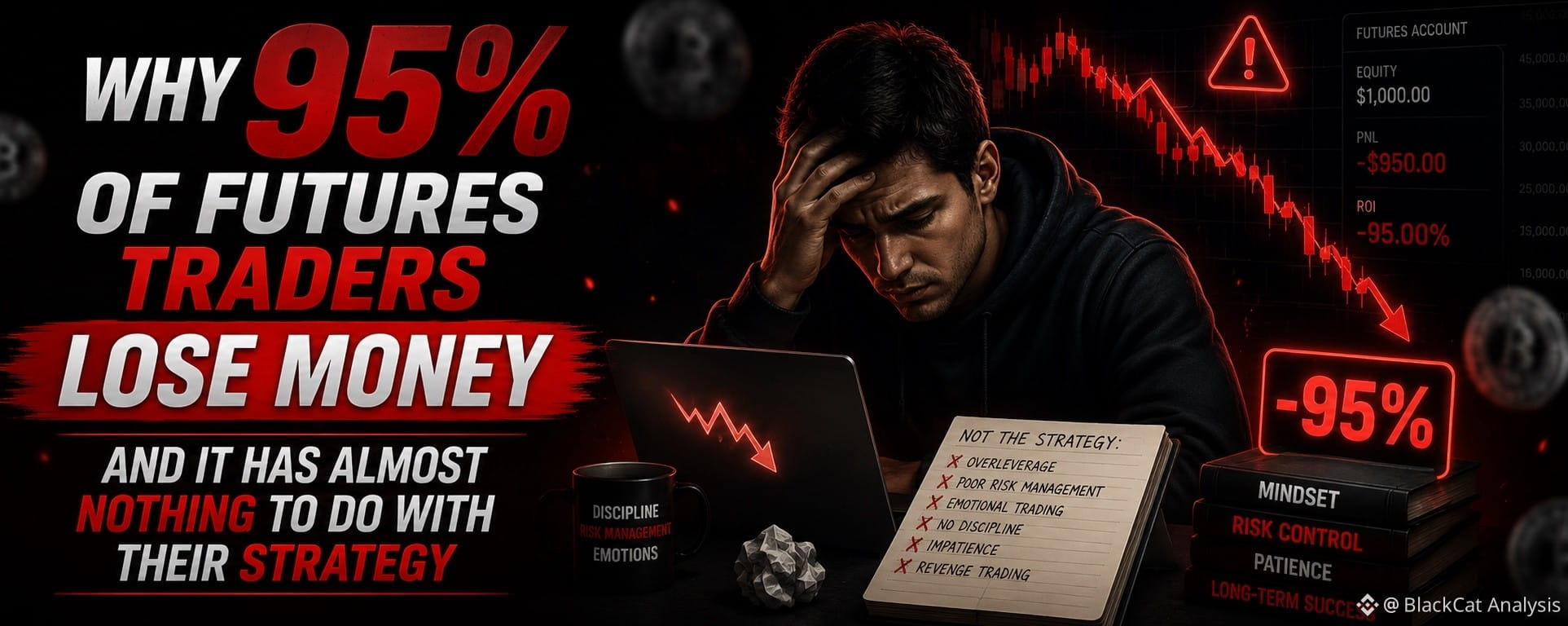
Article
Why 95% of Futures Traders Lose Money — And It Has Almost Nothing to Do With Their Strategy$BTC $ETH $SOL
Most traders believe they lose because they picked the wrong direction.
I don’t think that’s true.
The market doesn’t bankrupt people because they’re wrong.
It bankrupts them because they can’t survive being wrong.
That’s a completely different problem.
Every beginner spends months searching for the perfect indicator, the perfect strategy, or the perfect entry.
Almost nobody spends the same amount of time learning how to stay alive after a bad trade.
That’s why the outcome is predictable.
The issue isn’t leverage.
It’s what leverage does to human behavior.
The moment a position becomes too large, the chart stops being a chart.
Every candle starts feeling personal.
A small pullback becomes panic.
A normal retracement feels like disaster.
A tiny profit suddenly feels too valuable to let go.
Nothing on the screen has changed.
Only the trader has.
That’s why two people can trade the exact same setup and end up with completely different results.
One is managing probability.
The other is managing emotion.
The market always knows which one you are.
Another mistake is believing that trading is about finding opportunities.
It isn’t.
There are thousands of opportunities every week.
Professional traders don’t get paid for finding trades.
They get paid for ignoring most of them.
Every trade you don’t take is also a trading decision.
Sometimes it’s the most profitable one.
This is where most futures traders quietly disappear.
Not because they lack intelligence.
Because they mistake activity for progress.
More trades.
More leverage.
More indicators.
More confidence.
More losses.
The irony is that the traders who survive the longest often look… boring.
They trade less.
Risk less.
Wait longer.
Miss more moves.
And somehow…
End up making more money.
Because futures trading has never been a game of predicting the market.
It’s a game of staying in the market long enough for probability to finally work in your favor.
That’s the lesson most traders learn only after they’ve already paid for it.
Trade less.
Think more.
Protect capital first.
Everything else comes later.
Why 95% of Futures Traders Lose Money — And It Has Almost Nothing to Do With Their Strategy
$BTC $ETH $SOL
Most traders believe they lose because they picked the wrong direction.
I don’t think that’s true.
The market doesn’t bankrupt people because they’re wrong.
It bankrupts them because they can’t survive being wrong.
That’s a completely different problem.
Every beginner spends months searching for the perfect indicator, the perfect strategy, or the perfect entry.
Almost nobody spends the same amount of time learning how to stay alive after a bad trade.
That’s why the outcome is predictable.
The issue isn’t leverage.
It’s what leverage does to human behavior.
The moment a position becomes too large, the chart stops being a chart.
Every candle starts feeling personal.
A small pullback becomes panic.
A normal retracement feels like disaster.
A tiny profit suddenly feels too valuable to let go.
Nothing on the screen has changed.
Only the trader has.
That’s why two people can trade the exact same setup and end up with completely different results.
One is managing probability.
The other is managing emotion.
The market always knows which one you are.
Another mistake is believing that trading is about finding opportunities.
It isn’t.
There are thousands of opportunities every week.
Professional traders don’t get paid for finding trades.
They get paid for ignoring most of them.
Every trade you don’t take is also a trading decision.
Sometimes it’s the most profitable one.
This is where most futures traders quietly disappear.
Not because they lack intelligence.
Because they mistake activity for progress.
More trades.
More leverage.
More indicators.
More confidence.
More losses.
The irony is that the traders who survive the longest often look… boring.
They trade less.
Risk less.
Wait longer.
Miss more moves.
And somehow…
End up making more money.
Because futures trading has never been a game of predicting the market.
It’s a game of staying in the market long enough for probability to finally work in your favor.
That’s the lesson most traders learn only after they’ve already paid for it.
Trade less.
Think more.
Protect capital first.
Everything else comes later.
Most traders believe they lose because they picked the wrong direction.
I don’t think that’s true.
The market doesn’t bankrupt people because they’re wrong.
It bankrupts them because they can’t survive being wrong.
That’s a completely different problem.
Every beginner spends months searching for the perfect indicator, the perfect strategy, or the perfect entry.
Almost nobody spends the same amount of time learning how to stay alive after a bad trade.
That’s why the outcome is predictable.
The issue isn’t leverage.
It’s what leverage does to human behavior.
The moment a position becomes too large, the chart stops being a chart.
Every candle starts feeling personal.
A small pullback becomes panic.
A normal retracement feels like disaster.
A tiny profit suddenly feels too valuable to let go.
Nothing on the screen has changed.
Only the trader has.
That’s why two people can trade the exact same setup and end up with completely different results.
One is managing probability.
The other is managing emotion.
The market always knows which one you are.
Another mistake is believing that trading is about finding opportunities.
It isn’t.
There are thousands of opportunities every week.
Professional traders don’t get paid for finding trades.
They get paid for ignoring most of them.
Every trade you don’t take is also a trading decision.
Sometimes it’s the most profitable one.
This is where most futures traders quietly disappear.
Not because they lack intelligence.
Because they mistake activity for progress.
More trades.
More leverage.
More indicators.
More confidence.
More losses.
The irony is that the traders who survive the longest often look… boring.
They trade less.
Risk less.
Wait longer.
Miss more moves.
And somehow…
End up making more money.
Because futures trading has never been a game of predicting the market.
It’s a game of staying in the market long enough for probability to finally work in your favor.
That’s the lesson most traders learn only after they’ve already paid for it.
Trade less.
Think more.
Protect capital first.
Everything else comes later.
185

Article
If I Only Had $1,000 Today, I Wouldn’t Try to Find the Next 100x.That’s exactly how most people lose their first $1,000.
Every cycle, traders ask the wrong question.
“Which coin will outperform?”
Very few ask something much more important:
“What role should each coin play inside my portfolio?”
Those are two completely different games.
If I only had $1,000 today, I wouldn’t build my portfolio around conviction.
I’d build it around probability.
Bitcoin would still receive the largest allocation.
Not because I expect it to produce the biggest return…
But because every bull market still begins with liquidity finding its way into $BTC first.
Bitcoin isn’t where I look for excitement.
It’s where I buy time.
Ethereum comes next for a completely different reason.
I don’t own $ETH because I think it’s “better.”
I own it because if capital starts rotating beyond Bitcoin, Ethereum is usually the first major beneficiary.
It sits at the center of where liquidity naturally flows next.
After that…
I stop thinking about market cap.
I start thinking about narratives.
That’s where projects like $SOL , $BNB, $LINK, and $SUI enter the picture.
Not because I know they’ll outperform.
But because each represents a different bet on where attention could concentrate during the next expansion.
Crypto isn’t just a market.
It’s a competition for liquidity.
The projects that capture attention usually capture capital.
And the projects that capture capital often outperform long before fundamentals fully explain why.
The final part of my portfolio would never chase certainty.
It would chase optionality.
I’d reserve a small allocation for one early-stage project.
Not because I’m expecting it to succeed.
Because asymmetric returns only require being right once.
Most people think diversification means buying many coins.
I think diversification means owning different reasons for being invested.
Different narratives.
Different liquidity profiles.
Different risk.
That’s what creates resilience.
If one thesis fails, the portfolio still survives.
And surviving long enough is what allows you to participate in the next opportunity.
Because the biggest mistake isn’t missing the next 100x.
It’s losing your capital before it ever arrives.
Trade smarter.
Not harder.
If I Only Had $1,000 Today, I Wouldn’t Try to Find the Next 100x.
That’s exactly how most people lose their first $1,000.
Every cycle, traders ask the wrong question.
“Which coin will outperform?”
Very few ask something much more important:
“What role should each coin play inside my portfolio?”
Those are two completely different games.
If I only had $1,000 today, I wouldn’t build my portfolio around conviction.
I’d build it around probability.
Bitcoin would still receive the largest allocation.
Not because I expect it to produce the biggest return…
But because every bull market still begins with liquidity finding its way into $BTC first.
Bitcoin isn’t where I look for excitement.
It’s where I buy time.
Ethereum comes next for a completely different reason.
I don’t own $ETH because I think it’s “better.”
I own it because if capital starts rotating beyond Bitcoin, Ethereum is usually the first major beneficiary.
It sits at the center of where liquidity naturally flows next.
After that…
I stop thinking about market cap.
I start thinking about narratives.
That’s where projects like $SOL , $BNB, $LINK, and $SUI enter the picture.
Not because I know they’ll outperform.
But because each represents a different bet on where attention could concentrate during the next expansion.
Crypto isn’t just a market.
It’s a competition for liquidity.
The projects that capture attention usually capture capital.
And the projects that capture capital often outperform long before fundamentals fully explain why.
The final part of my portfolio would never chase certainty.
It would chase optionality.
I’d reserve a small allocation for one early-stage project.
Not because I’m expecting it to succeed.
Because asymmetric returns only require being right once.
Most people think diversification means buying many coins.
I think diversification means owning different reasons for being invested.
Different narratives.
Different liquidity profiles.
Different risk.
That’s what creates resilience.
If one thesis fails, the portfolio still survives.
And surviving long enough is what allows you to participate in the next opportunity.
Because the biggest mistake isn’t missing the next 100x.
It’s losing your capital before it ever arrives.
Trade smarter.
Not harder.
Every cycle, traders ask the wrong question.
“Which coin will outperform?”
Very few ask something much more important:
“What role should each coin play inside my portfolio?”
Those are two completely different games.
If I only had $1,000 today, I wouldn’t build my portfolio around conviction.
I’d build it around probability.
Bitcoin would still receive the largest allocation.
Not because I expect it to produce the biggest return…
But because every bull market still begins with liquidity finding its way into $BTC first.
Bitcoin isn’t where I look for excitement.
It’s where I buy time.
Ethereum comes next for a completely different reason.
I don’t own $ETH because I think it’s “better.”
I own it because if capital starts rotating beyond Bitcoin, Ethereum is usually the first major beneficiary.
It sits at the center of where liquidity naturally flows next.
After that…
I stop thinking about market cap.
I start thinking about narratives.
That’s where projects like $SOL , $BNB, $LINK, and $SUI enter the picture.
Not because I know they’ll outperform.
But because each represents a different bet on where attention could concentrate during the next expansion.
Crypto isn’t just a market.
It’s a competition for liquidity.
The projects that capture attention usually capture capital.
And the projects that capture capital often outperform long before fundamentals fully explain why.
The final part of my portfolio would never chase certainty.
It would chase optionality.
I’d reserve a small allocation for one early-stage project.
Not because I’m expecting it to succeed.
Because asymmetric returns only require being right once.
Most people think diversification means buying many coins.
I think diversification means owning different reasons for being invested.
Different narratives.
Different liquidity profiles.
Different risk.
That’s what creates resilience.
If one thesis fails, the portfolio still survives.
And surviving long enough is what allows you to participate in the next opportunity.
Because the biggest mistake isn’t missing the next 100x.
It’s losing your capital before it ever arrives.
Trade smarter.
Not harder.
2
3
392

Article
10 Lessons the Last Bull Market Taught Me That Charts Never CouldEveryone remembers the profits.
Very few remember how those profits were actually made.
When people look back at the last bull market, they remember Bitcoin making new highs, altcoins exploding overnight, and portfolios multiplying faster than they ever imagined.
What they forget is that the biggest lessons had nothing to do with price.
They had everything to do with behavior.
The first lesson is simple.
The market doesn’t reward the smartest trader. It rewards the trader who survives long enough to meet the right cycle.
Most fortunes weren’t created by predicting every move.
They were created by staying alive while everyone else was trying to be right.
Another lesson is that fear creates opportunity long before it creates confidence.
By the time the headlines become bullish, most of the easy money has already been made.
The hardest buys always feel uncomfortable.
The easiest buys are usually the most expensive ones.
The last cycle also taught me something that completely changed how I think about momentum.
Price doesn’t attract liquidity because it’s rising.
It rises because liquidity has already started moving.
By the time everyone notices the trend, the market is often preparing for the next rotation.
One of the biggest mistakes people made wasn’t buying the wrong coins.
It was believing every rally deserved their full confidence.
Bull markets have a way of making average decisions look brilliant.
Until they don’t.
That’s why risk management matters more during a bull market than during a bear market.
Because losses happen slowly in bear markets.
They happen all at once in bull markets when greed convinces you that nothing can go wrong.
Another lesson?
Never confuse community with value.
The loudest projects were not always the strongest.
Attention is temporary.
Utility survives.
Perhaps the biggest realization, however, came much later.
Every cycle feels permanent while you’re living inside it.
Bull markets convince you that prices will keep rising forever.
Bear markets convince you they’ll never recover.
Both are usually wrong.
Markets don’t move in straight lines.
They move in cycles.
And cycles exist because human psychology never really changes.
Maybe that’s the most important lesson of all.
The next bull market will create new millionaires.
But it will also create the exact same mistakes.
Different charts.
Different narratives.
The same emotions.
The traders who outperform won’t necessarily be the ones with the best indicators.
They’ll be the ones who remember what the last cycle was really trying to teach.
Trade smarter.
Not louder.
$BTC $ETH $SOL
#Meodenit
10 Lessons the Last Bull Market Taught Me That Charts Never Could
Everyone remembers the profits.
Very few remember how those profits were actually made.
When people look back at the last bull market, they remember Bitcoin making new highs, altcoins exploding overnight, and portfolios multiplying faster than they ever imagined.
What they forget is that the biggest lessons had nothing to do with price.
They had everything to do with behavior.
The first lesson is simple.
The market doesn’t reward the smartest trader. It rewards the trader who survives long enough to meet the right cycle.
Most fortunes weren’t created by predicting every move.
They were created by staying alive while everyone else was trying to be right.
Another lesson is that fear creates opportunity long before it creates confidence.
By the time the headlines become bullish, most of the easy money has already been made.
The hardest buys always feel uncomfortable.
The easiest buys are usually the most expensive ones.
The last cycle also taught me something that completely changed how I think about momentum.
Price doesn’t attract liquidity because it’s rising.
It rises because liquidity has already started moving.
By the time everyone notices the trend, the market is often preparing for the next rotation.
One of the biggest mistakes people made wasn’t buying the wrong coins.
It was believing every rally deserved their full confidence.
Bull markets have a way of making average decisions look brilliant.
Until they don’t.
That’s why risk management matters more during a bull market than during a bear market.
Because losses happen slowly in bear markets.
They happen all at once in bull markets when greed convinces you that nothing can go wrong.
Another lesson?
Never confuse community with value.
The loudest projects were not always the strongest.
Attention is temporary.
Utility survives.
Perhaps the biggest realization, however, came much later.
Every cycle feels permanent while you’re living inside it.
Bull markets convince you that prices will keep rising forever.
Bear markets convince you they’ll never recover.
Both are usually wrong.
Markets don’t move in straight lines.
They move in cycles.
And cycles exist because human psychology never really changes.
Maybe that’s the most important lesson of all.
The next bull market will create new millionaires.
But it will also create the exact same mistakes.
Different charts.
Different narratives.
The same emotions.
The traders who outperform won’t necessarily be the ones with the best indicators.
They’ll be the ones who remember what the last cycle was really trying to teach.
Trade smarter.
Not louder.
$BTC $ETH $SOL
#Meodenit
Very few remember how those profits were actually made.
When people look back at the last bull market, they remember Bitcoin making new highs, altcoins exploding overnight, and portfolios multiplying faster than they ever imagined.
What they forget is that the biggest lessons had nothing to do with price.
They had everything to do with behavior.
The first lesson is simple.
The market doesn’t reward the smartest trader. It rewards the trader who survives long enough to meet the right cycle.
Most fortunes weren’t created by predicting every move.
They were created by staying alive while everyone else was trying to be right.
Another lesson is that fear creates opportunity long before it creates confidence.
By the time the headlines become bullish, most of the easy money has already been made.
The hardest buys always feel uncomfortable.
The easiest buys are usually the most expensive ones.
The last cycle also taught me something that completely changed how I think about momentum.
Price doesn’t attract liquidity because it’s rising.
It rises because liquidity has already started moving.
By the time everyone notices the trend, the market is often preparing for the next rotation.
One of the biggest mistakes people made wasn’t buying the wrong coins.
It was believing every rally deserved their full confidence.
Bull markets have a way of making average decisions look brilliant.
Until they don’t.
That’s why risk management matters more during a bull market than during a bear market.
Because losses happen slowly in bear markets.
They happen all at once in bull markets when greed convinces you that nothing can go wrong.
Another lesson?
Never confuse community with value.
The loudest projects were not always the strongest.
Attention is temporary.
Utility survives.
Perhaps the biggest realization, however, came much later.
Every cycle feels permanent while you’re living inside it.
Bull markets convince you that prices will keep rising forever.
Bear markets convince you they’ll never recover.
Both are usually wrong.
Markets don’t move in straight lines.
They move in cycles.
And cycles exist because human psychology never really changes.
Maybe that’s the most important lesson of all.
The next bull market will create new millionaires.
But it will also create the exact same mistakes.
Different charts.
Different narratives.
The same emotions.
The traders who outperform won’t necessarily be the ones with the best indicators.
They’ll be the ones who remember what the last cycle was really trying to teach.
Trade smarter.
Not louder.
$BTC $ETH $SOL
#Meodenit
99
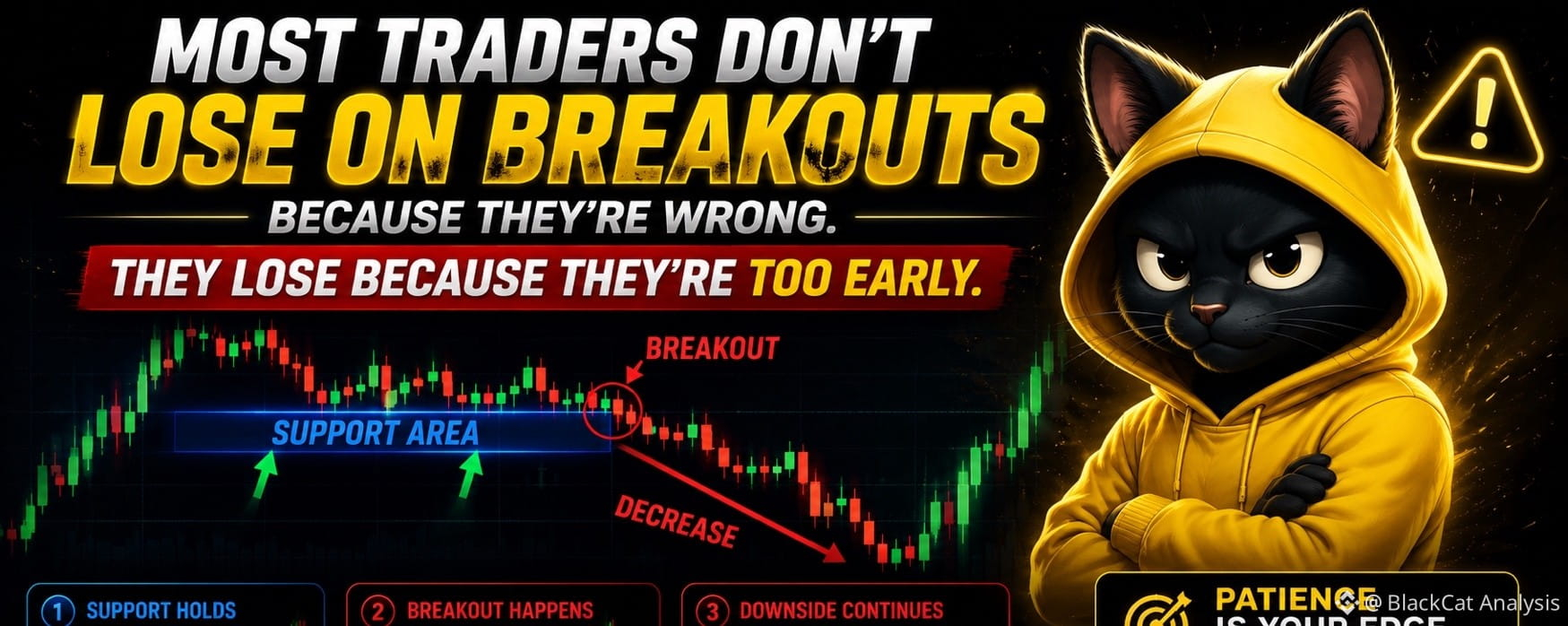
Article
Most Traders Don’t Lose on Breakouts Because They’re Wrong. They Lose Because They’re Too Early.Almost everyone understands what a breakout looks like.
$BTC $ETH $SOL
Price pushes above resistance.
Volume increases.
The market starts moving.
Simple.
But if trading breakouts were really that simple, most traders wouldn’t lose money chasing them.
The uncomfortable truth is that a breakout is not a signal. It’s a test.
The market isn’t trying to reward the first buyer above resistance. It’s trying to discover whether there is enough demand left after everyone has already become excited.
That is why so many breakouts fail.
When price finally escapes a range, the crowd sees confirmation. Smart money often sees something different: fresh liquidity.
Every trader who buys the breakout places a stop somewhere below it.
Every trader who shorts too early places a stop somewhere above it.
The breakout itself becomes the place where both sides quietly build liquidity.
That is why the first move is often the least important.
The reaction after the breakout tells the real story.
If price can reclaim the level after a retest while volume remains healthy, it suggests buyers are absorbing supply instead of simply reacting to momentum.
If the breakout immediately loses acceptance and falls back inside the range, the market has revealed something equally valuable: the breakout wasn’t expansion—it was distribution.
This is why experienced traders spend less time asking:
“Did resistance break?”
And far more time asking:
“Who is trapped after the breakout?”
Because markets don’t move simply because resistance disappears.
They move because someone is forced to react.
The strongest trends are often born from forced buying, forced selling, and positions that can no longer stay open.
That changes the way you see every breakout.
Instead of chasing the candle…
You start reading the positioning behind it.
And once you begin trading liquidity instead of candles, the market starts making a lot more sense.
Trade smarter, not faster.
Most Traders Don’t Lose on Breakouts Because They’re Wrong. They Lose Because They’re Too Early.
Almost everyone understands what a breakout looks like.
$BTC $ETH $SOL
Price pushes above resistance.
Volume increases.
The market starts moving.
Simple.
But if trading breakouts were really that simple, most traders wouldn’t lose money chasing them.
The uncomfortable truth is that a breakout is not a signal. It’s a test.
The market isn’t trying to reward the first buyer above resistance. It’s trying to discover whether there is enough demand left after everyone has already become excited.
That is why so many breakouts fail.
When price finally escapes a range, the crowd sees confirmation. Smart money often sees something different: fresh liquidity.
Every trader who buys the breakout places a stop somewhere below it.
Every trader who shorts too early places a stop somewhere above it.
The breakout itself becomes the place where both sides quietly build liquidity.
That is why the first move is often the least important.
The reaction after the breakout tells the real story.
If price can reclaim the level after a retest while volume remains healthy, it suggests buyers are absorbing supply instead of simply reacting to momentum.
If the breakout immediately loses acceptance and falls back inside the range, the market has revealed something equally valuable: the breakout wasn’t expansion—it was distribution.
This is why experienced traders spend less time asking:
“Did resistance break?”
And far more time asking:
“Who is trapped after the breakout?”
Because markets don’t move simply because resistance disappears.
They move because someone is forced to react.
The strongest trends are often born from forced buying, forced selling, and positions that can no longer stay open.
That changes the way you see every breakout.
Instead of chasing the candle…
You start reading the positioning behind it.
And once you begin trading liquidity instead of candles, the market starts making a lot more sense.
Trade smarter, not faster.
$BTC $ETH $SOL
Price pushes above resistance.
Volume increases.
The market starts moving.
Simple.
But if trading breakouts were really that simple, most traders wouldn’t lose money chasing them.
The uncomfortable truth is that a breakout is not a signal. It’s a test.
The market isn’t trying to reward the first buyer above resistance. It’s trying to discover whether there is enough demand left after everyone has already become excited.
That is why so many breakouts fail.
When price finally escapes a range, the crowd sees confirmation. Smart money often sees something different: fresh liquidity.
Every trader who buys the breakout places a stop somewhere below it.
Every trader who shorts too early places a stop somewhere above it.
The breakout itself becomes the place where both sides quietly build liquidity.
That is why the first move is often the least important.
The reaction after the breakout tells the real story.
If price can reclaim the level after a retest while volume remains healthy, it suggests buyers are absorbing supply instead of simply reacting to momentum.
If the breakout immediately loses acceptance and falls back inside the range, the market has revealed something equally valuable: the breakout wasn’t expansion—it was distribution.
This is why experienced traders spend less time asking:
“Did resistance break?”
And far more time asking:
“Who is trapped after the breakout?”
Because markets don’t move simply because resistance disappears.
They move because someone is forced to react.
The strongest trends are often born from forced buying, forced selling, and positions that can no longer stay open.
That changes the way you see every breakout.
Instead of chasing the candle…
You start reading the positioning behind it.
And once you begin trading liquidity instead of candles, the market starts making a lot more sense.
Trade smarter, not faster.
1
131

Article
Can Ethereum Really Outperform Bitcoin in the Next Bull Market?Every bull cycle begins with the same question: Will #Bitcoin lead the market again, or will Ethereum deliver the bigger returns?
Bitcoin has always been the foundation of the crypto market. It is the asset institutions trust first, the benchmark for market sentiment, and often the first destination for fresh capital when confidence begins to return. That is why the early stages of almost every major rally have historically belonged to $BTC .
But bull markets rarely end where they begin.
As liquidity expands and risk appetite grows, capital tends to move further out on the risk curve. That is where $ETH
{future}(BTCUSDT)
has repeatedly proven its strength.
Unlike Bitcoin, Ethereum is more than a store of value. It is the infrastructure behind smart contracts, DeFi, stablecoins, tokenized real-world assets, NFTs, and thousands of decentralized applications. As on-chain activity accelerates, demand for ETH can grow alongside the network itself, creating a different type of value proposition.
Institutional adoption could also become a major catalyst.
The launch of Spot Ethereum ETFs and the increasing participation of traditional financial institutions have introduced a new source of demand that previous cycles never had. If these inflows continue to build while network usage expands, Ethereum could find itself in a uniquely favorable position.
History also offers an interesting pattern.
{future}(ETHUSDT)
Bitcoin usually leads the first phase of a bull market by attracting the largest share of new capital. Once BTC establishes a clear uptrend and investor confidence improves, liquidity often rotates into Ethereum before spreading across the broader altcoin market. That rotation has historically allowed ETH to outperform Bitcoin on a percentage basis during certain stages of the cycle.
Of course, Bitcoin still holds structural advantages that are difficult to challenge. It remains the largest digital asset, enjoys the strongest institutional recognition, and is still viewed by many as the safest way to gain exposure to crypto. During periods of uncertainty, capital often flows back into Bitcoin before anywhere else.
Perhaps the better question is not Bitcoin or Ethereum.
It is when each asset tends to outperform.
Bitcoin often dominates when capital is seeking security and leadership. Ethereum tends to thrive when liquidity expands, innovation accelerates, and investors become willing to take on more risk.
The next bull market may not be about choosing one over the other. It may be about understanding how capital flows through the cycle—and positioning accordingly.
Because in crypto, the biggest opportunities often come not from predicting the winner, but from recognizing where liquidity is moving next.
Can Ethereum Really Outperform Bitcoin in the Next Bull Market?
Every bull cycle begins with the same question: Will #Bitcoin lead the market again, or will Ethereum deliver the bigger returns?
Bitcoin has always been the foundation of the crypto market. It is the asset institutions trust first, the benchmark for market sentiment, and often the first destination for fresh capital when confidence begins to return. That is why the early stages of almost every major rally have historically belonged to $BTC .
But bull markets rarely end where they begin.
As liquidity expands and risk appetite grows, capital tends to move further out on the risk curve. That is where $ETH
has repeatedly proven its strength.
Unlike Bitcoin, Ethereum is more than a store of value. It is the infrastructure behind smart contracts, DeFi, stablecoins, tokenized real-world assets, NFTs, and thousands of decentralized applications. As on-chain activity accelerates, demand for ETH can grow alongside the network itself, creating a different type of value proposition.
Institutional adoption could also become a major catalyst.
The launch of Spot Ethereum ETFs and the increasing participation of traditional financial institutions have introduced a new source of demand that previous cycles never had. If these inflows continue to build while network usage expands, Ethereum could find itself in a uniquely favorable position.
History also offers an interesting pattern.
Bitcoin usually leads the first phase of a bull market by attracting the largest share of new capital. Once BTC establishes a clear uptrend and investor confidence improves, liquidity often rotates into Ethereum before spreading across the broader altcoin market. That rotation has historically allowed ETH to outperform Bitcoin on a percentage basis during certain stages of the cycle.
Of course, Bitcoin still holds structural advantages that are difficult to challenge. It remains the largest digital asset, enjoys the strongest institutional recognition, and is still viewed by many as the safest way to gain exposure to crypto. During periods of uncertainty, capital often flows back into Bitcoin before anywhere else.
Perhaps the better question is not Bitcoin or Ethereum.
It is when each asset tends to outperform.
Bitcoin often dominates when capital is seeking security and leadership. Ethereum tends to thrive when liquidity expands, innovation accelerates, and investors become willing to take on more risk.
The next bull market may not be about choosing one over the other. It may be about understanding how capital flows through the cycle—and positioning accordingly.
Because in crypto, the biggest opportunities often come not from predicting the winner, but from recognizing where liquidity is moving next.
Bitcoin has always been the foundation of the crypto market. It is the asset institutions trust first, the benchmark for market sentiment, and often the first destination for fresh capital when confidence begins to return. That is why the early stages of almost every major rally have historically belonged to $BTC .
But bull markets rarely end where they begin.
As liquidity expands and risk appetite grows, capital tends to move further out on the risk curve. That is where $ETH
has repeatedly proven its strength.
Unlike Bitcoin, Ethereum is more than a store of value. It is the infrastructure behind smart contracts, DeFi, stablecoins, tokenized real-world assets, NFTs, and thousands of decentralized applications. As on-chain activity accelerates, demand for ETH can grow alongside the network itself, creating a different type of value proposition.
Institutional adoption could also become a major catalyst.
The launch of Spot Ethereum ETFs and the increasing participation of traditional financial institutions have introduced a new source of demand that previous cycles never had. If these inflows continue to build while network usage expands, Ethereum could find itself in a uniquely favorable position.
History also offers an interesting pattern.
Bitcoin usually leads the first phase of a bull market by attracting the largest share of new capital. Once BTC establishes a clear uptrend and investor confidence improves, liquidity often rotates into Ethereum before spreading across the broader altcoin market. That rotation has historically allowed ETH to outperform Bitcoin on a percentage basis during certain stages of the cycle.
Of course, Bitcoin still holds structural advantages that are difficult to challenge. It remains the largest digital asset, enjoys the strongest institutional recognition, and is still viewed by many as the safest way to gain exposure to crypto. During periods of uncertainty, capital often flows back into Bitcoin before anywhere else.
Perhaps the better question is not Bitcoin or Ethereum.
It is when each asset tends to outperform.
Bitcoin often dominates when capital is seeking security and leadership. Ethereum tends to thrive when liquidity expands, innovation accelerates, and investors become willing to take on more risk.
The next bull market may not be about choosing one over the other. It may be about understanding how capital flows through the cycle—and positioning accordingly.
Because in crypto, the biggest opportunities often come not from predicting the winner, but from recognizing where liquidity is moving next.
143
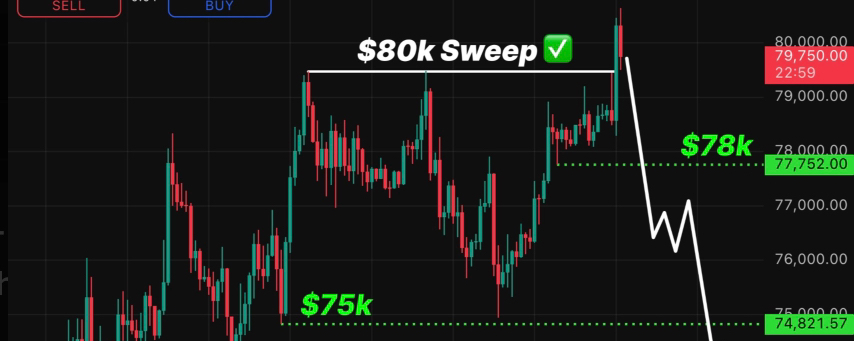
Article
$BTC – After $80K: The Market Is Setting Up the Next MoveThe $80,000 target has now been reached, right in line with the expected structure. That level was not just a number — it marked the continuation of short-term momentum and confirmed that the market is still following a clean path for now.
But once a target is completed, the focus shifts.
The next 14 days are likely to be more about positioning than direction.
The first scenario I’m watching is a short-term accumulation phase. Price may move sideways or compress within a tighter range as the market absorbs liquidity. This is usually the stage where volatility fades on the surface, but positioning quietly builds underneath before a larger move unfolds.
At the same time, the 75,000 USD level becomes a key structural reference on the higher timeframe. If this area gets broken with clear acceptance, it would signal that the current structure is starting to weaken, opening the door for a deeper rotation.
Below that, the 73,000 USD zone stands out as the next liquidity pocket. If the market extends lower, this is where reactions could become more aggressive, as both trapped positions and fresh liquidity begin to interact.
From a structural perspective, the market is still behaving in a relatively “clean” way. That’s exactly why this phase matters. Clean structures often transition quietly before they expand.
Psychologically, this is where traders tend to get impatient. After a strong move to $80K, many expect immediate continuation. But markets rarely move in a straight line. They pause, reset, and reposition before deciding again.
For now, the priority is not prediction — it’s observation. Watching how price reacts at each key level will tell us far more than trying to guess the next move too early.
I’ll keep tracking the structure closely and update when the market starts to reveal clearer intent.
Trade $BTC here 👇
{future}(BTCUSDT)
$BTC – After $80K: The Market Is Setting Up the Next Move
The $80,000 target has now been reached, right in line with the expected structure. That level was not just a number — it marked the continuation of short-term momentum and confirmed that the market is still following a clean path for now.
But once a target is completed, the focus shifts.
The next 14 days are likely to be more about positioning than direction.
The first scenario I’m watching is a short-term accumulation phase. Price may move sideways or compress within a tighter range as the market absorbs liquidity. This is usually the stage where volatility fades on the surface, but positioning quietly builds underneath before a larger move unfolds.
At the same time, the 75,000 USD level becomes a key structural reference on the higher timeframe. If this area gets broken with clear acceptance, it would signal that the current structure is starting to weaken, opening the door for a deeper rotation.
Below that, the 73,000 USD zone stands out as the next liquidity pocket. If the market extends lower, this is where reactions could become more aggressive, as both trapped positions and fresh liquidity begin to interact.
From a structural perspective, the market is still behaving in a relatively “clean” way. That’s exactly why this phase matters. Clean structures often transition quietly before they expand.
Psychologically, this is where traders tend to get impatient. After a strong move to $80K, many expect immediate continuation. But markets rarely move in a straight line. They pause, reset, and reposition before deciding again.
For now, the priority is not prediction — it’s observation. Watching how price reacts at each key level will tell us far more than trying to guess the next move too early.
I’ll keep tracking the structure closely and update when the market starts to reveal clearer intent.
Trade $BTC here 👇
But once a target is completed, the focus shifts.
The next 14 days are likely to be more about positioning than direction.
The first scenario I’m watching is a short-term accumulation phase. Price may move sideways or compress within a tighter range as the market absorbs liquidity. This is usually the stage where volatility fades on the surface, but positioning quietly builds underneath before a larger move unfolds.
At the same time, the 75,000 USD level becomes a key structural reference on the higher timeframe. If this area gets broken with clear acceptance, it would signal that the current structure is starting to weaken, opening the door for a deeper rotation.
Below that, the 73,000 USD zone stands out as the next liquidity pocket. If the market extends lower, this is where reactions could become more aggressive, as both trapped positions and fresh liquidity begin to interact.
From a structural perspective, the market is still behaving in a relatively “clean” way. That’s exactly why this phase matters. Clean structures often transition quietly before they expand.
Psychologically, this is where traders tend to get impatient. After a strong move to $80K, many expect immediate continuation. But markets rarely move in a straight line. They pause, reset, and reposition before deciding again.
For now, the priority is not prediction — it’s observation. Watching how price reacts at each key level will tell us far more than trying to guess the next move too early.
I’ll keep tracking the structure closely and update when the market starts to reveal clearer intent.
Trade $BTC here 👇
3
705

Article
Turtle – Engineering the Next Era of Programmable Liquidity and Enduring Financial ResilienceIn a world where global markets swing wildly on liquidity crunches, eroded trust, and broken capital pipelines, DeFi stands at a pivotal crossroads. The old playbook—fragmented liquidity, blind incentive farming, and boom-bust volatility—is finally cracking. What’s emerging is something far more powerful: programmable, intelligence-driven liquidity coordination. And at the forefront is #Turtle , not as another yield aggregator, but as the decentralized coordination engine quietly rebuilding how capital actually moves and works in Web3.
#TURTLE operates as a true Liquidity Distribution Protocol—an on-chain layer that acts like a precision capital allocator. It connects real Liquidity Providers with battle-tested protocols by tracking every wallet action in real time: deposits, swaps, stakes, referrals. No custody. No spray-and-pray rewards. Just transparent, activity-based boosted yields that reward actual contribution. The result? Liquidity stops being a chaotic force and becomes a measurable, optimizable asset—creating a self-reinforcing flywheel of trust, efficiency, and sustained value.
What sets Turtle apart are its foundational advantages:
• Systemic Risk Mitigation at Scale: By routing capital only to verified opportunities with real demand, Turtle eliminates the misallocation that fuels cascading failures. Capital no longer gets trapped in dead-end farms—it flows where it’s needed, when it’s needed.
• Real-Time Market Stabilization: On-chain attribution and dynamic reward mechanics smooth out extreme swings, turning volatile liquidity into a stabilizing force rather than a trigger for panic.
• Capital Efficiency Redefined: Every on-chain interaction generates trackable returns. Short-term hype gives way to long-term compounding, turning passive LPs into active participants in a maturing ecosystem.
• Institutional-Grade Bridge Building: With the recent Chainlink integration for secure oracles and cross-chain capabilities, Turtle is actively pulling verified institutional capital on-chain—moving beyond retail speculation into the next tier of adoption.
The numbers speak for themselves: over 360,000 wallets connected, more than $5.5 billion in liquidity coordinated, a robust $8.22M on-chain treasury, and fresh capital bringing total funding to $11.7M from elite backers including Theia, ConsenSys, and Ethereum co-founder Joseph Lubin. Add the flawless 40/40 Token Transparency Framework filing with @Blockworks that triggered today’s 17% surge, and the message is unmistakable: the market is rewarding substance over spectacle.
Looking ahead, Turtle is positioning itself at the intersection of DeFi, RWA, and private credit—creating programmable fixed-rate markets and institutional liquidity rails that traditional finance has long struggled to achieve. This isn’t just infrastructure. It’s the infrastructure layer that could finally make decentralized finance resilient enough to stand alongside TradFi without inheriting its fragility.
Challenges remain, of course: broader institutional onboarding, evolving global regulations, and scaling securely at hyper-growth levels. But these are execution hurdles, not conceptual ones—and Turtle’s Swiss Verein structure, fixed 1B token supply, and single-token alignment philosophy give it the governance clarity to navigate them.
In the end, Turtle isn’t merely a project. It’s a blueprint:
👉 For a financial system that is programmable, not reactive
👉 For liquidity that is intelligent, not impulsive
👉 For stability that is engineered, not hoped for
This is the alpha shift smart capital has been waiting for. The protocols and investors who internalize it early won’t just survive the next cycle—they will define it.
The liquidity revolution isn’t coming.
It’s already being coordinated.
And Turtle is holding the map. 🐢
$TURTLE
{future}(TURTLEUSDT)
Turtle – Engineering the Next Era of Programmable Liquidity and Enduring Financial Resilience
In a world where global markets swing wildly on liquidity crunches, eroded trust, and broken capital pipelines, DeFi stands at a pivotal crossroads. The old playbook—fragmented liquidity, blind incentive farming, and boom-bust volatility—is finally cracking. What’s emerging is something far more powerful: programmable, intelligence-driven liquidity coordination. And at the forefront is #Turtle , not as another yield aggregator, but as the decentralized coordination engine quietly rebuilding how capital actually moves and works in Web3.
#TURTLE operates as a true Liquidity Distribution Protocol—an on-chain layer that acts like a precision capital allocator. It connects real Liquidity Providers with battle-tested protocols by tracking every wallet action in real time: deposits, swaps, stakes, referrals. No custody. No spray-and-pray rewards. Just transparent, activity-based boosted yields that reward actual contribution. The result? Liquidity stops being a chaotic force and becomes a measurable, optimizable asset—creating a self-reinforcing flywheel of trust, efficiency, and sustained value.
What sets Turtle apart are its foundational advantages:
• Systemic Risk Mitigation at Scale: By routing capital only to verified opportunities with real demand, Turtle eliminates the misallocation that fuels cascading failures. Capital no longer gets trapped in dead-end farms—it flows where it’s needed, when it’s needed.
• Real-Time Market Stabilization: On-chain attribution and dynamic reward mechanics smooth out extreme swings, turning volatile liquidity into a stabilizing force rather than a trigger for panic.
• Capital Efficiency Redefined: Every on-chain interaction generates trackable returns. Short-term hype gives way to long-term compounding, turning passive LPs into active participants in a maturing ecosystem.
• Institutional-Grade Bridge Building: With the recent Chainlink integration for secure oracles and cross-chain capabilities, Turtle is actively pulling verified institutional capital on-chain—moving beyond retail speculation into the next tier of adoption.
The numbers speak for themselves: over 360,000 wallets connected, more than $5.5 billion in liquidity coordinated, a robust $8.22M on-chain treasury, and fresh capital bringing total funding to $11.7M from elite backers including Theia, ConsenSys, and Ethereum co-founder Joseph Lubin. Add the flawless 40/40 Token Transparency Framework filing with @Blockworks that triggered today’s 17% surge, and the message is unmistakable: the market is rewarding substance over spectacle.
Looking ahead, Turtle is positioning itself at the intersection of DeFi, RWA, and private credit—creating programmable fixed-rate markets and institutional liquidity rails that traditional finance has long struggled to achieve. This isn’t just infrastructure. It’s the infrastructure layer that could finally make decentralized finance resilient enough to stand alongside TradFi without inheriting its fragility.
Challenges remain, of course: broader institutional onboarding, evolving global regulations, and scaling securely at hyper-growth levels. But these are execution hurdles, not conceptual ones—and Turtle’s Swiss Verein structure, fixed 1B token supply, and single-token alignment philosophy give it the governance clarity to navigate them.
In the end, Turtle isn’t merely a project. It’s a blueprint:
👉 For a financial system that is programmable, not reactive
👉 For liquidity that is intelligent, not impulsive
👉 For stability that is engineered, not hoped for
This is the alpha shift smart capital has been waiting for. The protocols and investors who internalize it early won’t just survive the next cycle—they will define it.
The liquidity revolution isn’t coming.
It’s already being coordinated.
And Turtle is holding the map. 🐢
$TURTLE
#TURTLE operates as a true Liquidity Distribution Protocol—an on-chain layer that acts like a precision capital allocator. It connects real Liquidity Providers with battle-tested protocols by tracking every wallet action in real time: deposits, swaps, stakes, referrals. No custody. No spray-and-pray rewards. Just transparent, activity-based boosted yields that reward actual contribution. The result? Liquidity stops being a chaotic force and becomes a measurable, optimizable asset—creating a self-reinforcing flywheel of trust, efficiency, and sustained value.
What sets Turtle apart are its foundational advantages:
• Systemic Risk Mitigation at Scale: By routing capital only to verified opportunities with real demand, Turtle eliminates the misallocation that fuels cascading failures. Capital no longer gets trapped in dead-end farms—it flows where it’s needed, when it’s needed.
• Real-Time Market Stabilization: On-chain attribution and dynamic reward mechanics smooth out extreme swings, turning volatile liquidity into a stabilizing force rather than a trigger for panic.
• Capital Efficiency Redefined: Every on-chain interaction generates trackable returns. Short-term hype gives way to long-term compounding, turning passive LPs into active participants in a maturing ecosystem.
• Institutional-Grade Bridge Building: With the recent Chainlink integration for secure oracles and cross-chain capabilities, Turtle is actively pulling verified institutional capital on-chain—moving beyond retail speculation into the next tier of adoption.
The numbers speak for themselves: over 360,000 wallets connected, more than $5.5 billion in liquidity coordinated, a robust $8.22M on-chain treasury, and fresh capital bringing total funding to $11.7M from elite backers including Theia, ConsenSys, and Ethereum co-founder Joseph Lubin. Add the flawless 40/40 Token Transparency Framework filing with @Blockworks that triggered today’s 17% surge, and the message is unmistakable: the market is rewarding substance over spectacle.
Looking ahead, Turtle is positioning itself at the intersection of DeFi, RWA, and private credit—creating programmable fixed-rate markets and institutional liquidity rails that traditional finance has long struggled to achieve. This isn’t just infrastructure. It’s the infrastructure layer that could finally make decentralized finance resilient enough to stand alongside TradFi without inheriting its fragility.
Challenges remain, of course: broader institutional onboarding, evolving global regulations, and scaling securely at hyper-growth levels. But these are execution hurdles, not conceptual ones—and Turtle’s Swiss Verein structure, fixed 1B token supply, and single-token alignment philosophy give it the governance clarity to navigate them.
In the end, Turtle isn’t merely a project. It’s a blueprint:
👉 For a financial system that is programmable, not reactive
👉 For liquidity that is intelligent, not impulsive
👉 For stability that is engineered, not hoped for
This is the alpha shift smart capital has been waiting for. The protocols and investors who internalize it early won’t just survive the next cycle—they will define it.
The liquidity revolution isn’t coming.
It’s already being coordinated.
And Turtle is holding the map. 🐢
$TURTLE
2
2.4k

Article
I Thought I Was Managing Time in Pixels… I Didn’t Realize It Was Rewriting Who I Am Inside ItAt the beginning, Pixels felt completely harmless.A gentle, predictable loop. You log in, plant a few things, do some tasks, come back later.
Time passed softly, almost invisibly. I never questioned it because nothing in the game forced me to. It was just… there.
Comfortable. Easy to slip into.I treated time inside Pixels like something external — something I could step in and out of without it really touching me. I managed it. I scheduled it. I thought I was in control.Then I used $PIXEL for the first time.
It was such a small decision. Just skipping one delay. Speeding up one little gap. Nothing dramatic. But from that single moment, something inside me quietly shifted, and I didn’t even notice it happening.Waiting stopped feeling natural.
The same pauses that once felt peaceful now felt… heavy. Misaligned. Like I was no longer meant to experience the game at that pace. Every small delay started to irritate me in a way it never had before. I caught myself thinking, “I could just use PIXEL and move on.” And slowly, without me realizing, that thought began to repeat itself across everything.
The game didn’t change.I did.I stopped accepting the slower rhythm. I started seeing every pause as optional. Every routine as something that could be accelerated. I wasn’t consciously optimizing — I was simply no longer the same player who once found comfort in waiting.$P$PIXEL dn’t just give me speed.It changed the version of me that plays the game.Now I move differently.
I feel differently. I evaluate every loop with a new, sharper lens. The default pace of the world no longer feels neutral — it feels expensive. The game is no longer just something I play through. It has become something I negotiate with, moment by moment.And the strangest part? I never decided to change.
The system simply gave me the option, and that option quietly rewrote me from the inside.You can stop spending $PIXEL.But you can’t easily go back to experiencing time the way you did before.The slower rhythm now feels foreign.
The old patience now feels like waste. Once that line is crossed, there is no clean way back.That is the real power of the token.Not what it buys.But who it turns you into.And once enough players go through that invisible shift, the game no longer needs to force anything.The behavior sustains itself — because the people inside it are no longer the same as when they first entered.
@pixels #pixel $PIXEL
{future}(PIXELUSDT)
I Thought I Was Managing Time in Pixels… I Didn’t Realize It Was Rewriting Who I Am Inside It
At the beginning, Pixels felt completely harmless.A gentle, predictable loop. You log in, plant a few things, do some tasks, come back later.
Time passed softly, almost invisibly. I never questioned it because nothing in the game forced me to. It was just… there.
Comfortable. Easy to slip into.I treated time inside Pixels like something external — something I could step in and out of without it really touching me. I managed it. I scheduled it. I thought I was in control.Then I used $PIXEL for the first time.
It was such a small decision. Just skipping one delay. Speeding up one little gap. Nothing dramatic. But from that single moment, something inside me quietly shifted, and I didn’t even notice it happening.Waiting stopped feeling natural.
The same pauses that once felt peaceful now felt… heavy. Misaligned. Like I was no longer meant to experience the game at that pace. Every small delay started to irritate me in a way it never had before. I caught myself thinking, “I could just use PIXEL and move on.” And slowly, without me realizing, that thought began to repeat itself across everything.
The game didn’t change.I did.I stopped accepting the slower rhythm. I started seeing every pause as optional. Every routine as something that could be accelerated. I wasn’t consciously optimizing — I was simply no longer the same player who once found comfort in waiting.$P$PIXEL dn’t just give me speed.It changed the version of me that plays the game.Now I move differently.
I feel differently. I evaluate every loop with a new, sharper lens. The default pace of the world no longer feels neutral — it feels expensive. The game is no longer just something I play through. It has become something I negotiate with, moment by moment.And the strangest part? I never decided to change.
The system simply gave me the option, and that option quietly rewrote me from the inside.You can stop spending $PIXEL .But you can’t easily go back to experiencing time the way you did before.The slower rhythm now feels foreign.
The old patience now feels like waste. Once that line is crossed, there is no clean way back.That is the real power of the token.Not what it buys.But who it turns you into.And once enough players go through that invisible shift, the game no longer needs to force anything.The behavior sustains itself — because the people inside it are no longer the same as when they first entered.
@Pixels #pixel $PIXEL
Time passed softly, almost invisibly. I never questioned it because nothing in the game forced me to. It was just… there.
Comfortable. Easy to slip into.I treated time inside Pixels like something external — something I could step in and out of without it really touching me. I managed it. I scheduled it. I thought I was in control.Then I used $PIXEL for the first time.
It was such a small decision. Just skipping one delay. Speeding up one little gap. Nothing dramatic. But from that single moment, something inside me quietly shifted, and I didn’t even notice it happening.Waiting stopped feeling natural.
The same pauses that once felt peaceful now felt… heavy. Misaligned. Like I was no longer meant to experience the game at that pace. Every small delay started to irritate me in a way it never had before. I caught myself thinking, “I could just use PIXEL and move on.” And slowly, without me realizing, that thought began to repeat itself across everything.
The game didn’t change.I did.I stopped accepting the slower rhythm. I started seeing every pause as optional. Every routine as something that could be accelerated. I wasn’t consciously optimizing — I was simply no longer the same player who once found comfort in waiting.$P$PIXEL dn’t just give me speed.It changed the version of me that plays the game.Now I move differently.
I feel differently. I evaluate every loop with a new, sharper lens. The default pace of the world no longer feels neutral — it feels expensive. The game is no longer just something I play through. It has become something I negotiate with, moment by moment.And the strangest part? I never decided to change.
The system simply gave me the option, and that option quietly rewrote me from the inside.You can stop spending $PIXEL .But you can’t easily go back to experiencing time the way you did before.The slower rhythm now feels foreign.
The old patience now feels like waste. Once that line is crossed, there is no clean way back.That is the real power of the token.Not what it buys.But who it turns you into.And once enough players go through that invisible shift, the game no longer needs to force anything.The behavior sustains itself — because the people inside it are no longer the same as when they first entered.
@Pixels #pixel $PIXEL
3
5
374
Log in to explore more content
Join global crypto users on Binance Square
⚡️ Get latest and useful information about crypto.
💬 Trusted by the world’s largest crypto exchange.
👍 Discover real insights from verified creators.
Email / Phone number
Trending Topics
RussiaStartsLargeScaleDigitalRubleRolloutSep1
22,334 views
522 Discussing
#russiastartslargescaledigitalrublerolloutsep1
RUSSIA IS ABOUT TO CHANGE HOW DIGITAL MONEY WORKS. 🇷🇺
Starting September 1, Russia begins a large-scale rollout of the digital ruble, pushing its central bank digital currency (CBDC) deeper into the economy.
This isn’t just another payment system.
It’s a major step toward a more digital-first financial system.
And here’s the part crypto traders should watch closely:
More countries are moving toward digital national currencies
Faster digital payments are becoming the new standard
Global finance is gradually shifting toward digital money infrastructure
CBDCs are moving from experiments toward real-world use
But here’s the key point…
The digital ruble is NOT Bitcoin.
Bitcoin is decentralized, while the digital ruble is issued and controlled by Russia’s central bank.
Yet its rollout could accelerate a much bigger global race toward digital currencies and programmable money.
Could September 1 become another major milestone in the world’s transition toward digital money?🇷🇺
#Crypto #DigitalRuble #CBDC #Write2Earn
$BTC
$ETH
$HEMI
Shae Cassler Sw9r
·6 Likes
·2.8k views
BitcoinUp23%InAugustOutperformingGoldAndStocks
33,322 views
885 Discussing
BitcoinHolds$78K
21,387 views
175 Discussing