
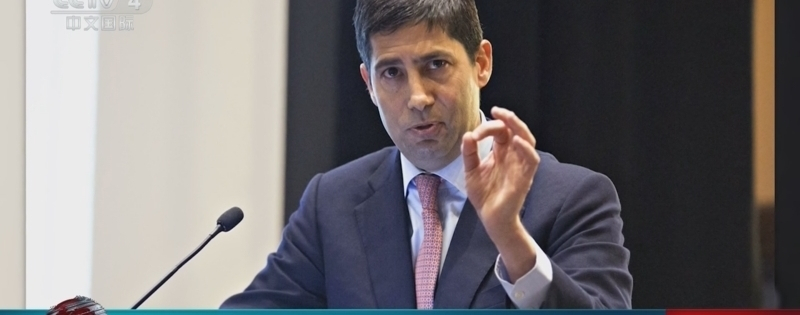

The Federal Reserve Chair Kevin W. Wersh appeared at the Jackson Hole conference and delivered a speech titled “In Our Time.”
Overall, Wersh’s Jackson Hole speech sent a relatively clear signal of cautious hawkishness. He believes that the U.S. economy and labor market still show resilience, and that the current financial conditions are hard to describe as clearly restrictive. Meanwhile, inflation remains significantly higher than the Fed’s 2% target, so price stability should continue to be the top priority for monetary policy.
In his remarks, the Fed Chair emphasized: “My standard is this: we must have confidence that underlying inflation is clearly and at a sufficiently fast pace moving toward our goals. Otherwise, we still have work to do.”
Waller also said that although the summer CPI and PCE inflation data came in better than expected, “they have not led me to believe that the underlying inflation trend has shown any meaningful improvement.”
In response to external criticism that he “insists on not providing forward guidance,” Waller also seized the opportunity to deliver an unprecedentedly deep explanation.
Waller believes that forward guidance is necessary in times of crisis, but should be clearly weakened in normal times. He argues that signaling the interest-rate path to the market too early—even in a way that is close to a commitment—may appear to increase transparency, but could actually create new misdirection: on the one hand, it constrains the Fed’s space to make flexible decisions based on changes in the economy in the future; on the other hand, it may also cause the market to trade excessively around “guessing the Fed,” rather than independently assessing the economic fundamentals.
He is especially wary of the “mirror-hall problem” created in this way—where the market sets prices based on the Fed’s guidance, and the Fed in turn uses market prices to make judgments, which could ultimately lead both sides to ignore new economic developments at the same time.
To that end, Waller neither supports the routineization of forward guidance nor is willing to provide a mechanical policy “reaction function.” Instead, he is more inclined to reduce pre-commitments so the market can form its own judgment, while the Fed, based on real-time data, trends, and more robust policy rules, retains sufficient flexibility whenever it truly needs to make decisions.
After Waller’s remarks, the CME “FedWatch” tool raised the probability of a Fed rate hike in September to nearly 60%; yesterday, that figure was only 35%. Spot gold plunged by $50 in the short term, with the latest quote falling to around $4,550 per ounce.
