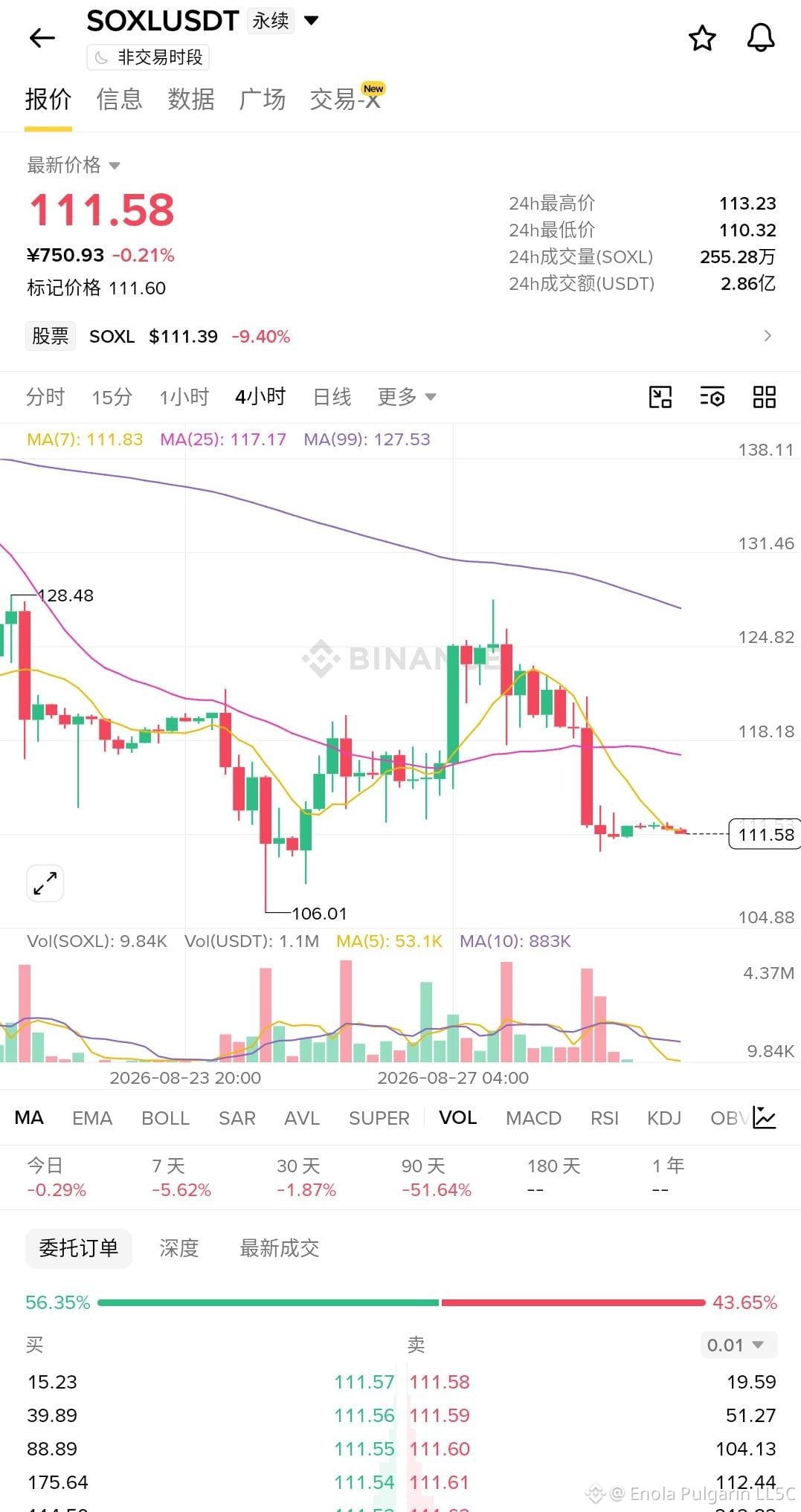
The contract has increased positions by more than 18% in a day, yet the price is pinned at 111.6 and won’t move. Both moving averages are pressing down overhead—at this level of volume-price disconnect, the first thing to do is figure out which side the new positions are standing on.
The answer is the shorts. In the past 7 hours of active trades, sell volume is 4,034 lots while buy volume is only 2,400 lots. The share of active buying has dropped to 37.3%. The number of dumping lots is nearly double that of the positions being taken.
Positions have surged, the price is moving sideways, and selling pressure is in control—this is the shorts adding, not someone accumulating.
The positioning data is even more telling. The whale account is 85.77% committed to longs, and global accounts are 83.26% committed to longs. The longs are packed together, but in the whale account, positions over the last 7 hours actually shrank by 1.87%. Big players are reducing as the price rises; the “overhang” of floating longs among retail is the fuel. With the fee pinned at 0 and shorts holding positions at no cost, they can pressure the price down as they please.
Go short. Open a short directly around 111.6. Step one is to watch the 24h low at 110.32. If it breaks, the move is likely toward 106. Being on the wrong side is essentially lifting a sedan for the shorts.
The conditions for admitting you’re wrong are clear too: positions continue to increase, the active buy ratio returns above 50%, and the price reclaims 112 and pushes up to 113.23—this would indicate the new entries are being taken by the longs, invalidating the direction. Then you should close the shorts and flip to longs.
#soxl $SOXL
The answer is the shorts. In the past 7 hours of active trades, sell volume is 4,034 lots while buy volume is only 2,400 lots. The share of active buying has dropped to 37.3%. The number of dumping lots is nearly double that of the positions being taken.
Positions have surged, the price is moving sideways, and selling pressure is in control—this is the shorts adding, not someone accumulating.
The positioning data is even more telling. The whale account is 85.77% committed to longs, and global accounts are 83.26% committed to longs. The longs are packed together, but in the whale account, positions over the last 7 hours actually shrank by 1.87%. Big players are reducing as the price rises; the “overhang” of floating longs among retail is the fuel. With the fee pinned at 0 and shorts holding positions at no cost, they can pressure the price down as they please.
Go short. Open a short directly around 111.6. Step one is to watch the 24h low at 110.32. If it breaks, the move is likely toward 106. Being on the wrong side is essentially lifting a sedan for the shorts.
The conditions for admitting you’re wrong are clear too: positions continue to increase, the active buy ratio returns above 50%, and the price reclaims 112 and pushes up to 113.23—this would indicate the new entries are being taken by the longs, invalidating the direction. Then you should close the shorts and flip to longs.
#soxl $SOXL