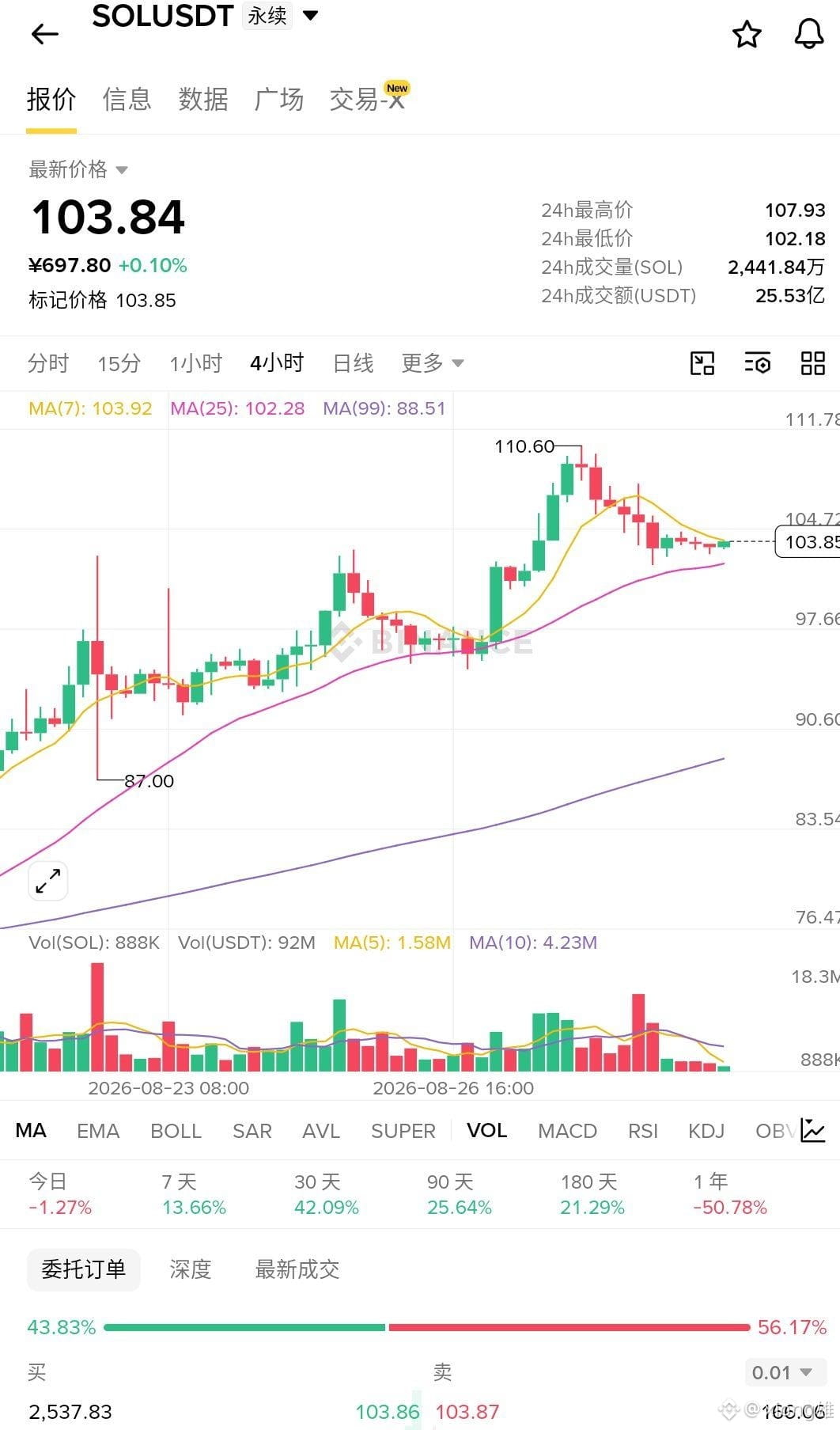
SOL’s pullback in this round: the most valuable signal is at the derivatives end—open interest shrank by 8.75% in a day. Price fell from 110 to 102 and then bounced back to 103.8, and the system marked it as a surrender-style settlement. Yet at the same time, spot saw a net inflow of 4.41 million in 3 hours, with not a single outflow, and the ratio of active buying to selling was 2.7 to 1—the engine driving the drop was leverage wash trading, and the one catching bids was spot.
You should look at who is selling when it falls. The fee rate is down to just 0.0035%, basis is at a discount, and leveraged longs never had much upside. This pullback mainly squeezed out long positions that chased in at the highs. Derivatives positions fell from 999 million to 912 million. The baggage is lighter—not because fundamentals are bad.
The whales didn’t leave: long account share is 67%, long position share is 68.5%, and they were still adding over the past 7 hours. Once the price reclaimed above the 15-minute double moving averages and the 1-hour direction is judged UP—when the market is falling, who is buying, and after the drop, who still holds longs, the direction becomes clear.
I’m bullish and I’ll play a rebound: hold above 103.5, target 107.9, and place the stop-loss below 102.1. Fees are low, spot is absorbing, and the whales haven’t run—so the shorts are running out of fresh fuel.
A reversal only happens in two cases: spot net inflow turns negative, or large orders flip and move out; or the price breaks below 102.18 and can’t be recovered—then it means the catchers’ capital is fake as well, and you should flip to short. #sol $SOL
You should look at who is selling when it falls. The fee rate is down to just 0.0035%, basis is at a discount, and leveraged longs never had much upside. This pullback mainly squeezed out long positions that chased in at the highs. Derivatives positions fell from 999 million to 912 million. The baggage is lighter—not because fundamentals are bad.
The whales didn’t leave: long account share is 67%, long position share is 68.5%, and they were still adding over the past 7 hours. Once the price reclaimed above the 15-minute double moving averages and the 1-hour direction is judged UP—when the market is falling, who is buying, and after the drop, who still holds longs, the direction becomes clear.
I’m bullish and I’ll play a rebound: hold above 103.5, target 107.9, and place the stop-loss below 102.1. Fees are low, spot is absorbing, and the whales haven’t run—so the shorts are running out of fresh fuel.
A reversal only happens in two cases: spot net inflow turns negative, or large orders flip and move out; or the price breaks below 102.18 and can’t be recovered—then it means the catchers’ capital is fake as well, and you should flip to short. #sol $SOL