#NYSilverFuturesDrop3% $USDC
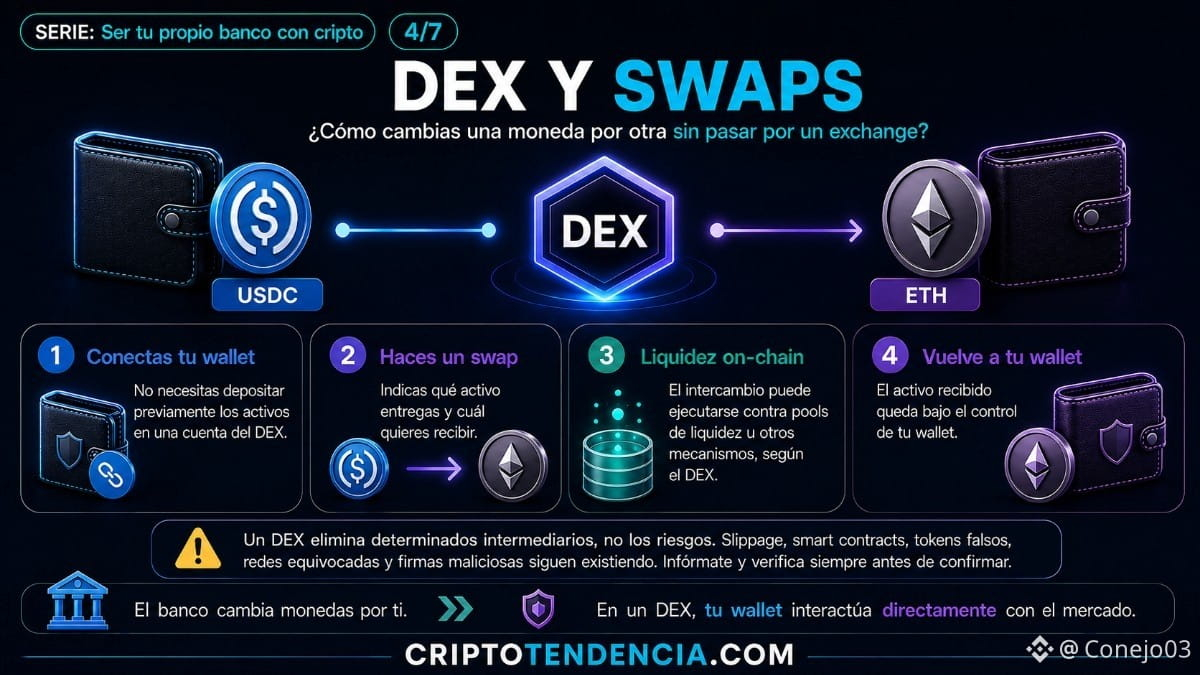
@USDC Be your own bank with crypto (4/7): how to exchange one coin for another without depositing it first on an exchange.
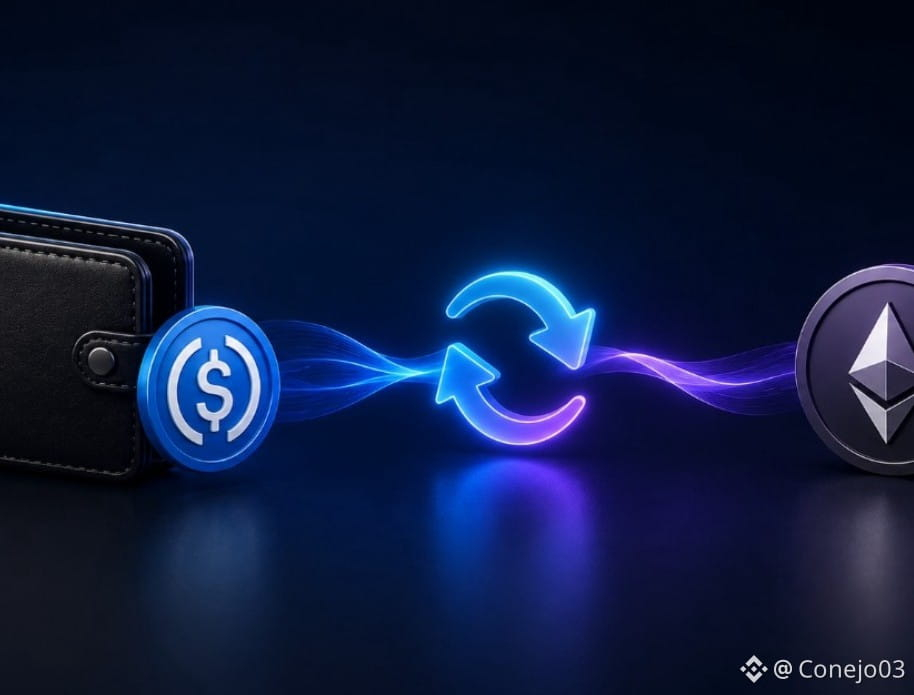
A person has 1,000 USDC in their wallet and wants to convert part of it into ETH. In the traditional financial system, and in most centralized exchanges, swapping one asset for another starts with the same gesture: handing the money first to an institution that custody it while the transaction takes place within its own infrastructure.
On a DEX —a decentralized exchange— a different possibility appears, because the wallet can interact directly with market infrastructure deployed on a blockchain, without giving up custody of the funds beforehand. And once that idea is accepted, the question that organizes everything else arises:
◽Who is on the other side of the exchange?
The central concept is on-chain liquidity: the capital available within the protocol itself to facilitate transactions. Many DEXs handle the exchange using liquidity pools and automated mechanisms, while others use on-chain order books, hybrid designs, or aggregators, so there is no single model that can describe them all.
A pool is a set of assets deposited into a protocol, available to facilitate exchanges under certain rules.$ETH
On top of these pools operate the so-called Automated Market Makers (AMMs), protocols that use formulas and smart contracts to determine how trades are executed and how the price moves as the available liquidity changes. This automation explains why a person can trade without any bank or human intermediary approving the transaction.
@USDC Be your own bank with crypto (4/7): how to exchange one coin for another without depositing it first on an exchange.
A person has 1,000 USDC in their wallet and wants to convert part of it into ETH. In the traditional financial system, and in most centralized exchanges, swapping one asset for another starts with the same gesture: handing the money first to an institution that custody it while the transaction takes place within its own infrastructure.
On a DEX —a decentralized exchange— a different possibility appears, because the wallet can interact directly with market infrastructure deployed on a blockchain, without giving up custody of the funds beforehand. And once that idea is accepted, the question that organizes everything else arises:
◽Who is on the other side of the exchange?
The central concept is on-chain liquidity: the capital available within the protocol itself to facilitate transactions. Many DEXs handle the exchange using liquidity pools and automated mechanisms, while others use on-chain order books, hybrid designs, or aggregators, so there is no single model that can describe them all.
A pool is a set of assets deposited into a protocol, available to facilitate exchanges under certain rules.$ETH
On top of these pools operate the so-called Automated Market Makers (AMMs), protocols that use formulas and smart contracts to determine how trades are executed and how the price moves as the available liquidity changes. This automation explains why a person can trade without any bank or human intermediary approving the transaction.