
Bilverse
744 Posts
Bilverse
Crypto Enthusiast & Real Estate Investor, focused on smart, future-driven opportunities
Open Trade

BTC Holder
High-Frequency Trader
1.7 Years
75 Following
16.0K+ Followers
11.6K+ Liked
Posts
Portfolio
All
Quotes
Videos
PINNED
🧧 BIG SOL IS WAITING INSIDE THESE RED PACKETS… 🧧
The Solana Red Packets are ready with BIG Rewards sitting inside! 💜💚
💰 Want to claim yours?
👇 3 SIMPLE STEPS:
1️⃣ FOLLOW my account
2️⃣ ❤️ LIKE this post
3️⃣ 💬 COMMENT “294” below to claim 🎁
Don’t wait until the Red Packets are gone. 👀
SOL community, make some noise! ⚡️
Click here to DOUBLE your Rewards! 🧧🚀
🌌 SOL TO THE MOON 🚀
#SOL #RedPacketMission #Bilverse #CryptoCommunity
The Solana Red Packets are ready with BIG Rewards sitting inside! 💜💚
💰 Want to claim yours?
👇 3 SIMPLE STEPS:
1️⃣ FOLLOW my account
2️⃣ ❤️ LIKE this post
3️⃣ 💬 COMMENT “294” below to claim 🎁
Don’t wait until the Red Packets are gone. 👀
SOL community, make some noise! ⚡️
Click here to DOUBLE your Rewards! 🧧🚀
🌌 SOL TO THE MOON 🚀
#SOL #RedPacketMission #Bilverse #CryptoCommunity

PINNED
A year ago, I lost $28K in crypto trading with 50x leverage. 💔
I thought I was done with trading forever.
Back in Jan–Feb 2025, I was heavily into $TRUMP and $MELANIA
Everywhere I looked, people were talking about $TRUMP going to $99–$100.
I got caught up in it, dipped into my savings, and started trading futures with 50x leverage.
Then the market turned.
My positions were liquidated.
-$28K. 🥀
Honestly, that hurt.
I stepped away from trading and focused completely on my real estate business.
That ended up taking off.
Today, we’re a team of 150+ people. 🏢
Then, about 5 months ago, I started trading again.
Not to win back the $28K.
I just missed the markets. 😅📈
But this time, I have my business, my team, and a completely different perspective.
Trading doesn’t have to be my whole life.
About 45–50 days ago, I also started posting more here.
I never expected much from it.
Now we’re already 15K+. 🟡
Looking back, it’s crazy:
Last year: -$28K and a liquidated account.
Today: 150+ people in my business, back to trading, and 15K+ people following the journey.
I haven’t won back that $28K.
And I’m not trying to.
Trading is something I enjoy now — not something I need.
That, for me, is the real comeback. 🤝❤️
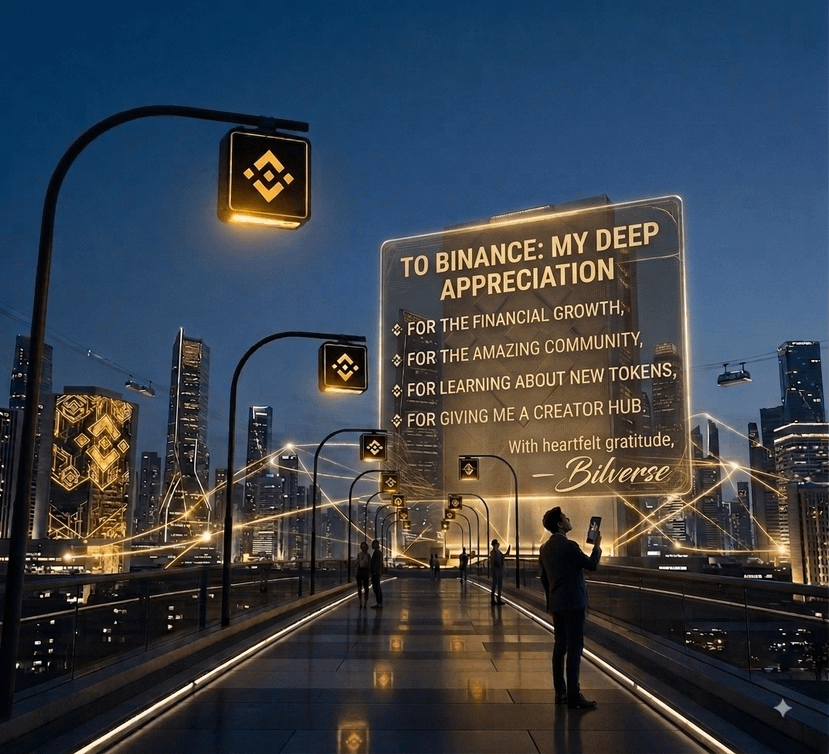
Thank you to everyone following the journey — and a special thank you to Binance and the Binance community. 🟡
What’s one loss or mistake in crypto that changed the way you trade?
I’d genuinely love to hear your story. ❤️
Maybe your experience can help someone who’s going through the same thing. 👀
#MyStory #TradingJourney #Bilverse #Binance #CryptoCommunity
I thought I was done with trading forever.
Back in Jan–Feb 2025, I was heavily into $TRUMP and $MELANIA
Everywhere I looked, people were talking about $TRUMP going to $99–$100.
I got caught up in it, dipped into my savings, and started trading futures with 50x leverage.
Then the market turned.
My positions were liquidated.
-$28K. 🥀
Honestly, that hurt.
I stepped away from trading and focused completely on my real estate business.
That ended up taking off.
Today, we’re a team of 150+ people. 🏢
Then, about 5 months ago, I started trading again.
Not to win back the $28K.
I just missed the markets. 😅📈
But this time, I have my business, my team, and a completely different perspective.
Trading doesn’t have to be my whole life.
About 45–50 days ago, I also started posting more here.
I never expected much from it.
Now we’re already 15K+. 🟡
Looking back, it’s crazy:
Last year: -$28K and a liquidated account.
Today: 150+ people in my business, back to trading, and 15K+ people following the journey.
I haven’t won back that $28K.
And I’m not trying to.
Trading is something I enjoy now — not something I need.
That, for me, is the real comeback. 🤝❤️
Thank you to everyone following the journey — and a special thank you to Binance and the Binance community. 🟡
What’s one loss or mistake in crypto that changed the way you trade?
I’d genuinely love to hear your story. ❤️
Maybe your experience can help someone who’s going through the same thing. 👀
#MyStory #TradingJourney #Bilverse #Binance #CryptoCommunity

Go!

奕澤YiiiiiZze
·
--
Recently, Bitcoin (BTC) has rebounded strongly from its 63,000 USD level and has moved above the 80,000 USD mark. Premiums have appeared on U.S. exchanges such as Coinbase, indicating a clear rebound in buy-side demand in the U.S. market. At the same time, Bitcoin spot ETFs have seen net inflows for multiple consecutive trading days, with total August inflows exceeding $3 billion.
Despite hawkish signals from Federal Reserve officials that have led to short-term consolidation at high levels, selling pressure from institutions and long-term holders has eased. Overall market sentiment remains steady and resilient.
Despite hawkish signals from Federal Reserve officials that have led to short-term consolidation at high levels, selling pressure from institutions and long-term holders has eased. Overall market sentiment remains steady and resilient.
Go!

白鲨观点
·
--
BearishPreviously I thought that trading, like any other industry,
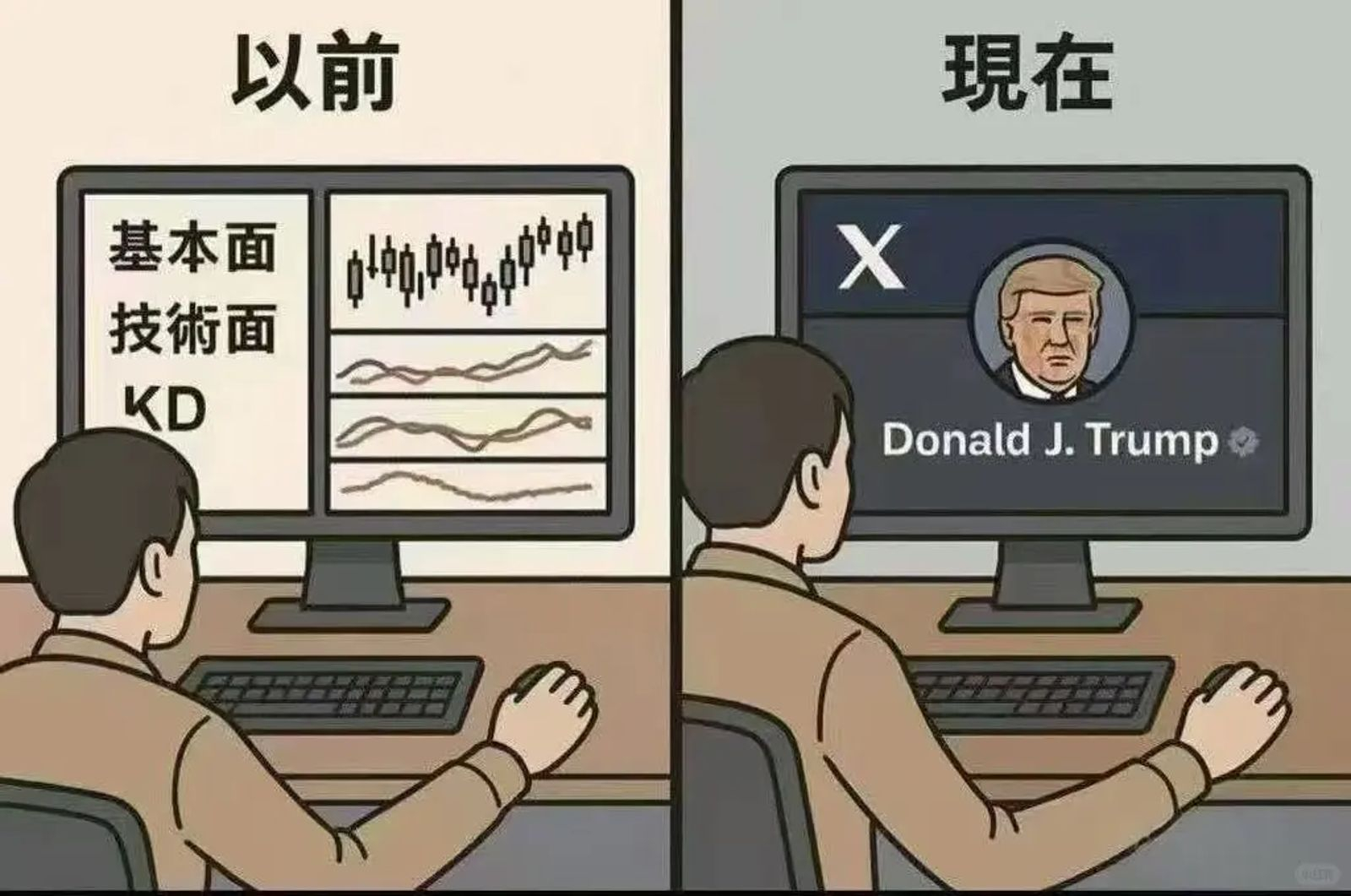
was the same: as long as you worked hard enough, you could get ahead. So I stared at the charts for 16 hours every day—drawing K-line charts over and over, studying dozens of indicators, scrolling the news nonstop for 24 hours. Even when I slept, I kept my phone under my pillow. Whenever the market moved, I’d wake up.
And what happened? The harder I tried, the more I lost.
Later, it gradually clicked for me:
Trading isn’t like construction work. It’s not that if you do one more hour, you’ll earn one more hour of money.
Quite the opposite.
The more frequently you trade, the higher the probability you’ll make mistakes.
The truly profitable trades are often the ones you wait for,
not the ones you force into existence.
Patience—waiting for the right opportunity,
patiently holding the correct position,
patiently letting profits grow on their own—
those stretches of time when it feels like you’re doing nothing,
are actually the most valuable part of trading.
It’s kind of ironic when you think about it:
When I first started, I was always hunting for opportunities, always wanting to trade. In the end, I lost terribly.
Now, I might only make trades once or twice a week—
and yet I earn more than before.
So sometimes I wonder:
are we really competing with the market,
or are we competing with our own “reluctance”?
Reluctant to miss any market move,
reluctant to let the money in the account sit idle,
reluctant to just watch other people make money…
In the end, I realized:
all that reluctance is a trap.
Slow down. Do less.
And you’ll go farther.
#BinanceSquare #BTC #交易心得 #交易认知
was the same: as long as you worked hard enough, you could get ahead. So I stared at the charts for 16 hours every day—drawing K-line charts over and over, studying dozens of indicators, scrolling the news nonstop for 24 hours. Even when I slept, I kept my phone under my pillow. Whenever the market moved, I’d wake up.
And what happened? The harder I tried, the more I lost.
Later, it gradually clicked for me:
Trading isn’t like construction work. It’s not that if you do one more hour, you’ll earn one more hour of money.
Quite the opposite.
The more frequently you trade, the higher the probability you’ll make mistakes.
The truly profitable trades are often the ones you wait for,
not the ones you force into existence.
Patience—waiting for the right opportunity,
patiently holding the correct position,
patiently letting profits grow on their own—
those stretches of time when it feels like you’re doing nothing,
are actually the most valuable part of trading.
It’s kind of ironic when you think about it:
When I first started, I was always hunting for opportunities, always wanting to trade. In the end, I lost terribly.
Now, I might only make trades once or twice a week—
and yet I earn more than before.
So sometimes I wonder:
are we really competing with the market,
or are we competing with our own “reluctance”?
Reluctant to miss any market move,
reluctant to let the money in the account sit idle,
reluctant to just watch other people make money…
In the end, I realized:
all that reluctance is a trap.
Slow down. Do less.
And you’ll go farther.
#BinanceSquare #BTC #交易心得 #交易认知
Go!


Zuby - PK
·
--
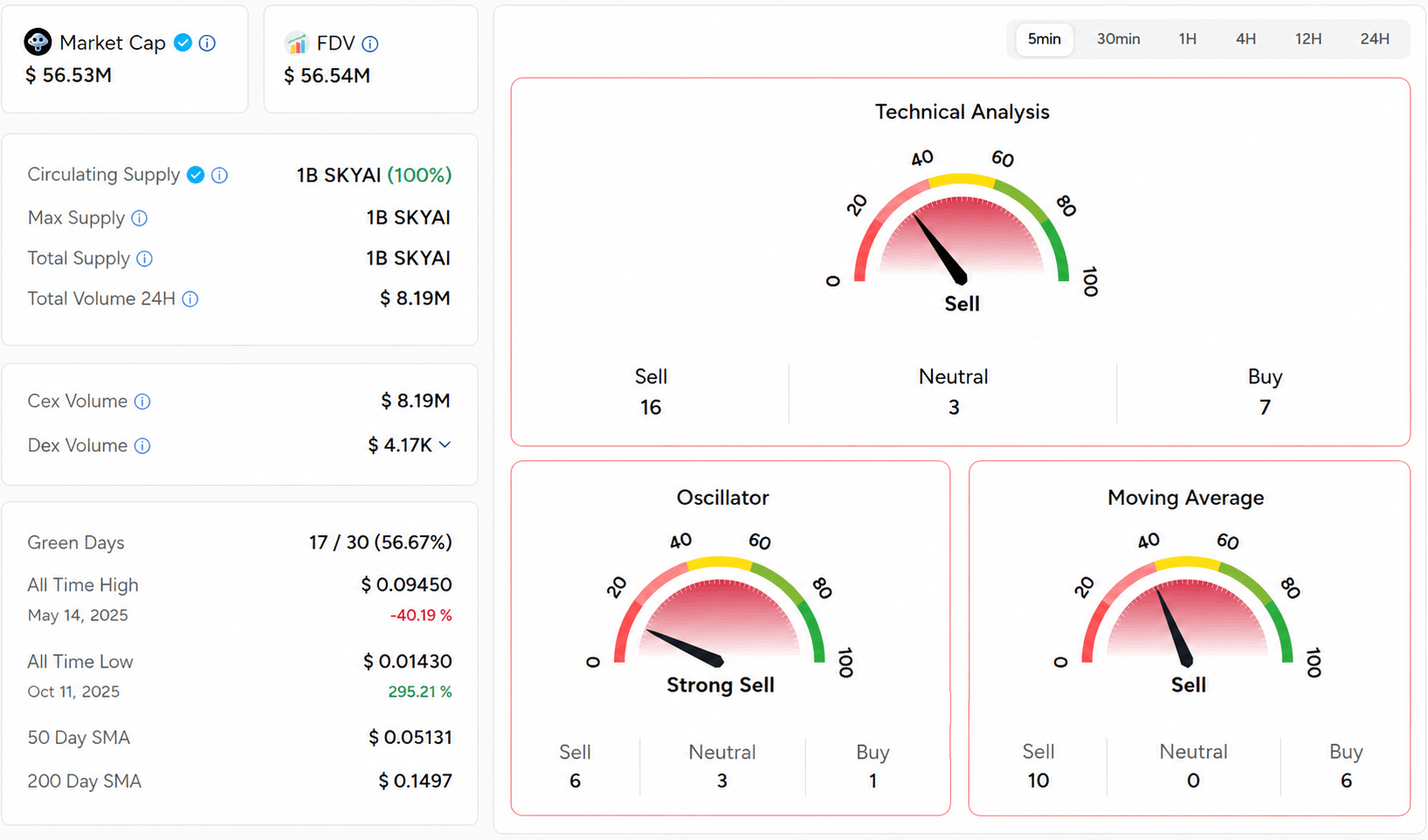
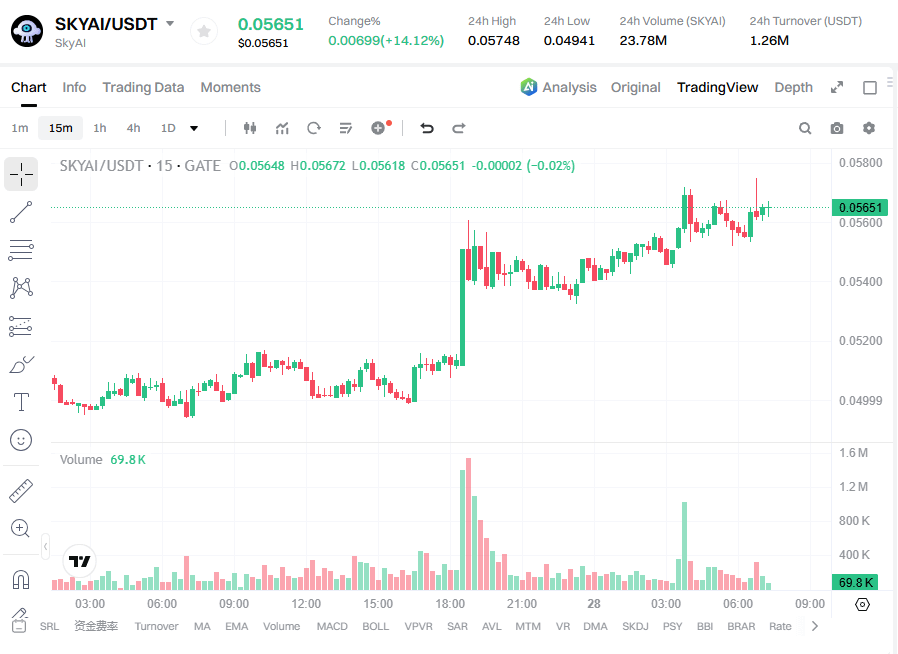
🚀 Today's Trending Altcoin Analysis: SKYAI Market Update: Strong Recovery but Mixed Signals
💰 Current Price & Volume
📊 SKYAI: $0.05630
📈 24H Change: +12.48%
💵 24H Volume: $8.18M
🪙 Circulating/Max Supply: 1B SKYAI
📈 Price Performance
🔥 SKYAI remains 40.42% below its $0.09450 ATH, reached on May 14, 2025.
🚀 However, it has surged 293.67% from its $0.01430 ATL, showing a strong recovery from its lows.
📊 Technical Outlook
⚠️ Short-term 5D/20D SMA crossover is bearish, pointing to weaker near-term momentum.
🟢 The 20D/50D crossover remains bullish, offering a more positive medium-term signal.
🔴 The 50D/200D crossover is bearish, keeping the longer-term trend under pressure.
🔍 Indicators
📉 RSI: 41.84 — neutral, with room before oversold conditions.
🔻 MACD: -0.000868 — indicates mild downward pressure.
🐂 Stochastic K: 4.77 — suggests the market is deeply compressed.
💰 MFI: 56.22 — indicates healthy market participation.
⚡ ROC: -52.1 — reflects negative momentum.
🌪️ Volatility: 18.10% — elevated market movement.
🎯 Bottom Line
⌯⌲ 🚀 SKYAI's strong recovery and recent 12.48% daily gain are encouraging, but mixed moving averages and negative momentum indicators suggest traders should remain cautious.
⌯⌲ Key resistance around the recent highs and support near the $0.051 50-day SMA may be important levels to watch.
#SKYAİ #SKYAICrypto #SKYAIAnalysis #SKYAITrading
🗣📢 Not financial advice. High volatility. Trade with risk management. DYOR ⚠️
$SKYAI
💰 Current Price & Volume
📊 SKYAI: $0.05630
📈 24H Change: +12.48%
💵 24H Volume: $8.18M
🪙 Circulating/Max Supply: 1B SKYAI
📈 Price Performance
🔥 SKYAI remains 40.42% below its $0.09450 ATH, reached on May 14, 2025.
🚀 However, it has surged 293.67% from its $0.01430 ATL, showing a strong recovery from its lows.
📊 Technical Outlook
⚠️ Short-term 5D/20D SMA crossover is bearish, pointing to weaker near-term momentum.
🟢 The 20D/50D crossover remains bullish, offering a more positive medium-term signal.
🔴 The 50D/200D crossover is bearish, keeping the longer-term trend under pressure.
🔍 Indicators
📉 RSI: 41.84 — neutral, with room before oversold conditions.
🔻 MACD: -0.000868 — indicates mild downward pressure.
🐂 Stochastic K: 4.77 — suggests the market is deeply compressed.
💰 MFI: 56.22 — indicates healthy market participation.
⚡ ROC: -52.1 — reflects negative momentum.
🌪️ Volatility: 18.10% — elevated market movement.
🎯 Bottom Line
⌯⌲ 🚀 SKYAI's strong recovery and recent 12.48% daily gain are encouraging, but mixed moving averages and negative momentum indicators suggest traders should remain cautious.
⌯⌲ Key resistance around the recent highs and support near the $0.051 50-day SMA may be important levels to watch.
#SKYAİ #SKYAICrypto #SKYAIAnalysis #SKYAITrading
🗣📢 Not financial advice. High volatility. Trade with risk management. DYOR ⚠️
$SKYAI
Go!

ANUUONCHAIN
·
--
😍🥰😍🥰😍🥰😍🥰😍🥰😍🥰😍🥰😍
🥵🥵🥵🥵🥵🥵🥵🥵🥵🥵🥵🥵🥵🥵🥵
follow me please
🙌🙌🙌🙌😼😼😼😼😼😼😼😼😼😼😼
🥵🥵🥵🥵🥵🥵🥵🥵🥵🥵🥵🥵🥵🥵🥵
follow me please
🙌🙌🙌🙌😼😼😼😼😼😼😼😼😼😼😼

Go!

龟龟财神到
·
--
Don't be sad, the flowers will bloom for you

Go!
大嗯BNB
·
--
BTC is trading in a tight range near 80,000, with Warsh giving his first keynote address tonight at Jackson Hole. 69% of fund managers expect a neutral tone—no specific rate signals.
Beyond the content of the speech itself, there’s one thing tonight that’s worth watching more than whether the tone is hawkish or dovish.
Analyst Lee proposed a key observation framework: after the speech, look at the synchrony between BTC and gold. If BTC rises while gold also rises and long-term bonds fall, it indicates the market is using BTC to trade narratives around government debt risk and currency debasement—the “digital gold” role is being confirmed. If BTC and stocks fall together, it suggests BTC is still priced as a pure high-volatility risk asset, with rate sensitivity outweighing any hedging narrative.
The difference between these two scenarios is not about how much the price moves tonight, but rather what role this asset class actually plays within the macro framework. That question has remained unanswered throughout the first half of 2026, and tonight’s price action may provide a partial answer.
The variables that truly affect short-term prices, ranked by importance, are: dollar funding conditions, real yields, and term premium. These three are more directly relevant than rate decisions themselves. By contrast, the Fed’s balance sheet, the Treasury’s cash balance, and bank reserves affect liquidity structure over a longer horizon.
After tonight’s speech ends, don’t rush to chase or cut. Watch the direction of gold and long-term bonds rather than relying on BTC’s own price to judge the real logic behind this sell-off and rebound.
Since Warsh took office, he has abandoned forward guidance—each speech is the only source of information. If he offers any positive remarks regarding financial innovation, stablecoins, or a regulatory framework for digital assets, that would be a structural positive catalyst independent of the rate path. Its long-term impact on the crypto industry could exceed any instance of a pause in rate hikes.
What are you planning to focus on tonight when it comes to this speech? Will you watch the wording on rates, or the synchrony between BTC and gold? Share your thoughts.
$BTC
Beyond the content of the speech itself, there’s one thing tonight that’s worth watching more than whether the tone is hawkish or dovish.
Analyst Lee proposed a key observation framework: after the speech, look at the synchrony between BTC and gold. If BTC rises while gold also rises and long-term bonds fall, it indicates the market is using BTC to trade narratives around government debt risk and currency debasement—the “digital gold” role is being confirmed. If BTC and stocks fall together, it suggests BTC is still priced as a pure high-volatility risk asset, with rate sensitivity outweighing any hedging narrative.
The difference between these two scenarios is not about how much the price moves tonight, but rather what role this asset class actually plays within the macro framework. That question has remained unanswered throughout the first half of 2026, and tonight’s price action may provide a partial answer.
The variables that truly affect short-term prices, ranked by importance, are: dollar funding conditions, real yields, and term premium. These three are more directly relevant than rate decisions themselves. By contrast, the Fed’s balance sheet, the Treasury’s cash balance, and bank reserves affect liquidity structure over a longer horizon.
After tonight’s speech ends, don’t rush to chase or cut. Watch the direction of gold and long-term bonds rather than relying on BTC’s own price to judge the real logic behind this sell-off and rebound.
Since Warsh took office, he has abandoned forward guidance—each speech is the only source of information. If he offers any positive remarks regarding financial innovation, stablecoins, or a regulatory framework for digital assets, that would be a structural positive catalyst independent of the rate path. Its long-term impact on the crypto industry could exceed any instance of a pause in rate hikes.
What are you planning to focus on tonight when it comes to this speech? Will you watch the wording on rates, or the synchrony between BTC and gold? Share your thoughts.
$BTC

Go!
Sheemm
·
--
🎁🎁🎁🎁 GOOD AFTERNOON
LIKE REPOST COMMENT AND
CLAIM 🤗🤗$BNB 🎁🎁🎁🎁
$MOVR
$HEMI
#NYSilverFuturesDrop3%
#RedPacketMission 😊
LIKE REPOST COMMENT AND
CLAIM 🤗🤗$BNB 🎁🎁🎁🎁
$MOVR
$HEMI
#NYSilverFuturesDrop3%
#RedPacketMission 😊
Go!

Prof Denial
·
--
I’m giving a $DOGE 🐶 reward 🎁 to our community as a BIG gift of appreciation.
💛claim it before the reward is gone.💛
💛 Don’t wait and miss your chance! 💛
💛claim it before the reward is gone.💛
💛 Don’t wait and miss your chance! 💛

Go!

圣克斯Lucky1688
·
--
🧧🧧🔥🔥🧧🧧With inflation remaining the main focus, uncertainty around the Fed is on the rise. Less guidance may mean increased market volatility—so watch the data, yields, and liquidity closely. Follow me, answer 1 to the question, and take away the $SOL red envelope 🧧🧧🔥🔥🧧🧧.

Go!

Muzamil Abbas⁷⁵ 穆扎米尔_阿巴斯
·
--
Bullish🎁 $SHIB GIVEAWAY WORTH $100 🎁
I’m giving away SHIB Gift Boxes to 3,000 lucky people! 🐕🔥
To participate:
❤️ Like this post ✅
🔁 Repost this post ✅
💬 Comment “1” below ✅
🎁 Claim your Gift Box ✅
Good luck everyone🚀✨
#SHIB #Giveaway #Binance #CryptoGiveaway

Go!

x_Rex
·
--
🧧 Happy Friday, everyone 🧧
Repost✅, + Claim✅
Type 👉 blessing .
Not gonna pretend today was easy, it wasn't. red days happen to all of us, and today hit harder than most. but Fridays have a way of resetting something in me, so here's a small red packet to pass a little good luck around.
First come first served.
Whatever kind of week you had, I hope your Friday is softer than mine was. we go again.
Repost✅, + Claim✅
Type 👉 blessing .
Not gonna pretend today was easy, it wasn't. red days happen to all of us, and today hit harder than most. but Fridays have a way of resetting something in me, so here's a small red packet to pass a little good luck around.
First come first served.
Whatever kind of week you had, I hope your Friday is softer than mine was. we go again.

Go!

Night King Official
·
--
🚨 GIVEAWAY LIVE! 🎁
3,000 Red Packets are up for grabs! 🔥
✅ Follow
🔁 Repost
💬 Comment "666"
🎁 Claim Reward
Who’s ready? 👀
3,000 Red Packets are up for grabs! 🔥
✅ Follow
🔁 Repost
💬 Comment "666"
🎁 Claim Reward
Who’s ready? 👀

Go!

Ahmed Ali Nizamani
·
--
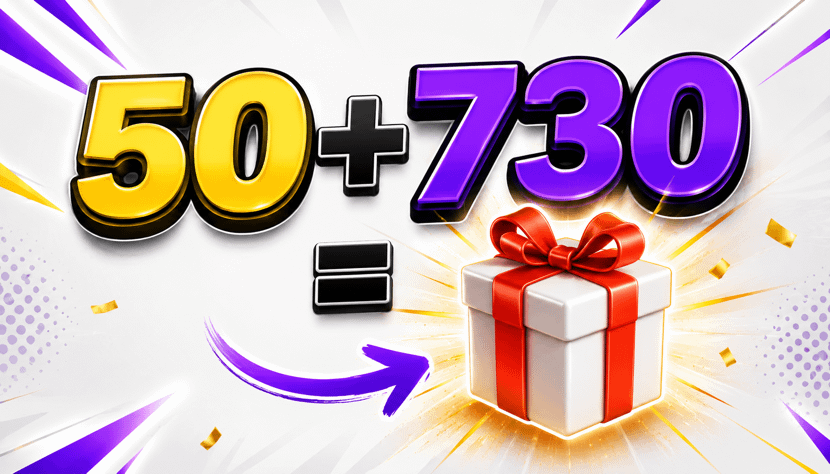
50 + 730 = 🎁🎁🎁🎁✨
Go!

PK Aima
·
--
Respect others and be honest . 🎀🎀🎀like it
share it
follow
and claim reward 🎀🎀🎀
share it
follow
and claim reward 🎀🎀🎀

Go!

BOSS BNB
·
--
Good EVENING
CLICK 👉🏻CLAIM THE WEB3 BENEFIT
GOOD LUCK🫰🏻
CLICK 👉🏻CLAIM THE WEB3 BENEFIT
GOOD LUCK🫰🏻
Go!

Leo - F0
·
--
Bullish🔥🧧🧧GREETINGS TO MY FAMILY FROM DUBAİ WITH A RED GIFT PACKAGE.🧧🧧🔥
"Shed your worries under the palm tree shade. Chasing the paradise your dreams have made." 🏝️🍹🛥️
$BTC 🔥🔥🧧🧧 #Dubai_Crypto_Group
#金价升破4400美元创两月高
$BNB $ETH
#1688家族family 💚 @周周1688
#xrp #Binance
"Shed your worries under the palm tree shade. Chasing the paradise your dreams have made." 🏝️🍹🛥️
$BTC 🔥🔥🧧🧧 #Dubai_Crypto_Group
#金价升破4400美元创两月高
$BNB $ETH
#1688家族family 💚 @周周1688
#xrp #Binance

Go!

NVD Insights
·
--
Big Big Big chance to get free $DOGE
Drop "NVD"
Drop "NVD"

🚨 $PROM SHORT SETUP — SUPPLY IS GETTING TESTED
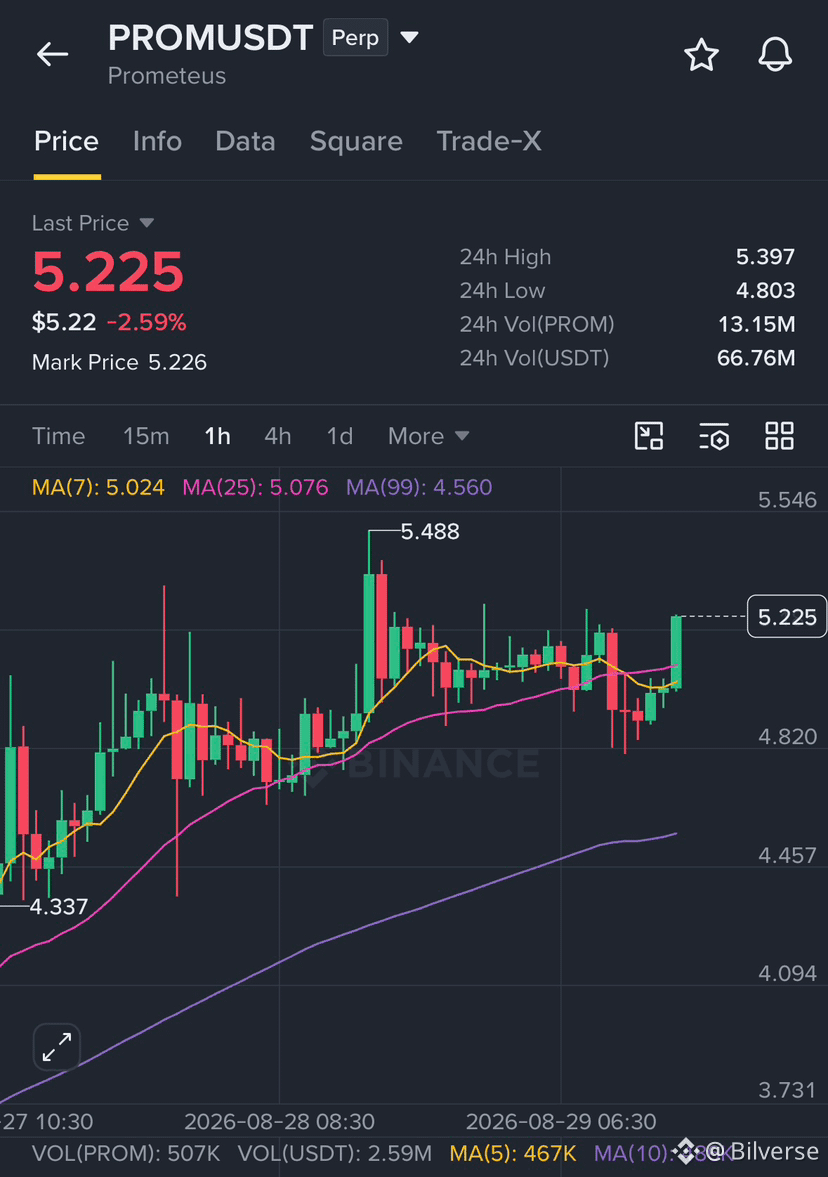
$PROM is sitting at 5.225 after pushing into a key resistance area.
This is where I’m watching for the rejection. 👀
Trade Plan:
🔴 Entry: 5.225 – 5.300
🎯 TP1: 5.076
🎯 TP2: 4.983
🎯 TP3: 4.820
🛑 SL: 5.397
Why this setup?
• Price is trading above the MA(7) at 5.024 and MA(25) at 5.076, making the current zone a key decision area.
• 5.397 is the visible 24H high — clean invalidation for the short thesis.
• Below, 4.983 → 4.820 opens the path toward the lower part of the range.
• 24H volume is already sitting around 66.76M USDT, so this is not a dead market.
The setup is simple:
Reject the supply → lose 5.07 → sellers can start hunting 4.98 and 4.82.
I’m not chasing the candle.
I’m waiting for confirmation and letting the level do the work. 🎯
#PROM #Altcoins #TradingSetup #Bilverse
$PROM is sitting at 5.225 after pushing into a key resistance area.
This is where I’m watching for the rejection. 👀
Trade Plan:
🔴 Entry: 5.225 – 5.300
🎯 TP1: 5.076
🎯 TP2: 4.983
🎯 TP3: 4.820
🛑 SL: 5.397
Why this setup?
• Price is trading above the MA(7) at 5.024 and MA(25) at 5.076, making the current zone a key decision area.
• 5.397 is the visible 24H high — clean invalidation for the short thesis.
• Below, 4.983 → 4.820 opens the path toward the lower part of the range.
• 24H volume is already sitting around 66.76M USDT, so this is not a dead market.
The setup is simple:
Reject the supply → lose 5.07 → sellers can start hunting 4.98 and 4.82.
I’m not chasing the candle.
I’m waiting for confirmation and letting the level do the work. 🎯
#PROM #Altcoins #TradingSetup #Bilverse
Log in to explore more content