
Binance News
366.2k Posts

Binance News
 Binance Officially Verified Account
Report
Follow Binance News to stay on top of industry trends & news
9 Following
2.3M+ Followers
2.8M+ Liked
Top
Replies
Videos
·
--
Article
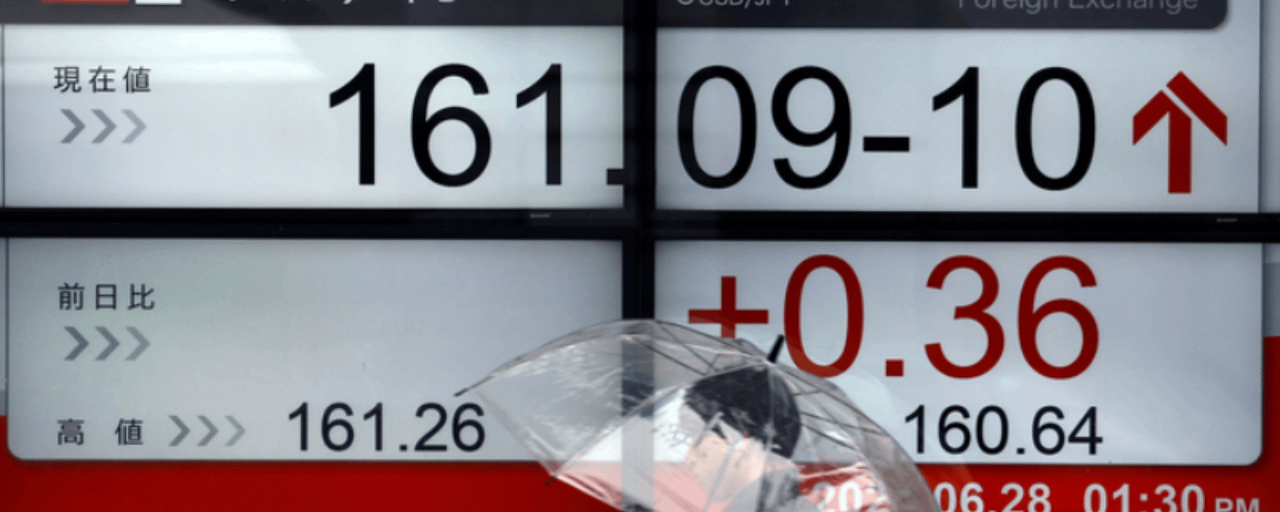
Yen Passes 160 Per Dollar to Hit Weakest Level in a MonthThe yen moved past 160 per US dollar to its weakest level in a month, extending a slide that has erased more than half of its intervention-fueled gains, according to Bloomberg. The Japanese currency fell as much as 0.5% to 160.20 versus the greenback on Friday after the dollar got a boost from Federal Reserve Chairman Kevin Warsh's vow to hit the central bank's inflation target, with traders now watching for signs of when authorities might move to protect the currency. Hedge funds added to short yen bets for a second straight week, according to Commodity Futures Trading Commission data for the period ending Aug. 25.
The yen has been under pressure since failing to push through 155 earlier this month, in the wake of joint action on July 31 when the US and Japan conducted their first coordinated yen-buying intervention since 1998. The latest weakness came even after Treasury Secretary Scott Bessent made a fresh attempt to rein in long-term US borrowing costs from multi-year highs. Bank of America strategist Alex Cohen said intervention expectations will inevitably increase with the yen at the psychologically relevant 160 level, though authorities are likely to be more patient given the move is largely dollar- and US-rates-driven. Investors remain concerned about the wide rate gap between Japan and other economies, the country's heavy debt burden and rising oil prices.
State Street Investment Management's Masahiko Loo said the mid-160s is becoming a policy level rather than a valuation level, with Washington and Tokyo effectively drawing a political line in the sand, and did not rule out another round of intervention before a potential Bank of Japan hike as early as September. The BOJ meets next month, with markets pricing in about an 80% chance of a hike, while traders also expect a Fed rate increase this year. BNY strategist Geoffrey Yu said he expects Japanese authorities to hold off on intervention for now with the rates meeting approaching.
Prime Minister Sanae Takaichi's government is said to support a near-term BOJ hike given the yen weakness. The currency had been near a four-decade low of around 164 per dollar before the late-July intervention that saw the US join Japan in its defense, and authorities had also intervened in the summer of 2024 when the yen crossed the 160-per-dollar level.
Yen Passes 160 Per Dollar to Hit Weakest Level in a Month
The yen moved past 160 per US dollar to its weakest level in a month, extending a slide that has erased more than half of its intervention-fueled gains, according to Bloomberg. The Japanese currency fell as much as 0.5% to 160.20 versus the greenback on Friday after the dollar got a boost from Federal Reserve Chairman Kevin Warsh's vow to hit the central bank's inflation target, with traders now watching for signs of when authorities might move to protect the currency. Hedge funds added to short yen bets for a second straight week, according to Commodity Futures Trading Commission data for the period ending Aug. 25.
The yen has been under pressure since failing to push through 155 earlier this month, in the wake of joint action on July 31 when the US and Japan conducted their first coordinated yen-buying intervention since 1998. The latest weakness came even after Treasury Secretary Scott Bessent made a fresh attempt to rein in long-term US borrowing costs from multi-year highs. Bank of America strategist Alex Cohen said intervention expectations will inevitably increase with the yen at the psychologically relevant 160 level, though authorities are likely to be more patient given the move is largely dollar- and US-rates-driven. Investors remain concerned about the wide rate gap between Japan and other economies, the country's heavy debt burden and rising oil prices.
State Street Investment Management's Masahiko Loo said the mid-160s is becoming a policy level rather than a valuation level, with Washington and Tokyo effectively drawing a political line in the sand, and did not rule out another round of intervention before a potential Bank of Japan hike as early as September. The BOJ meets next month, with markets pricing in about an 80% chance of a hike, while traders also expect a Fed rate increase this year. BNY strategist Geoffrey Yu said he expects Japanese authorities to hold off on intervention for now with the rates meeting approaching.
Prime Minister Sanae Takaichi's government is said to support a near-term BOJ hike given the yen weakness. The currency had been near a four-decade low of around 164 per dollar before the late-July intervention that saw the US join Japan in its defense, and authorities had also intervened in the summer of 2024 when the yen crossed the 160-per-dollar level.
The yen has been under pressure since failing to push through 155 earlier this month, in the wake of joint action on July 31 when the US and Japan conducted their first coordinated yen-buying intervention since 1998. The latest weakness came even after Treasury Secretary Scott Bessent made a fresh attempt to rein in long-term US borrowing costs from multi-year highs. Bank of America strategist Alex Cohen said intervention expectations will inevitably increase with the yen at the psychologically relevant 160 level, though authorities are likely to be more patient given the move is largely dollar- and US-rates-driven. Investors remain concerned about the wide rate gap between Japan and other economies, the country's heavy debt burden and rising oil prices.
State Street Investment Management's Masahiko Loo said the mid-160s is becoming a policy level rather than a valuation level, with Washington and Tokyo effectively drawing a political line in the sand, and did not rule out another round of intervention before a potential Bank of Japan hike as early as September. The BOJ meets next month, with markets pricing in about an 80% chance of a hike, while traders also expect a Fed rate increase this year. BNY strategist Geoffrey Yu said he expects Japanese authorities to hold off on intervention for now with the rates meeting approaching.
Prime Minister Sanae Takaichi's government is said to support a near-term BOJ hike given the yen weakness. The currency had been near a four-decade low of around 164 per dollar before the late-July intervention that saw the US join Japan in its defense, and authorities had also intervened in the summer of 2024 when the yen crossed the 160-per-dollar level.
2
1
19
10.2k
·
--
Article
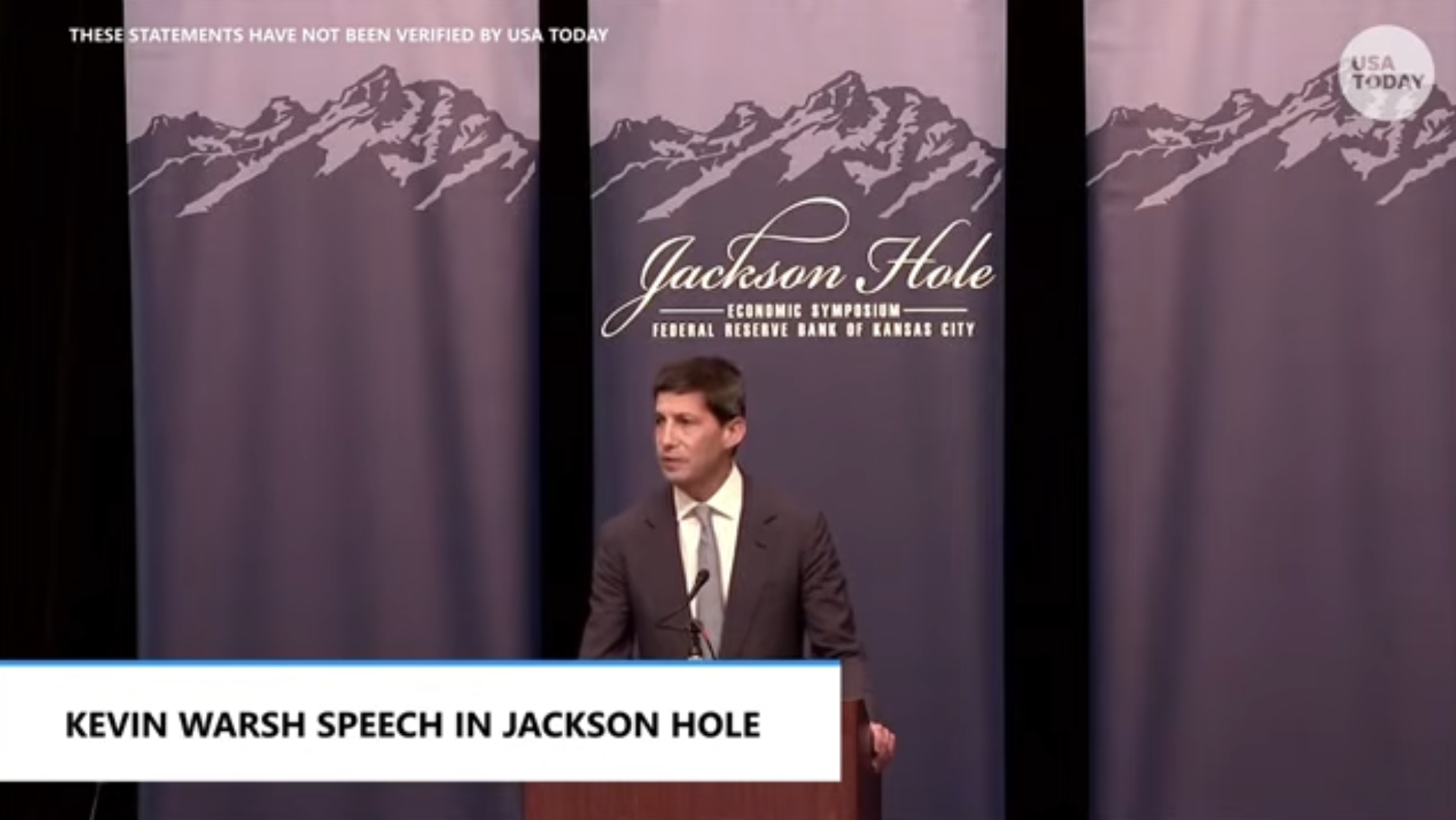
Market News: Warsh Says "We Have Work to Do" on Inflation as September Hike Odds Jump to 50%Federal Reserve Chairman Kevin Warsh used his first Jackson Hole keynote to place inflation at the center of the Fed's near-term agenda, telling the Kansas City Fed's annual symposium that "the responsibility for 65 months of sustained, elevated inflation sits squarely with the central bank.""We must be confident that underlying inflation is moving to our objective, clearly and at sufficient speed," he said. "Otherwise, we have work to do. That's our job, our mandate, and our charge to keep."Markets repriced immediately. September rate hike odds jumped to 42% from 35% a day earlier per CME FedWatch, and StoneX market analyst Fawad Razaqzada put the intraday move at 30% to roughly 50% during the speech itself. Bitcoin dipped to $78,700 from just under $80,000. US stocks fell modestly and bond yields moved higher.Warsh Refused to Pre-Commit but the Substance Repriced the PathWarsh opened by warning against reading the speech as a rate signal: "You can call it an outline. You can call it a trail map. Just don't call it forward guidance."That was the expected line. Razaqzada noted Warsh said what markets anticipated on forward guidance — that he does not believe in it and would not pre-commit to September. What moved pricing was the substance underneath, which Razaqzada described as "quite hawkish" and more hawkish than expected.Jackson Hole has historically been where Fed chairs prepare markets for policy shifts, which is why a first appearance by a new chair carried outsized weight regardless of what he declined to promise.PCE at 3.7% With the Six-Month Trend Running HotterThe inflation data Warsh presented is what drove the repricing.The 12-month change in the PCE price index stands at 3.7%, with the six-month change at 4.1% — meaning the more recent trend is running above the annual figure rather than converging toward target. Comparable CPI measures are also elevated, as are core measures of both.He addressed the summer's softer prints directly, closing off the dovish interpretation markets had partly built on: "While this summer's PCE and CPI readings were better than expected, they do not tell me that underlying trends have meaningfully improved."His disaggregation of the PCE basket reinforced the point. Over the past 12 months, 54% of its 199 components showed price increases above 3% — below post-pandemic highs of roughly 77%, but well above the 32% average across the two pre-pandemic decades. Over six months, 49% showed annualized increases above 3%.Warsh described the 2% PCE target as "a firm, fixed target" and added that "price stability is not self-executing, nor is inflation necessarily mean-reverting. It is the Fed's job to deliver stable prices."He also flagged that "the recent rise in overall commodity prices also bears watching" — relevant with Brent having traded above $90 for much of the month before easing on the Iran-Oman Strait of Hormuz agreement.Financial Conditions Are Not Restrictive, Removing an Argument for HoldingThe passage with the clearest policy implication was Warsh's read on financial conditions.Credit spreads on corporate bonds and leveraged loans sit near the low ends of their historical ranges with strong issuance volumes this year. Banks reported in the July Senior Loan Officer Opinion Survey that commercial and industrial lending standards are on the easier end of their historical range. "Credit and loan markets are showing few signs of policy restraint," Warsh said.Outside strains in housing and agriculture, he concluded, "I would be hard pressed to describe broad financial conditions as restrictive."That matters because "policy is already restrictive" is a standard argument for waiting. A chair who does not believe conditions are restrictive has correspondingly less reason to hold.Labor Markets Consistent With Full EmploymentWarsh was unambiguous on the employment side of the mandate, and pre-empted the argument that weak payrolls justify easing.The jobless rate at 4.1% remains low by historical standards and has not changed much for a couple of years. Four-week average unemployment claims are near their lowest level in decades. "I believe the labor markets are consistent with full employment," he said.On soft monthly job gains: "When labor supply is barely growing, monthly job gains are naturally going to run low." He attributed low turnover partly to the large-scale rematching between employers and employees that occurred post-pandemic.He also described the broader economy as having strengthened — four-quarter growth in equipment and intangibles investment around 9%, the highest since 2021, with more than half attributable to AI buildout; S&P 500 profits up more than 20% over the past year; and private domestic final purchases rising at nearly 3% this calendar year.Forward Guidance "Has Overstayed Its Welcome"The speech's central institutional argument was that forward guidance, adopted during the Global Financial Crisis, should be limited outside genuine crises."Transparency in communications about future policy decisions is not a virtue unto itself," Warsh said. "Communications must be in service to the Fed's paramount responsibility: getting monetary policy right." Oversharing deliberations and overcommitting to future decisions can lead markets, businesses and households astray, and quasi-commitments on rates inhibit the Fed's own freedom to decide correctly.He invoked the hall-of-mirrors problem — if markets rely materially on Fed guidance while the Fed relies on market prices, both are more likely to be blinded to new developments. His framing of who bears that cost was pointed: "The most serious harm is likely to befall those without financial assets. If the Fed gets inflation wrong and judges the economy wrong, who gets the worst of it? Not the financial high-fliers."He rejected committing to an explicit reaction function as well, saying forecasts illustrating one work "better in theory than in practice, better in the lab than in the field," and noting forward guidance in 2021 may have slowed the response to high inflation.MUFG's Derek Halpenny had expected precisely this and warned the long end could face pressure absent credible fiscal consolidation. Fidelity's Jurrien Timmer has separately identified reduced Fed transparency as a driver of the term premium surge — less transparency meaning more uncertainty and higher risk premia.AI as a Potential New Factor of ProductionWarsh devoted substantial time to artificial intelligence, describing it as "a new variable — potentially a new factor of production" with consequences for both the economy and monetary policy.He cited annualized token sales at the two leading labs exceeding $100 billion, up more than 500% from a year ago, and said "a kind of hyper-Moore's law seems to be playing out." A Fed task force on productivity and jobs is examining the implications, though he stressed its recommendations "have no bearing on decisions we make in the current policy conjuncture."His open questions — where returns on capital will land, whether token usage complements or competes with labor, what the equilibrium price of tokens will be — mirror the return-on-capital debate that has driven AI equity volatility through August.Non-Farm Payrolls and CPI Become the Deciding DataA non-farm payrolls report and a CPI release land before the September 16 meeting, alongside several smaller data points.Razaqzada's framing is that under the new chairman the Fed has become more data-dependent — which follows directly from the rejection of forward guidance. A Fed that will not pre-commit is one whose decision genuinely turns on what arrives in the intermeeting period.He flagged a specific asymmetry: recent US jobs reports have consistently missed expectations and fallen far short. Further weakness could severely undermine expectations for a September hike.That is the tension in Warsh's own position. He described labor markets as consistent with full employment and explained away weak monthly gains as a labor supply effect. A genuinely data-dependent Fed facing another disappointing payrolls print would find that framing harder to sustain.The Position Risk for Bitcoin at $78,700Bitcoin's dip to $78,700 comes after a week in which it added roughly 9% while hike expectations were already rising — the divergence that made the speech a position risk rather than a routine event.The rally was built on lower long-end yields and a weaker dollar following Treasury Secretary Bessent's bond buyback expansion. The 10-year had fallen seven basis points on the week to 4.67%, the dollar index sat just above 99, and Brent eased below $90 on the Iran-Oman agreement. Spot Bitcoin ETFs absorbed $2.8 billion across eight consecutive sessions, with August one session from becoming the largest inflow month since the funds launched.Warsh's assessment that conditions are not restrictive does not directly reverse that backdrop, but it removes the dovish confirmation markets had partly priced.The technical picture compounds it. Glassnode data shows nearly 8% of Bitcoin's supply was acquired between $80,000 and $82,000 — the largest concentration at any comparable range — with the US spot ETF cohort's average cost basis in the same band and the 50-week moving average at $81,081, where Bitcoin was rejected earlier in the week.Absorbing that supply requires sustained spot demand rather than short covering. Whether the ETF streak survives a repriced rate path is the more relevant variable than any single technical level.Warsh closed by committing to nothing: "I stand here today committed to a discipline, not to a decision."
Market News: Warsh Says "We Have Work to Do" on Inflation as September Hike Odds Jump to 50%
Federal Reserve Chairman Kevin Warsh used his first Jackson Hole keynote to place inflation at the center of the Fed's near-term agenda, telling the Kansas City Fed's annual symposium that "the responsibility for 65 months of sustained, elevated inflation sits squarely with the central bank.""We must be confident that underlying inflation is moving to our objective, clearly and at sufficient speed," he said. "Otherwise, we have work to do. That's our job, our mandate, and our charge to keep."Markets repriced immediately. September rate hike odds jumped to 42% from 35% a day earlier per CME FedWatch, and StoneX market analyst Fawad Razaqzada put the intraday move at 30% to roughly 50% during the speech itself. Bitcoin dipped to $78,700 from just under $80,000. US stocks fell modestly and bond yields moved higher.Warsh Refused to Pre-Commit but the Substance Repriced the PathWarsh opened by warning against reading the speech as a rate signal: "You can call it an outline. You can call it a trail map. Just don't call it forward guidance."That was the expected line. Razaqzada noted Warsh said what markets anticipated on forward guidance — that he does not believe in it and would not pre-commit to September. What moved pricing was the substance underneath, which Razaqzada described as "quite hawkish" and more hawkish than expected.Jackson Hole has historically been where Fed chairs prepare markets for policy shifts, which is why a first appearance by a new chair carried outsized weight regardless of what he declined to promise.PCE at 3.7% With the Six-Month Trend Running HotterThe inflation data Warsh presented is what drove the repricing.The 12-month change in the PCE price index stands at 3.7%, with the six-month change at 4.1% — meaning the more recent trend is running above the annual figure rather than converging toward target. Comparable CPI measures are also elevated, as are core measures of both.He addressed the summer's softer prints directly, closing off the dovish interpretation markets had partly built on: "While this summer's PCE and CPI readings were better than expected, they do not tell me that underlying trends have meaningfully improved."His disaggregation of the PCE basket reinforced the point. Over the past 12 months, 54% of its 199 components showed price increases above 3% — below post-pandemic highs of roughly 77%, but well above the 32% average across the two pre-pandemic decades. Over six months, 49% showed annualized increases above 3%.Warsh described the 2% PCE target as "a firm, fixed target" and added that "price stability is not self-executing, nor is inflation necessarily mean-reverting. It is the Fed's job to deliver stable prices."He also flagged that "the recent rise in overall commodity prices also bears watching" — relevant with Brent having traded above $90 for much of the month before easing on the Iran-Oman Strait of Hormuz agreement.Financial Conditions Are Not Restrictive, Removing an Argument for HoldingThe passage with the clearest policy implication was Warsh's read on financial conditions.Credit spreads on corporate bonds and leveraged loans sit near the low ends of their historical ranges with strong issuance volumes this year. Banks reported in the July Senior Loan Officer Opinion Survey that commercial and industrial lending standards are on the easier end of their historical range. "Credit and loan markets are showing few signs of policy restraint," Warsh said.Outside strains in housing and agriculture, he concluded, "I would be hard pressed to describe broad financial conditions as restrictive."That matters because "policy is already restrictive" is a standard argument for waiting. A chair who does not believe conditions are restrictive has correspondingly less reason to hold.Labor Markets Consistent With Full EmploymentWarsh was unambiguous on the employment side of the mandate, and pre-empted the argument that weak payrolls justify easing.The jobless rate at 4.1% remains low by historical standards and has not changed much for a couple of years. Four-week average unemployment claims are near their lowest level in decades. "I believe the labor markets are consistent with full employment," he said.On soft monthly job gains: "When labor supply is barely growing, monthly job gains are naturally going to run low." He attributed low turnover partly to the large-scale rematching between employers and employees that occurred post-pandemic.He also described the broader economy as having strengthened — four-quarter growth in equipment and intangibles investment around 9%, the highest since 2021, with more than half attributable to AI buildout; S&P 500 profits up more than 20% over the past year; and private domestic final purchases rising at nearly 3% this calendar year.Forward Guidance "Has Overstayed Its Welcome"The speech's central institutional argument was that forward guidance, adopted during the Global Financial Crisis, should be limited outside genuine crises."Transparency in communications about future policy decisions is not a virtue unto itself," Warsh said. "Communications must be in service to the Fed's paramount responsibility: getting monetary policy right." Oversharing deliberations and overcommitting to future decisions can lead markets, businesses and households astray, and quasi-commitments on rates inhibit the Fed's own freedom to decide correctly.He invoked the hall-of-mirrors problem — if markets rely materially on Fed guidance while the Fed relies on market prices, both are more likely to be blinded to new developments. His framing of who bears that cost was pointed: "The most serious harm is likely to befall those without financial assets. If the Fed gets inflation wrong and judges the economy wrong, who gets the worst of it? Not the financial high-fliers."He rejected committing to an explicit reaction function as well, saying forecasts illustrating one work "better in theory than in practice, better in the lab than in the field," and noting forward guidance in 2021 may have slowed the response to high inflation.MUFG's Derek Halpenny had expected precisely this and warned the long end could face pressure absent credible fiscal consolidation. Fidelity's Jurrien Timmer has separately identified reduced Fed transparency as a driver of the term premium surge — less transparency meaning more uncertainty and higher risk premia.AI as a Potential New Factor of ProductionWarsh devoted substantial time to artificial intelligence, describing it as "a new variable — potentially a new factor of production" with consequences for both the economy and monetary policy.He cited annualized token sales at the two leading labs exceeding $100 billion, up more than 500% from a year ago, and said "a kind of hyper-Moore's law seems to be playing out." A Fed task force on productivity and jobs is examining the implications, though he stressed its recommendations "have no bearing on decisions we make in the current policy conjuncture."His open questions — where returns on capital will land, whether token usage complements or competes with labor, what the equilibrium price of tokens will be — mirror the return-on-capital debate that has driven AI equity volatility through August.Non-Farm Payrolls and CPI Become the Deciding DataA non-farm payrolls report and a CPI release land before the September 16 meeting, alongside several smaller data points.Razaqzada's framing is that under the new chairman the Fed has become more data-dependent — which follows directly from the rejection of forward guidance. A Fed that will not pre-commit is one whose decision genuinely turns on what arrives in the intermeeting period.He flagged a specific asymmetry: recent US jobs reports have consistently missed expectations and fallen far short. Further weakness could severely undermine expectations for a September hike.That is the tension in Warsh's own position. He described labor markets as consistent with full employment and explained away weak monthly gains as a labor supply effect. A genuinely data-dependent Fed facing another disappointing payrolls print would find that framing harder to sustain.The Position Risk for Bitcoin at $78,700Bitcoin's dip to $78,700 comes after a week in which it added roughly 9% while hike expectations were already rising — the divergence that made the speech a position risk rather than a routine event.The rally was built on lower long-end yields and a weaker dollar following Treasury Secretary Bessent's bond buyback expansion. The 10-year had fallen seven basis points on the week to 4.67%, the dollar index sat just above 99, and Brent eased below $90 on the Iran-Oman agreement. Spot Bitcoin ETFs absorbed $2.8 billion across eight consecutive sessions, with August one session from becoming the largest inflow month since the funds launched.Warsh's assessment that conditions are not restrictive does not directly reverse that backdrop, but it removes the dovish confirmation markets had partly priced.The technical picture compounds it. Glassnode data shows nearly 8% of Bitcoin's supply was acquired between $80,000 and $82,000 — the largest concentration at any comparable range — with the US spot ETF cohort's average cost basis in the same band and the 50-week moving average at $81,081, where Bitcoin was rejected earlier in the week.Absorbing that supply requires sustained spot demand rather than short covering. Whether the ETF streak survives a repriced rate path is the more relevant variable than any single technical level.Warsh closed by committing to nothing: "I stand here today committed to a discipline, not to a decision."
2
25
10.1k
·
--
Article
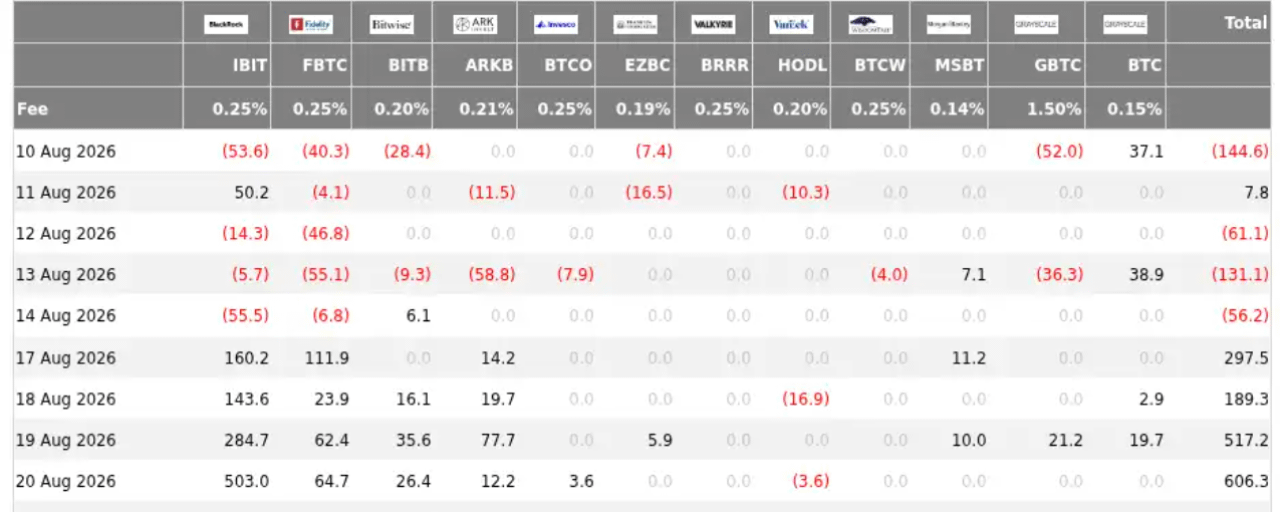
Bitcoin ETF Ends 9-Day Inflow Streak as Jiang Zhuoer Sells Half of ETH Spot HoldingsJiang Zhuoer said on X that Bitcoin ETFs turned to net outflows on Friday, ending a nine-day streak of inflows. According to Odaily, he also said Federal Reserve Chair Kevin Warsh sent hawkish signals and that Bitcoin will face its first test since the recent rally. Jiang added that he sold 50% of his ETH spot position during Friday's decline.
Bitcoin ETF Ends 9-Day Inflow Streak as Jiang Zhuoer Sells Half of ETH Spot Holdings
Jiang Zhuoer said on X that Bitcoin ETFs turned to net outflows on Friday, ending a nine-day streak of inflows. According to Odaily, he also said Federal Reserve Chair Kevin Warsh sent hawkish signals and that Bitcoin will face its first test since the recent rally. Jiang added that he sold 50% of his ETH spot position during Friday's decline.
1
17
39.5k
·
--
Solana Meme Coin GOLD Falls More Than 90% in MinutesSolana ecosystem meme coin GOLD fell more than 90% in a short period. According to Odaily, one user who bought GOLD at a high price lost about $62,100 within seven minutes.
The realtrumpcoins account, which has drawn attention from U.S. President Donald Trump, previously launched the GOLD token, and the team holds about 82.45% of the token supply.
Solana Meme Coin GOLD Falls More Than 90% in Minutes
Solana ecosystem meme coin GOLD fell more than 90% in a short period. According to Odaily, one user who bought GOLD at a high price lost about $62,100 within seven minutes.
The realtrumpcoins account, which has drawn attention from U.S. President Donald Trump, previously launched the GOLD token, and the team holds about 82.45% of the token supply.
The realtrumpcoins account, which has drawn attention from U.S. President Donald Trump, previously launched the GOLD token, and the team holds about 82.45% of the token supply.
3
1
15
26.5k
·
--
Article
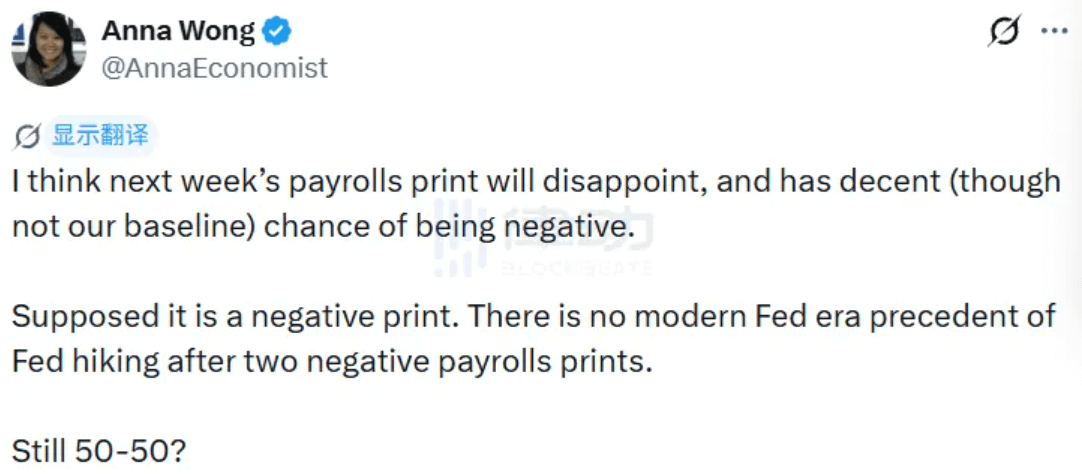
Bloomberg's Anna Wong Says Weak Payrolls Could Block a September Fed HikeBloomberg Chief Economist Anna Wong wrote that next week's non-farm payroll report may come in weak, with a certain probability of registering negative growth — an outcome she says would have a key impact on the Federal Reserve's policy path.Her specific claim is historical: there is no precedent in the modern history of the Federal Reserve for raising interest rates after two consecutive negative non-farm payroll readings.The Precedent Argument Cuts Against Warsh's FramingWong's note lands directly against the labor market assessment Chairman Kevin Warsh delivered at Jackson Hole on Friday.Warsh described labor markets as "consistent with full employment," citing a 4.1% jobless rate that has held roughly steady for a couple of years and four-week average unemployment claims near their lowest level in decades. He pre-empted the argument that weak payrolls justify holding: "When labor supply is barely growing, monthly job gains are naturally going to run low."That framing treats soft monthly prints as a supply-side artifact rather than a demand signal. Wong's precedent argument tests it at the extreme. A supply-constrained labor market producing low positive job gains is one thing. Two consecutive negative prints is a different data series, and Wong's point is that the Fed has never hiked into that configuration.Warsh's Own Position Makes the Data More DecisiveThe rejection of forward guidance that defined Warsh's speech is what gives Wong's argument force.Warsh declined to pre-commit to anything: "I stand here today committed to a discipline, not to a decision." He also rejected committing to an explicit reaction function, saying forecasts illustrating one work "better in theory than in practice, better in the lab than in the field."StoneX analyst Fawad Razaqzada read the consequence directly — under the new chairman the Fed has become more data-dependent. A committee that will not pre-commit is one whose September decision genuinely turns on the intermeeting data, which means a payrolls print carries more weight than it would under a chair who had already signalled a path.Razaqzada flagged the same asymmetry Wong is describing: recent US jobs reports have consistently missed expectations and fallen far short, and further weakness could severely undermine hike expectations.The Repricing Now Has Two-Way RiskMarkets moved sharply hawkish during Warsh's speech. September hike odds jumped to 42% from 35% per CME FedWatch, with Razaqzada putting the intraday move at 30% to roughly 50%.That repricing was driven by inflation and financial conditions rather than employment. PCE stands at 3.7% on a 12-month basis with the six-month change at 4.1% — the recent trend running hotter than the annual figure — and Warsh said the summer's softer prints "do not tell me that underlying trends have meaningfully improved." He also concluded he "would be hard pressed to describe broad financial conditions as restrictive."Wong's note introduces the offsetting variable. A non-farm payrolls report and a CPI release both land before the September 16 meeting. If payrolls print negative, the hawkish inflation case collides with an employment print that, by Wong's reading, has no historical precedent for a hike.The Crypto ReadBitcoin dipped to $78,700 on Warsh's remarks after a week in which it added roughly 9% while hike expectations were already rising.That divergence — a rally running through a hawkish repricing — is the position risk. The move was built on lower long-end yields and a weaker dollar following Treasury Secretary Bessent's bond buyback expansion, with the 10-year down seven basis points on the week to 4.67% and Brent easing below $90 on the Iran-Oman Strait of Hormuz agreement. Spot Bitcoin ETFs absorbed $2.8 billion across eight consecutive sessions.A weak payrolls print would restore the lower-yield backdrop that drove those flows. A strong one alongside sticky inflation would confirm the hawkish read Warsh delivered. With Glassnode showing nearly 8% of Bitcoin's supply concentrated between $80,000 and $82,000 and the 50-week moving average at $81,081, the data determines whether spot demand can absorb that overhead supply or whether the eight-session ETF streak breaks first.
Bloomberg's Anna Wong Says Weak Payrolls Could Block a September Fed Hike
Bloomberg Chief Economist Anna Wong wrote that next week's non-farm payroll report may come in weak, with a certain probability of registering negative growth — an outcome she says would have a key impact on the Federal Reserve's policy path.Her specific claim is historical: there is no precedent in the modern history of the Federal Reserve for raising interest rates after two consecutive negative non-farm payroll readings.The Precedent Argument Cuts Against Warsh's FramingWong's note lands directly against the labor market assessment Chairman Kevin Warsh delivered at Jackson Hole on Friday.Warsh described labor markets as "consistent with full employment," citing a 4.1% jobless rate that has held roughly steady for a couple of years and four-week average unemployment claims near their lowest level in decades. He pre-empted the argument that weak payrolls justify holding: "When labor supply is barely growing, monthly job gains are naturally going to run low."That framing treats soft monthly prints as a supply-side artifact rather than a demand signal. Wong's precedent argument tests it at the extreme. A supply-constrained labor market producing low positive job gains is one thing. Two consecutive negative prints is a different data series, and Wong's point is that the Fed has never hiked into that configuration.Warsh's Own Position Makes the Data More DecisiveThe rejection of forward guidance that defined Warsh's speech is what gives Wong's argument force.Warsh declined to pre-commit to anything: "I stand here today committed to a discipline, not to a decision." He also rejected committing to an explicit reaction function, saying forecasts illustrating one work "better in theory than in practice, better in the lab than in the field."StoneX analyst Fawad Razaqzada read the consequence directly — under the new chairman the Fed has become more data-dependent. A committee that will not pre-commit is one whose September decision genuinely turns on the intermeeting data, which means a payrolls print carries more weight than it would under a chair who had already signalled a path.Razaqzada flagged the same asymmetry Wong is describing: recent US jobs reports have consistently missed expectations and fallen far short, and further weakness could severely undermine hike expectations.The Repricing Now Has Two-Way RiskMarkets moved sharply hawkish during Warsh's speech. September hike odds jumped to 42% from 35% per CME FedWatch, with Razaqzada putting the intraday move at 30% to roughly 50%.That repricing was driven by inflation and financial conditions rather than employment. PCE stands at 3.7% on a 12-month basis with the six-month change at 4.1% — the recent trend running hotter than the annual figure — and Warsh said the summer's softer prints "do not tell me that underlying trends have meaningfully improved." He also concluded he "would be hard pressed to describe broad financial conditions as restrictive."Wong's note introduces the offsetting variable. A non-farm payrolls report and a CPI release both land before the September 16 meeting. If payrolls print negative, the hawkish inflation case collides with an employment print that, by Wong's reading, has no historical precedent for a hike.The Crypto ReadBitcoin dipped to $78,700 on Warsh's remarks after a week in which it added roughly 9% while hike expectations were already rising.That divergence — a rally running through a hawkish repricing — is the position risk. The move was built on lower long-end yields and a weaker dollar following Treasury Secretary Bessent's bond buyback expansion, with the 10-year down seven basis points on the week to 4.67% and Brent easing below $90 on the Iran-Oman Strait of Hormuz agreement. Spot Bitcoin ETFs absorbed $2.8 billion across eight consecutive sessions.A weak payrolls print would restore the lower-yield backdrop that drove those flows. A strong one alongside sticky inflation would confirm the hawkish read Warsh delivered. With Glassnode showing nearly 8% of Bitcoin's supply concentrated between $80,000 and $82,000 and the 50-week moving average at $81,081, the data determines whether spot demand can absorb that overhead supply or whether the eight-session ETF streak breaks first.
7
4.2k
·
--
White House Teleprompter Operator Pays $170,000 to End Insider Trading ProbeA White House teleprompter operator, Gabriel Perez, will pay more than $172,000 to end a federal regulator's probe into alleged well-timed prediction market bets about President Donald Trump's speeches, according to Bloomberg. Perez agreed to pay a $65,000 penalty to the Commodity Futures Trading Commission and return more than $107,000 in illicit profits, without admitting the regulator's claims that he misappropriated inside information to rack up wins on the prediction market platform Kalshi. The CFTC said the penalty represents a "substantial discount" because of Perez's cooperation, and that he also agreed to a three-year trading ban.
In its cease-and-desist order, the CFTC said Perez understood the information he learned during his work was confidential and not to be shared with anyone outside the White House. An attorney for Perez could not immediately be reached. Kalshi said it spotted anomalous trades in March and alerted the CFTC, and a White House spokesperson at the time said the employee had been put on unpaid administrative leave. Kalshi's head of enforcement, Robert DeNault, said on X that the firm caught prohibited trading activity, adding that anyone who violates its rules or federal law will face consequences.
Perez allegedly made the trades between December 2025 and February 2026, placing almost exclusively sports- and Trump-related wagers, including bets on questions such as what Trump would say during remarks at the Detroit Economic Club. He generally had access to Trump's speeches about an hour before they happened, the CFTC said. The case is the latest to heighten concerns about insider-trading opportunities opened up by prediction markets, with lawmakers introducing legislation to crack down on some wagers and the White House warning staff against trading on confidential information. Platforms like Kalshi and Polymarket, which have surged in popularity over the past 18 months, both say they oppose insider trading and actively police their markets.
White House Teleprompter Operator Pays $170,000 to End Insider Trading Probe
A White House teleprompter operator, Gabriel Perez, will pay more than $172,000 to end a federal regulator's probe into alleged well-timed prediction market bets about President Donald Trump's speeches, according to Bloomberg. Perez agreed to pay a $65,000 penalty to the Commodity Futures Trading Commission and return more than $107,000 in illicit profits, without admitting the regulator's claims that he misappropriated inside information to rack up wins on the prediction market platform Kalshi. The CFTC said the penalty represents a "substantial discount" because of Perez's cooperation, and that he also agreed to a three-year trading ban.
In its cease-and-desist order, the CFTC said Perez understood the information he learned during his work was confidential and not to be shared with anyone outside the White House. An attorney for Perez could not immediately be reached. Kalshi said it spotted anomalous trades in March and alerted the CFTC, and a White House spokesperson at the time said the employee had been put on unpaid administrative leave. Kalshi's head of enforcement, Robert DeNault, said on X that the firm caught prohibited trading activity, adding that anyone who violates its rules or federal law will face consequences.
Perez allegedly made the trades between December 2025 and February 2026, placing almost exclusively sports- and Trump-related wagers, including bets on questions such as what Trump would say during remarks at the Detroit Economic Club. He generally had access to Trump's speeches about an hour before they happened, the CFTC said. The case is the latest to heighten concerns about insider-trading opportunities opened up by prediction markets, with lawmakers introducing legislation to crack down on some wagers and the White House warning staff against trading on confidential information. Platforms like Kalshi and Polymarket, which have surged in popularity over the past 18 months, both say they oppose insider trading and actively police their markets.
In its cease-and-desist order, the CFTC said Perez understood the information he learned during his work was confidential and not to be shared with anyone outside the White House. An attorney for Perez could not immediately be reached. Kalshi said it spotted anomalous trades in March and alerted the CFTC, and a White House spokesperson at the time said the employee had been put on unpaid administrative leave. Kalshi's head of enforcement, Robert DeNault, said on X that the firm caught prohibited trading activity, adding that anyone who violates its rules or federal law will face consequences.
Perez allegedly made the trades between December 2025 and February 2026, placing almost exclusively sports- and Trump-related wagers, including bets on questions such as what Trump would say during remarks at the Detroit Economic Club. He generally had access to Trump's speeches about an hour before they happened, the CFTC said. The case is the latest to heighten concerns about insider-trading opportunities opened up by prediction markets, with lawmakers introducing legislation to crack down on some wagers and the White House warning staff against trading on confidential information. Platforms like Kalshi and Polymarket, which have surged in popularity over the past 18 months, both say they oppose insider trading and actively police their markets.
7
9.5k
·
--
STOCKS | Crypto-Linked Index Falls 8.34% as Bitcoin and Ether Extend LossesAccording to Wallstreetcn, the U.S. crypto and crypto-linked index fell 8.34% to 67.35 points, down 2.60% for the week, while MarketVectorTM Digital Assets 100 Small Cap Index dropped 4.71% to 2,432.36966 points over the past 24 hours and fell 7.12% over the past seven days, the MarketVectorTM Digital Assets 100 Mid Cap Index declined 4.78% to 2,616.8022 points and fell 10.15% over the past seven days, and the MarketVector Digital Assets 100 Index lost 2.92% to 15,513.41799 points and fell 2.33% over the past seven days. Bitcoin fell 3.40% to $77,383.30 over the past 24 hours after hawkish remarks in Fed Chair Kevin Warsh's speech accelerated the decline, was roughly flat over the past seven days, and showed an M-shaped pattern, having fallen to $75,577.56 on August 23 and risen to $81,440.98 on August 28, while ether fell 3.15% to $2,429 and lost 0.70% over the past seven days.
STOCKS | Crypto-Linked Index Falls 8.34% as Bitcoin and Ether Extend Losses
According to Wallstreetcn, the U.S. crypto and crypto-linked index fell 8.34% to 67.35 points, down 2.60% for the week, while MarketVectorTM Digital Assets 100 Small Cap Index dropped 4.71% to 2,432.36966 points over the past 24 hours and fell 7.12% over the past seven days, the MarketVectorTM Digital Assets 100 Mid Cap Index declined 4.78% to 2,616.8022 points and fell 10.15% over the past seven days, and the MarketVector Digital Assets 100 Index lost 2.92% to 15,513.41799 points and fell 2.33% over the past seven days. Bitcoin fell 3.40% to $77,383.30 over the past 24 hours after hawkish remarks in Fed Chair Kevin Warsh's speech accelerated the decline, was roughly flat over the past seven days, and showed an M-shaped pattern, having fallen to $75,577.56 on August 23 and risen to $81,440.98 on August 28, while ether fell 3.15% to $2,429 and lost 0.70% over the past seven days.
3
3
20
41.8k
·
--
U.S. President Donald Trump Says U.S. Reached Oil Deal With VenezuelaAccording to Wallstreetcn, U.S. President Donald Trump said the United States had just reached an oil deal with Venezuela and had obtained majority control of Venezuela's more than 65 billion barrels of proven oil reserves.
U.S. President Donald Trump Says U.S. Reached Oil Deal With Venezuela
According to Wallstreetcn, U.S. President Donald Trump said the United States had just reached an oil deal with Venezuela and had obtained majority control of Venezuela's more than 65 billion barrels of proven oil reserves.
12
30.7k
·
--
OpenAI Ends Cursor Partnership After SpaceX AcquisitionOpenAI said it will end its partnership with Cursor after Cursor was acquired by SpaceX. According to Sina Finance, direct access to OpenAI's models for Cursor will end on November 12.
OpenAI said it wants developers to broadly use its models, but it cannot be sure SpaceX will use its technology within its service terms because of past contract violations by several companies under Elon Musk. OpenAI also said that after Musk acquired X, the company violated its contract terms with OpenAI and breached several other agreements. Earlier this year, Musk acknowledged under oath that xAI, now under SpaceX, had violated OpenAI's service terms, which were broadly similar to xAI's own terms.
OpenAI Ends Cursor Partnership After SpaceX Acquisition
OpenAI said it will end its partnership with Cursor after Cursor was acquired by SpaceX. According to Sina Finance, direct access to OpenAI's models for Cursor will end on November 12.
OpenAI said it wants developers to broadly use its models, but it cannot be sure SpaceX will use its technology within its service terms because of past contract violations by several companies under Elon Musk. OpenAI also said that after Musk acquired X, the company violated its contract terms with OpenAI and breached several other agreements. Earlier this year, Musk acknowledged under oath that xAI, now under SpaceX, had violated OpenAI's service terms, which were broadly similar to xAI's own terms.
OpenAI said it wants developers to broadly use its models, but it cannot be sure SpaceX will use its technology within its service terms because of past contract violations by several companies under Elon Musk. OpenAI also said that after Musk acquired X, the company violated its contract terms with OpenAI and breached several other agreements. Earlier this year, Musk acknowledged under oath that xAI, now under SpaceX, had violated OpenAI's service terms, which were broadly similar to xAI's own terms.
9
36.5k
·
--
Iranian Media: $7.5 Billion in Oil Revenue Transferred to Iran's Central BankAccording to Jin10, Iranian media Fars News said Iran currently has enough oil available for sale to meet budget funding needs and is not affected by maritime transport restrictions. According to data from the Ministry of Petroleum, the realization rate of budgeted oil revenue reached 99% in the first four months of this fiscal year, and the ministry had already transferred $7.5 billion in oil-related foreign exchange revenue from those months to the central bank, which can cover the government's foreign exchange spending through January next year.
Iranian Media: $7.5 Billion in Oil Revenue Transferred to Iran's Central Bank
According to Jin10, Iranian media Fars News said Iran currently has enough oil available for sale to meet budget funding needs and is not affected by maritime transport restrictions. According to data from the Ministry of Petroleum, the realization rate of budgeted oil revenue reached 99% in the first four months of this fiscal year, and the ministry had already transferred $7.5 billion in oil-related foreign exchange revenue from those months to the central bank, which can cover the government's foreign exchange spending through January next year.
1
17
15k
·
--
XRP ETFs Pull In $110.49 Million In Biggest Weekly Haul Of 2026Spot XRP ETFs drew $110.49 million in net inflows for the week ending August 28, their strongest weekly haul of 2026 and more than double the prior high, according to BeInCrypto, with trading volume hitting $363.03 million. Cumulative net inflows rose to $1.66 billion and total net assets climbed to $1.44 billion across the funds. XRP traded near $1.38 as of August 29, after briefly testing $1.70 resistance earlier in the week.
XRP ETFs Pull In $110.49 Million In Biggest Weekly Haul Of 2026
Spot XRP ETFs drew $110.49 million in net inflows for the week ending August 28, their strongest weekly haul of 2026 and more than double the prior high, according to BeInCrypto, with trading volume hitting $363.03 million. Cumulative net inflows rose to $1.66 billion and total net assets climbed to $1.44 billion across the funds. XRP traded near $1.38 as of August 29, after briefly testing $1.70 resistance earlier in the week.
3
2
6
22.8k
·
--
Lighter, Zcash And Rain Eye Fibonacci Upside After BreakoutsLighter (LIT), Zcash (ZEC) and Rain (RAIN) have all broken above multi-month highs and reached their first Fibonacci extension targets, with the 1.618 levels now in focus into the weekend. According to BeInCrypto, LIT targets $3.98 after clearing $3.30, ZEC is eyeing $1,099.14 after stalling under $903.47, and RAIN has hit a record high near $0.019464 with $0.02214 next.
Lighter, Zcash And Rain Eye Fibonacci Upside After Breakouts
Lighter (LIT), Zcash (ZEC) and Rain (RAIN) have all broken above multi-month highs and reached their first Fibonacci extension targets, with the 1.618 levels now in focus into the weekend. According to BeInCrypto, LIT targets $3.98 after clearing $3.30, ZEC is eyeing $1,099.14 after stalling under $903.47, and RAIN has hit a record high near $0.019464 with $0.02214 next.
5
34.1k
·
--
IMF Sees 2026 Global Inflation Rising to 4.7% as Iran-Israel Conflict Disrupts Energy SupplyThe Iran-Israel conflict has disrupted global energy supply and shipping, pushed up oil prices, and weighed on the world economy, according to Jiemian News. Commercial traffic through the Strait of Hormuz has fallen from 130 to 140 ships a day before the war to single digits, a drop of more than 90%. International oil prices briefly topped $126 a barrel and are still around $88, more than 20% above pre-war levels. The report said higher energy costs have also complicated inflation control in major economies: U.S. consumer prices rose 3.4% year on year in July, with gasoline up 24.6%, while July inflation in the eurozone and the U.K. both reached 2.9%. The International Monetary Fund expects global inflation to rise to 4.7% in 2026, and the World Bank warned that if energy supply disruptions continue, global growth this year could slow to 1.3%.
IMF Sees 2026 Global Inflation Rising to 4.7% as Iran-Israel Conflict Disrupts Energy Supply
The Iran-Israel conflict has disrupted global energy supply and shipping, pushed up oil prices, and weighed on the world economy, according to Jiemian News. Commercial traffic through the Strait of Hormuz has fallen from 130 to 140 ships a day before the war to single digits, a drop of more than 90%. International oil prices briefly topped $126 a barrel and are still around $88, more than 20% above pre-war levels. The report said higher energy costs have also complicated inflation control in major economies: U.S. consumer prices rose 3.4% year on year in July, with gasoline up 24.6%, while July inflation in the eurozone and the U.K. both reached 2.9%. The International Monetary Fund expects global inflation to rise to 4.7% in 2026, and the World Bank warned that if energy supply disruptions continue, global growth this year could slow to 1.3%.
1
2
3.2k
·
--
Crypto News Today: Warsh Says "We Have Work to Do" — September Hike Odds Hit 50%, Bitcoin ETF Streak Breaks, and Payrolls Next Week Will Decide EverythingWarsh's first Jackson Hole keynote was more hawkish than expected — PCE at 4.1% on a six-month basis, financial conditions "not restrictive," and a flat-out rejection of forward guidance. September hike odds jumped to 50%, Bitcoin dipped to $78,700, and the nine-day ETF inflow streak ended with a $201.9M outflow. The yen crossed 160 per dollar to a one-month low. One variable now sits above everything: Bloomberg's Anna Wong says next week's payrolls may print negative — and there is no precedent in modern Fed history for hiking after two consecutive negative readings. Warsh committed to a discipline, not a decision. The data decides.Warsh Says "We Have Work to Do" on Inflation as September Hike Odds Jump to 50%Warsh placed inflation at the center of the Fed's agenda at Jackson Hole, citing PCE at 3.7% annually and 4.1% over six months — the recent trend running hotter than the annual figure. He dismissed the summer's softer prints: "They do not tell me that underlying trends have meaningfully improved." On financial conditions: "I would be hard pressed to describe broad financial conditions as restrictive." Labor markets he called "consistent with full employment." Forward guidance, he said, "has overstayed its welcome." September hike odds jumped from 35% to 50% intraday. Bitcoin dipped to $78,700. Warsh closed with the line that defines everything: "I stand here today committed to a discipline, not to a decision."Yen Passes 160 Per Dollar to Hit Weakest Level in a MonthThe yen fell as much as 0.5% to 160.20 per dollar — its weakest in a month — as Warsh's hawkish tone boosted the greenback. Hedge funds added to short yen bets for a second straight week. The yen had failed to push through 155 earlier this month despite the first coordinated US-Japan yen-buying intervention since 1998. State Street's Masahiko Loo said the mid-160s is becoming a policy level rather than a valuation level, with markets pricing an 80% chance of a BOJ hike next month. The yen at 160 raises the same carry trade unwind risk that crashed Bitcoin from $65,000 to $50,000 in a week in July 2024 — a BOJ hike and a Fed hold simultaneously is the precise configuration that triggers it.JackYi Says Bitcoin Pullback Near $75,500 Could Offer New OpportunityLiquid Capital founder JackYi said Bitcoin's pullback was expected and that a decline to around $75,500 would present a new opportunity, adding he remains optimistic about a rebound after a modest correction. His broader framing is worth noting: he entered Bitcoin in 2015 through mining, caught the 2017 bull market, later invested in hundreds of projects with most failing, and concluded that nine consecutive successful trades can be erased by one failure. The $75,500 level sits roughly 5% below current prices — below the $77,100-$80,000 supply zone Bitfinex identified as the key absorption band — and would represent a partial retracement of the rally from $62,000 without breaking the broader recovery structure.Bitcoin ETF Streak Ends With $201.9 Million Outflow as Ether Funds Extend to 12 DaysThe nine-day Bitcoin ETF inflow streak ended with a $201.9M outflow — the session after Warsh's speech, consistent with the lag between macro events and ETF flow response. Ether ETFs took in $102.1M for a 12th consecutive session, running three sessions longer than Bitcoin's streak. August still finishes as the strongest inflow month of 2026 at $3B+, but missed passing October 2025 as the all-time monthly record by one session. The outflow matters most because of where Bitcoin is trading: nearly 8% of supply was acquired between $80,000 and $82,000, the 50-week moving average sits at $81,081, and absorbing that overhead supply requires sustained spot demand. That demand just paused.Bloomberg's Anna Wong Says Weak Payrolls Could Block a September Fed HikeBloomberg Chief Economist Anna Wong says next week's NFP may print weak — with a real probability of negative growth — and states explicitly: there is no precedent in modern Fed history for raising rates after two consecutive negative payroll readings. The argument lands directly against Warsh's employment framing, which attributed soft monthly gains to low labor supply rather than weak demand. A data-dependent Fed that won't pre-commit — Warsh's explicit position — means payrolls now carry maximum weight. If NFP prints negative, the hawkish inflation case Warsh delivered at Jackson Hole collides with an employment reality that has historically blocked rate hikes. Bitcoin at $78,700 is positioned in the middle of that binary: a weak print restores the lower-yield backdrop that drove the ETF streak; a strong one confirms the hawkish read and tests the supply wall at $80,000-$82,000.
Crypto News Today: Warsh Says "We Have Work to Do" — September Hike Odds Hit 50%, Bitcoin ETF Streak Breaks, and Payrolls Next Week Will Decide Everything
Warsh's first Jackson Hole keynote was more hawkish than expected — PCE at 4.1% on a six-month basis, financial conditions "not restrictive," and a flat-out rejection of forward guidance. September hike odds jumped to 50%, Bitcoin dipped to $78,700, and the nine-day ETF inflow streak ended with a $201.9M outflow. The yen crossed 160 per dollar to a one-month low. One variable now sits above everything: Bloomberg's Anna Wong says next week's payrolls may print negative — and there is no precedent in modern Fed history for hiking after two consecutive negative readings. Warsh committed to a discipline, not a decision. The data decides.Warsh Says "We Have Work to Do" on Inflation as September Hike Odds Jump to 50%Warsh placed inflation at the center of the Fed's agenda at Jackson Hole, citing PCE at 3.7% annually and 4.1% over six months — the recent trend running hotter than the annual figure. He dismissed the summer's softer prints: "They do not tell me that underlying trends have meaningfully improved." On financial conditions: "I would be hard pressed to describe broad financial conditions as restrictive." Labor markets he called "consistent with full employment." Forward guidance, he said, "has overstayed its welcome." September hike odds jumped from 35% to 50% intraday. Bitcoin dipped to $78,700. Warsh closed with the line that defines everything: "I stand here today committed to a discipline, not to a decision."Yen Passes 160 Per Dollar to Hit Weakest Level in a MonthThe yen fell as much as 0.5% to 160.20 per dollar — its weakest in a month — as Warsh's hawkish tone boosted the greenback. Hedge funds added to short yen bets for a second straight week. The yen had failed to push through 155 earlier this month despite the first coordinated US-Japan yen-buying intervention since 1998. State Street's Masahiko Loo said the mid-160s is becoming a policy level rather than a valuation level, with markets pricing an 80% chance of a BOJ hike next month. The yen at 160 raises the same carry trade unwind risk that crashed Bitcoin from $65,000 to $50,000 in a week in July 2024 — a BOJ hike and a Fed hold simultaneously is the precise configuration that triggers it.JackYi Says Bitcoin Pullback Near $75,500 Could Offer New OpportunityLiquid Capital founder JackYi said Bitcoin's pullback was expected and that a decline to around $75,500 would present a new opportunity, adding he remains optimistic about a rebound after a modest correction. His broader framing is worth noting: he entered Bitcoin in 2015 through mining, caught the 2017 bull market, later invested in hundreds of projects with most failing, and concluded that nine consecutive successful trades can be erased by one failure. The $75,500 level sits roughly 5% below current prices — below the $77,100-$80,000 supply zone Bitfinex identified as the key absorption band — and would represent a partial retracement of the rally from $62,000 without breaking the broader recovery structure.Bitcoin ETF Streak Ends With $201.9 Million Outflow as Ether Funds Extend to 12 DaysThe nine-day Bitcoin ETF inflow streak ended with a $201.9M outflow — the session after Warsh's speech, consistent with the lag between macro events and ETF flow response. Ether ETFs took in $102.1M for a 12th consecutive session, running three sessions longer than Bitcoin's streak. August still finishes as the strongest inflow month of 2026 at $3B+, but missed passing October 2025 as the all-time monthly record by one session. The outflow matters most because of where Bitcoin is trading: nearly 8% of supply was acquired between $80,000 and $82,000, the 50-week moving average sits at $81,081, and absorbing that overhead supply requires sustained spot demand. That demand just paused.Bloomberg's Anna Wong Says Weak Payrolls Could Block a September Fed HikeBloomberg Chief Economist Anna Wong says next week's NFP may print weak — with a real probability of negative growth — and states explicitly: there is no precedent in modern Fed history for raising rates after two consecutive negative payroll readings. The argument lands directly against Warsh's employment framing, which attributed soft monthly gains to low labor supply rather than weak demand. A data-dependent Fed that won't pre-commit — Warsh's explicit position — means payrolls now carry maximum weight. If NFP prints negative, the hawkish inflation case Warsh delivered at Jackson Hole collides with an employment reality that has historically blocked rate hikes. Bitcoin at $78,700 is positioned in the middle of that binary: a weak print restores the lower-yield backdrop that drove the ETF streak; a strong one confirms the hawkish read and tests the supply wall at $80,000-$82,000.
34
84
4.1k
·
--
Article
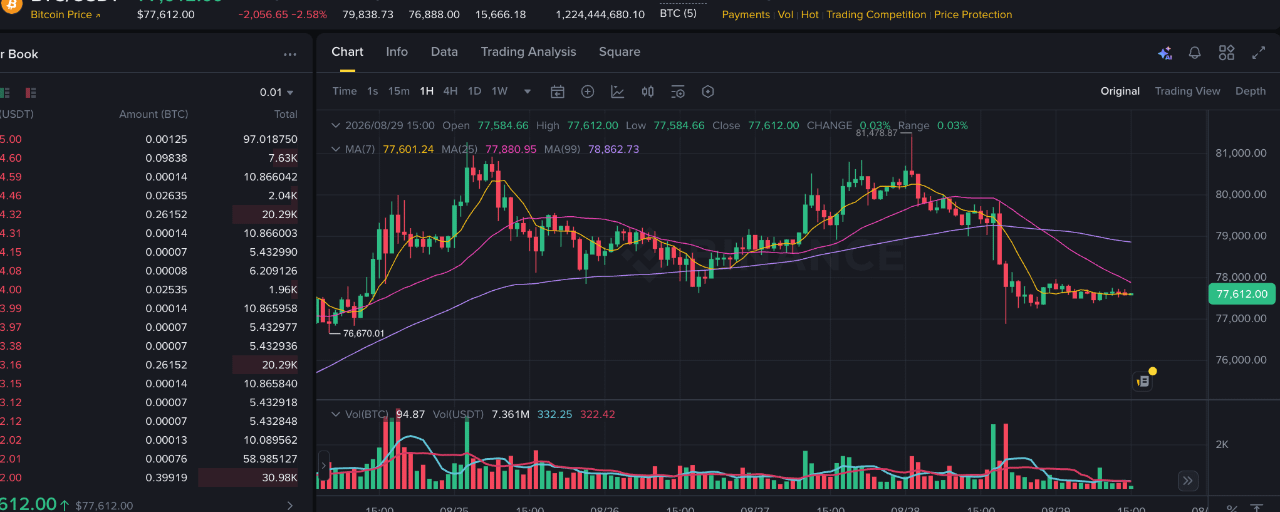
JackYi Says Bitcoin Pullback Near $75,500 Could Offer New OpportunityLiquid Capital founder JackYi said Bitcoin has seen a slight pullback as expected and that a further decline to around $75,500 would present a new opportunity. According to Foresight News, he said he remains optimistic about a rebound after a modest correction.
JackYi also said investing and trading are among the hardest things to do. He said he entered the BTC market in 2015 at a low point through mining, later made successful investments in projects including Quantum, and caught the 2017 bull market. He described that success as largely luck, saying he had previously believed it reflected skill because he had achieved some results in entrepreneurship and investment in traditional industries.
He added that he later invested in hundreds of projects, with most failing and only a few succeeding. As investment opportunities decreased, he began studying trading more seriously. He said trading requires greater caution, noting that nine consecutive successful trades can be erased by one failure.
JackYi Says Bitcoin Pullback Near $75,500 Could Offer New Opportunity
Liquid Capital founder JackYi said Bitcoin has seen a slight pullback as expected and that a further decline to around $75,500 would present a new opportunity. According to Foresight News, he said he remains optimistic about a rebound after a modest correction.
JackYi also said investing and trading are among the hardest things to do. He said he entered the BTC market in 2015 at a low point through mining, later made successful investments in projects including Quantum, and caught the 2017 bull market. He described that success as largely luck, saying he had previously believed it reflected skill because he had achieved some results in entrepreneurship and investment in traditional industries.
He added that he later invested in hundreds of projects, with most failing and only a few succeeding. As investment opportunities decreased, he began studying trading more seriously. He said trading requires greater caution, noting that nine consecutive successful trades can be erased by one failure.
JackYi also said investing and trading are among the hardest things to do. He said he entered the BTC market in 2015 at a low point through mining, later made successful investments in projects including Quantum, and caught the 2017 bull market. He described that success as largely luck, saying he had previously believed it reflected skill because he had achieved some results in entrepreneurship and investment in traditional industries.
He added that he later invested in hundreds of projects, with most failing and only a few succeeding. As investment opportunities decreased, he began studying trading more seriously. He said trading requires greater caution, noting that nine consecutive successful trades can be erased by one failure.
2
5
19k
·
--
Article
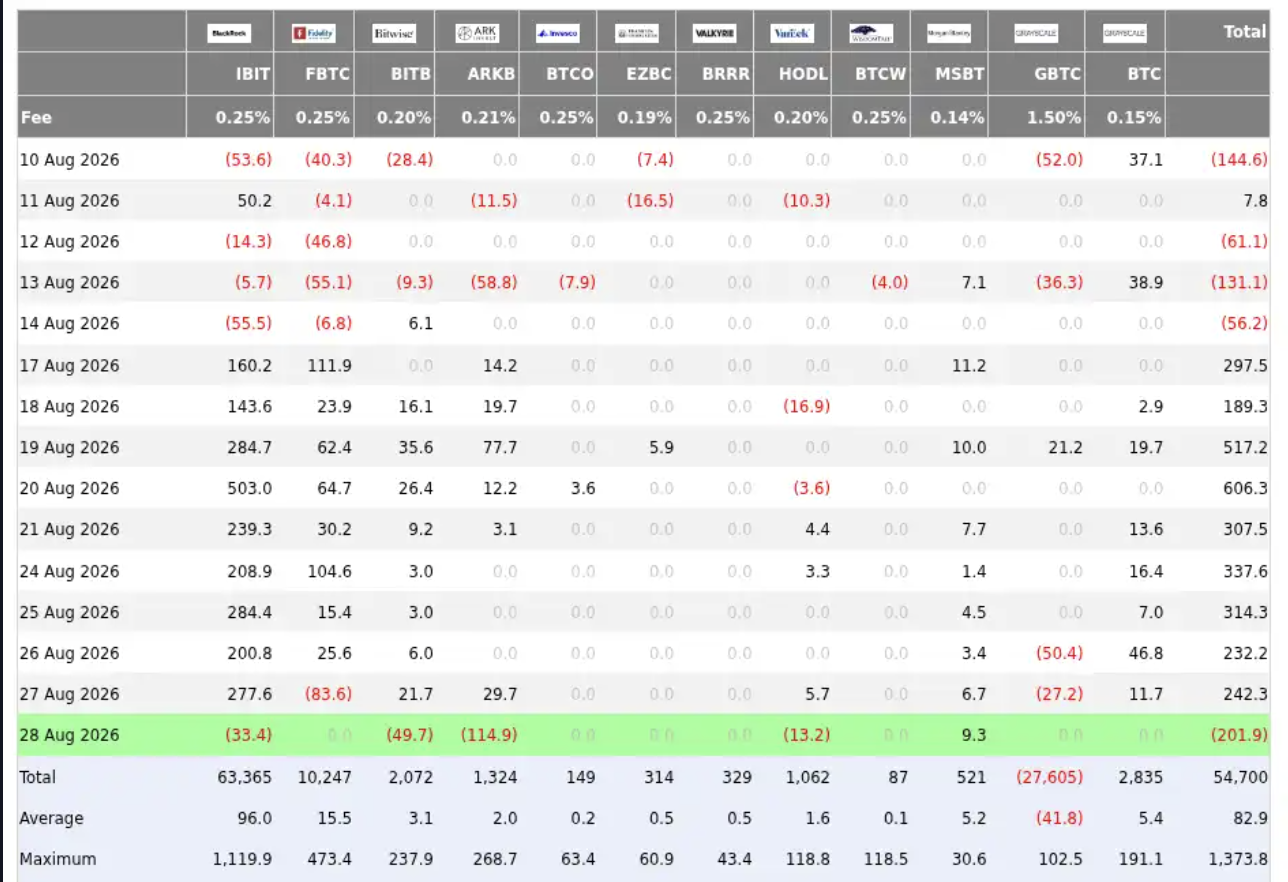
ETFs News: Bitcoin ETF Streak Ends With $201.9 Million Outflow as Ether Funds Extend to 12 DaysUS spot Bitcoin ETFs recorded a net outflow of $201.9 million, ending nine consecutive trading days of net inflows, according to Farside data. Spot Ethereum ETFs went the other way, taking in $102.1 million for a 12th consecutive session.The Split Follows Warsh's Hawkish Jackson Hole KeynoteThe reversal in Bitcoin flows lands immediately after Fed Chairman Kevin Warsh's first Jackson Hole address, which markets read as more hawkish than expected.Warsh said the Fed's "predominant focus right now should be on prices," with PCE at 3.7% on a 12-month basis and 4.1% over six months. He dismissed the summer's softer prints as not indicating that underlying trends had improved, and said he "would be hard pressed to describe broad financial conditions as restrictive."September hike odds jumped to 42% from 35% per CME FedWatch, with StoneX's Fawad Razaqzada putting the intraday repricing at 30% to roughly 50%. Bitcoin dipped to $78,700.ETF flows respond to macro conditions with a lag, which is why the outflow arrived the session after the speech rather than during it. The nine-day streak had been built on the opposite backdrop — lower long-end yields and a weaker dollar following Treasury Secretary Bessent's bond buyback expansion.Ether Funds Now Run Three Sessions Longer Than Bitcoin'sThe 12-day Ethereum streak against Bitcoin's broken nine-day run is the more analytically interesting detail.Ether ETFs began their run before Bitcoin's and have now continued through the session that broke it. That divergence has precedent from earlier in the summer, when ETH ETF inflows outpaced Bitcoin's in specific weeks while Bitmine accumulated more than 10,000 ETH weekly and ETH exchange outflows ran $164.6 million over a single week.Ether also outperformed through the rally itself, gaining 31.3% in the week Bitcoin added 23.6%, and closed above its 200-day moving average alongside Bitcoin with a golden cross forming.Whether the divergence reflects a genuine allocation preference or simply different flow timing will be clearer if Ether's streak survives another session or two of Bitcoin outflows.August Still Finishes as the Strongest Month of 2026The outflow arrives at the end of a month that was already historic for the Bitcoin funds.The nine-day streak pulled roughly $2.8 billion into the products, with August flows clearing $3 billion — the strongest month of 2026 and roughly double April's total. Bitcoin ETF assets climbed to more than $99 billion from about $77 billion in mid-August, though most of that $22 billion gain came from price appreciation rather than fresh money.August had needed one more session of net buying to pass October 2025 as the biggest inflow month since the funds launched. The $201.9 million outflow removes that.The funds also remain net negative for 2026 by roughly $2.5 billion, meaning August recovered a little more than half of what left between May and July.The Supply Wall Makes the Flow Reversal ConsequentialThe timing matters because of where Bitcoin is trading.Glassnode data shows nearly 8% of Bitcoin's supply was acquired between $80,000 and $82,000 — the largest concentration at any comparable range, with roughly 5% at $80,000 alone. The average cost basis of US spot ETF deposits sits in the same band, and the 50-week moving average is at $81,081, where Bitcoin was rejected earlier in the week at an $81,265 high.The Bitfinex analyst team described the setup as "a squeeze that has run into a defined population of sellers," pointing to spot demand absorbing overhead supply between $77,100 and $80,000. Absorbing that supply requires sustained spot demand rather than short covering — QCP Capital flagged that falling open interest pointed to short covering rather than fresh buying, with spot ETF inflows supplying the genuine demand.That demand just paused. Whether it resumes depends substantially on the non-farm payrolls report and CPI release landing before the September 16 meeting. Bloomberg Chief Economist Anna Wong has argued next week's payrolls may print weak or even negative, noting there is no precedent in modern Fed history for hiking after two consecutive negative readings.
ETFs News: Bitcoin ETF Streak Ends With $201.9 Million Outflow as Ether Funds Extend to 12 Days
US spot Bitcoin ETFs recorded a net outflow of $201.9 million, ending nine consecutive trading days of net inflows, according to Farside data. Spot Ethereum ETFs went the other way, taking in $102.1 million for a 12th consecutive session.The Split Follows Warsh's Hawkish Jackson Hole KeynoteThe reversal in Bitcoin flows lands immediately after Fed Chairman Kevin Warsh's first Jackson Hole address, which markets read as more hawkish than expected.Warsh said the Fed's "predominant focus right now should be on prices," with PCE at 3.7% on a 12-month basis and 4.1% over six months. He dismissed the summer's softer prints as not indicating that underlying trends had improved, and said he "would be hard pressed to describe broad financial conditions as restrictive."September hike odds jumped to 42% from 35% per CME FedWatch, with StoneX's Fawad Razaqzada putting the intraday repricing at 30% to roughly 50%. Bitcoin dipped to $78,700.ETF flows respond to macro conditions with a lag, which is why the outflow arrived the session after the speech rather than during it. The nine-day streak had been built on the opposite backdrop — lower long-end yields and a weaker dollar following Treasury Secretary Bessent's bond buyback expansion.Ether Funds Now Run Three Sessions Longer Than Bitcoin'sThe 12-day Ethereum streak against Bitcoin's broken nine-day run is the more analytically interesting detail.Ether ETFs began their run before Bitcoin's and have now continued through the session that broke it. That divergence has precedent from earlier in the summer, when ETH ETF inflows outpaced Bitcoin's in specific weeks while Bitmine accumulated more than 10,000 ETH weekly and ETH exchange outflows ran $164.6 million over a single week.Ether also outperformed through the rally itself, gaining 31.3% in the week Bitcoin added 23.6%, and closed above its 200-day moving average alongside Bitcoin with a golden cross forming.Whether the divergence reflects a genuine allocation preference or simply different flow timing will be clearer if Ether's streak survives another session or two of Bitcoin outflows.August Still Finishes as the Strongest Month of 2026The outflow arrives at the end of a month that was already historic for the Bitcoin funds.The nine-day streak pulled roughly $2.8 billion into the products, with August flows clearing $3 billion — the strongest month of 2026 and roughly double April's total. Bitcoin ETF assets climbed to more than $99 billion from about $77 billion in mid-August, though most of that $22 billion gain came from price appreciation rather than fresh money.August had needed one more session of net buying to pass October 2025 as the biggest inflow month since the funds launched. The $201.9 million outflow removes that.The funds also remain net negative for 2026 by roughly $2.5 billion, meaning August recovered a little more than half of what left between May and July.The Supply Wall Makes the Flow Reversal ConsequentialThe timing matters because of where Bitcoin is trading.Glassnode data shows nearly 8% of Bitcoin's supply was acquired between $80,000 and $82,000 — the largest concentration at any comparable range, with roughly 5% at $80,000 alone. The average cost basis of US spot ETF deposits sits in the same band, and the 50-week moving average is at $81,081, where Bitcoin was rejected earlier in the week at an $81,265 high.The Bitfinex analyst team described the setup as "a squeeze that has run into a defined population of sellers," pointing to spot demand absorbing overhead supply between $77,100 and $80,000. Absorbing that supply requires sustained spot demand rather than short covering — QCP Capital flagged that falling open interest pointed to short covering rather than fresh buying, with spot ETF inflows supplying the genuine demand.That demand just paused. Whether it resumes depends substantially on the non-farm payrolls report and CPI release landing before the September 16 meeting. Bloomberg Chief Economist Anna Wong has argued next week's payrolls may print weak or even negative, noting there is no precedent in modern Fed history for hiking after two consecutive negative readings.
1
1
9.4k
·
--
Trader Killa Says Bitcoin Bear Market Depth Is Shrinking, Sees Little Chance of $50,000 in OctoberTrader Killa said data from several Bitcoin bull and bear cycles suggests that bear market drawdowns are becoming shallower and that the bottom of the current cycle may already be in place. According to ChainCatcher, Killa said the widely expected scenario of Bitcoin falling to $50,000 in October is now highly unlikely.
Killa also said that if Bitcoin drops to $61,000, expected long liquidations could reach $20 billion. He added that market makers may have an incentive and the ability to liquidate long positions and then rebuild positions.
Killa is a BTC-focused quantitative trader who previously predicted the peak of this bull market in May 2025 and has more than 200,000 followers on X. He said he shorted Bitcoin at $74,688 in mid-April and turned long on June 5 during a broad market decline.
Trader Killa Says Bitcoin Bear Market Depth Is Shrinking, Sees Little Chance of $50,000 in October
Trader Killa said data from several Bitcoin bull and bear cycles suggests that bear market drawdowns are becoming shallower and that the bottom of the current cycle may already be in place. According to ChainCatcher, Killa said the widely expected scenario of Bitcoin falling to $50,000 in October is now highly unlikely.
Killa also said that if Bitcoin drops to $61,000, expected long liquidations could reach $20 billion. He added that market makers may have an incentive and the ability to liquidate long positions and then rebuild positions.
Killa is a BTC-focused quantitative trader who previously predicted the peak of this bull market in May 2025 and has more than 200,000 followers on X. He said he shorted Bitcoin at $74,688 in mid-April and turned long on June 5 during a broad market decline.
Killa also said that if Bitcoin drops to $61,000, expected long liquidations could reach $20 billion. He added that market makers may have an incentive and the ability to liquidate long positions and then rebuild positions.
Killa is a BTC-focused quantitative trader who previously predicted the peak of this bull market in May 2025 and has more than 200,000 followers on X. He said he shorted Bitcoin at $74,688 in mid-April and turned long on June 5 during a broad market decline.
1
1
12
15k
·
--
ETH Faces $988 Million Short Liquidations Above $2,555, Coinglass Data ShowsCoinglass data shows that if ETH breaks above $2,555, cumulative short liquidations across major centralized exchanges would reach $988 million. According to ChainCatcher, if ETH falls below $2,320, cumulative long liquidations across major centralized exchanges would reach $708 million.
ETH Faces $988 Million Short Liquidations Above $2,555, Coinglass Data Shows
Coinglass data shows that if ETH breaks above $2,555, cumulative short liquidations across major centralized exchanges would reach $988 million. According to ChainCatcher, if ETH falls below $2,320, cumulative long liquidations across major centralized exchanges would reach $708 million.
5
7.6k
·
--
Grayscale Says Debasement Trade Is Benefiting BitcoinGrayscale's crypto research team said the so-called debasement trade is benefiting Bitcoin, with research head Zach Pandl arguing that unchecked government debt growth is weakening confidence in fiat currencies and driving investors toward alternative stores of value such as gold and some cryptocurrencies. According to ChainCatcher, the report said Bitcoin stands to benefit the most.
The report said U.S. public debt has surpassed $40 trillion, while the Treasury is conducting bond buybacks to ease rising borrowing costs even as the core deficit remains. Grayscale said this could push investors toward debasement trades involving Bitcoin, Ethereum, and Zcash, and argued that the buybacks show government debt growth is raising borrowing costs while only treating the symptom of higher bond yields rather than the structural deficit.
The report also noted that Bitcoin began surging last week as the dollar posted its worst week in August and fell to a three-month low. As of Friday afternoon in New York, Bitcoin was trading around $77,493, after briefly reaching $81,281 on Monday; it was little changed over the past 24 hours but had gained more than 20% over the past 30 days.
Grayscale Says Debasement Trade Is Benefiting Bitcoin
Grayscale's crypto research team said the so-called debasement trade is benefiting Bitcoin, with research head Zach Pandl arguing that unchecked government debt growth is weakening confidence in fiat currencies and driving investors toward alternative stores of value such as gold and some cryptocurrencies. According to ChainCatcher, the report said Bitcoin stands to benefit the most.
The report said U.S. public debt has surpassed $40 trillion, while the Treasury is conducting bond buybacks to ease rising borrowing costs even as the core deficit remains. Grayscale said this could push investors toward debasement trades involving Bitcoin, Ethereum, and Zcash, and argued that the buybacks show government debt growth is raising borrowing costs while only treating the symptom of higher bond yields rather than the structural deficit.
The report also noted that Bitcoin began surging last week as the dollar posted its worst week in August and fell to a three-month low. As of Friday afternoon in New York, Bitcoin was trading around $77,493, after briefly reaching $81,281 on Monday; it was little changed over the past 24 hours but had gained more than 20% over the past 30 days.
The report said U.S. public debt has surpassed $40 trillion, while the Treasury is conducting bond buybacks to ease rising borrowing costs even as the core deficit remains. Grayscale said this could push investors toward debasement trades involving Bitcoin, Ethereum, and Zcash, and argued that the buybacks show government debt growth is raising borrowing costs while only treating the symptom of higher bond yields rather than the structural deficit.
The report also noted that Bitcoin began surging last week as the dollar posted its worst week in August and fell to a three-month low. As of Friday afternoon in New York, Bitcoin was trading around $77,493, after briefly reaching $81,281 on Monday; it was little changed over the past 24 hours but had gained more than 20% over the past 30 days.
9
36.3k
·
--
Charles Schwab Plans to Expand Schwab Crypto Trading to Solana, Avalanche, and ChainlinkCharles Schwab plans to expand its Schwab Crypto direct trading offering beyond Bitcoin and Ethereum to include Solana, Avalanche, and Chainlink in the future. According to Foresight News, the update was reported by Decrypt.
The company has not provided a timeline for the expansion.
Charles Schwab Plans to Expand Schwab Crypto Trading to Solana, Avalanche, and Chainlink
Charles Schwab plans to expand its Schwab Crypto direct trading offering beyond Bitcoin and Ethereum to include Solana, Avalanche, and Chainlink in the future. According to Foresight News, the update was reported by Decrypt.
The company has not provided a timeline for the expansion.
The company has not provided a timeline for the expansion.
8
24.6k
·
--
US MARKET CLOSE | Three Major Indexes Fall as Warsh Flags Inflation Concerns; September Rate-Hike Odds Jump to 57%Wall Street's three major indexes closed lower on Friday, weighed down by semiconductor stocks including Nvidia and Intel, which dragged the Nasdaq Composite lower, according to Sina Finance. The declines came after Federal Reserve Chair Kevin Warsh voiced concern about the current inflation trend, pressuring the S&P 500 to a lower Friday close even as the index held onto a weekly gain. The Dow Jones Industrial Average slipped 9.45 points, or 0.02%, to 53,559.99; the S&P 500 fell 19.23 points, or 0.25%, to 7,711.76; and the Nasdaq Composite dropped 138.93 points, or 0.52%, to 26,402.42. For the week, the S&P 500 rose 0.5%, the Nasdaq Composite gained 0.9%, and the Dow climbed 0.5%, marking its first weekly advance in about three weeks. Speaking at the annual central bank symposium in Jackson Hole, Wyoming, Warsh said that although this summer's personal consumption expenditures (PCE) price index and consumer price index (CPI) data came in better than expected, in his view this did not represent a substantive improvement in the underlying inflation trend. He added that the Fed must be convinced core inflation is falling clearly and quickly enough toward the policy target, and that if not, 'we still have work to do.' According to CME Group's FedWatch tool, federal funds futures traders' odds of a Fed rate hike in September rose to about 57% on Friday, up from just 35.4% the prior day. Following Warsh's remarks, short-term Treasury yields rose, while long-term yields were largely flat; long-term yields, which affect borrowing costs across the economy, have been a key market concern recently. Bill Birmingham, managing director at REX Financial, said the speech sent a very hawkish signal, both a message to markets and an overall stance that some of the Fed's conduct over roughly the past 40 years could have been more rigorous. Birmingham added that Warsh's comments on the composition of CPI in particular showed he is actively working to build internal consensus at the Fed to push a rate hike through. Investors also digested a batch of corporate earnings. Gap posted mixed quarterly results, but its shares surged 13% after the retailer appointed a new chief executive for its struggling Old Navy brand. Marvell Technology fell about 10% after issuing non-GAAP gross margin guidance for the quarter that missed market expectations.
US MARKET CLOSE | Three Major Indexes Fall as Warsh Flags Inflation Concerns; September Rate-Hike Odds Jump to 57%
Wall Street's three major indexes closed lower on Friday, weighed down by semiconductor stocks including Nvidia and Intel, which dragged the Nasdaq Composite lower, according to Sina Finance. The declines came after Federal Reserve Chair Kevin Warsh voiced concern about the current inflation trend, pressuring the S&P 500 to a lower Friday close even as the index held onto a weekly gain. The Dow Jones Industrial Average slipped 9.45 points, or 0.02%, to 53,559.99; the S&P 500 fell 19.23 points, or 0.25%, to 7,711.76; and the Nasdaq Composite dropped 138.93 points, or 0.52%, to 26,402.42. For the week, the S&P 500 rose 0.5%, the Nasdaq Composite gained 0.9%, and the Dow climbed 0.5%, marking its first weekly advance in about three weeks. Speaking at the annual central bank symposium in Jackson Hole, Wyoming, Warsh said that although this summer's personal consumption expenditures (PCE) price index and consumer price index (CPI) data came in better than expected, in his view this did not represent a substantive improvement in the underlying inflation trend. He added that the Fed must be convinced core inflation is falling clearly and quickly enough toward the policy target, and that if not, 'we still have work to do.' According to CME Group's FedWatch tool, federal funds futures traders' odds of a Fed rate hike in September rose to about 57% on Friday, up from just 35.4% the prior day. Following Warsh's remarks, short-term Treasury yields rose, while long-term yields were largely flat; long-term yields, which affect borrowing costs across the economy, have been a key market concern recently. Bill Birmingham, managing director at REX Financial, said the speech sent a very hawkish signal, both a message to markets and an overall stance that some of the Fed's conduct over roughly the past 40 years could have been more rigorous. Birmingham added that Warsh's comments on the composition of CPI in particular showed he is actively working to build internal consensus at the Fed to push a rate hike through. Investors also digested a batch of corporate earnings. Gap posted mixed quarterly results, but its shares surged 13% after the retailer appointed a new chief executive for its struggling Old Navy brand. Marvell Technology fell about 10% after issuing non-GAAP gross margin guidance for the quarter that missed market expectations.
7
16.8k
·
--
Afghanistan's Taliban Government Reportedly Bans Bitcoin and Crypto Trading NationwideBitcoin News said on X that Afghanistan's Taliban government has effectively banned Bitcoin and cryptocurrency trading nationwide and threatened to prosecute traders and related businesses. According to Odaily, more than 20 crypto shops in Herat have closed, at least 13 traders have reportedly been arrested, and Afghanistan's monthly crypto inflows have fallen from a peak of more than $150 million to less than $80,000.
Bitcoin and stablecoins had served as important tools for savings and remittances after Afghanistan was largely cut off from the global banking system. Taliban officials said digital assets are fraudulent and argued that crypto speculation is similar to gambling under Islamic law. Bitcoin can still be traded through the internet, private keys and counterparties, despite the crackdown.
Afghanistan's Taliban Government Reportedly Bans Bitcoin and Crypto Trading Nationwide
Bitcoin News said on X that Afghanistan's Taliban government has effectively banned Bitcoin and cryptocurrency trading nationwide and threatened to prosecute traders and related businesses. According to Odaily, more than 20 crypto shops in Herat have closed, at least 13 traders have reportedly been arrested, and Afghanistan's monthly crypto inflows have fallen from a peak of more than $150 million to less than $80,000.
Bitcoin and stablecoins had served as important tools for savings and remittances after Afghanistan was largely cut off from the global banking system. Taliban officials said digital assets are fraudulent and argued that crypto speculation is similar to gambling under Islamic law. Bitcoin can still be traded through the internet, private keys and counterparties, despite the crackdown.
Bitcoin and stablecoins had served as important tools for savings and remittances after Afghanistan was largely cut off from the global banking system. Taliban officials said digital assets are fraudulent and argued that crypto speculation is similar to gambling under Islamic law. Bitcoin can still be traded through the internet, private keys and counterparties, despite the crackdown.
6
6.9k
·
--
HYPE Has 19% Chance of Surpassing SOL Before October, predict.fun Sayspredict.fun posted on X that HYPE currently has a 19% chance of surpassing SOL before October. According to Odaily, the figure was shared in a post on the platform.
HYPE Has 19% Chance of Surpassing SOL Before October, predict.fun Says
predict.fun posted on X that HYPE currently has a 19% chance of surpassing SOL before October. According to Odaily, the figure was shared in a post on the platform.
1
3
17.7k
·
--
Boeing Signs $3 Billion Revolving Credit Agreement, Extends 2023 and 2024 FacilitiesAccording to Wallstreetcn, Boeing signed a $3 billion, 364-day revolving credit agreement on August 24, according to an SEC filing. The amended 2023 five-year credit agreement has total committed capacity of $3 billion and now matures on August 24, 2029, while the amended 2024 five-year credit agreement has total committed capacity of $4 billion and now matures on May 15, 2030.
Boeing Signs $3 Billion Revolving Credit Agreement, Extends 2023 and 2024 Facilities
According to Wallstreetcn, Boeing signed a $3 billion, 364-day revolving credit agreement on August 24, according to an SEC filing. The amended 2023 five-year credit agreement has total committed capacity of $3 billion and now matures on August 24, 2029, while the amended 2024 five-year credit agreement has total committed capacity of $4 billion and now matures on May 15, 2030.
1
5
16k
·
--
PRECIOUS METALS | SPDR Gold Trust Holdings Fall 4.279 Tons to 1,042.357 TonsAccording to Jin10, SPDR Gold Trust holdings decreased by 4.279 tons from the previous day to 1,042.357 tons.
PRECIOUS METALS | SPDR Gold Trust Holdings Fall 4.279 Tons to 1,042.357 Tons
According to Jin10, SPDR Gold Trust holdings decreased by 4.279 tons from the previous day to 1,042.357 tons.
XAU+0.06%
GLDETF-3.25%
2
7
9.3k
·
--
Starkware Says Anti-Quantum Bitcoin Transaction Was Mined on Mainnet Without Consensus ChangesBlockchain technology company Starkware said a transaction using researcher Avihu Levy’s anti-quantum Bitcoin (QSB) scheme was mined on the Bitcoin mainnet on August 26 without a soft fork, hard fork, or changes to consensus rules. According to Odaily, the transaction used 10,000 satoshis, was processed through MARA Foundation’s Slipstream service, and took several hours of GPU computation at a cost of about $150 to $200.
Starkware said QSB uses hash-function-based anti-quantum spending conditions and reduces quantum attack risk through signature trial mining, but users still need to move funds manually and it cannot protect assets whose public keys have already been exposed. Starkware CEO Eli Ben-Sasson still supports introducing a protocol-level solution through a soft fork.
Starkware Says Anti-Quantum Bitcoin Transaction Was Mined on Mainnet Without Consensus Changes
Blockchain technology company Starkware said a transaction using researcher Avihu Levy’s anti-quantum Bitcoin (QSB) scheme was mined on the Bitcoin mainnet on August 26 without a soft fork, hard fork, or changes to consensus rules. According to Odaily, the transaction used 10,000 satoshis, was processed through MARA Foundation’s Slipstream service, and took several hours of GPU computation at a cost of about $150 to $200.
Starkware said QSB uses hash-function-based anti-quantum spending conditions and reduces quantum attack risk through signature trial mining, but users still need to move funds manually and it cannot protect assets whose public keys have already been exposed. Starkware CEO Eli Ben-Sasson still supports introducing a protocol-level solution through a soft fork.
Starkware said QSB uses hash-function-based anti-quantum spending conditions and reduces quantum attack risk through signature trial mining, but users still need to move funds manually and it cannot protect assets whose public keys have already been exposed. Starkware CEO Eli Ben-Sasson still supports introducing a protocol-level solution through a soft fork.
1
6
4.3k
·
--
Polygon Labs Warns Old Polygon PoS Nodes Fell Out of Consensus After Austin and Kyoto ForksPolygon Labs issued an urgent notice after the Austin and Kyoto hard forks activated on Polygon PoS. According to ChainCatcher, nodes still running older Bor or Heimdall versions have fallen out of consensus and must upgrade to catch up with the network.
Austin activated at mainnet block 91,949,700 and requires Bor v2.1.0 or later. Kyoto activated at block 51,533,000 and requires Heimdall v0.11.0 or later.
Austin addresses two Bor resource-exhaustion risks: L1-to-L2 bridge state-sync events not being counted toward the gas limit could slow block processing, and an unlimited TxDependency field could cause peer nodes to crash. Kyoto fixes vulnerabilities involving deeply nested message attacks, fee-token scanning, and checkpoint signature recovery. Both hard forks are binary-only upgrades with no state migration, and nodes that did not fork do not need to resynchronize. Operators of older clients should upgrade and, if necessary, recover synchronization under Polygon guidance.
Polygon Labs Warns Old Polygon PoS Nodes Fell Out of Consensus After Austin and Kyoto Forks
Polygon Labs issued an urgent notice after the Austin and Kyoto hard forks activated on Polygon PoS. According to ChainCatcher, nodes still running older Bor or Heimdall versions have fallen out of consensus and must upgrade to catch up with the network.
Austin activated at mainnet block 91,949,700 and requires Bor v2.1.0 or later. Kyoto activated at block 51,533,000 and requires Heimdall v0.11.0 or later.
Austin addresses two Bor resource-exhaustion risks: L1-to-L2 bridge state-sync events not being counted toward the gas limit could slow block processing, and an unlimited TxDependency field could cause peer nodes to crash. Kyoto fixes vulnerabilities involving deeply nested message attacks, fee-token scanning, and checkpoint signature recovery. Both hard forks are binary-only upgrades with no state migration, and nodes that did not fork do not need to resynchronize. Operators of older clients should upgrade and, if necessary, recover synchronization under Polygon guidance.
Austin activated at mainnet block 91,949,700 and requires Bor v2.1.0 or later. Kyoto activated at block 51,533,000 and requires Heimdall v0.11.0 or later.
Austin addresses two Bor resource-exhaustion risks: L1-to-L2 bridge state-sync events not being counted toward the gas limit could slow block processing, and an unlimited TxDependency field could cause peer nodes to crash. Kyoto fixes vulnerabilities involving deeply nested message attacks, fee-token scanning, and checkpoint signature recovery. Both hard forks are binary-only upgrades with no state migration, and nodes that did not fork do not need to resynchronize. Operators of older clients should upgrade and, if necessary, recover synchronization under Polygon guidance.
2
7.6k
·
--
Ripple Plans Four-Stage Quantum-Resistant Migration for XRP LedgerRipple Senior Director of Engineering Ayo Akinyele said the company is developing a four-stage quantum-resistant migration plan for the XRP Ledger, aiming to complete the transition before quantum computers become a practical threat. According to ChainCatcher, the plan includes assessing network exposure, testing quantum-resistant cryptographic schemes, running current security systems alongside quantum-resistant alternatives, and preparing contingency responses if quantum computing advances faster than expected.
Akinyele said the migration involves more than replacing one encryption algorithm and will require more flexible infrastructure, stronger key management, and clearer upgrade paths. He added that the XRP Ledger already allows the key controlling an account to be changed without altering the account itself, which could reduce future migration difficulty, although independent validators would still need to coordinate any broader rule changes.
Akinyele also noted that Anthropic's model last month reduced the work needed to break a leading post-quantum signature candidate by 67 million times, while Bitcoin and Ethereum developers also released their own migration plans this week. He said AI and quantum computing are different technologies but are pushing financial infrastructure in the same direction, as AI agents begin trading and making payments autonomously and create demand for always-on, internet-native payment systems.
Ripple Plans Four-Stage Quantum-Resistant Migration for XRP Ledger
Ripple Senior Director of Engineering Ayo Akinyele said the company is developing a four-stage quantum-resistant migration plan for the XRP Ledger, aiming to complete the transition before quantum computers become a practical threat. According to ChainCatcher, the plan includes assessing network exposure, testing quantum-resistant cryptographic schemes, running current security systems alongside quantum-resistant alternatives, and preparing contingency responses if quantum computing advances faster than expected.
Akinyele said the migration involves more than replacing one encryption algorithm and will require more flexible infrastructure, stronger key management, and clearer upgrade paths. He added that the XRP Ledger already allows the key controlling an account to be changed without altering the account itself, which could reduce future migration difficulty, although independent validators would still need to coordinate any broader rule changes.
Akinyele also noted that Anthropic's model last month reduced the work needed to break a leading post-quantum signature candidate by 67 million times, while Bitcoin and Ethereum developers also released their own migration plans this week. He said AI and quantum computing are different technologies but are pushing financial infrastructure in the same direction, as AI agents begin trading and making payments autonomously and create demand for always-on, internet-native payment systems.
Akinyele said the migration involves more than replacing one encryption algorithm and will require more flexible infrastructure, stronger key management, and clearer upgrade paths. He added that the XRP Ledger already allows the key controlling an account to be changed without altering the account itself, which could reduce future migration difficulty, although independent validators would still need to coordinate any broader rule changes.
Akinyele also noted that Anthropic's model last month reduced the work needed to break a leading post-quantum signature candidate by 67 million times, while Bitcoin and Ethereum developers also released their own migration plans this week. He said AI and quantum computing are different technologies but are pushing financial infrastructure in the same direction, as AI agents begin trading and making payments autonomously and create demand for always-on, internet-native payment systems.
1
4
11.6k
·
--
Hyperliquid LIT Short Seller Closes BTC and ETH Longs, Opens New Leveraged ShortsHyperbot data shows that the largest LIT short seller on Hyperliquid has closed all of its Bitcoin and Ethereum long positions. According to Odaily, the trader then opened 10x leveraged short positions in AVAX and HYPE, as well as a 20x leveraged SOL short. The trader’s 3x leveraged short on 2.528 million LIT is now showing an unrealized loss of $5.25 million, and the overall position has an estimated return on investment of about -115%.
Hyperliquid LIT Short Seller Closes BTC and ETH Longs, Opens New Leveraged Shorts
Hyperbot data shows that the largest LIT short seller on Hyperliquid has closed all of its Bitcoin and Ethereum long positions. According to Odaily, the trader then opened 10x leveraged short positions in AVAX and HYPE, as well as a 20x leveraged SOL short. The trader’s 3x leveraged short on 2.528 million LIT is now showing an unrealized loss of $5.25 million, and the overall position has an estimated return on investment of about -115%.
1
3
25k
·
--
Afghanistan Taliban Government Effectively Bans Bitcoin and Crypto TradingAfghanistan's Taliban government has effectively banned Bitcoin and cryptocurrency trading nationwide, threatening to prosecute traders and related businesses. According to ChainCatcher, more than 20 crypto shops in Herat have closed, and at least 13 traders have reportedly been arrested.
Afghanistan's monthly crypto inflows have fallen from a peak of more than $150 million to less than $80,000. After the country was largely cut off from the global banking system, Bitcoin and stablecoins had become important tools for savings and remittances.
Taliban officials said digital assets are fraudulent and argued that crypto speculation is similar to gambling under Islamic law. While the crackdown has reduced Afghanistan's visible crypto market, Bitcoin can still be traded through the internet, private keys, and counterparties.
Afghanistan Taliban Government Effectively Bans Bitcoin and Crypto Trading
Afghanistan's Taliban government has effectively banned Bitcoin and cryptocurrency trading nationwide, threatening to prosecute traders and related businesses. According to ChainCatcher, more than 20 crypto shops in Herat have closed, and at least 13 traders have reportedly been arrested.
Afghanistan's monthly crypto inflows have fallen from a peak of more than $150 million to less than $80,000. After the country was largely cut off from the global banking system, Bitcoin and stablecoins had become important tools for savings and remittances.
Taliban officials said digital assets are fraudulent and argued that crypto speculation is similar to gambling under Islamic law. While the crackdown has reduced Afghanistan's visible crypto market, Bitcoin can still be traded through the internet, private keys, and counterparties.
Afghanistan's monthly crypto inflows have fallen from a peak of more than $150 million to less than $80,000. After the country was largely cut off from the global banking system, Bitcoin and stablecoins had become important tools for savings and remittances.
Taliban officials said digital assets are fraudulent and argued that crypto speculation is similar to gambling under Islamic law. While the crackdown has reduced Afghanistan's visible crypto market, Bitcoin can still be traded through the internet, private keys, and counterparties.
1
3.9k
·
--
AFTERMARKET MOVES | Gap Jumps 14% on Old Navy Leadership Change; Marvell, Autodesk Slide on GuidanceAccording to CNBC, Gap shares jumped about 14% in extended trading after the retailer said Michael Francis will lead Old Navy starting Nov. 2, succeeding Haio Barbeito, who had served as CEO since 2022. Gap posted second-quarter adjusted earnings of 52 cents per share, topping the LSEG consensus of 48 cents. Marvell Technology fell 6% after guiding to current-quarter adjusted earnings of $1.10 per share, plus or minus 5 cents, against the $1.07 analysts expected, with non-GAAP gross margin seen at 57.5% to 58.5% versus the StreetAccount call of 58.5%. Workday added almost 1% after beating LSEG estimates on both the top and bottom lines in the second quarter. Rubrik tumbled 7% as non-GAAP gross margin came in at 81% against an 81.7% StreetAccount estimate, though it beat on revenue and earnings, reporting 20 cents in adjusted earnings per share and $427 million in revenue versus the 4 cents and $396 million analysts penciled in. Autodesk slid 5% after third-quarter adjusted earnings guidance of $3.04 to $3.09 per share fell short of the $3.14 expected, with full-year guidance of $12.52 to $12.60 versus $12.60. Elastic N.V. surged 20% after full-year adjusted earnings guidance of $3.29 to $3.37 per share on revenue of $1.998 billion to $2.010 billion topped the $3.24 and $1.99 billion analysts expected. SentinelOne shed almost 4% after issuing a weak current-quarter and full-year earnings outlook that overshadowed a stronger-than-expected second quarter.
AFTERMARKET MOVES | Gap Jumps 14% on Old Navy Leadership Change; Marvell, Autodesk Slide on Guidance
According to CNBC, Gap shares jumped about 14% in extended trading after the retailer said Michael Francis will lead Old Navy starting Nov. 2, succeeding Haio Barbeito, who had served as CEO since 2022. Gap posted second-quarter adjusted earnings of 52 cents per share, topping the LSEG consensus of 48 cents. Marvell Technology fell 6% after guiding to current-quarter adjusted earnings of $1.10 per share, plus or minus 5 cents, against the $1.07 analysts expected, with non-GAAP gross margin seen at 57.5% to 58.5% versus the StreetAccount call of 58.5%. Workday added almost 1% after beating LSEG estimates on both the top and bottom lines in the second quarter. Rubrik tumbled 7% as non-GAAP gross margin came in at 81% against an 81.7% StreetAccount estimate, though it beat on revenue and earnings, reporting 20 cents in adjusted earnings per share and $427 million in revenue versus the 4 cents and $396 million analysts penciled in. Autodesk slid 5% after third-quarter adjusted earnings guidance of $3.04 to $3.09 per share fell short of the $3.14 expected, with full-year guidance of $12.52 to $12.60 versus $12.60. Elastic N.V. surged 20% after full-year adjusted earnings guidance of $3.29 to $3.37 per share on revenue of $1.998 billion to $2.010 billion topped the $3.24 and $1.99 billion analysts expected. SentinelOne shed almost 4% after issuing a weak current-quarter and full-year earnings outlook that overshadowed a stronger-than-expected second quarter.
5
5.1k
·
--
Genius Group Plans to Restart Bitcoin Reserve With Offering ProceedsGenius Group plans to restart its Bitcoin reserve using proceeds from a share offering and aims to raise the reserve to $827 million by 2031. According to Odaily, the company said the plan is tied to the funds raised from the issuance.
Genius Group Plans to Restart Bitcoin Reserve With Offering Proceeds
Genius Group plans to restart its Bitcoin reserve using proceeds from a share offering and aims to raise the reserve to $827 million by 2031. According to Odaily, the company said the plan is tied to the funds raised from the issuance.
1
4
3k
·
--
Acrisure Debt Slips as Guggenheim Links Pressure High-Yield CreditAcrisure's bonds and loans fell after ties to Guggenheim weighed on the company's debt and dragged on high-yield credit markets, according to Bloomberg.
The fintech and insurance broker had already said in late May it would cut 11% of its workforce, or about 2,250 people, as part of a broad overhaul to modernize operations. Some of its bonds and loans had declined, though they remained above levels typically considered distressed.
Acrisure Debt Slips as Guggenheim Links Pressure High-Yield Credit
Acrisure's bonds and loans fell after ties to Guggenheim weighed on the company's debt and dragged on high-yield credit markets, according to Bloomberg.
The fintech and insurance broker had already said in late May it would cut 11% of its workforce, or about 2,250 people, as part of a broad overhaul to modernize operations. Some of its bonds and loans had declined, though they remained above levels typically considered distressed.
The fintech and insurance broker had already said in late May it would cut 11% of its workforce, or about 2,250 people, as part of a broad overhaul to modernize operations. Some of its bonds and loans had declined, though they remained above levels typically considered distressed.
254
·
--
Robinhood Ecosystem Meme Coin Microduck Briefly Tops $13 Million Market CapRobinhood ecosystem meme coin microduck briefly rose above a $13 million market cap and was last reported at $12.71 million, up more than 352% on the day. According to Odaily, the token’s narrative centers on the open-source AI robot Microduck, which originated from the Open Duck Mini community project and was promoted for productization by Hugging Face.
Microduck is priced at $399 and comes with a camera and LiDAR. It supports an open-source SDK and training tools, and can learn different actions through reinforcement learning. The community describes it as combining physical AI, open-source robotics, and animal meme narratives.
Robinhood Ecosystem Meme Coin Microduck Briefly Tops $13 Million Market Cap
Robinhood ecosystem meme coin microduck briefly rose above a $13 million market cap and was last reported at $12.71 million, up more than 352% on the day. According to Odaily, the token’s narrative centers on the open-source AI robot Microduck, which originated from the Open Duck Mini community project and was promoted for productization by Hugging Face.
Microduck is priced at $399 and comes with a camera and LiDAR. It supports an open-source SDK and training tools, and can learn different actions through reinforcement learning. The community describes it as combining physical AI, open-source robotics, and animal meme narratives.
Microduck is priced at $399 and comes with a camera and LiDAR. It supports an open-source SDK and training tools, and can learn different actions through reinforcement learning. The community describes it as combining physical AI, open-source robotics, and animal meme narratives.
3
3.8k
·
--
Rivian Shares Fall After CFO Claire McDonough Announces DepartureRivian Automotive Inc. shares fell after the company said Chief Financial Officer Claire McDonough will step down in the coming months to take the same role at GE Vernova Inc., according to Bloomberg.
McDonough is leaving the electric vehicle maker for the turbine manufacturer.
Rivian Shares Fall After CFO Claire McDonough Announces Departure
Rivian Automotive Inc. shares fell after the company said Chief Financial Officer Claire McDonough will step down in the coming months to take the same role at GE Vernova Inc., according to Bloomberg.
McDonough is leaving the electric vehicle maker for the turbine manufacturer.
McDonough is leaving the electric vehicle maker for the turbine manufacturer.
5
10.6k
·
--
GEOPOLITICS | Russia Extends Diesel Export Ban Amid Ukraine AttacksRussia further extended a ban on diesel exports for producers to keep the domestic market supplied as Ukrainian attacks on the country’s refineries intensified, according to Bloomberg.
GEOPOLITICS | Russia Extends Diesel Export Ban Amid Ukraine Attacks
Russia further extended a ban on diesel exports for producers to keep the domestic market supplied as Ukrainian attacks on the country’s refineries intensified, according to Bloomberg.
2
1.6k
·
--
U.S. Judge Rejects SVB Former Parent’s Claim to $1.7 Billion Held at BankAccording to Wallstreetcn, a U.S. federal judge ruled that Silicon Valley Bank's former parent company has no right to claim $1.7 billion it had deposited at the bank when the Federal Deposit Insurance Corporation took over the failed lender and protected other depositors' funds. U.S. District Judge Beth Labson Freeman in the Northern District of California issued the ruling on Friday, saying SVB Financial Trust cannot recover the cash because the former parent company's managers made decisions that directly led to the bank's collapse, and the FDIC's argument that the bank executives' misconduct was a substantial factor in the losses and that the trust should be liable for their negligence prevailed.
U.S. Judge Rejects SVB Former Parent’s Claim to $1.7 Billion Held at Bank
According to Wallstreetcn, a U.S. federal judge ruled that Silicon Valley Bank's former parent company has no right to claim $1.7 billion it had deposited at the bank when the Federal Deposit Insurance Corporation took over the failed lender and protected other depositors' funds. U.S. District Judge Beth Labson Freeman in the Northern District of California issued the ruling on Friday, saying SVB Financial Trust cannot recover the cash because the former parent company's managers made decisions that directly led to the bank's collapse, and the FDIC's argument that the bank executives' misconduct was a substantial factor in the losses and that the trust should be liable for their negligence prevailed.
1.5k
·
--
Bitcoin, Stocks Face September Midterm Pattern As Fed Hike Odds RiseBitcoin, US stocks and bonds are entering September with a historical midterm-election pattern that has often preceded market lows, while traders price a higher chance of a Fed hike. According to BeInCrypto, Bitcoin is near $77,500, the S&P 500 remains close to record highs and the 30-year Treasury yield is elevated after touching 5.28% on August 21. Kalshi traders put September hike odds at 53%, versus about 48% for a hold.
Bitcoin, Stocks Face September Midterm Pattern As Fed Hike Odds Rise
Bitcoin, US stocks and bonds are entering September with a historical midterm-election pattern that has often preceded market lows, while traders price a higher chance of a Fed hike. According to BeInCrypto, Bitcoin is near $77,500, the S&P 500 remains close to record highs and the 30-year Treasury yield is elevated after touching 5.28% on August 21. Kalshi traders put September hike odds at 53%, versus about 48% for a hold.
1
6
16.8k
·
--
ASIA NIGHT SESSION | Nikkei, TAIEX Futures Slide After Warsh Hawkish Signal Sinks Wall Street; Korea DarkAccording to HKET, Taiwan's SETN and JPX official data, Asian index futures traded lower in the overnight session after Federal Reserve Chair Kevin Warsh struck a hawkish tone at the Jackson Hole symposium, saying inflation had not slowed meaningfully and reaffirming the 2% target. U.S. equities turned red on Friday, with the Dow down 0.02% at 53,559.99, the S&P 500 off 0.25% at 7,711.76 and the Nasdaq down 0.52% at 26,402.42; the Philadelphia Semiconductor Index sank 3.47% to 11,469.66 and Nvidia fell 4.57% to $217.55. Traders lifted odds of a September rate hike, and spot gold dropped about 3%.
Nikkei 225 index futures fell in Osaka Exchange night trading, with the near-month September 2026 contract settling at 65,830, down 620 points (about 0.93%), after ranging between 65,660 and 66,850, per JPX official data. The December 2026 contract closed at 65,720, down 590.
Hong Kong's Hang Seng Index night futures closed down 42 points at 25,472, while the China Enterprises/H-share proxy edged up 0.4% to 6,210. In U.S. trading, Alibaba's American shares rose about 2.3% versus the Hong Kong close and JD.com added close to 2%, Meituan's ADR gained more than 1% after results, and HSBC's ADR rose about 0.6%; Tencent was soft and BYD's ADR slipped about 2.3% following earnings.
Taiwan's TAIEX index futures dropped 457 points, or 0.99%, to 45,900 in the night session, and Taiwan Semiconductor Manufacturing Co. futures fell 21 points, pointing to selling pressure on chip heavyweights at the next cash open.
South Korea's KOSPI 200 night-futures read was unavailable, as no Korean market-morning report covered the session with the cash market shut for the weekend.
ASIA NIGHT SESSION | Nikkei, TAIEX Futures Slide After Warsh Hawkish Signal Sinks Wall Street; Korea Dark
According to HKET, Taiwan's SETN and JPX official data, Asian index futures traded lower in the overnight session after Federal Reserve Chair Kevin Warsh struck a hawkish tone at the Jackson Hole symposium, saying inflation had not slowed meaningfully and reaffirming the 2% target. U.S. equities turned red on Friday, with the Dow down 0.02% at 53,559.99, the S&P 500 off 0.25% at 7,711.76 and the Nasdaq down 0.52% at 26,402.42; the Philadelphia Semiconductor Index sank 3.47% to 11,469.66 and Nvidia fell 4.57% to $217.55. Traders lifted odds of a September rate hike, and spot gold dropped about 3%.
Nikkei 225 index futures fell in Osaka Exchange night trading, with the near-month September 2026 contract settling at 65,830, down 620 points (about 0.93%), after ranging between 65,660 and 66,850, per JPX official data. The December 2026 contract closed at 65,720, down 590.
Hong Kong's Hang Seng Index night futures closed down 42 points at 25,472, while the China Enterprises/H-share proxy edged up 0.4% to 6,210. In U.S. trading, Alibaba's American shares rose about 2.3% versus the Hong Kong close and JD.com added close to 2%, Meituan's ADR gained more than 1% after results, and HSBC's ADR rose about 0.6%; Tencent was soft and BYD's ADR slipped about 2.3% following earnings.
Taiwan's TAIEX index futures dropped 457 points, or 0.99%, to 45,900 in the night session, and Taiwan Semiconductor Manufacturing Co. futures fell 21 points, pointing to selling pressure on chip heavyweights at the next cash open.
South Korea's KOSPI 200 night-futures read was unavailable, as no Korean market-morning report covered the session with the cash market shut for the weekend.
Nikkei 225 index futures fell in Osaka Exchange night trading, with the near-month September 2026 contract settling at 65,830, down 620 points (about 0.93%), after ranging between 65,660 and 66,850, per JPX official data. The December 2026 contract closed at 65,720, down 590.
Hong Kong's Hang Seng Index night futures closed down 42 points at 25,472, while the China Enterprises/H-share proxy edged up 0.4% to 6,210. In U.S. trading, Alibaba's American shares rose about 2.3% versus the Hong Kong close and JD.com added close to 2%, Meituan's ADR gained more than 1% after results, and HSBC's ADR rose about 0.6%; Tencent was soft and BYD's ADR slipped about 2.3% following earnings.
Taiwan's TAIEX index futures dropped 457 points, or 0.99%, to 45,900 in the night session, and Taiwan Semiconductor Manufacturing Co. futures fell 21 points, pointing to selling pressure on chip heavyweights at the next cash open.
South Korea's KOSPI 200 night-futures read was unavailable, as no Korean market-morning report covered the session with the cash market shut for the weekend.
2
4.7k
·
--
Goldman Sachs Is Largest Known Holder of Spot Solana ETF ExposureGoldman Sachs is the largest known holder of spot Solana ETF exposure, with about $88.1 million, according to 13F filings. According to ChainCatcher, Cointelegraph reported that the figure makes Goldman Sachs the biggest disclosed holder of the product.
Goldman Sachs Is Largest Known Holder of Spot Solana ETF Exposure
Goldman Sachs is the largest known holder of spot Solana ETF exposure, with about $88.1 million, according to 13F filings. According to ChainCatcher, Cointelegraph reported that the figure makes Goldman Sachs the biggest disclosed holder of the product.
4
8k
Join global crypto users on Binance Square
⚡️ Get latest and useful information about crypto.
💬 Trusted by the world’s largest crypto exchange.
👍 Discover real insights from verified creators.
Email / Phone number
Trending Topics
AntiQuantumBitcoinTransactionMinedOnMainnet
15,041 views
422 Discussing
#antiquantumbitcointransactionminedonmainnet
🚨 BITCOIN QUANTUM-RESISTANT TRANSACTION MINED! ₿⚛️
A quantum-resistant Bitcoin transaction has been successfully mined on the Bitcoin mainnet — a notable step toward Bitcoin’s long-term security against future quantum-computing threats.
📊 Trading Setup:
Don’t chase the news. Wait for BTC to confirm the direction with price action + volume before entering.
⏱️ Trade Time: Hold only while the setup remains valid; there is no guaranteed holding period.
🎯 Profit: No fixed profit is guaranteed. Set your entry, stop-loss, and target first, then calculate the potential reward.
⚠️ Trade smart: Use proper risk management and never enter just because of a headline.
What do you think—will BTC react bullishly to this development? ₿📈
#Bitcoin #BTC #QuantumComputing #CryptoNews
https://www.binance.com/en/square/profile/square-creator-4e7984f6aedff
click tobelow trade👇👇
$BTC
$ETH
$BNB
MR TALHA King
·4 Likes
·825 views
BitcoinSpotETFEnds9DayInflowStreak
13,646 views
305 Discussing
YenPasses160PerDollarToOneMonthLow
33,537 views
635 Discussing