

Japan’s Ministry of Finance has released official data on FX market interventions. The result is disappointing: despite deploying record capital (and even bringing in support from the U.S. Treasury), the USD/JPY exchange rate has again returned to the 160 level.
Key factors behind the capitulation of interventions:
• Scale of the sleeping cache: In one month, the regulator spent 15.4 trillion yen ($96.6 billion), and Tokyo’s total spending on defending the national currency since the start of the year has reached an astronomical 27 trillion yen.
• Inability to withstand the interest-rate differential: Interventions remove speculative pressure, but they cannot overcome the fundamental gap in percentages between the US Federal Reserve and the Bank of Japan. Capital continues to flee to higher-yielding dollar assets.
• Pressure from real imports: Rising energy prices and record imports force Japanese corporations to massively exchange yen for dollars for settlements, buying dollars regardless of the exchange-rate level.
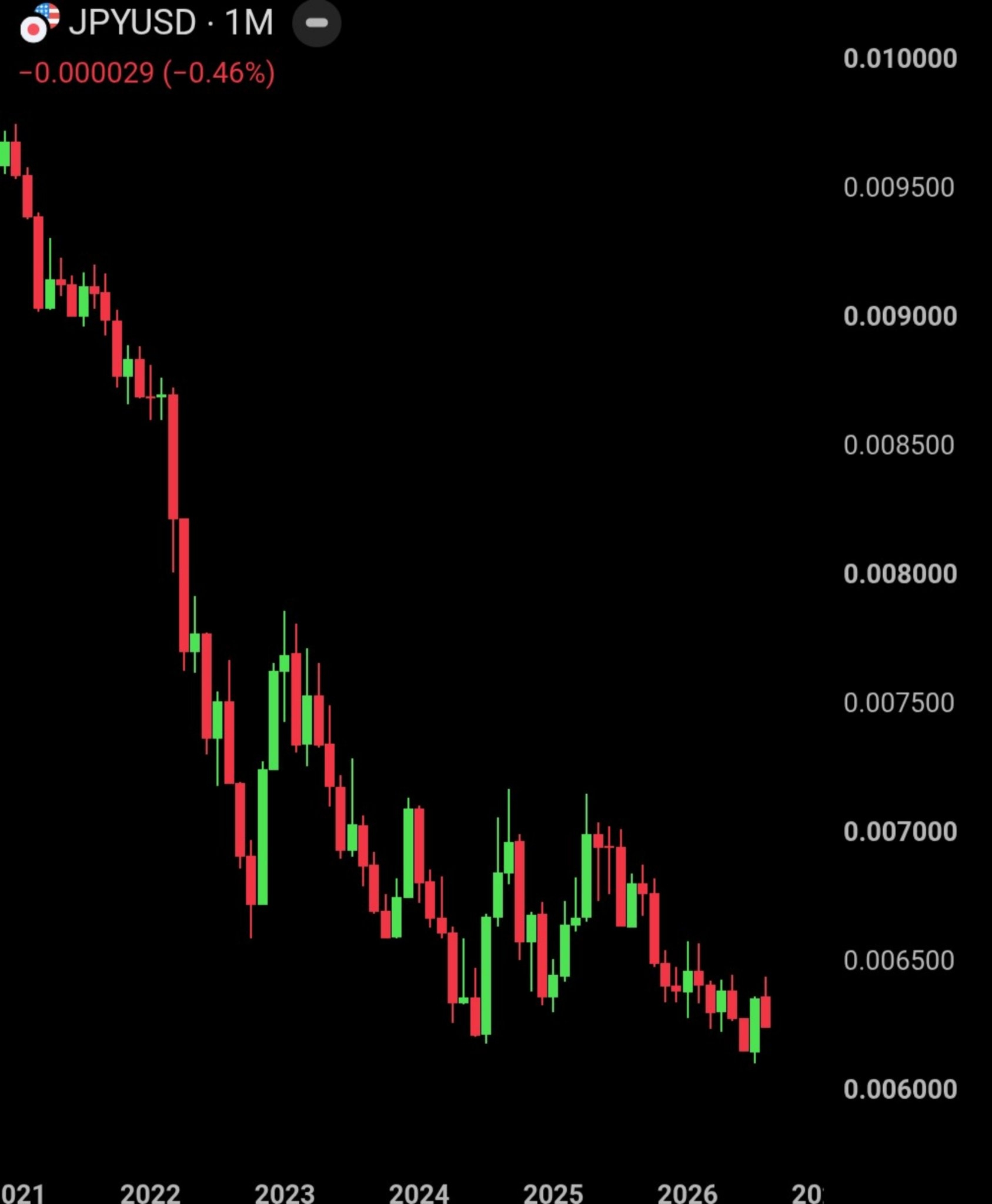
The injection of tens of billions of dollars provides only a short-lived rebound. The only real tool to save the yen remains the aggressive rate hike by the Bank of Japan (already expected by September), but this threatens a new wave of volatility and the unwinding of the carry trade for global risk assets.
#TrumpSaysUSReachedVenezuelaOilDeal