

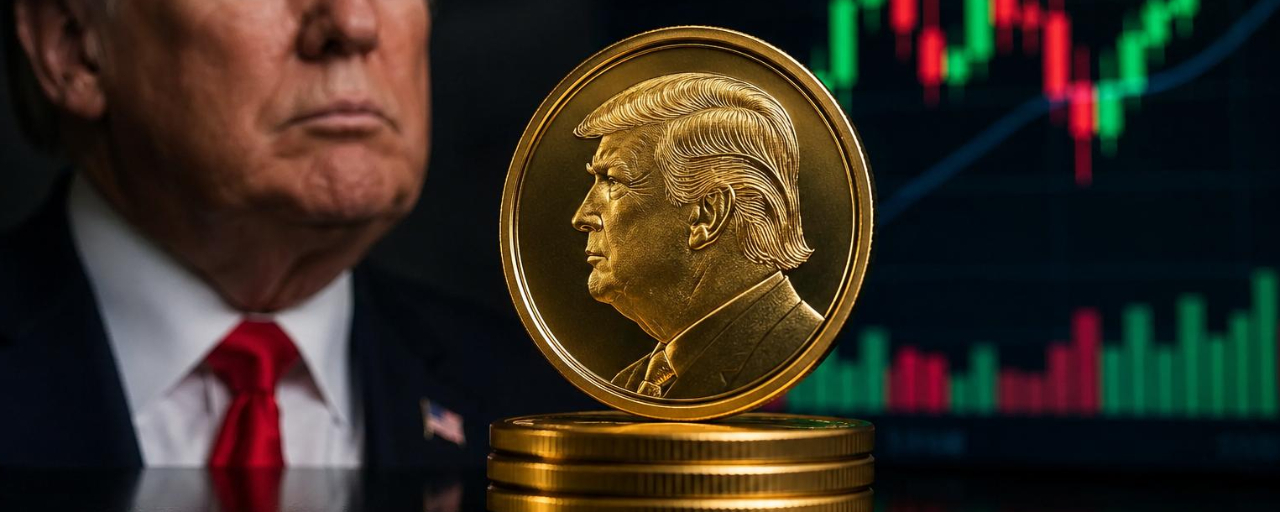

The U.S. consumer rights organization Public Citizen released a report on August 27 that laid out five cryptocurrency products promoted by the Trump family and tallied up the numbers. The conclusion was that Trump himself earned at least $1.4 billion (about NT$44.2 billion) from these products in 2025; while the investors who bought into them have, on paper, lost at least $4.7 billion (about NT$148 billion).
The breakdown of losses for each of the five products is as follows:
Trump meme coin (TRUMP): $3.2 billion (about NT$101.2 billion)
The token WLFI issued by the crypto company World Liberty Financial, co-founded by Trump and his son: $1.0 billion (about NT$31.6 billion)
Cryptocurrency assets bought with company funds by the Trump Media & Technology Group: $450 million (about NT$14.2 billion)
Trump digital trading card NFT: $9.3 million (about NT$294 million)
USD1 stablecoin: 0
To add context: a meme coin is a cryptocurrency whose value comes mainly from internet memes, celebrities, or social-media buzz. Its price doesn’t rely on any revenue or dividends—it depends on how many people are willing to buy it.
The biggest chunk of the loss is the Trump meme coin.
The report cites data from on-chain analytics firm Nansen: in the roughly 1.6 million retail wallets that bought this coin, nearly 1 million are still stuck/underwater, for a total loss of $3.2 billion.
The coin was issued on January 17, 2025—three days before Trump’s inauguration. According to CoinGecko data, it peaked at $73.43, but this morning’s price was about $2.77. From the high, it has fallen 96%.
-----
So how did Trump’s $1.4 billion get earned?
According to the property disclosures he filed this past June, the two largest items are: one is the authorization fee of $635 million paid to him by the Trump meme coin, and the other is $557 million earned from selling the WLFI token. The rest comes from operating revenue from the USD1 stablecoin.
And Public Citizen states directly in the report: “I can’t see any of Trump’s own money going into any of these projects.”
Because those tokens weren’t bought with his own money—they were directly allocated/issued to companies under his name. As for the meme coin side of the income, it comes in the form of authorization/royalty fees.
Based on my observations, what this report calculates is that the issuer’s cost structure and the buyer’s cost structure are fundamentally in different worlds.
One side’s cost is zero; the other side’s cost is actually the money transferred out from the bank.
So even though it’s the same 96% drop, it means something totally different for each side. For people buying the coin, it’s a loss; for the issuer, it’s just that he “earned a little less.”
-----
And in the U.S., it’s not like no one wants to regulate it.
On August 26, the California State Assembly passed Bill 2409 (Assembly Bill 2409, or AB 2409), a law specifically targeting meme coins. The Senate voted 40 in favor and 0 against. The House then approved the Senate’s amended version 78 to 0. Both chambers passed it unanimously, and it is now awaiting the governor’s signature.
This bill mainly regulates two things:
Bans federal, state, and local public officials from issuing meme coins on their own
Bans digital asset service providers from selling meme coins issued by public officials to California residents
But even if this law is signed and passed, it would only be able to regulate coins issued after January 1, 2027. And the Trump coin was issued in January 2025, so it falls outside the lookback/retrieval period.
Although meme coins might make you rich overnight, in what I’ve seen, most people end up taking losses and exiting. If you’re just getting into crypto, I suggest staying as far away from these coins as possible.
So next time you see a celebrity promoting a coin, try asking one question first: Are the coins he has money-bought, or were they handed/given to him by someone else?
Have you ever bought a meme coin because someone recommended it to you?
Feel free to share with me~
⚠️ The information above is for reference only and does not constitute any investment advice.