

Large amount of ETH transferred to the exchange (about 8000 ETH, approximately 14.8 million USD)
Many people's first reaction: Is there going to be a crash? Is it going to collapse? Is something big going to happen?
Don't rush to conclusions; what truly deserves your attention isn't 'guessing the plot.'
Rather, it's about how risks are gradually amplified
'Transfer to exchange' = 'sell immediately'? Not necessarily
A few more common possibilities are:
Supplement margin (to avoid liquidation)
Change collateral/rebalance (shifting risk)
You really want to sell (this is one way)
So it's more like a signal: market sentiment may tighten, but it doesn't mean you already have the answer
Why is everyone watching the 'liquidation price'? A simple understanding for newbies
The core of leverage is summed up in one sentence: If you can't withstand volatility, you will be forcibly liquidated by the system.
Boss Yi's position has been repeatedly mentioned:
The position size is very large (about 463,000 ETH, fluctuating with price)
The cost line has been mentioned around $3,180 (discussion scope)
The liquidation range has been mentioned at $1,576–$1,682 (chain data platform estimated scope)
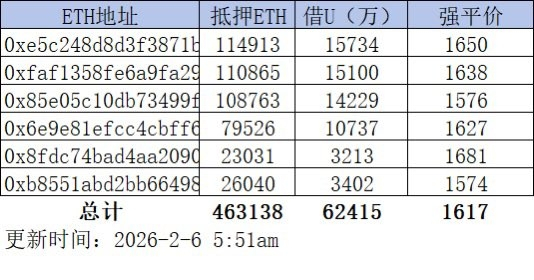
You don't need to get caught up in the truth of numbers to the decimal point, focus on the key point: The closer you are to liquidation, the less it is trading and more it is about survival.
The 'wrong posture' learned by newbies: the more it falls, the more they add
Many people see large account holders 'adding margin' and follow suit: 'If he can hold on, so can I.'
But the reality is:
You don't have his capital depth
You don't have his information density
You certainly don't have his margin for error
The act of adding margin is essentially: using more money to buy more time.
But time does not guarantee a reversal for you

Newbies remember these 4 points, they are more useful than watching candlesticks (suggest saving this)
First look at the liquidation price, then decide whether to open leverage or not
The higher the leverage, the smaller the position (don't get this reversed)
Don't put all your bullets on a single asset
Have an exit condition (write down stop-loss/reduction plans)
Before 'adding once more', ask yourself: Is this strategy, or is it unwillingness?
The market has new plots every day, but not many will survive to the next round
High leverage is not a wealth code; it's an amplifier: it amplifies gains in favorable conditions and amplifies risks in unfavorable conditions.