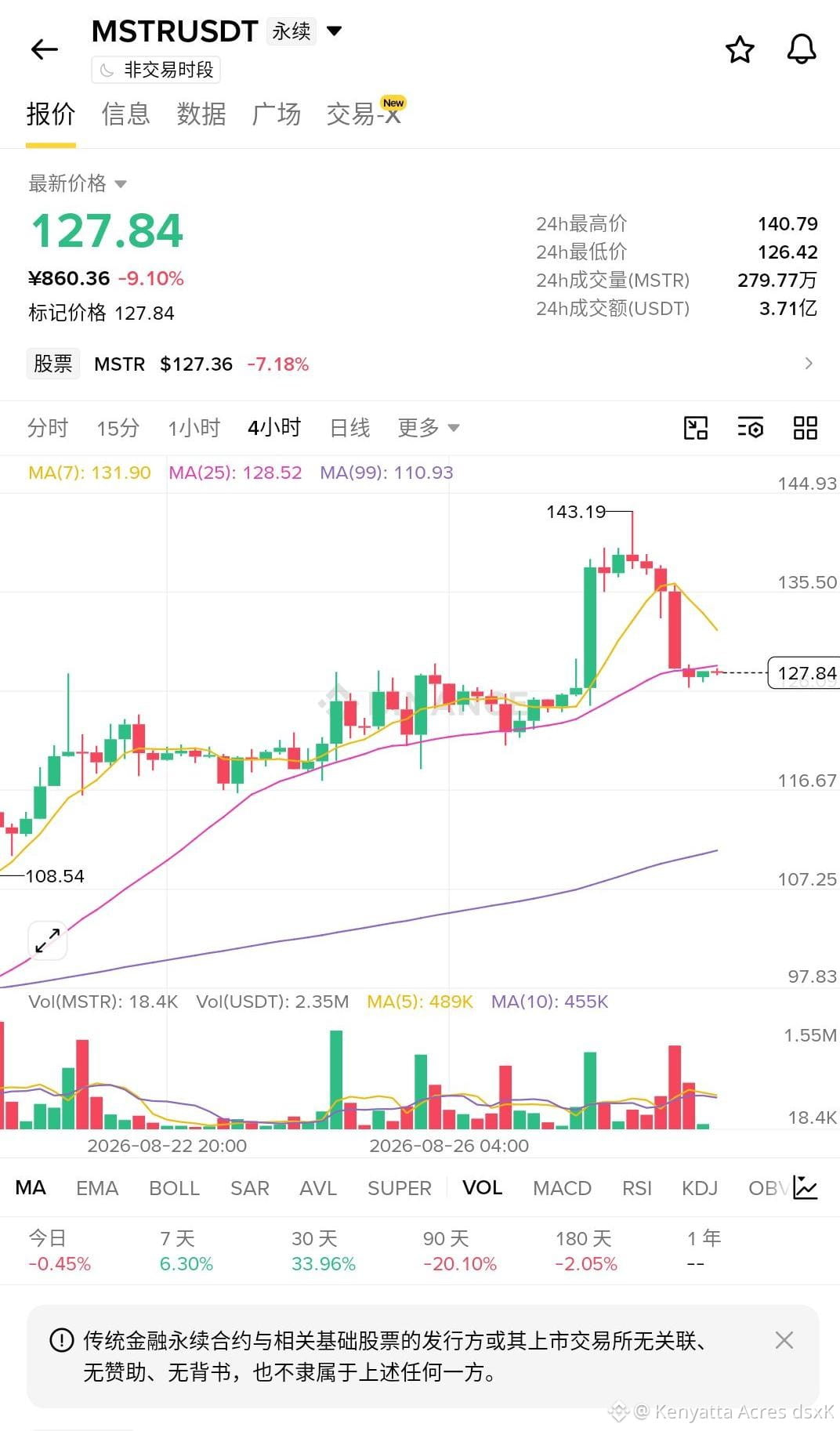
The most unusual thing wasn’t MSTR’s yesterday 8.97% red candle, but the fact that after the bearish candle, the bulls were still paying the counterparty—funding rate remained positive at 0.0212%, with 5 positives out of 8 samples. In the past 24 hours, it fell 8.73%; contract open interest was cut by 8.32%. The result wasn’t washing out the unwilling longs— it was washing out even tougher ones.
The confusing part is the “whale” on the other side: the long/short ratio on the account side dropped 4.52% over 7 hours, yet on the position side the longs still made up 72.34% and, over those 7 hours, the long share even increased by 1.55%—the account is converging, but positions are becoming more and more concentrated in longs. The main players haven’t admitted defeat; they’ve simply compressed the positioning even more. This round of leverage cleaning clearly wasn’t cleaned thoroughly.
What’s propping up that rebound stop at 127.9? Net inflows of big spot orders are zero. In 5 samples, not a single one is a large order. Supposedly, all the buying is sitting in the derivatives order book: aggressive buys account for 56.6%, but open interest still shrank by 6.75% over 7 hours—there’s no confirmation from fresh money entering; it’s trapped longs on the contract side pulling themselves up. Price is stuck below the 15-minute MA50 (128.5), and it can’t even reclaim the first resistance.
My stance is straightforward: I’m going short. Enter short at 127.9–128.5, with a stop-loss above 129.5. When does a reversal happen? When net spot big-order inflows turn positive, price holds and regains 128.5, and the funding rate simultaneously flips to negative—only then would the longs truly be liquidated and it would be time to go long. Until then, every rebound is handing a knife to the short side.
#mstr $MSTR
The confusing part is the “whale” on the other side: the long/short ratio on the account side dropped 4.52% over 7 hours, yet on the position side the longs still made up 72.34% and, over those 7 hours, the long share even increased by 1.55%—the account is converging, but positions are becoming more and more concentrated in longs. The main players haven’t admitted defeat; they’ve simply compressed the positioning even more. This round of leverage cleaning clearly wasn’t cleaned thoroughly.
What’s propping up that rebound stop at 127.9? Net inflows of big spot orders are zero. In 5 samples, not a single one is a large order. Supposedly, all the buying is sitting in the derivatives order book: aggressive buys account for 56.6%, but open interest still shrank by 6.75% over 7 hours—there’s no confirmation from fresh money entering; it’s trapped longs on the contract side pulling themselves up. Price is stuck below the 15-minute MA50 (128.5), and it can’t even reclaim the first resistance.
My stance is straightforward: I’m going short. Enter short at 127.9–128.5, with a stop-loss above 129.5. When does a reversal happen? When net spot big-order inflows turn positive, price holds and regains 128.5, and the funding rate simultaneously flips to negative—only then would the longs truly be liquidated and it would be time to go long. Until then, every rebound is handing a knife to the short side.
#mstr $MSTR