At this stage, it is precisely the time for researchers to play their role.
Whether in the US stock market or on-chain, many major logics have been laid out over the years: monetary easing is beneficial, tapering is a negative, defensive strategies in the late cycle, and it’s best to sell during an inverted yield curve...
These have all become market reflexes, and traders can place orders without much thought.
What is truly worth spending time on is actually those structural micro changes — which experiences are still effective, which have failed, which narratives can become foundations, and which foundations are starting to loosen.
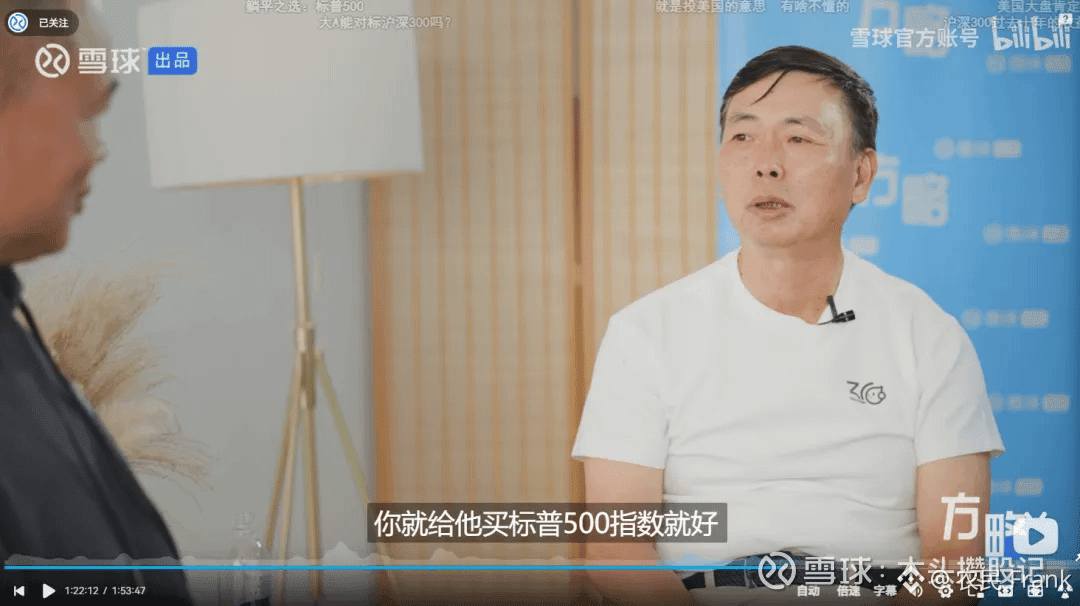
There has never been a one-size-fits-all "experience"; even Duan Yongping's advice to "just buy the S&P 500 index" carries inherent restrictive premises (that American financial/military hegemony can still be maintained).
Thus, Vida keeps a large amount of cash, anticipating that when those "mindless leveraged long positions in the S&P 500" pay the price, it may not conflict with Duan Yongping.
Investment cannot rely solely on knee-jerk reactions; at this time, researchers must go to the front lines. Even if the foundations are generally settling, there will always be some people taking the elevator up, creating localized structural prosperity.
Like last year, many star small-cap stocks like RKLB saw numerous buyers following the logic.
Moreover, research is different from arbitrage; it is not a cold game of zero-sum. As long as the value growth you are researching is real, this ship may not sink even if there are more people on board.
Especially in this era where large models can write reports, sharing is not just an output, but also a practice to force a logical closed loop through public expression.
2026, LFG
Whether in the US stock market or on-chain, many major logics have been laid out over the years: monetary easing is beneficial, tapering is a negative, defensive strategies in the late cycle, and it’s best to sell during an inverted yield curve...
These have all become market reflexes, and traders can place orders without much thought.
What is truly worth spending time on is actually those structural micro changes — which experiences are still effective, which have failed, which narratives can become foundations, and which foundations are starting to loosen.
There has never been a one-size-fits-all "experience"; even Duan Yongping's advice to "just buy the S&P 500 index" carries inherent restrictive premises (that American financial/military hegemony can still be maintained).
Thus, Vida keeps a large amount of cash, anticipating that when those "mindless leveraged long positions in the S&P 500" pay the price, it may not conflict with Duan Yongping.
Investment cannot rely solely on knee-jerk reactions; at this time, researchers must go to the front lines. Even if the foundations are generally settling, there will always be some people taking the elevator up, creating localized structural prosperity.
Like last year, many star small-cap stocks like RKLB saw numerous buyers following the logic.
Moreover, research is different from arbitrage; it is not a cold game of zero-sum. As long as the value growth you are researching is real, this ship may not sink even if there are more people on board.
Especially in this era where large models can write reports, sharing is not just an output, but also a practice to force a logical closed loop through public expression.
2026, LFG