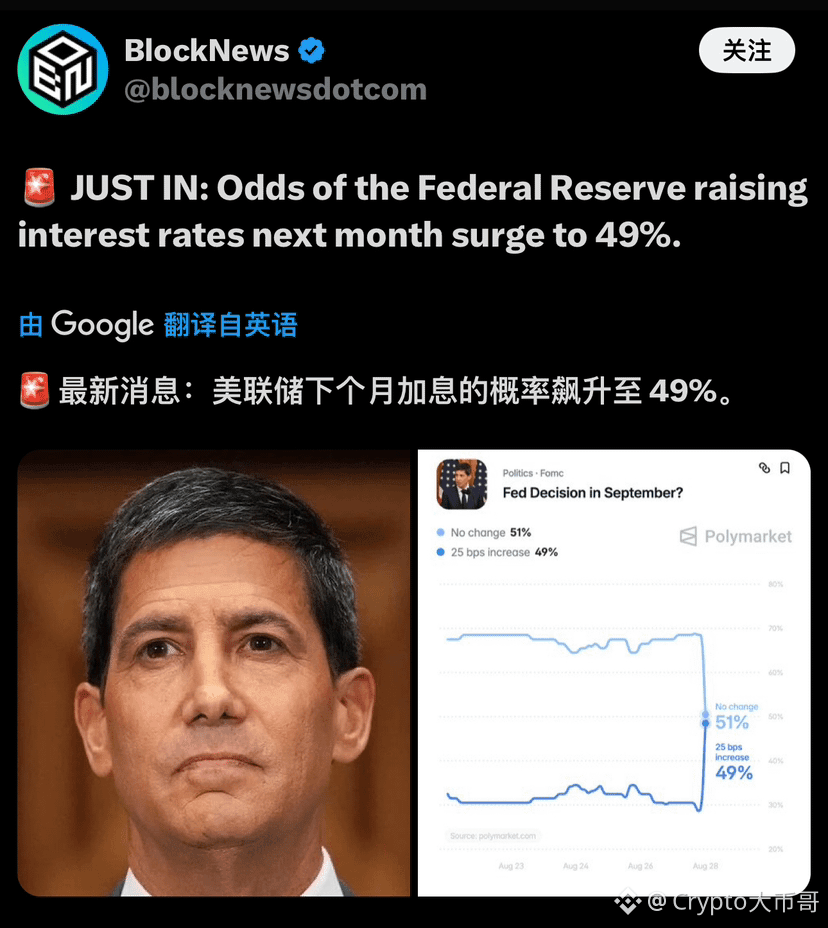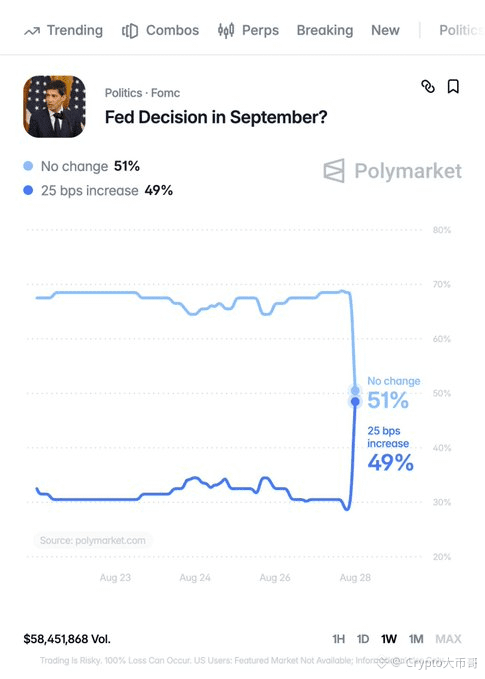
🚨🚨🚨The chair of the U.S. Federal Reserve, Kevin Walsh, has just put money back at the very center of monetary policy
Listen closely to what Walsh is really saying.
He wants policymakers to focus not only on the money created by the central bank, but also on the money coming from banks and the financial system.
Then he goes straight into a discussion about financial innovation and the speed of money circulation.
For me, this is where things get really interesting.
The financial system is introducing brand-new forms of money:
👉 stablecoins
👉 tokenized deposits
👉 tokenized treasuries
👉 digital securities
👉 on-chain credit
The Fed itself also admits that stablecoins, tokenization, and distributed ledgers are creating new channels for dollar intermediation, foreign exchange, and cross-border payments.
Now let’s look at Ripple’s stack.
RLUSD = tokenized dollar liquidity.
ripple:native = native neutral liquidity on the XRPL.
Ripple Payments = cross-border money transfers and FX trading.
XRPL = settlement, tokenization, decentralized exchanges (DEXs), automated market makers (AMMs), and institutional lending infrastructure.
Ripple Prime = institutional trading and liquidity.
Ripple Mint = institutional-grade RLUSD issuance and redemption.
This isn’t theoretical pipeline engineering.
Ripple Payments can convert fiat into XRP or RLUSD, transfer value between XRP, and convert into the target currency.
Bitso’s MXNB + RLUSD trading pair provides a real-world example:
U.S. dollar liquidity → RLUSD → XRPL → MXNB → Mexico’s financial system.
Walsh is talking about how innovation changes the mechanisms between money, velocity, financial conditions, and prices.
XRPL can settle in seconds, and Ripple says it has already processed trades with a value of more than $1 trillion between counterparties.
That’s why his words hit me differently.
What the Fed is discussing is a monetary system in which the form of money, its speed, and how it moves are all changing.
The purpose of the design of ripple:native is exactly to solve this problem: moving liquidity between different forms of value without forcing every institution to pre-fund capital everywhere.
The money system is continuously evolving.
The design goal of XRP is to enable liquidity.
$XRP
Listen closely to what Walsh is really saying.
He wants policymakers to focus not only on the money created by the central bank, but also on the money coming from banks and the financial system.
Then he goes straight into a discussion about financial innovation and the speed of money circulation.
For me, this is where things get really interesting.
The financial system is introducing brand-new forms of money:
👉 stablecoins
👉 tokenized deposits
👉 tokenized treasuries
👉 digital securities
👉 on-chain credit
The Fed itself also admits that stablecoins, tokenization, and distributed ledgers are creating new channels for dollar intermediation, foreign exchange, and cross-border payments.
Now let’s look at Ripple’s stack.
RLUSD = tokenized dollar liquidity.
ripple:native = native neutral liquidity on the XRPL.
Ripple Payments = cross-border money transfers and FX trading.
XRPL = settlement, tokenization, decentralized exchanges (DEXs), automated market makers (AMMs), and institutional lending infrastructure.
Ripple Prime = institutional trading and liquidity.
Ripple Mint = institutional-grade RLUSD issuance and redemption.
This isn’t theoretical pipeline engineering.
Ripple Payments can convert fiat into XRP or RLUSD, transfer value between XRP, and convert into the target currency.
Bitso’s MXNB + RLUSD trading pair provides a real-world example:
U.S. dollar liquidity → RLUSD → XRPL → MXNB → Mexico’s financial system.
Walsh is talking about how innovation changes the mechanisms between money, velocity, financial conditions, and prices.
XRPL can settle in seconds, and Ripple says it has already processed trades with a value of more than $1 trillion between counterparties.
That’s why his words hit me differently.
What the Fed is discussing is a monetary system in which the form of money, its speed, and how it moves are all changing.
The purpose of the design of ripple:native is exactly to solve this problem: moving liquidity between different forms of value without forcing every institution to pre-fund capital everywhere.
The money system is continuously evolving.
The design goal of XRP is to enable liquidity.
$XRP