Rebuilding the rate-hike threshold + refusing to give a hawkish commitment—this is the theme of tonight’s Waller speech
Although Waller did not lock in the probability of a September rate hike, he clearly told the market that current interest rates are not restrictive enough for financial markets, opening up the imagination of further rate hikes—especially with the reinforcement of the 2% inflation target, which has plunged the market deep into concerns about a September rate hike
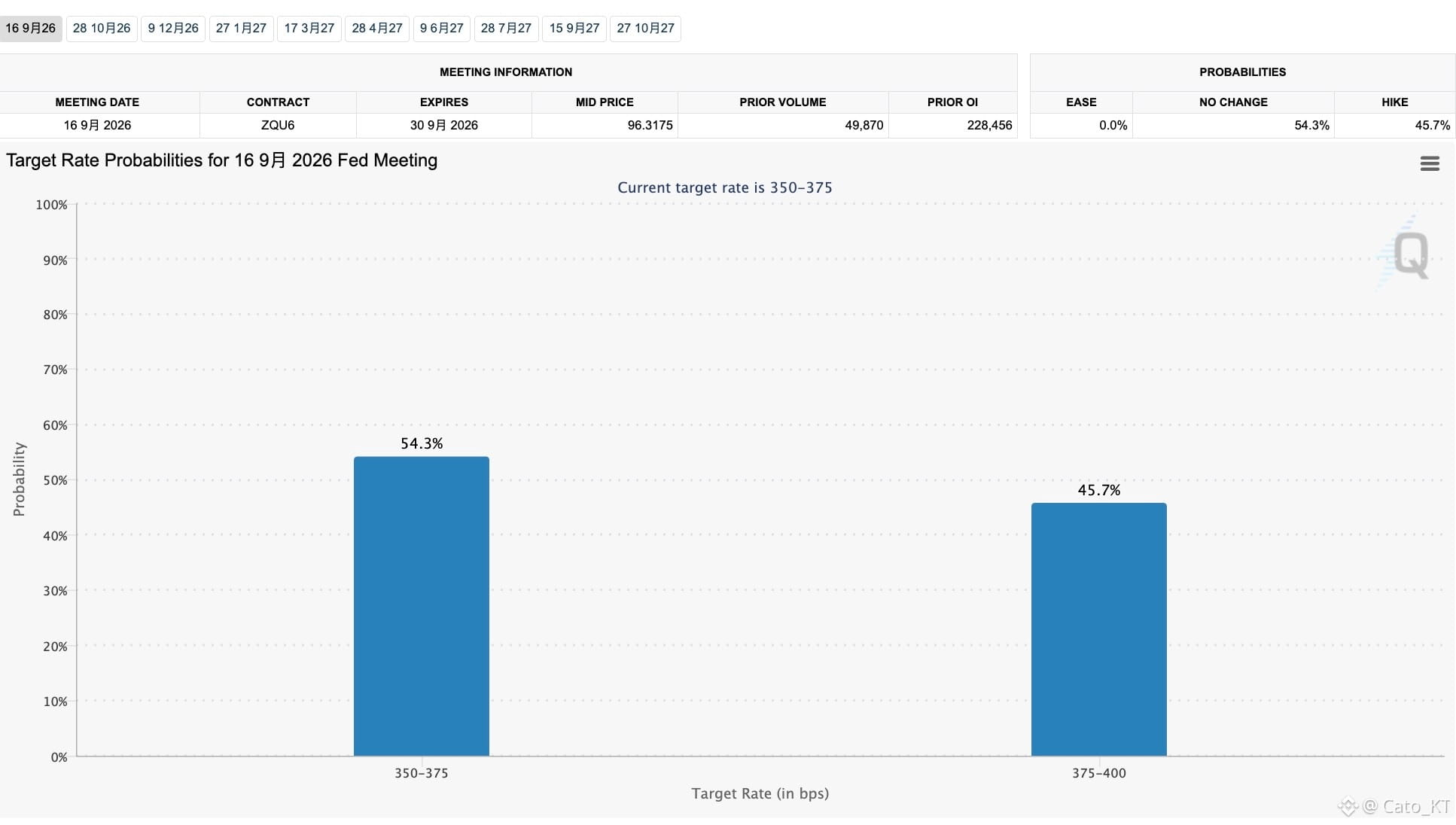
After Waller’s speech, CME swap rates show a 45.7% probability of a September rate hike, while traders price the probability at 50%!
In fact, the core of tonight’s Waller speech is still to keep the market at high rates. Although the probability of a September rate hike has increased, I still do not think there will actually be a hike in September,
Because current interest rates do not affect financing for tech stocks, but for real estate, retail, and other real-economy firms, high financing costs are fatal. The current crisis can still be held back for now—if rate hikes continue, these companies will inevitably be sacrificed.
So, as before: Waller is trying to guide the market to maintain high rates. Besides the fact that the data itself lacks sufficient evidence for rate cuts, more importantly, Waller needs time for the working group to set up a new data set combination to support rate cuts.
Before the working group’s data is released, unless inflation continues to fall, Waller may indeed need to continue using a hawkish tone to keep the market at high rates.
Of course, beyond Waller’s own monetary-policy stance, market expectations remain effective too. To reduce expectations of rate hikes, besides August inflation, employment, and economic data, the most direct factor is for energy prices to quickly return to normal.
As for the reduction of the Fed’s forward guidance that Waller advocates, this speech, in a sense, further reinforces that policy
Under the future “Waller model,” once data is released, the market will have to price the data first, and only then will it come to Fed decision-making. The benefit of this approach is that market pricing becomes more intuitive; the downside is that the asset market will become more sensitive to how the data is priced!#黄金8月上涨约14%
Although Waller did not lock in the probability of a September rate hike, he clearly told the market that current interest rates are not restrictive enough for financial markets, opening up the imagination of further rate hikes—especially with the reinforcement of the 2% inflation target, which has plunged the market deep into concerns about a September rate hike
After Waller’s speech, CME swap rates show a 45.7% probability of a September rate hike, while traders price the probability at 50%!
In fact, the core of tonight’s Waller speech is still to keep the market at high rates. Although the probability of a September rate hike has increased, I still do not think there will actually be a hike in September,
Because current interest rates do not affect financing for tech stocks, but for real estate, retail, and other real-economy firms, high financing costs are fatal. The current crisis can still be held back for now—if rate hikes continue, these companies will inevitably be sacrificed.
So, as before: Waller is trying to guide the market to maintain high rates. Besides the fact that the data itself lacks sufficient evidence for rate cuts, more importantly, Waller needs time for the working group to set up a new data set combination to support rate cuts.
Before the working group’s data is released, unless inflation continues to fall, Waller may indeed need to continue using a hawkish tone to keep the market at high rates.
Of course, beyond Waller’s own monetary-policy stance, market expectations remain effective too. To reduce expectations of rate hikes, besides August inflation, employment, and economic data, the most direct factor is for energy prices to quickly return to normal.
As for the reduction of the Fed’s forward guidance that Waller advocates, this speech, in a sense, further reinforces that policy
Under the future “Waller model,” once data is released, the market will have to price the data first, and only then will it come to Fed decision-making. The benefit of this approach is that market pricing becomes more intuitive; the downside is that the asset market will become more sensitive to how the data is priced!#黄金8月上涨约14%