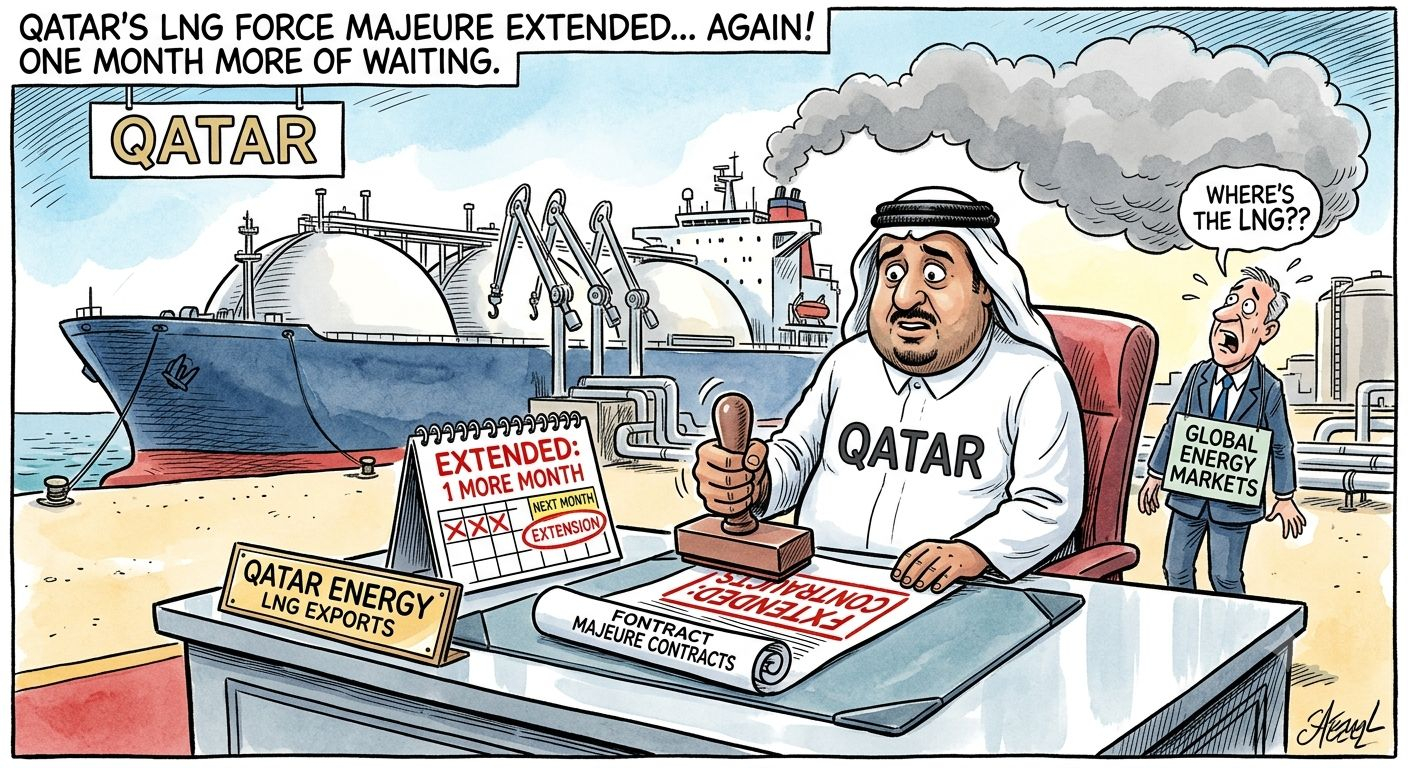
#qatarextendslngforcemajeurebyonemonth
The Qatar LNG disruption lasts longer — why markets should care
The interruption of Qatar’s LNG supply lasts further into the year, adding another layer of uncertainty to a global energy market that is already particularly sensitive.
What happened
QatarEnergy has extended its force majeure for LNG deliveries by an additional month, meaning some buyers could continue to face shipping disruptions while uncertainty persists regarding regional transport conditions.
Why it matters
The impact on financial markets is indirect, but potentially significant.
If LNG supply remains constrained for longer, energy prices could face additional upward pressure. Higher energy costs can fuel inflation, making it harder for central banks to move ahead with interest-rate cuts.
This matters for risk assets, including crypto.
If inflation proves stubborn and expectations for a more accommodative monetary policy are pushed back, financial conditions could remain restrictive for longer. The effect isn’t automatic, but it can create a tougher environment for assets that rely heavily on liquidity and risk appetite
The big picture is that disruptions in physical commodity markets don’t always stay confined to energy.
They can eventually feed through to prices, inflation, currencies, and expectations for interest rates — and then, from there, into broader financial markets.
Could prolonged energy supply disruptions become a more important factor in global risk sentiment in the coming months?
$NATGAS
$HEMI
The Qatar LNG disruption lasts longer — why markets should care
The interruption of Qatar’s LNG supply lasts further into the year, adding another layer of uncertainty to a global energy market that is already particularly sensitive.
What happened
QatarEnergy has extended its force majeure for LNG deliveries by an additional month, meaning some buyers could continue to face shipping disruptions while uncertainty persists regarding regional transport conditions.
Why it matters
The impact on financial markets is indirect, but potentially significant.
If LNG supply remains constrained for longer, energy prices could face additional upward pressure. Higher energy costs can fuel inflation, making it harder for central banks to move ahead with interest-rate cuts.
This matters for risk assets, including crypto.
If inflation proves stubborn and expectations for a more accommodative monetary policy are pushed back, financial conditions could remain restrictive for longer. The effect isn’t automatic, but it can create a tougher environment for assets that rely heavily on liquidity and risk appetite
The big picture is that disruptions in physical commodity markets don’t always stay confined to energy.
They can eventually feed through to prices, inflation, currencies, and expectations for interest rates — and then, from there, into broader financial markets.
Could prolonged energy supply disruptions become a more important factor in global risk sentiment in the coming months?
$NATGAS
$HEMI