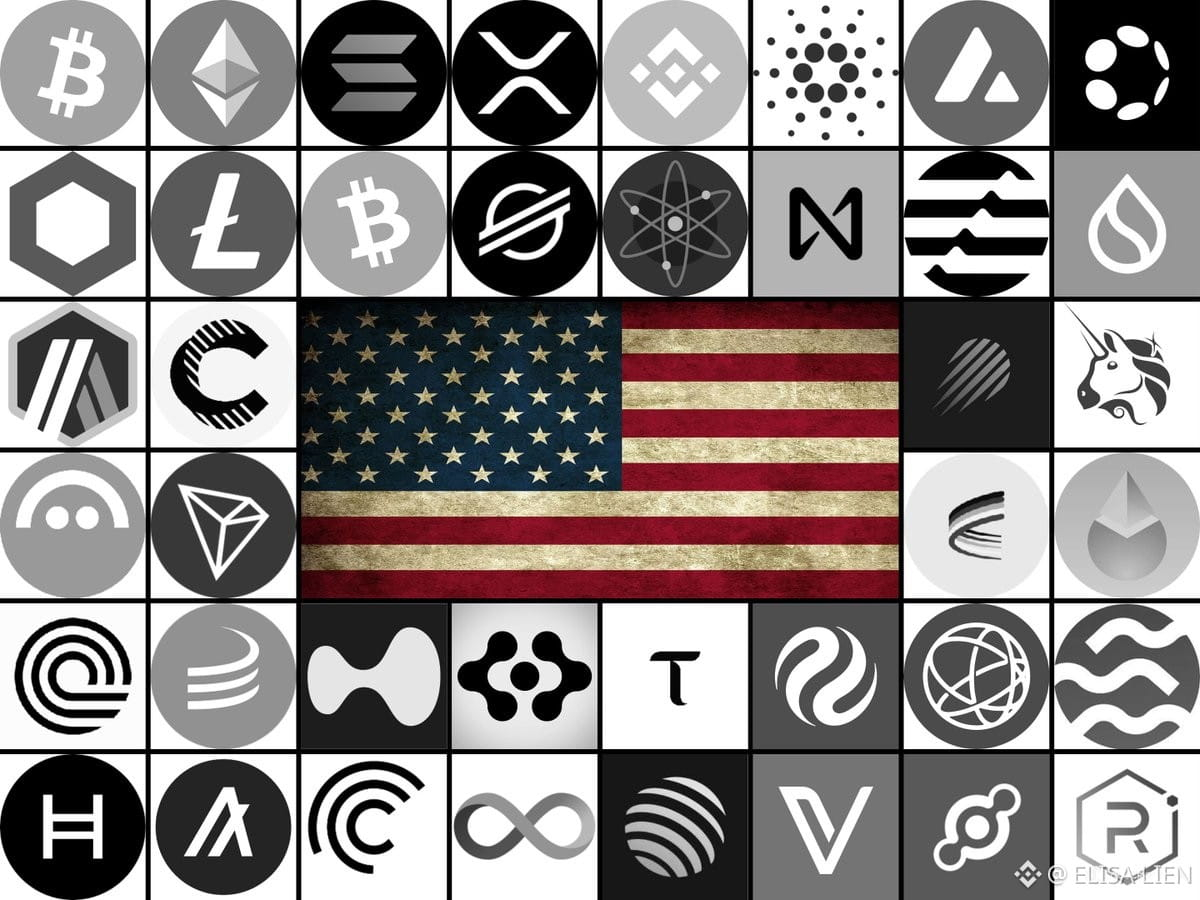
Which project benefits the most from the CLARITY Act?
> Bitcoin: The benchmark commodity; the law makes it permanent.
> Ethereum: The core commodity; the deepest foundation for DeFi and RWA.
> XRP: The grandfather ETF clause ends SEC pressure; a payments route.
> Solana: Gains grandfather status and passes maturity testing; a large DeFi base.
> Litecoin: Gains grandfather status, a clear payments commodity.
> Hedera: Gains grandfather status, an enterprise ledger and U.S. payments.
> Dogecoin: Gains grandfather status via the ETF, payment demand.
> Chainlink: U.S. oracle infrastructure that receives grandfather status for tokenization.
> Cardano: Referred to as a commodity in SEC/CFTC guidance.
> Avalanche: U.S. L1, institutional subnetworks and RWA.
> Tron: Dominant stablecoin and payments route.
> BNB: Broad on-chain financial footprint (Grayscale choice).
> Ondo: Tokenized U.S. treasury leader; the SEC investigation is closed.
> Canton: An institutional L1 that hosts DTCC tokenized assets.
> Maple: U.S. institutional lending and tokenized credit.
> Pax Gold: A regulated U.S.-tokenized commodity (Paxos).
> Centrifuge: A tokenized private credit pathway.
> Aptos: Ex-Diem team from Meta, a U.S.-built payments L1.
> Sui: Ex-Diem team from Meta, high-throughput U.S. L1.
> Helium: U.S. DePIN, real-world usage.
> Algorand: U.S. roots (Micali/MIT), payments and RWA.
> Stellar: U.S. foundation, cross-border payments and RWA.
> Uniswap: U.S. DEX, a safe non-custodial port that reduces SEC risk.
> Hyperliquid: Non-custodial perps aligned with the safe port of DeFi.
> Aave: Non-custodial lending covered by the safe port.
> Jupiter: Solana aggregator, benefiting from more on-chain assets.
> Aerodrome: Solana/Base liquidity venue.
> Raydium: Solana DEX volume.
> Meteora: Solana liquidity, low-cost based on revenue.
> Arbitrum: L2 for RWA and institutional adoption (marked by Grayscale).
> Bitcoin: The benchmark commodity; the law makes it permanent.
> Ethereum: The core commodity; the deepest foundation for DeFi and RWA.
> XRP: The grandfather ETF clause ends SEC pressure; a payments route.
> Solana: Gains grandfather status and passes maturity testing; a large DeFi base.
> Litecoin: Gains grandfather status, a clear payments commodity.
> Hedera: Gains grandfather status, an enterprise ledger and U.S. payments.
> Dogecoin: Gains grandfather status via the ETF, payment demand.
> Chainlink: U.S. oracle infrastructure that receives grandfather status for tokenization.
> Cardano: Referred to as a commodity in SEC/CFTC guidance.
> Avalanche: U.S. L1, institutional subnetworks and RWA.
> Tron: Dominant stablecoin and payments route.
> BNB: Broad on-chain financial footprint (Grayscale choice).
> Ondo: Tokenized U.S. treasury leader; the SEC investigation is closed.
> Canton: An institutional L1 that hosts DTCC tokenized assets.
> Maple: U.S. institutional lending and tokenized credit.
> Pax Gold: A regulated U.S.-tokenized commodity (Paxos).
> Centrifuge: A tokenized private credit pathway.
> Aptos: Ex-Diem team from Meta, a U.S.-built payments L1.
> Sui: Ex-Diem team from Meta, high-throughput U.S. L1.
> Helium: U.S. DePIN, real-world usage.
> Algorand: U.S. roots (Micali/MIT), payments and RWA.
> Stellar: U.S. foundation, cross-border payments and RWA.
> Uniswap: U.S. DEX, a safe non-custodial port that reduces SEC risk.
> Hyperliquid: Non-custodial perps aligned with the safe port of DeFi.
> Aave: Non-custodial lending covered by the safe port.
> Jupiter: Solana aggregator, benefiting from more on-chain assets.
> Aerodrome: Solana/Base liquidity venue.
> Raydium: Solana DEX volume.
> Meteora: Solana liquidity, low-cost based on revenue.
> Arbitrum: L2 for RWA and institutional adoption (marked by Grayscale).