
冷静的链上数据
189 Posts

冷静的链上数据
8 Following
56 Followers
84 Liked
Posts
See translation
Foo Fighters 出道三十多年,第一次登上好莱坞碗。
还拉来了洛杉矶爱乐乐团。
一支摇滚乐队,用三十年把演出做成了品牌资产。
乐队 IP 越老越值钱。
演出门票、周边、流媒体版权全是现金流。
现场演出是流媒体时代少数还在增长的音乐生意。
老牌乐队靠长期主义赚钱,比追风口稳得多。
财富的积累从来不是靠一夜成名,而是靠资产持续产生现金流。
音乐人如此,普通人也是。
当你的资产能像演唱会门票一样源源不断产生收入。
你才算真的财务自由。
关注我,每天用数据帮你理清市场的底层逻辑加入社群领取策略
还拉来了洛杉矶爱乐乐团。
一支摇滚乐队,用三十年把演出做成了品牌资产。
乐队 IP 越老越值钱。
演出门票、周边、流媒体版权全是现金流。
现场演出是流媒体时代少数还在增长的音乐生意。
老牌乐队靠长期主义赚钱,比追风口稳得多。
财富的积累从来不是靠一夜成名,而是靠资产持续产生现金流。
音乐人如此,普通人也是。
当你的资产能像演唱会门票一样源源不断产生收入。
你才算真的财务自由。
关注我,每天用数据帮你理清市场的底层逻辑加入社群领取策略

Sam Altman unusually openly expresses concern.
Control of AI may be concentrated in the hands of a few people.
Even the CEO of their own company says so—this is indeed worth paying attention to.
The stronger the AI, the higher the concentration of data, computing power, and models.
A handful of giants control the most advanced AI, while ordinary people can only be users.
But from another perspective, the debate between centralization and decentralization can’t escape the AI era either.
AI requires massive computing power, which naturally tends toward centralization.
And the distributed idea of blockchain is precisely another way to organize computing power.
In the future, AI may not belong to just a few companies.
Decentralized computing power and on-chain model verification—these directions are already taking root.
The more concentrated the technology is, the greater the value of decentralization.
Follow me, and every day I’ll use data to help you make sense of the market’s underlying logic加入社群领取策略
Control of AI may be concentrated in the hands of a few people.
Even the CEO of their own company says so—this is indeed worth paying attention to.
The stronger the AI, the higher the concentration of data, computing power, and models.
A handful of giants control the most advanced AI, while ordinary people can only be users.
But from another perspective, the debate between centralization and decentralization can’t escape the AI era either.
AI requires massive computing power, which naturally tends toward centralization.
And the distributed idea of blockchain is precisely another way to organize computing power.
In the future, AI may not belong to just a few companies.
Decentralized computing power and on-chain model verification—these directions are already taking root.
The more concentrated the technology is, the greater the value of decentralization.
Follow me, and every day I’ll use data to help you make sense of the market’s underlying logic加入社群领取策略

See translation
人形机器人在北京的世界人形机器人运动会上,百米跑出 9 秒多。
把博尔特 2009 年的纪录都超了。
科幻片里的画面,真在现实里发生了。
机器人跑进 10 秒,硬件能力已经不是实验室玩具。
运动控制、电池、材料这些底层技术,正在指数级进化。
人形机器人量产的那天,劳动力市场会重写。
AI 负责大脑,机器人负责身体,这两个赛道正在合流。
而算力是它们共同的底座。
大模型训练、机器人推理,全都吃算力。
当机器人开始满街跑,你会意识到。
算力可能才是这个时代最硬的资产。
关注我,每天用数据帮你理清市场的底层逻辑加入社群领取策略
把博尔特 2009 年的纪录都超了。
科幻片里的画面,真在现实里发生了。
机器人跑进 10 秒,硬件能力已经不是实验室玩具。
运动控制、电池、材料这些底层技术,正在指数级进化。
人形机器人量产的那天,劳动力市场会重写。
AI 负责大脑,机器人负责身体,这两个赛道正在合流。
而算力是它们共同的底座。
大模型训练、机器人推理,全都吃算力。
当机器人开始满街跑,你会意识到。
算力可能才是这个时代最硬的资产。
关注我,每天用数据帮你理清市场的底层逻辑加入社群领取策略

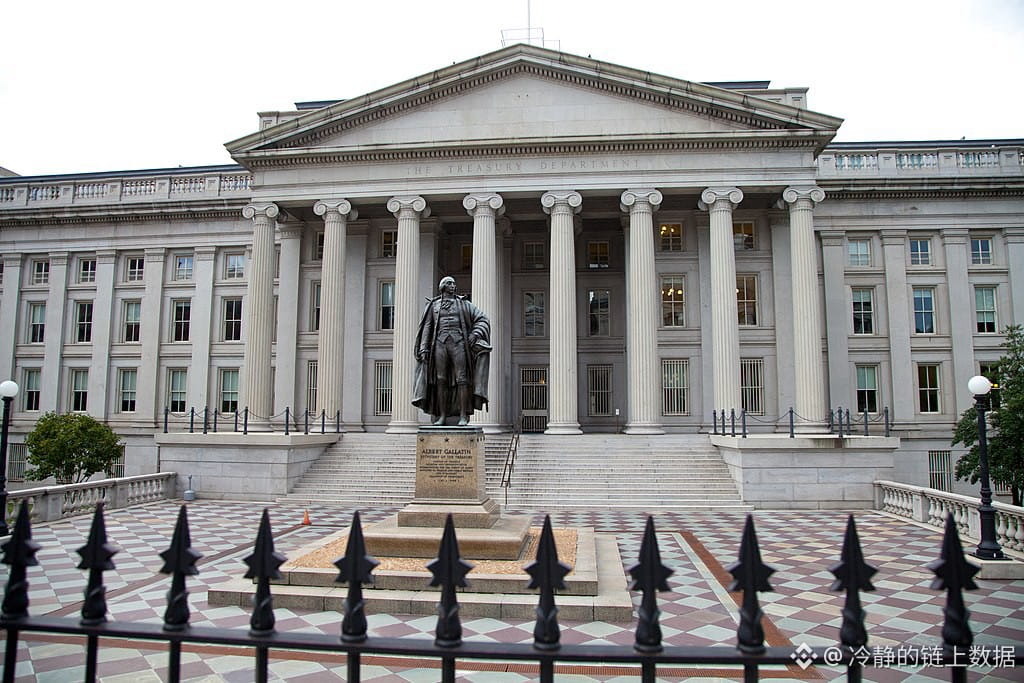
U.S. Treasury Secretary expands the government bond repo program to try to cap long-term yields.
But the bond market simply won’t play along—BTC and gold both surged instead.
This phenomenon is pretty interesting.
When policy intervention fails, it’s essentially a sign that market confidence in fiat currency credit is loosening.
If yields can’t be controlled, capital starts looking for alternative assets.
With BTC and gold rising together, their safe-haven attributes are activated at the same time.
Historically, every time fiscal intervention fails, it’s performance time for safe-haven assets.
Once faith in this risk-free asset—government bonds—gets shaken, money flows to two places.
Gold and Bitcoin.
When traditional market funds start taking BTC seriously, the narrative for this industry changes.
It’s not just hype—it’s allocation.
Follow me. Every day, I’ll use data to help you sort out the market’s underlying logic 加入社群领取策略
But the bond market simply won’t play along—BTC and gold both surged instead.
This phenomenon is pretty interesting.
When policy intervention fails, it’s essentially a sign that market confidence in fiat currency credit is loosening.
If yields can’t be controlled, capital starts looking for alternative assets.
With BTC and gold rising together, their safe-haven attributes are activated at the same time.
Historically, every time fiscal intervention fails, it’s performance time for safe-haven assets.
Once faith in this risk-free asset—government bonds—gets shaken, money flows to two places.
Gold and Bitcoin.
When traditional market funds start taking BTC seriously, the narrative for this industry changes.
It’s not just hype—it’s allocation.
Follow me. Every day, I’ll use data to help you sort out the market’s underlying logic 加入社群领取策略
On the eve of Nvidia’s earnings report, the whole AI trading world held its breath.
U.S. stock futures are flat and other key data are coming in.
This could be one of the most important earnings reports of the year.
Whether the frenzy over AI capital expenditures can continue depends on this report.
With rate-cut expectations from the Federal Reserve and the risks tied to Iran sanctions, the macro picture is also a battleground.
Volatility around the earnings release will inevitably spike, and the options market has already priced it in.
For ordinary people, AI is the core narrative driving the U.S. stock market right now.
If it hesitates, the entire tech sector moves with it.
And the AI narrative is on the same stream of capital as the crypto market.
When risk appetite is high, both sides rise together.
So tonight’s Nvidia numbers don’t just impact the Nasdaq—they also affect how BTC looks.
Before the earnings land, controlling position size matters more than predicting the direction.
Follow me—every day I’ll use data to help you untangle the market’s underlying logic加入社群领取策略
U.S. stock futures are flat and other key data are coming in.
This could be one of the most important earnings reports of the year.
Whether the frenzy over AI capital expenditures can continue depends on this report.
With rate-cut expectations from the Federal Reserve and the risks tied to Iran sanctions, the macro picture is also a battleground.
Volatility around the earnings release will inevitably spike, and the options market has already priced it in.
For ordinary people, AI is the core narrative driving the U.S. stock market right now.
If it hesitates, the entire tech sector moves with it.
And the AI narrative is on the same stream of capital as the crypto market.
When risk appetite is high, both sides rise together.
So tonight’s Nvidia numbers don’t just impact the Nasdaq—they also affect how BTC looks.
Before the earnings land, controlling position size matters more than predicting the direction.
Follow me—every day I’ll use data to help you untangle the market’s underlying logic加入社群领取策略
Spot crypto ETFs saw net inflows of $2.6 billion last week, and trading volume tripled.
This is the best week since October 2025.
Institutional money is back—this is the most notable signal.
Both BTC and ETH ETFs are pulling in funds at the same time; it’s not a single-coin market.
The $2.6 billion weekly inflow directly narrowed the year-to-date net-outflow gap from $5.7 billion to $3.1 billion.
Higher trading volume equals big money moving—not retail FOMO.
ETFs are the largest incremental source of capital in the crypto market.
Sustained inflows work better than any technical indicator.
If next week can still maintain this pace, the market will have fundamental support.
Of course, overall for the year it’s still a net-outflow situation—don’t get overly optimistic.
Follow the money data: when the data says buy, keep buying; when the data says stop, stop.
📌 Institutions keep “bottom-fishing,” the gap is narrowing—ETF data is the thermometer for this leg of the market.
Group chat: tap the card below to join the group and get strategies every day
➕ Join the fan group to get strategies!🔥 Every day I’ll help you understand the biggest crypto-market headlines and track institutional fund flows—using the simplest way to spot the next opportunity!🚀加入社群领取策略
This is the best week since October 2025.
Institutional money is back—this is the most notable signal.
Both BTC and ETH ETFs are pulling in funds at the same time; it’s not a single-coin market.
The $2.6 billion weekly inflow directly narrowed the year-to-date net-outflow gap from $5.7 billion to $3.1 billion.
Higher trading volume equals big money moving—not retail FOMO.
ETFs are the largest incremental source of capital in the crypto market.
Sustained inflows work better than any technical indicator.
If next week can still maintain this pace, the market will have fundamental support.
Of course, overall for the year it’s still a net-outflow situation—don’t get overly optimistic.
Follow the money data: when the data says buy, keep buying; when the data says stop, stop.
📌 Institutions keep “bottom-fishing,” the gap is narrowing—ETF data is the thermometer for this leg of the market.
Group chat: tap the card below to join the group and get strategies every day
➕ Join the fan group to get strategies!🔥 Every day I’ll help you understand the biggest crypto-market headlines and track institutional fund flows—using the simplest way to spot the next opportunity!🚀加入社群领取策略

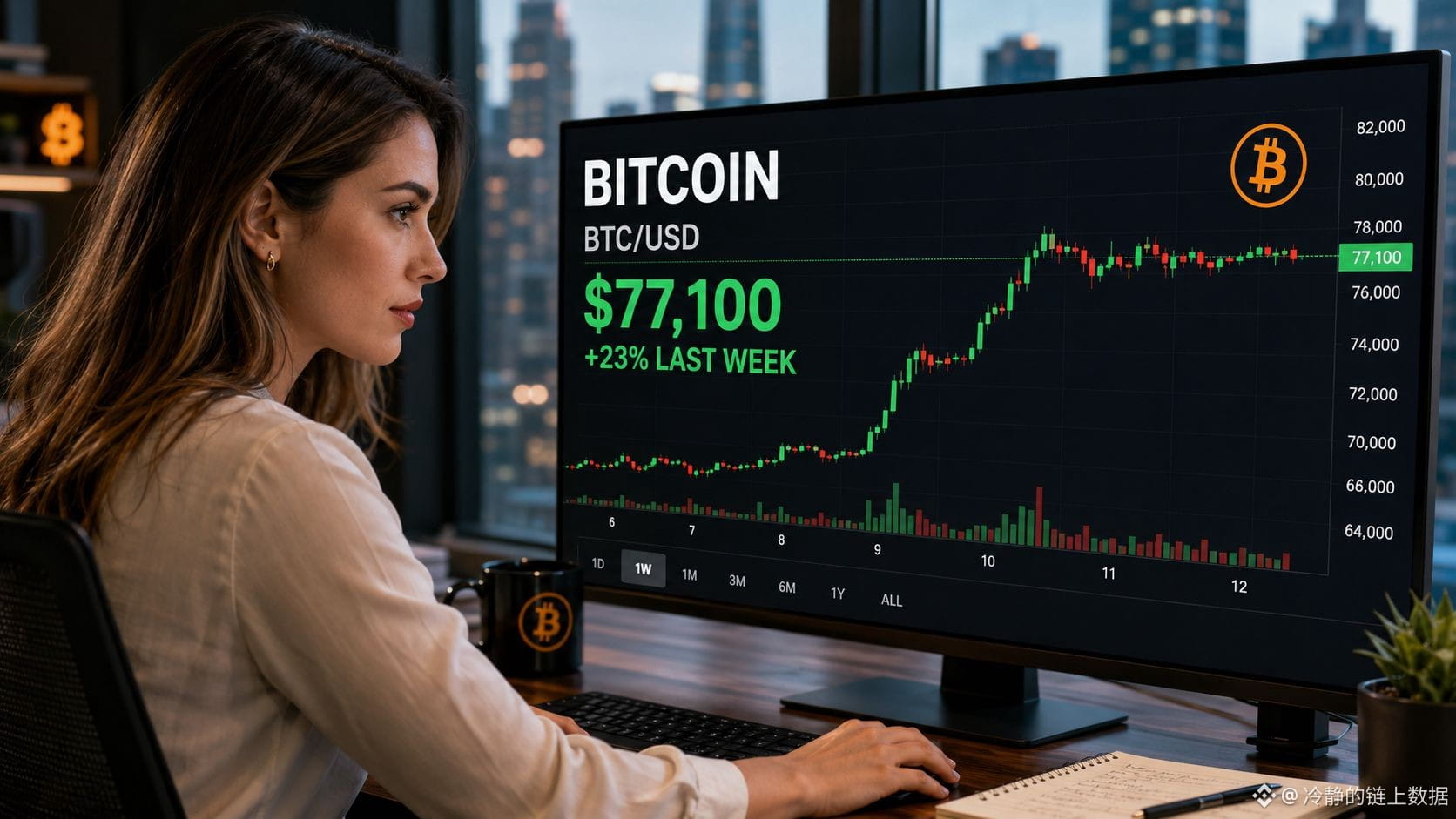
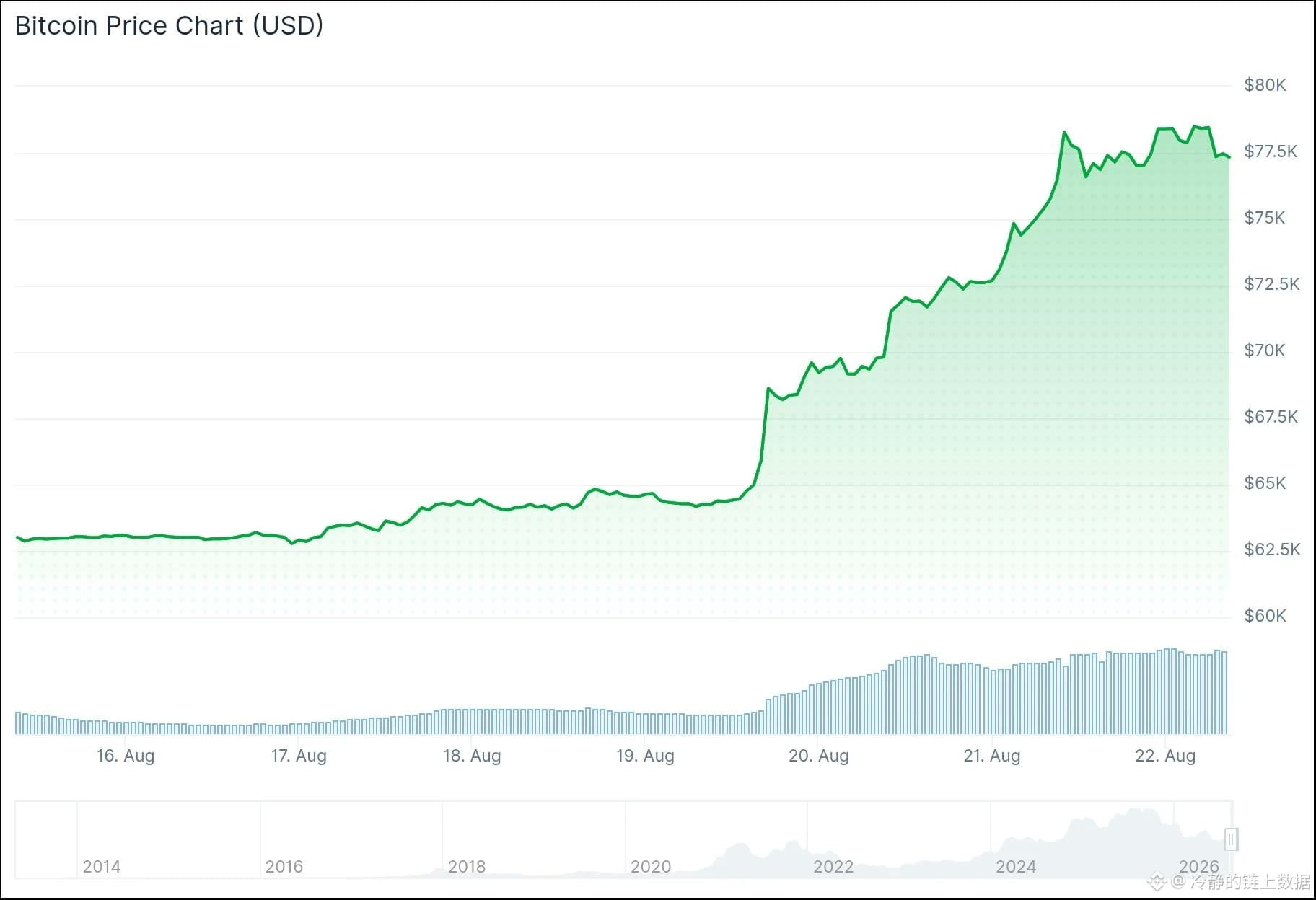
BTC is consolidating around 77,000, having jumped more than 23% last week.
This is the strongest week since March 2023.
But on Friday, $1.72 billion in profit-taking was cashed out, setting a new recent high.
After a 23% rise, holding steady instead of going sideways quickly suggests that selling pressure has been absorbed and that the bulls still have the upper hand.
Taking profits is a healthy behavior—capital is rotating through turnover rather than a coordinated stampede after everyone turns bullish.
However, once the dense profit-taking zone breaks down, the pullback can accelerate very fast.
Spot ETFs are still seeing ongoing inflows, and the institutional backstop logic hasn’t changed.
For the short term, support is at 75,000. Holding it means a strong consolidation; only a breakdown would warrant caution.
Honestly, this level is quite delicate.
After a strong week followed by sideways action, both bulls and bears are waiting for direction, and volatility could expand at any time.
Right now, the risk of chasing higher is greater than the opportunity—wait for a pullback and scale in more comfortably.
📌 After a strong week, staying flat is the most comfortable scenario for the bulls—but 75,000 is the line in the sand.
Group chat: Tap the card below to join the group and receive strategy updates every day
➕ Get the strategy in the fan group!🔥 Every day, I’ll help you understand crypto market hotspots and institutional capital flows in the simplest way, so you can catch the next opportunity!🚀加入社群领取策略
This is the strongest week since March 2023.
But on Friday, $1.72 billion in profit-taking was cashed out, setting a new recent high.
After a 23% rise, holding steady instead of going sideways quickly suggests that selling pressure has been absorbed and that the bulls still have the upper hand.
Taking profits is a healthy behavior—capital is rotating through turnover rather than a coordinated stampede after everyone turns bullish.
However, once the dense profit-taking zone breaks down, the pullback can accelerate very fast.
Spot ETFs are still seeing ongoing inflows, and the institutional backstop logic hasn’t changed.
For the short term, support is at 75,000. Holding it means a strong consolidation; only a breakdown would warrant caution.
Honestly, this level is quite delicate.
After a strong week followed by sideways action, both bulls and bears are waiting for direction, and volatility could expand at any time.
Right now, the risk of chasing higher is greater than the opportunity—wait for a pullback and scale in more comfortably.
📌 After a strong week, staying flat is the most comfortable scenario for the bulls—but 75,000 is the line in the sand.
Group chat: Tap the card below to join the group and receive strategy updates every day
➕ Get the strategy in the fan group!🔥 Every day, I’ll help you understand crypto market hotspots and institutional capital flows in the simplest way, so you can catch the next opportunity!🚀加入社群领取策略
XRP surged 50% in a week and is now consolidating around 1.47.
The reason: ETF inflows set a new weekly high.
Honestly, this move isn’t the short-term speculation I thought it was.
Spot ETF has seen consecutive net inflows—institutions are buying with real money.
Total market capitalization is back above 2.6 trillion, and risk appetite is truly back.
After a 50% rally, what’s the biggest risk? Profit-taking—concentrated sell-offs.
Right now, consolidation is a sign of strength. As long as pullbacks don’t break the key support level, there’s still a chance.
Think about where this rally started: market sentiment swung from panic to greed in just one week.
With a pace like this, it’s usually driven by institutional capital—not retail crowding together.
But don’t mistake short-term gains for a long-term trend.
ETF inflow data is the real benchmark. Check it every week and don’t let a single big bullish candle take you off your game.
📌 A 50% rise was powered by institutional funds. Whether it can hold depends on whether the inflows can continue.
Group chat: Tap the card below to join the group and get strategies every day
➕ Fan group: Get the strategy!🔥 Every day, help you understand crypto market highlights and institutional fund flows—in the simplest way to catch the next opportunity!🚀加入社群领取策略
The reason: ETF inflows set a new weekly high.
Honestly, this move isn’t the short-term speculation I thought it was.
Spot ETF has seen consecutive net inflows—institutions are buying with real money.
Total market capitalization is back above 2.6 trillion, and risk appetite is truly back.
After a 50% rally, what’s the biggest risk? Profit-taking—concentrated sell-offs.
Right now, consolidation is a sign of strength. As long as pullbacks don’t break the key support level, there’s still a chance.
Think about where this rally started: market sentiment swung from panic to greed in just one week.
With a pace like this, it’s usually driven by institutional capital—not retail crowding together.
But don’t mistake short-term gains for a long-term trend.
ETF inflow data is the real benchmark. Check it every week and don’t let a single big bullish candle take you off your game.
📌 A 50% rise was powered by institutional funds. Whether it can hold depends on whether the inflows can continue.
Group chat: Tap the card below to join the group and get strategies every day
➕ Fan group: Get the strategy!🔥 Every day, help you understand crypto market highlights and institutional fund flows—in the simplest way to catch the next opportunity!🚀加入社群领取策略

800-millionaire fund managers sold Micron together in the second quarter.
They turned around and added shares in a stock that’s building AI infrastructure.
Institutional investors vote with their feet—they never waste words.
There’s concern that the storage chip cycle may have peaked, but AI compute demand is still expanding, and the direction is obvious.
Honestly, it’s more reliable to follow top capital than to follow your own instincts.
The industry trends they spot are often half a year ahead of retail investors.
The AI arms race burns chips, and it’s really competing for compute power.
Back then, miners抢ed GPUs; now big companies抢 chips. In essence, it’s the same thing.
Compute power is the hard currency of the new era.
When traditional capital starts rushing into compute, should those compute assets on-chain be worth a look too?
Follow me—every day, I’ll use data to help you untangle the market’s underlying logic加入社群领取策略
They turned around and added shares in a stock that’s building AI infrastructure.
Institutional investors vote with their feet—they never waste words.
There’s concern that the storage chip cycle may have peaked, but AI compute demand is still expanding, and the direction is obvious.
Honestly, it’s more reliable to follow top capital than to follow your own instincts.
The industry trends they spot are often half a year ahead of retail investors.
The AI arms race burns chips, and it’s really competing for compute power.
Back then, miners抢ed GPUs; now big companies抢 chips. In essence, it’s the same thing.
Compute power is the hard currency of the new era.
When traditional capital starts rushing into compute, should those compute assets on-chain be worth a look too?
Follow me—every day, I’ll use data to help you untangle the market’s underlying logic加入社群领取策略

Honestly, Grayscale’s move this time is kind of interesting.
A Zcash ETF will be listed on the NYSE Arca tomorrow.
ZEC futures open interest has directly overtaken DOGE and BNB— the market is already running ahead.
Everyone who’s been around knows what kind of treatment privacy coins have had these past few years.
Regulators are putting pressure on them, so money goes around.
And yet Grayscale pushed the ZEC ETF all the way to the listing stage.
It’s basically opening up a compliant door for the privacy track.
There are three things worth watching.
After the ETF launches, traditional capital will, for the first time, be able to allocate to privacy coins openly and legitimately— this narrative is fresh.
ZEC’s positioning is completely different from BTC and ETH, giving institutions an additional hedging option.
A surge in futures OI suggests “smart money” is entering early; it’s not just retail sentiment.
And one more detail: Grayscale set the management fee at 2.5% this time.
All management fees for the first 12 months will also be used to promote the Zcash ecosystem.
It’s like reinvesting revenue back into the ecosystem— the posture is quite strong.
But let’s say the ugly part upfront: the usual playbook is that prices spike and then retrace on the day the ETF lists— don’t chase the highs.
What really matters is whether, in the following days, capital shows continuous inflows—that’s the hard evidence of institutional attitude.
📌 Grayscale has opened the door for privacy coins, but the road behind that door depends on whether the money actually walks through.
Group chat: click the card below to join the group and get a strategy every day
➕ Fan group gets the strategy!🔥 Every day, help you understand crypto market hotspots and institutional capital flows, in the simplest way, so you can seize the next opportunity!🚀加入社群领取策略
A Zcash ETF will be listed on the NYSE Arca tomorrow.
ZEC futures open interest has directly overtaken DOGE and BNB— the market is already running ahead.
Everyone who’s been around knows what kind of treatment privacy coins have had these past few years.
Regulators are putting pressure on them, so money goes around.
And yet Grayscale pushed the ZEC ETF all the way to the listing stage.
It’s basically opening up a compliant door for the privacy track.
There are three things worth watching.
After the ETF launches, traditional capital will, for the first time, be able to allocate to privacy coins openly and legitimately— this narrative is fresh.
ZEC’s positioning is completely different from BTC and ETH, giving institutions an additional hedging option.
A surge in futures OI suggests “smart money” is entering early; it’s not just retail sentiment.
And one more detail: Grayscale set the management fee at 2.5% this time.
All management fees for the first 12 months will also be used to promote the Zcash ecosystem.
It’s like reinvesting revenue back into the ecosystem— the posture is quite strong.
But let’s say the ugly part upfront: the usual playbook is that prices spike and then retrace on the day the ETF lists— don’t chase the highs.
What really matters is whether, in the following days, capital shows continuous inflows—that’s the hard evidence of institutional attitude.
📌 Grayscale has opened the door for privacy coins, but the road behind that door depends on whether the money actually walks through.
Group chat: click the card below to join the group and get a strategy every day
➕ Fan group gets the strategy!🔥 Every day, help you understand crypto market hotspots and institutional capital flows, in the simplest way, so you can seize the next opportunity!🚀加入社群领取策略

See translation
英伟达最新研究证明了一件事,AI 智能体的表现,靠的不只是模型本身,还有外围的驯服系统。
点击头像,看直播了解最新策略
他们管这套系统叫 harness,中文可以理解成缰绳。研究发现,即使底层的 AI 模型不咋样,只要 harness 调教得好,智能体一样能稳定发挥,不会失控。反过来,模型再强,没有好的 harness,也容易跑偏。这个结论把 AI 行业的竞争焦点,从模型本身转移到了外围工程。
对加密圈来说,这个研究太应景了。现在币安都给 AI 机器人发了交易牌照,AI 交易代理开始大规模进场。英伟达的结论告诉我们,决定 AI 交易员靠不靠谱的,不是模型多聪明,而是风控系统够不够硬。没有 harness 的 AI 交易,就是脱缰的野马。
AI 交易时代已经来了,但真正能跑出来的,一定是模型加风控的双轮驱动。做 AI 交易项目的团队,与其卷模型,不如先把 harness 做扎实。这个认知差,就是未来一年的超额收益来源。
补充一个延展,英伟达这套 harness 思路,跟加密圈的风控引擎设计逻辑一模一样,规则层、风控层、执行层分离。AI 交易的下半场拼的不是谁的模型参数多,而是谁的系统在极端行情里更抗揍,这个结论对项目方和投资者都适用。
看下面👇,点击聊天室进群领取每日策略加入社群领取策略
点击头像,看直播了解最新策略
他们管这套系统叫 harness,中文可以理解成缰绳。研究发现,即使底层的 AI 模型不咋样,只要 harness 调教得好,智能体一样能稳定发挥,不会失控。反过来,模型再强,没有好的 harness,也容易跑偏。这个结论把 AI 行业的竞争焦点,从模型本身转移到了外围工程。
对加密圈来说,这个研究太应景了。现在币安都给 AI 机器人发了交易牌照,AI 交易代理开始大规模进场。英伟达的结论告诉我们,决定 AI 交易员靠不靠谱的,不是模型多聪明,而是风控系统够不够硬。没有 harness 的 AI 交易,就是脱缰的野马。
AI 交易时代已经来了,但真正能跑出来的,一定是模型加风控的双轮驱动。做 AI 交易项目的团队,与其卷模型,不如先把 harness 做扎实。这个认知差,就是未来一年的超额收益来源。
补充一个延展,英伟达这套 harness 思路,跟加密圈的风控引擎设计逻辑一模一样,规则层、风控层、执行层分离。AI 交易的下半场拼的不是谁的模型参数多,而是谁的系统在极端行情里更抗揍,这个结论对项目方和投资者都适用。
看下面👇,点击聊天室进群领取每日策略加入社群领取策略

See translation
华盛顿这周对加密的态度,可以用四个字形容,全面押注。
点击头像,看直播了解最新策略
特朗普亲自喊话,要求国会通过一个公平版的 CLARITY 法案,给加密一个明确的监管框架。CFTC 主席也放话了,如果法案卡住,监管机构就自己制定规则,不等国会了。SEC 那边也配合着加速审批 ETF 产品。三个最重要的监管方,第一次齐刷刷地朝同一个方向使劲。
这画面放在两年前想都不敢想,那时候 SEC 还在跟加密项目打官司,CFTC 还在争夺管辖权。现在华盛顿的态度180度转弯,从围剿变成了拥抱。CLARITY 法案如果落地,美国将第一次拥有完整的加密监管框架,这会是行业的历史性时刻。
监管的确定性,是机构资金进场的前提。华盛顿全面转向,华尔街的钱才会跟着进来。9 月中旬法案就要投票了,通过率预测目前只有 19.5%,变数还很大。政策市里,盯紧华盛顿的每一个动作,比盯 K 线有用得多。
再说一个信号,SEC 这周还加速审批了多只加密 ETF,包括杠杆产品和新的现货申请,说明监管层的执行层面也在配合立法节奏。华盛顿的全面转向,等于给华尔街吃了一颗定心丸,机构进场的通道正在被一条条打通。
看下面👇,点击聊天室进群领取每日策略加入社群领取策略
点击头像,看直播了解最新策略
特朗普亲自喊话,要求国会通过一个公平版的 CLARITY 法案,给加密一个明确的监管框架。CFTC 主席也放话了,如果法案卡住,监管机构就自己制定规则,不等国会了。SEC 那边也配合着加速审批 ETF 产品。三个最重要的监管方,第一次齐刷刷地朝同一个方向使劲。
这画面放在两年前想都不敢想,那时候 SEC 还在跟加密项目打官司,CFTC 还在争夺管辖权。现在华盛顿的态度180度转弯,从围剿变成了拥抱。CLARITY 法案如果落地,美国将第一次拥有完整的加密监管框架,这会是行业的历史性时刻。
监管的确定性,是机构资金进场的前提。华盛顿全面转向,华尔街的钱才会跟着进来。9 月中旬法案就要投票了,通过率预测目前只有 19.5%,变数还很大。政策市里,盯紧华盛顿的每一个动作,比盯 K 线有用得多。
再说一个信号,SEC 这周还加速审批了多只加密 ETF,包括杠杆产品和新的现货申请,说明监管层的执行层面也在配合立法节奏。华盛顿的全面转向,等于给华尔街吃了一颗定心丸,机构进场的通道正在被一条条打通。
看下面👇,点击聊天室进群领取每日策略加入社群领取策略

Uniswap just broke a record: on August 21 alone, it burned $590,000 worth of UNI—an all-time high.
Click the profile picture to watch the live stream and learn the latest strategies
Burning means the protocol uses part of the fees to buy back UNI and then destroys it, reducing the circulating supply. Burning $590,000 in a single day suggests Uniswap’s trading volume has exploded, with on-chain activity at an all-time high. When Ethereum rebounds back to 2,500, DeFi’s momentum comes back with it—on-chain trading, lending, and liquidations all heat up, so fee revenue naturally rises as well.
UNI’s deflationary logic is simple: the more people use Uniswap, the more UNI gets burned—less circulating supply, and higher value. This new all-time-high burn is a reflection of genuine on-chain demand, not empty slogans. By comparison, many projects are still issuing tokens based on inflationary models, while Uniswap is already walking the deflationary path.
On-chain data recovery often comes before price moves. Uniswap’s burn amount is a barometer of on-chain economic activity. This metric hitting a new high suggests DeFi’s “spring” may truly be back. Are you still watching on-chain data, or are you only looking at the candlestick chart?
One more perspective: a daily burn of $590,000, annualized, means a continued buy pressure equivalent to over $200 million in steady UNI repurchases. This real, hard-money deflation mechanism is stronger than any narrative. When the next bull cycle arrives and on-chain trading volume doubles, the burn amount could grow exponentially—making UNI’s scarcity increasingly obvious.
See below 👇, click the chat room to join the group and claim the daily strategy 加入社群领取策略
Click the profile picture to watch the live stream and learn the latest strategies
Burning means the protocol uses part of the fees to buy back UNI and then destroys it, reducing the circulating supply. Burning $590,000 in a single day suggests Uniswap’s trading volume has exploded, with on-chain activity at an all-time high. When Ethereum rebounds back to 2,500, DeFi’s momentum comes back with it—on-chain trading, lending, and liquidations all heat up, so fee revenue naturally rises as well.
UNI’s deflationary logic is simple: the more people use Uniswap, the more UNI gets burned—less circulating supply, and higher value. This new all-time-high burn is a reflection of genuine on-chain demand, not empty slogans. By comparison, many projects are still issuing tokens based on inflationary models, while Uniswap is already walking the deflationary path.
On-chain data recovery often comes before price moves. Uniswap’s burn amount is a barometer of on-chain economic activity. This metric hitting a new high suggests DeFi’s “spring” may truly be back. Are you still watching on-chain data, or are you only looking at the candlestick chart?
One more perspective: a daily burn of $590,000, annualized, means a continued buy pressure equivalent to over $200 million in steady UNI repurchases. This real, hard-money deflation mechanism is stronger than any narrative. When the next bull cycle arrives and on-chain trading volume doubles, the burn amount could grow exponentially—making UNI’s scarcity increasingly obvious.
See below 👇, click the chat room to join the group and claim the daily strategy 加入社群领取策略

The first spot Bitcoin ETF in the U.S. has shut down. Hashdex has liquidated its DeFi funds and pivoted to a Bitcoin fund.
Click the avatar to watch the live stream and learn the latest strategy
This DeFi ETF launched in the height of the 2021 bull market when everything was buzzing. It was marketed around the concept of decentralized finance, but four years later, its scale shrank to the point where no one was watching. Hashdex chose to liquidate and move all the money into a spot Bitcoin fund. This decision is quite representative: traditional capital’s enthusiasm for the DeFi narrative has cooled off, while belief in Bitcoin feels purer.
Hashdex’s shift from a DeFi fund to a Bitcoin fund is essentially a microcosm of the entire industry. Many of the popular tracks from the last bull cycle have already been proven by the market to fail. Meanwhile, Bitcoin, as the most original crypto asset, has instead become the steadiest one. Capital is moving back toward simplicity—back toward certainty.
The closure of the first spot Bitcoin ETF sounds alarming, but in reality it’s part of the industry’s self-purification. Shoddy products get weeded out, and high-quality assets are embraced—that’s what market maturity looks like. The Bitcoin ETF family is still expanding; only those lifeless concept funds are being eliminated.
One more thing: Hashdex’s liquidation of its DeFi fund is not an isolated case. This year, more than a dozen crypto-themed funds have already pivoted or closed down. The ones that survive are almost all spot Bitcoin and spot Ethereum products. Investors are voting with their feet, concentrating on the most core assets. This industry reshuffle is even more thorough than the last one.
Scroll down 👇, click the chat room to join the group and get the daily strategy 加入社群领取策略
Click the avatar to watch the live stream and learn the latest strategy
This DeFi ETF launched in the height of the 2021 bull market when everything was buzzing. It was marketed around the concept of decentralized finance, but four years later, its scale shrank to the point where no one was watching. Hashdex chose to liquidate and move all the money into a spot Bitcoin fund. This decision is quite representative: traditional capital’s enthusiasm for the DeFi narrative has cooled off, while belief in Bitcoin feels purer.
Hashdex’s shift from a DeFi fund to a Bitcoin fund is essentially a microcosm of the entire industry. Many of the popular tracks from the last bull cycle have already been proven by the market to fail. Meanwhile, Bitcoin, as the most original crypto asset, has instead become the steadiest one. Capital is moving back toward simplicity—back toward certainty.
The closure of the first spot Bitcoin ETF sounds alarming, but in reality it’s part of the industry’s self-purification. Shoddy products get weeded out, and high-quality assets are embraced—that’s what market maturity looks like. The Bitcoin ETF family is still expanding; only those lifeless concept funds are being eliminated.
One more thing: Hashdex’s liquidation of its DeFi fund is not an isolated case. This year, more than a dozen crypto-themed funds have already pivoted or closed down. The ones that survive are almost all spot Bitcoin and spot Ethereum products. Investors are voting with their feet, concentrating on the most core assets. This industry reshuffle is even more thorough than the last one.
Scroll down 👇, click the chat room to join the group and get the daily strategy 加入社群领取策略
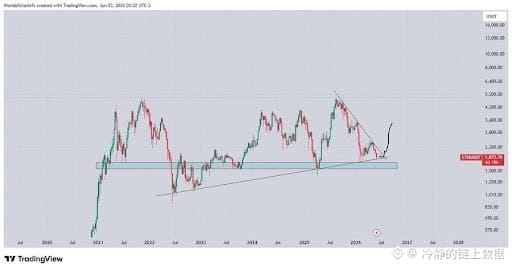
As Ethereum’s latest surge has pulled the Aave risks into the spotlight, debt is highly concentrated among a small number of large holders.
Click on the avatar to watch the live stream and learn the latest strategies
The higher the market goes, the crazier the leverage on-chain becomes. A researcher has turned their attention to Aave’s liquidation data: the loan positions of a few major holders account for a large proportion of total debt. Once the market reverses, the risk of cascading liquidations and stampedes should not be underestimated. DeFi leverage is transparent—everyone can see who borrowed how much and what collateral they posted. This is both an advantage and a risk.
At the Ethereum 2500 level, many large holders are adding leverage while sitting on clear liquidation thresholds. If the market keeps rising, things may remain fine. But if there’s a pullback of a few percentage points and liquidation thresholds are triggered, it becomes a chain reaction. The 2022 cascading liquidations are still fresh in people’s minds; even longtime players remember how brutal that episode was.
The upside of DeFi is transparency, but the downside is leverage buildup under that same transparency—often more hidden than in traditional finance. When the market is hot, no one talks about risk, but risk doesn’t disappear just because nobody brings it up. For those playing perps, contracts, and leverage: be sure to control your position size, keep a good safety margin, and don’t be the first person liquidated when the market flips.
One more data point: this week, Aave’s total value locked has risen together with Ethereum, climbing back above $20 billion. The speed at which leverage is stacking up is faster than many people imagined. Historical experience suggests that liquidation stampedes in DeFi often happen in the very first major bearish candle when the market suddenly reverses. Those spike wicks in just a few minutes can erase months of gains.
Risk control is a required lesson for DeFi players. The hotter the market gets, the calmer you need to be. Wishing every leveraged trader can safely get through every single spike.
Scroll below 👇, click the chat room to join the group and claim the daily strategy 加入社群领取策略
Click on the avatar to watch the live stream and learn the latest strategies
The higher the market goes, the crazier the leverage on-chain becomes. A researcher has turned their attention to Aave’s liquidation data: the loan positions of a few major holders account for a large proportion of total debt. Once the market reverses, the risk of cascading liquidations and stampedes should not be underestimated. DeFi leverage is transparent—everyone can see who borrowed how much and what collateral they posted. This is both an advantage and a risk.
At the Ethereum 2500 level, many large holders are adding leverage while sitting on clear liquidation thresholds. If the market keeps rising, things may remain fine. But if there’s a pullback of a few percentage points and liquidation thresholds are triggered, it becomes a chain reaction. The 2022 cascading liquidations are still fresh in people’s minds; even longtime players remember how brutal that episode was.
The upside of DeFi is transparency, but the downside is leverage buildup under that same transparency—often more hidden than in traditional finance. When the market is hot, no one talks about risk, but risk doesn’t disappear just because nobody brings it up. For those playing perps, contracts, and leverage: be sure to control your position size, keep a good safety margin, and don’t be the first person liquidated when the market flips.
One more data point: this week, Aave’s total value locked has risen together with Ethereum, climbing back above $20 billion. The speed at which leverage is stacking up is faster than many people imagined. Historical experience suggests that liquidation stampedes in DeFi often happen in the very first major bearish candle when the market suddenly reverses. Those spike wicks in just a few minutes can erase months of gains.
Risk control is a required lesson for DeFi players. The hotter the market gets, the calmer you need to be. Wishing every leveraged trader can safely get through every single spike.
Scroll below 👇, click the chat room to join the group and claim the daily strategy 加入社群领取策略

Trump personally stepped in to refute the rumors, saying he did not instruct Treasury Secretary Bessent to interfere with the bond market, but the market clearly isn’t buying it.
Click the avatar to watch the live stream and learn the latest strategy
This week’s turmoil in the U.S. Treasury market—people outside say it’s a Treasury repurchase plan led by Bessent, with the goal of lowering the government’s financing costs. Trump’s denial has only made the market more chaotic. Whether Treasury yields rise or fall now depends entirely on how Washington feels. The boundary between fiscal and monetary policy is becoming increasingly blurred, and investors’ confidence is being drained.
I checked the market reaction: after the denial statement was issued, the U.S. dollar continued to weaken, while gold and bitcoin continued to strengthen. The market is “voting with its feet.” No matter what Trump said, the traces of intervention have already shown up on the chart. When the Treasury buys its own bonds to push down yields—this kind of operation is extremely rare in history and is almost equivalent to a form of quantitative easing.
Once the government begins to intervene in the debt market, the credit of fiat currency suffers another crack. That’s also why bitcoin and gold have been rising together this week—capital is seeking assets that aren’t controlled by the government. The more policymakers meddle, the more valuable scarce assets become. This logic has been repeatedly validated this week.
One more angle: Trump denies intervention, but Bessent’s Treasury repurchase plan is still being carried out—so the two aren’t contradictory. The real issue is that the market has already concluded the government is intervening. Once that perception forms, no matter what people say with their mouths, damage to the dollar’s credibility has already occurred.
During a policy swing period, the last thing to do is to go all-in betting on a direction. Wait until Washington’s cards are laid out clearly, then move—there’s still time.
In any case, remember this: when the lines between fiscal and monetary policy are blurred, uncertainty itself is the problem. In times like these, hard assets are more reassuring than cash.
Click below 👇, enter the group via the chatroom, and get the daily strategy 加入社群领取策略
Click the avatar to watch the live stream and learn the latest strategy
This week’s turmoil in the U.S. Treasury market—people outside say it’s a Treasury repurchase plan led by Bessent, with the goal of lowering the government’s financing costs. Trump’s denial has only made the market more chaotic. Whether Treasury yields rise or fall now depends entirely on how Washington feels. The boundary between fiscal and monetary policy is becoming increasingly blurred, and investors’ confidence is being drained.
I checked the market reaction: after the denial statement was issued, the U.S. dollar continued to weaken, while gold and bitcoin continued to strengthen. The market is “voting with its feet.” No matter what Trump said, the traces of intervention have already shown up on the chart. When the Treasury buys its own bonds to push down yields—this kind of operation is extremely rare in history and is almost equivalent to a form of quantitative easing.
Once the government begins to intervene in the debt market, the credit of fiat currency suffers another crack. That’s also why bitcoin and gold have been rising together this week—capital is seeking assets that aren’t controlled by the government. The more policymakers meddle, the more valuable scarce assets become. This logic has been repeatedly validated this week.
One more angle: Trump denies intervention, but Bessent’s Treasury repurchase plan is still being carried out—so the two aren’t contradictory. The real issue is that the market has already concluded the government is intervening. Once that perception forms, no matter what people say with their mouths, damage to the dollar’s credibility has already occurred.
During a policy swing period, the last thing to do is to go all-in betting on a direction. Wait until Washington’s cards are laid out clearly, then move—there’s still time.
In any case, remember this: when the lines between fiscal and monetary policy are blurred, uncertainty itself is the problem. In times like these, hard assets are more reassuring than cash.
Click below 👇, enter the group via the chatroom, and get the daily strategy 加入社群领取策略

Bridgewater Fund founder Ray Dalio is back to speak. This time, he made his stance clear: Bitcoin is a tool to hedge the United States’ $4 trillion debt.
Click the avatar to watch the live stream and learn the latest strategy
U.S. federal debt has officially surpassed $40 trillion, with the average American carrying $120,000 in debt. Investors at Dalio’s level have long been skeptical about Bitcoin, but their attitude is now clearly loosening. He recommends that investors hold gold and some Bitcoin to hedge debt-related risks. Even the founder of the world’s largest hedge fund is turning toward it—this signal is heavy enough.
What does $40 trillion in debt even mean? Just the interest alone each year already consumes a large portion of government revenue. There are only two ways for the government to repay: either print money or default. Printing money would dilute the currency’s purchasing power. Against this backdrop, Bitcoin’s scarcity becomes the basis for its role as “hard currency.” The total supply is 21 million coins—none will be added.
Dalio isn’t the first Wall Street heavyweight to be bullish on Bitcoin, but he’s certainly one of the most credible. His shift represents a fundamental change in how traditional financial elites view crypto. Smart money is moving toward scarce assets—so are you still holding cash that keeps losing value?
For extra context: at the beginning of the year, Dalio was warning about a debt crisis, and by mid-year he started recommending allocating to Bitcoin. The speed of this attitude change shows that even the most conservative old money can’t stay put anymore. His idea of “diversified allocation” essentially means: don’t put all your assets into fiat currency. This advice is worth taking seriously.
Remember this: the allocation Dalio refers to is not a full-on all-in. Using a portion of your position to hedge risk—that’s the way smart money plays.
Look below👇, click the chatroom to join the group and get the daily strategy 加入社群领取策略
Click the avatar to watch the live stream and learn the latest strategy
U.S. federal debt has officially surpassed $40 trillion, with the average American carrying $120,000 in debt. Investors at Dalio’s level have long been skeptical about Bitcoin, but their attitude is now clearly loosening. He recommends that investors hold gold and some Bitcoin to hedge debt-related risks. Even the founder of the world’s largest hedge fund is turning toward it—this signal is heavy enough.
What does $40 trillion in debt even mean? Just the interest alone each year already consumes a large portion of government revenue. There are only two ways for the government to repay: either print money or default. Printing money would dilute the currency’s purchasing power. Against this backdrop, Bitcoin’s scarcity becomes the basis for its role as “hard currency.” The total supply is 21 million coins—none will be added.
Dalio isn’t the first Wall Street heavyweight to be bullish on Bitcoin, but he’s certainly one of the most credible. His shift represents a fundamental change in how traditional financial elites view crypto. Smart money is moving toward scarce assets—so are you still holding cash that keeps losing value?
For extra context: at the beginning of the year, Dalio was warning about a debt crisis, and by mid-year he started recommending allocating to Bitcoin. The speed of this attitude change shows that even the most conservative old money can’t stay put anymore. His idea of “diversified allocation” essentially means: don’t put all your assets into fiat currency. This advice is worth taking seriously.
Remember this: the allocation Dalio refers to is not a full-on all-in. Using a portion of your position to hedge risk—that’s the way smart money plays.
Look below👇, click the chatroom to join the group and get the daily strategy 加入社群领取策略

Bitcoin and gold took off together this week: in the past 48 hours, Bitcoin surged by $15,000, while gold instantly jumped to $4,600 per ounce.
Click the avatar to watch the livestream and learn the latest strategies
Two assets that have nothing to do with each other are soaring at the same time, driven by the same underlying logic: the credibility of the US dollar is weakening. This week the dollar fell by 1% to 2%, hitting a three-month low; Treasury yields were suppressed; inflation expectations started to rise; and money began fleeing fiat currency. This environment is a classic “value-depreciation trade”: buy scarce assets to hedge against fiat currency depreciation.
Analysts have dubbed this rally the “return of the depreciation trade.” The key is that investors no longer trust paper money. US Treasuries have already soared to $40 trillion, while the government keeps printing more. Gold and Bitcoin have become natural safe havens. Gold is a consensus that spans thousands of years; Bitcoin is a consensus in the digital age. When both rise together, it shows the market’s confidence in fiat money is wavering.
When a weakening dollar becomes a trend, Bitcoin’s long-term logic becomes even stronger. This rally isn’t just hype—it’s capital reconfiguring its asset allocations. In your asset portfolio, do you have positions that hedge against fiat depreciation?
One more data point: in this depreciation trade, gold hitting $4,600 is a historically high level, and Bitcoin at $80,000 is fast approaching. The market’s valuation for both assets refreshing at the same time suggests that trust in the fiat system is being repriced—and this trend may be more persistent than most people think.
In one sentence: fiat currency is shrinking, while scarce assets are appreciating. Once you understand this trend, you’ll know why this rally is so fierce.
See below 👇, click the chat room to join the group and claim the daily strategy 加入社群领取策略
Click the avatar to watch the livestream and learn the latest strategies
Two assets that have nothing to do with each other are soaring at the same time, driven by the same underlying logic: the credibility of the US dollar is weakening. This week the dollar fell by 1% to 2%, hitting a three-month low; Treasury yields were suppressed; inflation expectations started to rise; and money began fleeing fiat currency. This environment is a classic “value-depreciation trade”: buy scarce assets to hedge against fiat currency depreciation.
Analysts have dubbed this rally the “return of the depreciation trade.” The key is that investors no longer trust paper money. US Treasuries have already soared to $40 trillion, while the government keeps printing more. Gold and Bitcoin have become natural safe havens. Gold is a consensus that spans thousands of years; Bitcoin is a consensus in the digital age. When both rise together, it shows the market’s confidence in fiat money is wavering.
When a weakening dollar becomes a trend, Bitcoin’s long-term logic becomes even stronger. This rally isn’t just hype—it’s capital reconfiguring its asset allocations. In your asset portfolio, do you have positions that hedge against fiat depreciation?
One more data point: in this depreciation trade, gold hitting $4,600 is a historically high level, and Bitcoin at $80,000 is fast approaching. The market’s valuation for both assets refreshing at the same time suggests that trust in the fiat system is being repriced—and this trend may be more persistent than most people think.
In one sentence: fiat currency is shrinking, while scarce assets are appreciating. Once you understand this trend, you’ll know why this rally is so fierce.
See below 👇, click the chat room to join the group and claim the daily strategy 加入社群领取策略

Bitcoin has been on a wild run—jumping straight from 64,000 to 79,500. In one week it’s up 25%, and it’s only one breath away from 80,000.
Click the avatar to watch the livestream and learn the latest strategies.
The spark was U.S. Treasury yields being pushed down. The Ministry of Finance repurchased government bonds to ease pressure on the market, and money suddenly flooded into risk assets. Even more intense: this surge directly blew up a $4 billion short position. Shorts this week are collectively down on their knees, shouting “dad.” Spot Bitcoin ETFs also didn’t sit idle—pulling in $1.6 billion in a single week, the largest inflow since October.
I’ve seen too many market runs like this. When prices rise too fast in the short term, pullbacks usually come quickly too. But what’s different this time is that institutional inflows are sustained—not just a one- or two-day sentiment trade. ETF buy orders are lifting prices layer by layer, like a water pump. What this kind of setup fears most isn’t chasing—it’s getting off halfway.
Bitcoin’s “safe-haven” narrative is being repriced. The more volatile the Treasury market is, the more Bitcoin benefits. The 80,000 psychological level—once it breaks through, it’s a new world. Do you still have positions on hand? Comment your cost basis in the section below.
One more thing: during this rally, altcoins have clearly underperformed Bitcoin. Money is hiding in the assets with the highest certainty. Once Bitcoin holds above 80,000, the spillover to altcoins is only a matter of time—then is when the altseason truly begins. First, understand the main storyline before you position.
Last line: don’t put all your position into one direction. In Bitcoin’s run toward 80,000, volatility will be higher than you think. Build positions in batches, keep some “ammunition,” and when it dips you’ll have the chance to add.
Look below 👇, click the chatroom to join the group and claim the daily strategy 加入社群领取策略
Click the avatar to watch the livestream and learn the latest strategies.
The spark was U.S. Treasury yields being pushed down. The Ministry of Finance repurchased government bonds to ease pressure on the market, and money suddenly flooded into risk assets. Even more intense: this surge directly blew up a $4 billion short position. Shorts this week are collectively down on their knees, shouting “dad.” Spot Bitcoin ETFs also didn’t sit idle—pulling in $1.6 billion in a single week, the largest inflow since October.
I’ve seen too many market runs like this. When prices rise too fast in the short term, pullbacks usually come quickly too. But what’s different this time is that institutional inflows are sustained—not just a one- or two-day sentiment trade. ETF buy orders are lifting prices layer by layer, like a water pump. What this kind of setup fears most isn’t chasing—it’s getting off halfway.
Bitcoin’s “safe-haven” narrative is being repriced. The more volatile the Treasury market is, the more Bitcoin benefits. The 80,000 psychological level—once it breaks through, it’s a new world. Do you still have positions on hand? Comment your cost basis in the section below.
One more thing: during this rally, altcoins have clearly underperformed Bitcoin. Money is hiding in the assets with the highest certainty. Once Bitcoin holds above 80,000, the spillover to altcoins is only a matter of time—then is when the altseason truly begins. First, understand the main storyline before you position.
Last line: don’t put all your position into one direction. In Bitcoin’s run toward 80,000, volatility will be higher than you think. Build positions in batches, keep some “ammunition,” and when it dips you’ll have the chance to add.
Look below 👇, click the chatroom to join the group and claim the daily strategy 加入社群领取策略
The entire crypto market rose 3.21% over the past 24 hours, and the total market cap has returned to $2.62 trillion.
Click the avatar to watch the live stream and learn the latest strategies
Bitcoin led the rally. Behind it were improving regulatory expectations, along with a net inflow of $606 million into ETFs on August 20. With easing policies and institutions entering at the same time, the two positives compounded and market sentiment was clearly warming up. From BTC to ETH to altcoins, a broad-based uptrend returned the “making money” effect, and the number of active users on exchanges is also rising.
The reasons a market trend starts are often simple: the money is coming in, confidence is coming back—so naturally the candles turn red. At this point, the biggest thing to avoid is trading anxiety from being in cash. It’s not that you shouldn’t buy, and it’s not that you should avoid it—it’s about having a plan. In a real bull market, prices don’t just rise for a single day; opportunities are everywhere. Don’t be afraid to miss out—what you should fear is buying recklessly.
First, think through your strategy before deciding whether to get on board. In a bull market, people who lose money are often the ones who chase highs impulsively. Set your position size, hold on, and let time do the rest. When it’s rising, keep your hands under control; when it drops, keep your mind steady.
One last reminder: in a broad-based rally, the most dangerous thing isn’t missing the move—it’s chasing blindly. With a market cap of $2.62 trillion, the market is still in the process of repairing prior losses; the real direction should be confirmed by the sustained inflow of ETF funds.
One more note: a return to a $2.62 trillion market cap means the market has recovered most of the drawdown from the earlier period, but it hasn’t reached historical highs yet. This is exactly the zone where people are most likely to become complacent—position management remains the top priority.
Final sentence: in a bull market, the key to making money is holding steady, not getting out fast. Fees from frequent trading and the cost of missing out are far higher than you might think.
Watch below 👇, click the chat room to join the group and claim the daily strategy 加入社群领取策略
Click the avatar to watch the live stream and learn the latest strategies
Bitcoin led the rally. Behind it were improving regulatory expectations, along with a net inflow of $606 million into ETFs on August 20. With easing policies and institutions entering at the same time, the two positives compounded and market sentiment was clearly warming up. From BTC to ETH to altcoins, a broad-based uptrend returned the “making money” effect, and the number of active users on exchanges is also rising.
The reasons a market trend starts are often simple: the money is coming in, confidence is coming back—so naturally the candles turn red. At this point, the biggest thing to avoid is trading anxiety from being in cash. It’s not that you shouldn’t buy, and it’s not that you should avoid it—it’s about having a plan. In a real bull market, prices don’t just rise for a single day; opportunities are everywhere. Don’t be afraid to miss out—what you should fear is buying recklessly.
First, think through your strategy before deciding whether to get on board. In a bull market, people who lose money are often the ones who chase highs impulsively. Set your position size, hold on, and let time do the rest. When it’s rising, keep your hands under control; when it drops, keep your mind steady.
One last reminder: in a broad-based rally, the most dangerous thing isn’t missing the move—it’s chasing blindly. With a market cap of $2.62 trillion, the market is still in the process of repairing prior losses; the real direction should be confirmed by the sustained inflow of ETF funds.
One more note: a return to a $2.62 trillion market cap means the market has recovered most of the drawdown from the earlier period, but it hasn’t reached historical highs yet. This is exactly the zone where people are most likely to become complacent—position management remains the top priority.
Final sentence: in a bull market, the key to making money is holding steady, not getting out fast. Fees from frequent trading and the cost of missing out are far higher than you might think.
Watch below 👇, click the chat room to join the group and claim the daily strategy 加入社群领取策略

Log in to explore more content