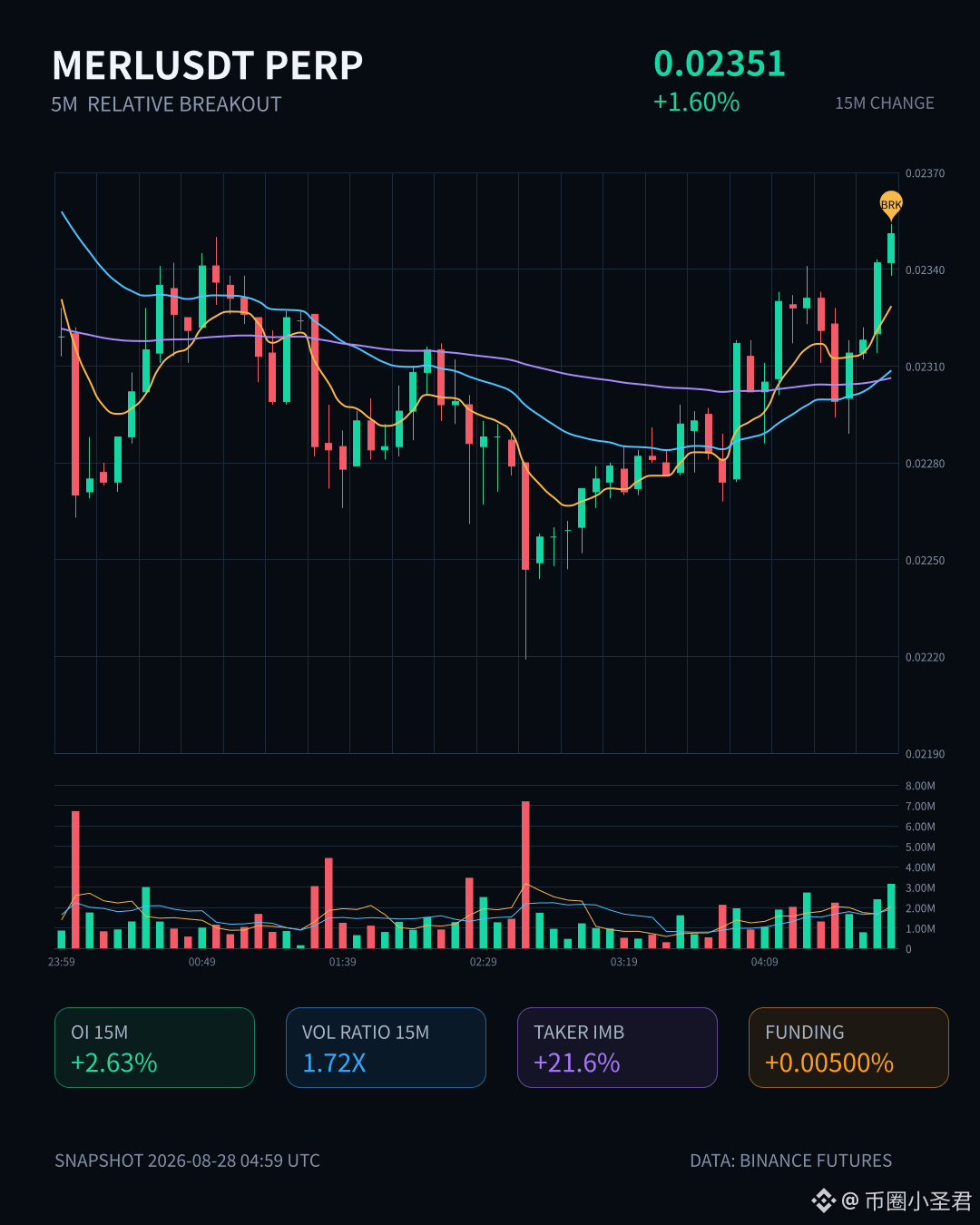
Merl, in this 15 minutes it directly gained 1.6%. The closing price broke above the upper band of the past 20 five-minute K-bars, with volume expanding 1.7 times. This doesn’t look like that kind of low-volume fake breakout—it looks quite real. More importantly, the OI for the 15-minute contract added 2.63% in one go; on the one-hour dimension it’s also rising in sync. The notional changes are 84K and 124K USD respectively. This combination of price going up + an OI surge clearly indicates new leveraged long positions are entering the market—not shorts getting squeezed out and hard-pushing to close.
The active trade imbalance is 21.6%, and the buy-sell ratio is 1.55, showing the order book is truly being pressed against by the buyers—not the kind where a retail crowd casually pulls it up with a quick trade and then runs. The funding rate is also at a high percentile recently. Along with the OI abnormal percentile at 98.6% and it staying firmly at #1 in the whole pool, this level of crowding isn’t “just a little bit” anymore. Going forward, whether it pushes higher or not, the speed at which positions are building will certainly feed the volatility. Keep an eye on whether, at the pullback, OI is being maintained or getting reduced—that’s the real intent behind the smart money. $MERL should mainly stay on the sidelines; whether chasing higher is cost-effective depends on your own risk appetite.
The active trade imbalance is 21.6%, and the buy-sell ratio is 1.55, showing the order book is truly being pressed against by the buyers—not the kind where a retail crowd casually pulls it up with a quick trade and then runs. The funding rate is also at a high percentile recently. Along with the OI abnormal percentile at 98.6% and it staying firmly at #1 in the whole pool, this level of crowding isn’t “just a little bit” anymore. Going forward, whether it pushes higher or not, the speed at which positions are building will certainly feed the volatility. Keep an eye on whether, at the pullback, OI is being maintained or getting reduced—that’s the real intent behind the smart money. $MERL should mainly stay on the sidelines; whether chasing higher is cost-effective depends on your own risk appetite.