#社保 Won’t Tell You for Sure:
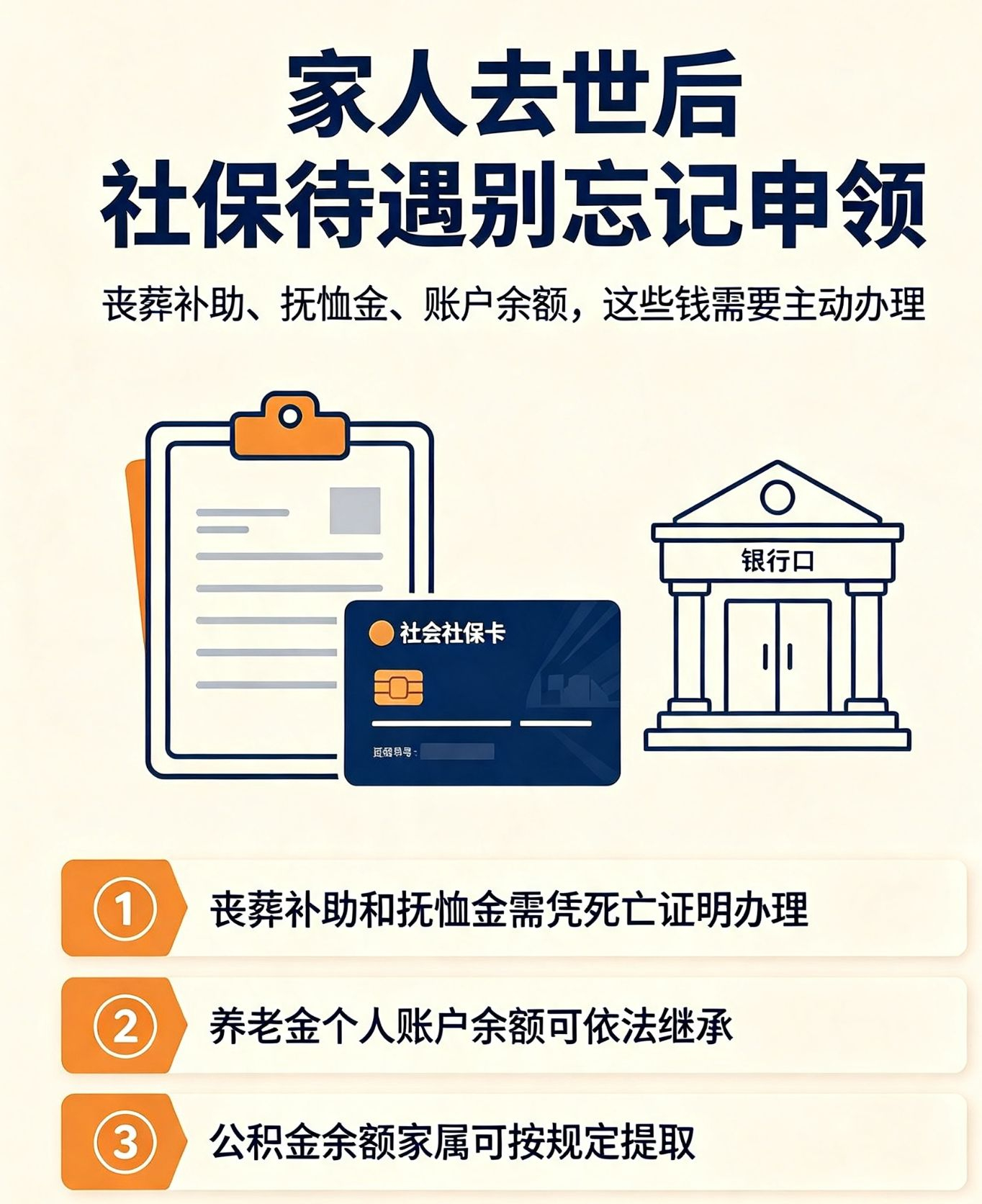
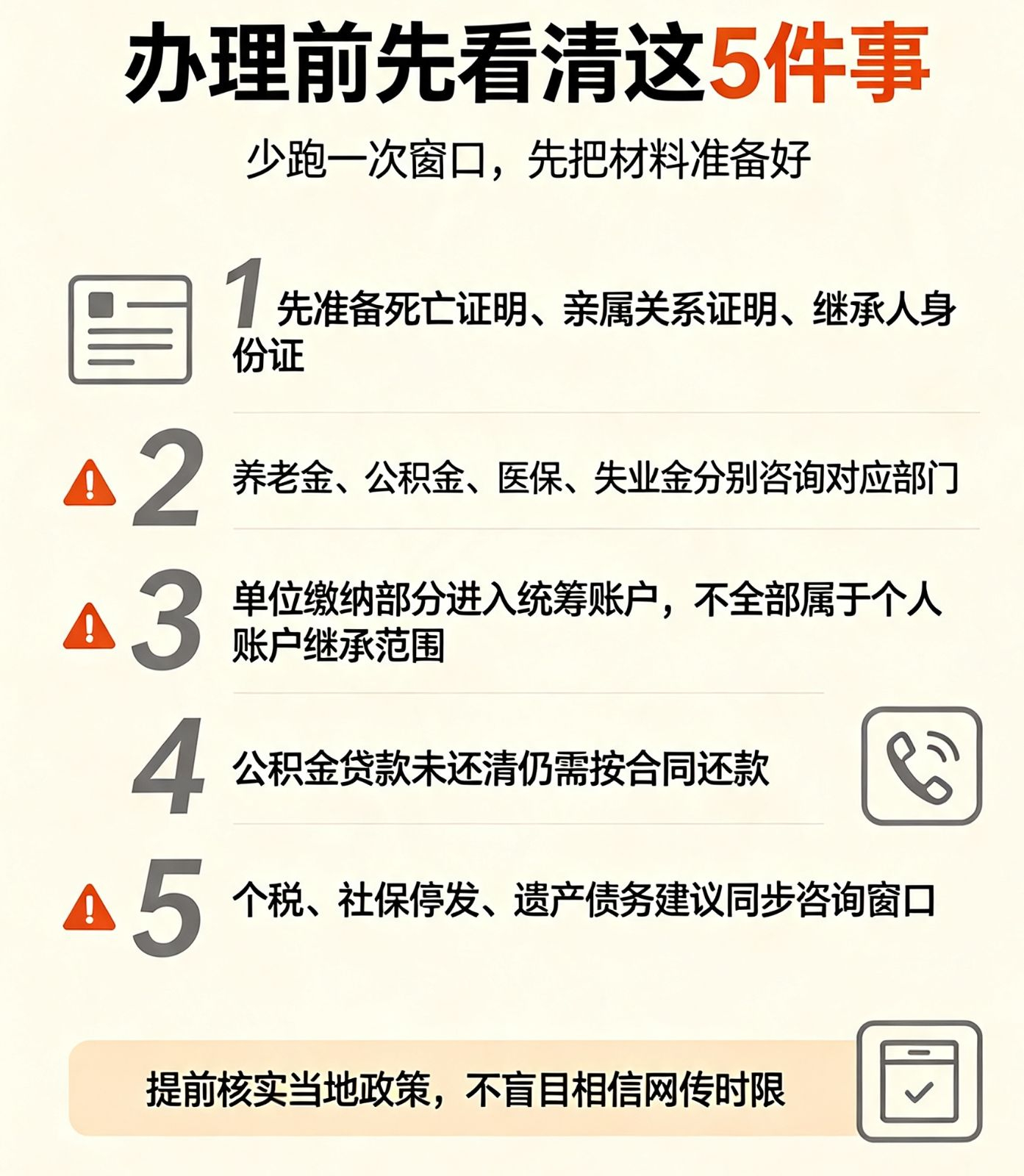
1. Burial allowance and survivor benefits won’t be deposited automatically. You must take the death certificate to the Social Security office to process the claim before you can receive it.
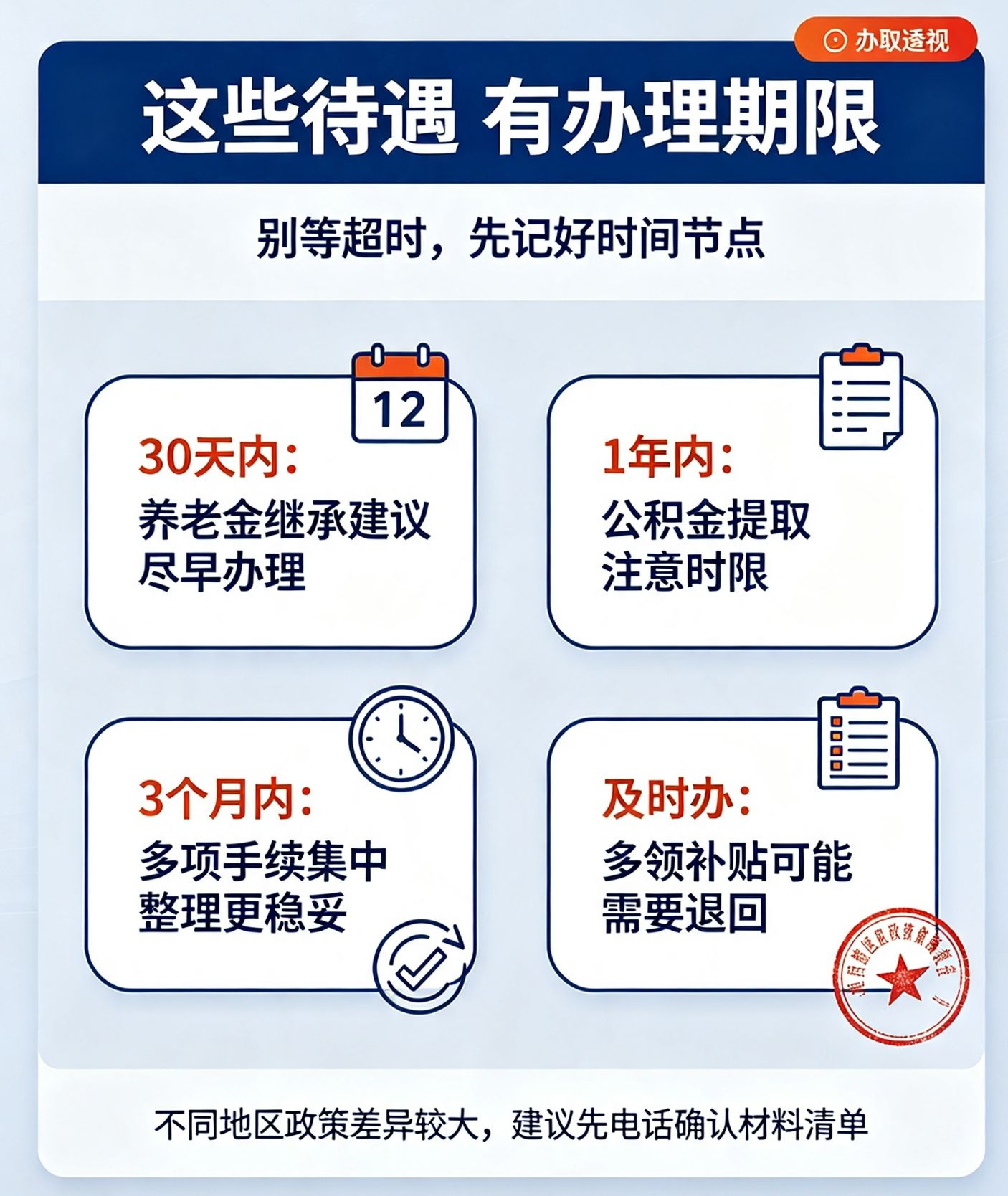
2. Any money left in your pension account can be inherited, but you must complete inheritance notarization within 30 days. If you miss the deadline, the money will be confiscated.
3. Even though medical insurance reimbursement may be halted, eligible family members who have paid medical insurance for 15 years can apply for a one-time medical assistance payment, up to 30,000.
4. Money in the housing provident fund account can be withdrawn in full by family members, but the process must be completed within 1 year. After the deadline, the account will be frozen directly.
5. If the pension insurance wasn’t paid for 15 years, family members can apply to have the money returned to the individual account; typically, you can get back tens of thousands.
6. To withdraw the balance in the social security card, bring the death certificate + your ID to the bank. Some banks also require an inheritance notarization certificate.
7. Work-injury subsidies, high-age allowances, and other subsidies will not stop automatically. Family members must report proactively. Any overpaid amounts will be reclaimed.
8. Starting from the month of death, for individual income tax filings, you need to bring the death certificate to the tax bureau to apply for tax exemption; otherwise, you may end up paying more tax.
9. If you paid social insurance in another city, you can transfer your pension account to the beneficiary’s account. You need to go to the social security office in the insured location to handle it.
10. Unpaid social insurance premiums from the deceased’s lifetime will be deducted from the estate. If they aren’t settled, it can affect the issuance of burial-related expenses.
11. The money in the deceased’s personal pension insurance account (including the portion paid by the employer) can all be inherited. Many people don’t know they can receive two portions of money.
12. If the housing provident fund loan hasn’t been fully repaid, payments must continue. Missing payments can affect children’s civil service exam eligibility and loan applications.
13. Any remaining money in the unemployment insurance account can be claimed. Bring a labor relationship proof (icon证明) to collect the last payment.
14. All procedures must be completed within 3 months. If you’re late, you may lose at least 50,000–80,000 in subsidies.
15. If it was a work-related death/injury, remember to apply for the work-injury death allowance. The current standard is 20 times the average monthly wage per person.
Don’t think these things are too much trouble—handle a few of them casually and you could get back tens of thousands. Especially if there are elderly people in the family who are sick, it’s recommended to save these in advance; when it matters, it can help you in a pinch. #就业报告 $DOGE
1. Burial allowance and survivor benefits won’t be deposited automatically. You must take the death certificate to the Social Security office to process the claim before you can receive it.
2. Any money left in your pension account can be inherited, but you must complete inheritance notarization within 30 days. If you miss the deadline, the money will be confiscated.
3. Even though medical insurance reimbursement may be halted, eligible family members who have paid medical insurance for 15 years can apply for a one-time medical assistance payment, up to 30,000.
4. Money in the housing provident fund account can be withdrawn in full by family members, but the process must be completed within 1 year. After the deadline, the account will be frozen directly.
5. If the pension insurance wasn’t paid for 15 years, family members can apply to have the money returned to the individual account; typically, you can get back tens of thousands.
6. To withdraw the balance in the social security card, bring the death certificate + your ID to the bank. Some banks also require an inheritance notarization certificate.
7. Work-injury subsidies, high-age allowances, and other subsidies will not stop automatically. Family members must report proactively. Any overpaid amounts will be reclaimed.
8. Starting from the month of death, for individual income tax filings, you need to bring the death certificate to the tax bureau to apply for tax exemption; otherwise, you may end up paying more tax.
9. If you paid social insurance in another city, you can transfer your pension account to the beneficiary’s account. You need to go to the social security office in the insured location to handle it.
10. Unpaid social insurance premiums from the deceased’s lifetime will be deducted from the estate. If they aren’t settled, it can affect the issuance of burial-related expenses.
11. The money in the deceased’s personal pension insurance account (including the portion paid by the employer) can all be inherited. Many people don’t know they can receive two portions of money.
12. If the housing provident fund loan hasn’t been fully repaid, payments must continue. Missing payments can affect children’s civil service exam eligibility and loan applications.
13. Any remaining money in the unemployment insurance account can be claimed. Bring a labor relationship proof (icon证明) to collect the last payment.
14. All procedures must be completed within 3 months. If you’re late, you may lose at least 50,000–80,000 in subsidies.
15. If it was a work-related death/injury, remember to apply for the work-injury death allowance. The current standard is 20 times the average monthly wage per person.
Don’t think these things are too much trouble—handle a few of them casually and you could get back tens of thousands. Especially if there are elderly people in the family who are sick, it’s recommended to save these in advance; when it matters, it can help you in a pinch. #就业报告 $DOGE