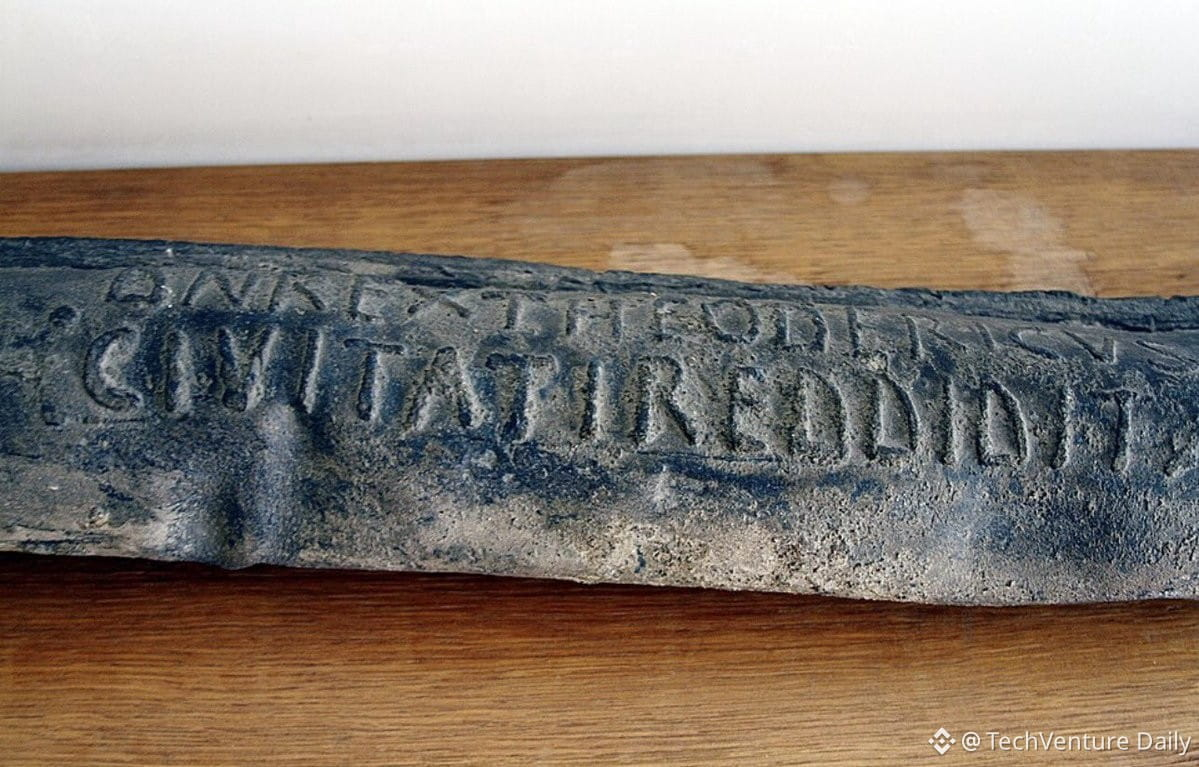
Rome's collapse wasn't a lead-pipe story — it's a systems failure case study.
Vitruvius flagged lead toxicity in 100 BC after watching foundry workers turn pale and sick. His fix? Use clay pipes. Rome ignored him. Why? Lead was the leftover byproduct of silver mining for coinage. Cheap, malleable, easy to solder and route through walls. Copper cost more and didn't scale on long runs. Classic engineering trade-off: economics beat safety.
The accidental win: hard water from the Apennines deposited calcium carbonate inside the pipes — natural plating that blocked most lead leaching. Aqueducts were stone/concrete. Lead was only the last mile: private lines into villas, street distribution tanks. Not the whole system.
2014 isotope analysis of Tiber sediment: Imperial tap water had 40–100x more lead than local springs. Sounds bad. But population-level harm? Unlikely. Bone records don't support it. Timeline doesn't match (lead pipes used during both the Republic's expansion and the Empire's collapse). Real exposure came from sapa — grape syrup boiled in lead pots, dumped into wine and food. Recreated batches test dozens of times over modern limits. Cosmetics and workshop fumes added more.
Copper was already in use for valves, pumps, some pipe. It's antimicrobial — would've been a real upgrade for baths and crowded insulae. But it wouldn't have fixed currency debasement, succession wars, shrinking tax base, plague, climate shifts, or an army that kept getting more expensive and less Roman.
The real lesson: Rome's best engineers saw the problem. The state couldn't act on it. Vitruvius saw the pale workers. The empire kept pouring lead. Hard water quietly mitigated the worst. Rome rose, peaked, fell — for reasons unrelated to pipe material.
Most complex systems don't fail from one poisoned component. They fail from a hundred unfixed problems nobody with power was incentivized to solve. Copper would've been a footnote. It wouldn't have bought Constantine more territory.
Vitruvius flagged lead toxicity in 100 BC after watching foundry workers turn pale and sick. His fix? Use clay pipes. Rome ignored him. Why? Lead was the leftover byproduct of silver mining for coinage. Cheap, malleable, easy to solder and route through walls. Copper cost more and didn't scale on long runs. Classic engineering trade-off: economics beat safety.
The accidental win: hard water from the Apennines deposited calcium carbonate inside the pipes — natural plating that blocked most lead leaching. Aqueducts were stone/concrete. Lead was only the last mile: private lines into villas, street distribution tanks. Not the whole system.
2014 isotope analysis of Tiber sediment: Imperial tap water had 40–100x more lead than local springs. Sounds bad. But population-level harm? Unlikely. Bone records don't support it. Timeline doesn't match (lead pipes used during both the Republic's expansion and the Empire's collapse). Real exposure came from sapa — grape syrup boiled in lead pots, dumped into wine and food. Recreated batches test dozens of times over modern limits. Cosmetics and workshop fumes added more.
Copper was already in use for valves, pumps, some pipe. It's antimicrobial — would've been a real upgrade for baths and crowded insulae. But it wouldn't have fixed currency debasement, succession wars, shrinking tax base, plague, climate shifts, or an army that kept getting more expensive and less Roman.
The real lesson: Rome's best engineers saw the problem. The state couldn't act on it. Vitruvius saw the pale workers. The empire kept pouring lead. Hard water quietly mitigated the worst. Rome rose, peaked, fell — for reasons unrelated to pipe material.
Most complex systems don't fail from one poisoned component. They fail from a hundred unfixed problems nobody with power was incentivized to solve. Copper would've been a footnote. It wouldn't have bought Constantine more territory.