First, let me ask: How many times have you blown your account?
I have seen too many people enter the market with a few hundred U, dreaming of "turning their fortunes around". As a result, two weeks later, they exit with nothing left and swear "never to touch it again"—then, the next month, they reinvest and continue to blow their accounts.
But if you are willing to spend 4 minutes reading this, you might avoid all the pitfalls I encountered back in the day.
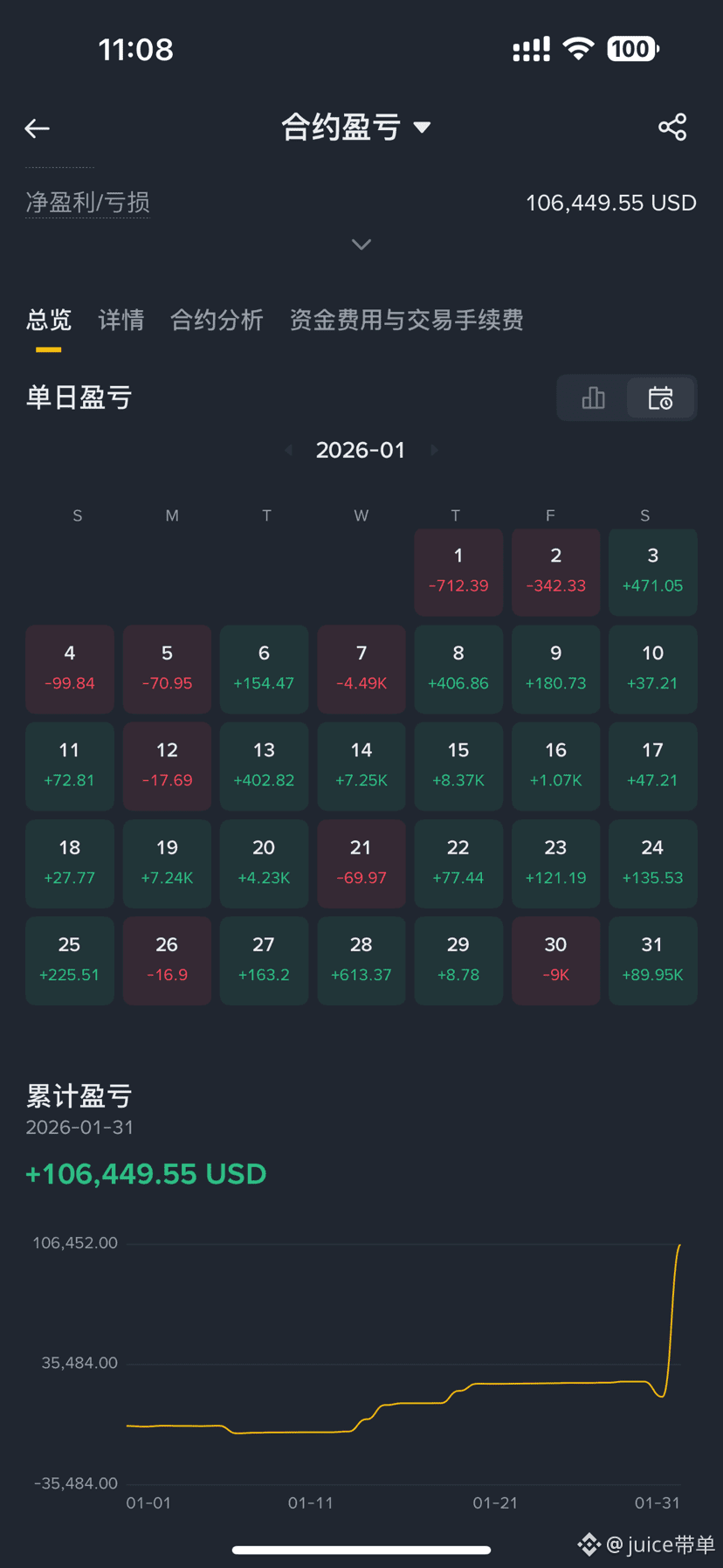
One of my apprentices started with 1200 U and built it up to 25,000 U in 4 months. Now their account is stable at over 38,000 U, with zero blow-ups.
This isn't some "copy trading expert" trick; it's the method I've used to grow from an 8000 U real account to what I have now. Here are three iron rules to share with you:
1. Divide your capital into three parts, and ensure a survival path.
Split the 1200 U into three portions of 400 U:
Day trading: Only look at one order per day. Once it hits the target, close it without regret.
Swing trading: Don't chase small fluctuations; wait for the trend to clarify before taking action, aiming to profit from movements of over 10%.
Reserve funds: Never touch this—it's your backup for when the market is bad and helps maintain your mental stability.
Most people fail because they go "all in with no way out." Remember: **Survive first, and only then can you earn back your losses.
2. Only trade major trends, and shut down during other times.
80% of the cryptocurrency market is in consolidation; frequently opening trades is just working for the exchange.
If BTC is stagnant for more than 3 days? Just close the software. Wait until it breaks below the consolidation range or stabilizes above key moving averages, and confirm the trend before entering.
If profits exceed 20% of your principal, withdraw 30% to secure profits. **I often tell my apprentices: "Don’t move during normal times, but when you do, ensure you're taking stable profits"—this is ten times better than staring at the screen all day.
3. Use rules to lock in your emotions; don't rely on feelings.
Set three strict rules in advance, print them out, and stick them in front of your screen:
Stop loss at 2%—cut it when it hits that point, even if it rebounds the next second, no regrets.
Take 4% profit—first reduce half your position, let the remaining run on its own.
Never average down during losses; that’s suicide.
You don’t need to be right every time, but execution must be on point. **Let the rules help you withstand greed and fear; that’s the secret to making money in the long run.
Lastly, let me say this:
Having a small capital is never the problem; the problem is your constant desire to "get rich overnight."
Growing from 1200 U to 38,000 U is not about gambling; it’s about controlling drawdowns, waiting for opportunities, and having a systematic approach.
If you’re still losing sleep over the fluctuations of a few hundred U, unsure how to allocate funds or find trends—feel free to reach out to me for a chat.
Often, avoiding three years of detours comes down to understanding "how to be stable," rather than "how to be fast." @juice带单