BTC ETF sees outflows while ETH ETF sees inflows: why can’t “both sides rising” be taken as a comprehensive trend reversal?
BTC ETF is experiencing net outflows, ETH ETF net inflows—yet both coins are up. Is this truly the return of broad risk appetite, or is it that short-term prices are covering up the divergence first? In perpetual contracts, the easiest way to lose money is to treat a local strength move as a unanimous conclusion.
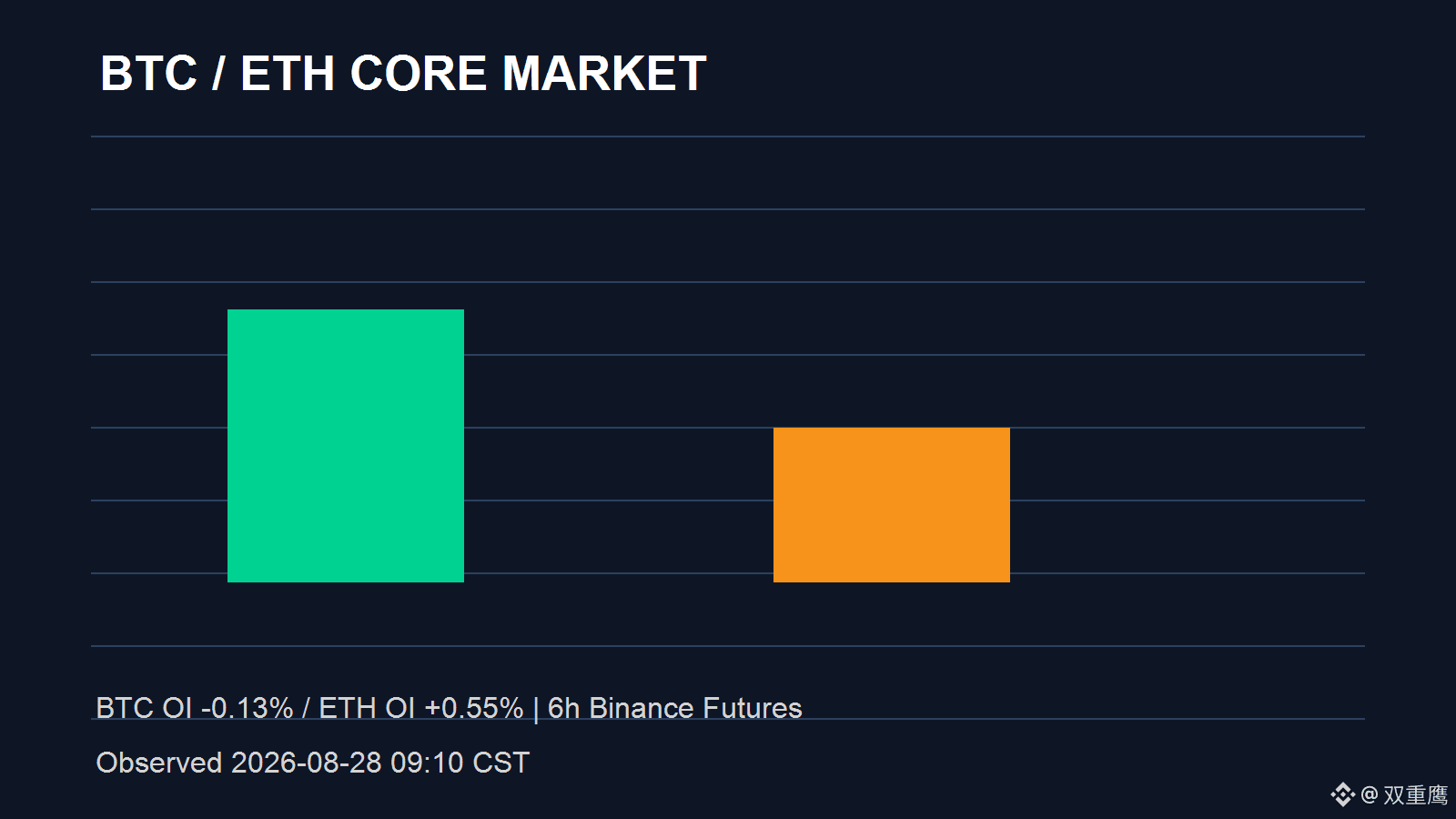
Facts: On Binance USD-collateralized perpetuals, $BTC is around $81,121, about +2.82% over 24 hours, with volume around $13.72 billion; $ETH is around $2,528, about +1.03%, with volume around $11.05 billion. BTCUSDT and ETHUSDT are both on TRADING. Over the past roughly 6 hours, BTC’s open interest notional is about -0.13%, while ETH’s is about +0.55%.
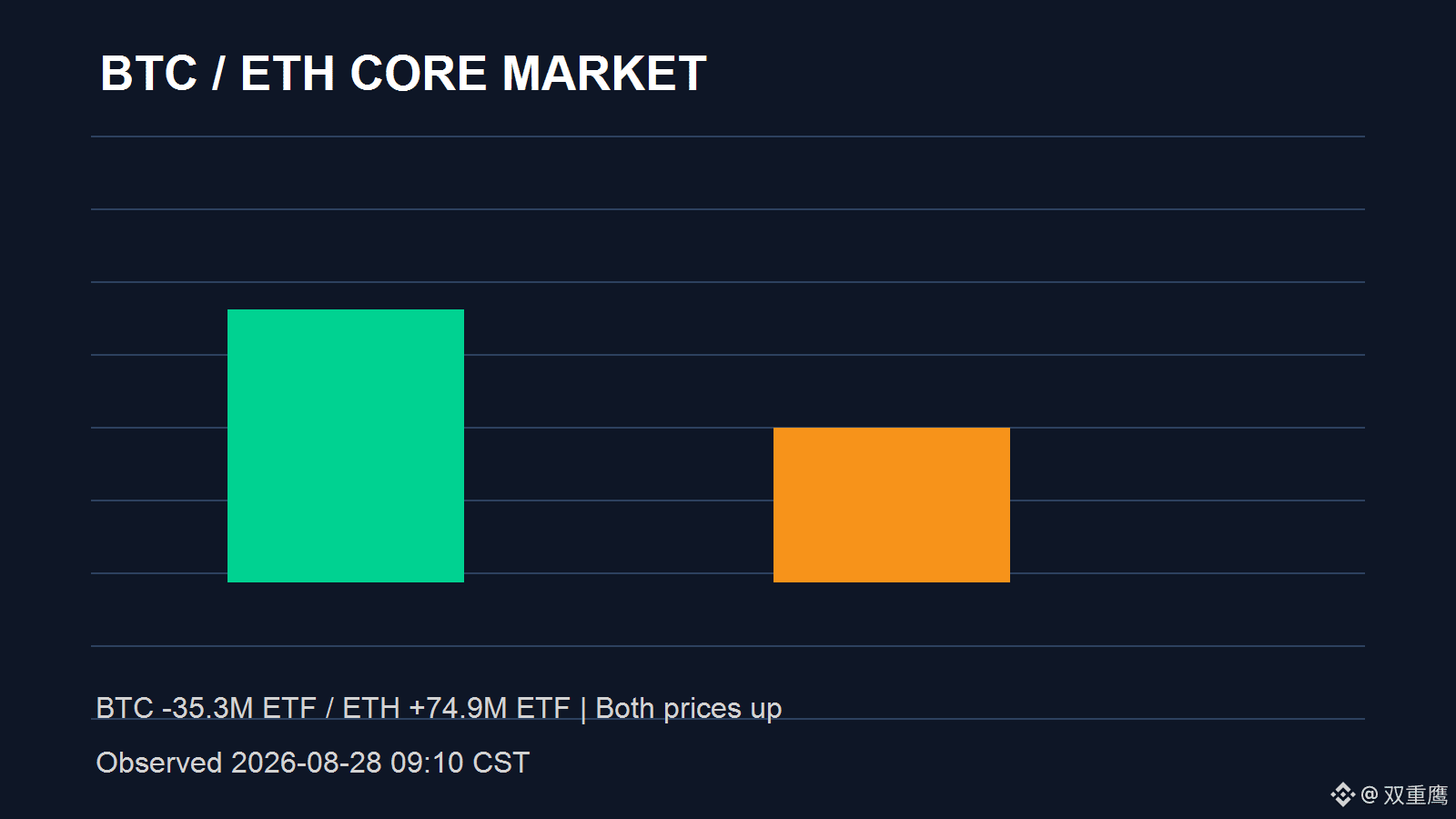
Facts: According to Farside’s latest verifiable data for August 27, the daily flows of US spot ETFs show BTC ETF net outflows of about $35.3 million, and ETH ETF net inflows of about $74.9 million. These are daily subscriptions/redemptions—not one-by-one trades happening right now.
Why can fund flows and prices be temporarily inconsistent? BTC and ETH ETF are different products with different subscription/redemption windows; meanwhile, perpetual prices are determined by the current spot price, short-position covering, and leverage positioning. BTC is rising but slightly reducing positions, while ETH is rising and adding positions—so the structure is not the same. What the market is confirming is whether momentum can spread: can BTC hold its pullback, and can new ETH positions receive execution with confirmation.
View: Both sides rising doesn’t mean both sides have the same (low) risk. For the bulls to be right, BTC needs to stop decreasing positions; ETH’s position increases must not push up funding rates; and both sides’ executions must stay aligned—only then does it come closer to an improvement in breadth. For the bears to be right, BTC must turn weaker while ETH continues adding positions and funding rates rise; that would indicate capital is being squeezed into the side with higher elasticity.
Speculation: This is currently a common rebound under structural divergence, not a directional verdict. My view: I’m more inclined to watch whether BTC can catch up to confirm the positioning, and whether ETH will fall behind after adding positions. Without breadth, leverage shouldn’t be amplified.
#BTC #ETH #ETF #合约交易 $BTC $ETH
When you see price rising, look for breadth first; decide on position sizing by assessing risk.
Risk warning: The above is based on observations from public data and is not trading advice. Perpetual contract volatility and funding rates can change very quickly; whether you’re bullish or bearish, set invalidation conditions, stop-losses, and a loss size you can bear for a single trade. Being wrong on direction once isn’t terrible; the real risk is using too much leverage to turn one misjudgment into an unrecoverable drawdown.
BTC ETF is experiencing net outflows, ETH ETF net inflows—yet both coins are up. Is this truly the return of broad risk appetite, or is it that short-term prices are covering up the divergence first? In perpetual contracts, the easiest way to lose money is to treat a local strength move as a unanimous conclusion.
Facts: On Binance USD-collateralized perpetuals, $BTC is around $81,121, about +2.82% over 24 hours, with volume around $13.72 billion; $ETH is around $2,528, about +1.03%, with volume around $11.05 billion. BTCUSDT and ETHUSDT are both on TRADING. Over the past roughly 6 hours, BTC’s open interest notional is about -0.13%, while ETH’s is about +0.55%.
Facts: According to Farside’s latest verifiable data for August 27, the daily flows of US spot ETFs show BTC ETF net outflows of about $35.3 million, and ETH ETF net inflows of about $74.9 million. These are daily subscriptions/redemptions—not one-by-one trades happening right now.
Why can fund flows and prices be temporarily inconsistent? BTC and ETH ETF are different products with different subscription/redemption windows; meanwhile, perpetual prices are determined by the current spot price, short-position covering, and leverage positioning. BTC is rising but slightly reducing positions, while ETH is rising and adding positions—so the structure is not the same. What the market is confirming is whether momentum can spread: can BTC hold its pullback, and can new ETH positions receive execution with confirmation.
View: Both sides rising doesn’t mean both sides have the same (low) risk. For the bulls to be right, BTC needs to stop decreasing positions; ETH’s position increases must not push up funding rates; and both sides’ executions must stay aligned—only then does it come closer to an improvement in breadth. For the bears to be right, BTC must turn weaker while ETH continues adding positions and funding rates rise; that would indicate capital is being squeezed into the side with higher elasticity.
Speculation: This is currently a common rebound under structural divergence, not a directional verdict. My view: I’m more inclined to watch whether BTC can catch up to confirm the positioning, and whether ETH will fall behind after adding positions. Without breadth, leverage shouldn’t be amplified.
#BTC #ETH #ETF #合约交易 $BTC $ETH
When you see price rising, look for breadth first; decide on position sizing by assessing risk.
Risk warning: The above is based on observations from public data and is not trading advice. Perpetual contract volatility and funding rates can change very quickly; whether you’re bullish or bearish, set invalidation conditions, stop-losses, and a loss size you can bear for a single trade. Being wrong on direction once isn’t terrible; the real risk is using too much leverage to turn one misjudgment into an unrecoverable drawdown.