ETH ETF inflows of 74.9 million, but the contract only rises 1%: why didn’t the bulls accelerate?
$ETH ETF net inflow is about $74.9 million, but ETH only gained about 1.1%: why didn’t the bulls turn the good news into a direct acceleration? The real question is whether this capital can push price, volume, and positions to align in the same direction.
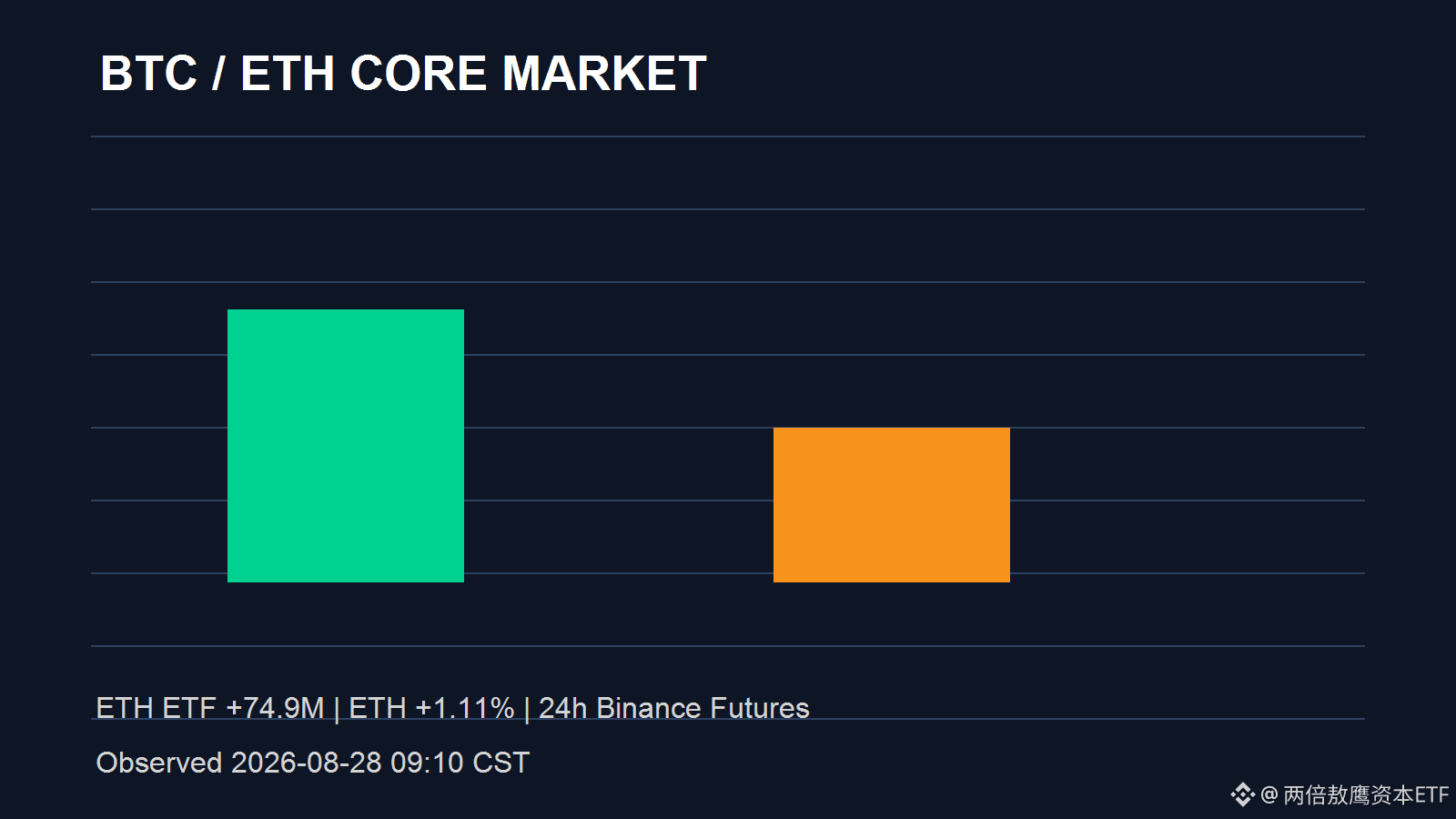
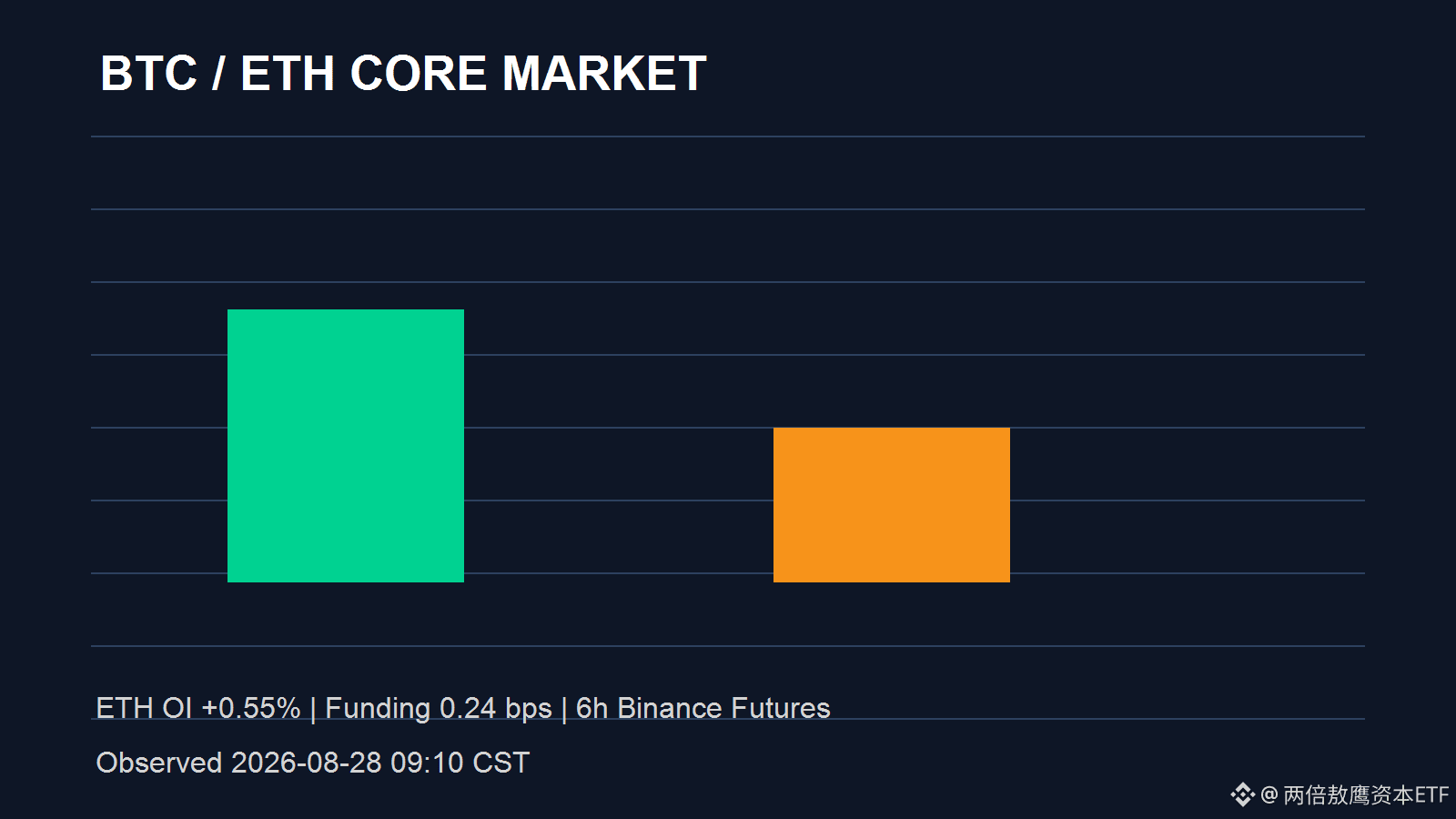
Facts: In Binance USDT-margined perpetuals, $BTC is about $81,121, up about 2.82% in 24 hours, with trading volume about $13.72 billion; $ETH is about $2,528, up about 1.03%, with trading volume about $11.05 billion. BTCUSDT and ETHUSDT are both on TRADING. Over the past ~6 hours, BTC open interest’s notional value is about -0.13%, while ETH is about +0.55%.
Facts: Farside’s latest verifiable data shows that on August 27, the daily flows of U.S. spot ETFs were: BTC ETF net outflow of about $35.3 million, and ETH ETF net inflow of about $74.9 million. These are daily creations/redemptions, not a moment-by-moment, trade-by-trade buying.
Why might good news and price reaction be inconsistent? ETF funds more often reflect the allocation side, while the perpetual market still has to account for leverage costs and short-term sell pressure. ETH holdings are increasing, but the funding rate is about 0.30 bps—lower than BTC’s ~0.62 bps. This isn’t an automatic “bullish” signal, but it does suggest the bulls aren’t paying uncontrollably high fees. The market is now confirming: can the added positions translate into sustained trading volume, or are they simply front-running with orders placed before the price actually catches up?
Viewpoint: ETF inflows are not a “buy-and-chase” button. For the bulls to be proven right, when ETH strengthens there should be expanded volume, positions should continue to increase moderately, and the fee rate should stay stable—only then does it resemble both spot and perps jointly absorbing liquidity. For the bears to be proven right, the up-move should narrow or reverse, positions should keep stacking higher, and the fee rate should subsequently rise—turning the good news into a crowded trade with high costs.
Speculation: What’s happening now looks like a mild test, not enough to prove ETH will independently break out into a trend. My view: I’ll watch whether the price continues to deliver returns after positions increase—not just whether the ETF’s single-day numbers look strong. Start with smaller position sizing; after confirmation, then talk about expansion.
#BTC #ETH #ETF #合约交易 $BTC $ETH
Let the money flows provide the background—the price and positions will give the answer.
Risk warning: The above is based on observations from publicly available data, not trading advice. Contract volatility and funding rates can change very quickly; whether you’re bullish or bearish, first set invalidation conditions, stop-losses, and limit the maximum single-loss you can tolerate. Being wrong on direction once isn’t scary; the real danger is using excessively high leverage to turn one wrong call into an unrecoverable drawdown.
$ETH ETF net inflow is about $74.9 million, but ETH only gained about 1.1%: why didn’t the bulls turn the good news into a direct acceleration? The real question is whether this capital can push price, volume, and positions to align in the same direction.
Facts: In Binance USDT-margined perpetuals, $BTC is about $81,121, up about 2.82% in 24 hours, with trading volume about $13.72 billion; $ETH is about $2,528, up about 1.03%, with trading volume about $11.05 billion. BTCUSDT and ETHUSDT are both on TRADING. Over the past ~6 hours, BTC open interest’s notional value is about -0.13%, while ETH is about +0.55%.
Facts: Farside’s latest verifiable data shows that on August 27, the daily flows of U.S. spot ETFs were: BTC ETF net outflow of about $35.3 million, and ETH ETF net inflow of about $74.9 million. These are daily creations/redemptions, not a moment-by-moment, trade-by-trade buying.
Why might good news and price reaction be inconsistent? ETF funds more often reflect the allocation side, while the perpetual market still has to account for leverage costs and short-term sell pressure. ETH holdings are increasing, but the funding rate is about 0.30 bps—lower than BTC’s ~0.62 bps. This isn’t an automatic “bullish” signal, but it does suggest the bulls aren’t paying uncontrollably high fees. The market is now confirming: can the added positions translate into sustained trading volume, or are they simply front-running with orders placed before the price actually catches up?
Viewpoint: ETF inflows are not a “buy-and-chase” button. For the bulls to be proven right, when ETH strengthens there should be expanded volume, positions should continue to increase moderately, and the fee rate should stay stable—only then does it resemble both spot and perps jointly absorbing liquidity. For the bears to be proven right, the up-move should narrow or reverse, positions should keep stacking higher, and the fee rate should subsequently rise—turning the good news into a crowded trade with high costs.
Speculation: What’s happening now looks like a mild test, not enough to prove ETH will independently break out into a trend. My view: I’ll watch whether the price continues to deliver returns after positions increase—not just whether the ETF’s single-day numbers look strong. Start with smaller position sizing; after confirmation, then talk about expansion.
#BTC #ETH #ETF #合约交易 $BTC $ETH
Let the money flows provide the background—the price and positions will give the answer.
Risk warning: The above is based on observations from publicly available data, not trading advice. Contract volatility and funding rates can change very quickly; whether you’re bullish or bearish, first set invalidation conditions, stop-losses, and limit the maximum single-loss you can tolerate. Being wrong on direction once isn’t scary; the real danger is using excessively high leverage to turn one wrong call into an unrecoverable drawdown.