

Dow Theory is the 'Bible' of technical analysis. Created by Charles Dow at the end of the 19th century, it remains the foundation upon which modern indicators, support levels, and chart patterns are built. If trading is a language, then Dow Theory is its grammar.
Here is an expanded breakdown of the main postulates that will help you 'read' the market.

1. The market discounts everything
The first and main principle: price is not just a number; it reflects all available information. News, investor expectations, inflation, emotions, and even natural disasters are already 'stitched' into the chart. Instead of analyzing financial reports, Dow suggested analyzing price movements.

2. Three types of trends
Dow compared market movements to the ocean. He identified three time structures:
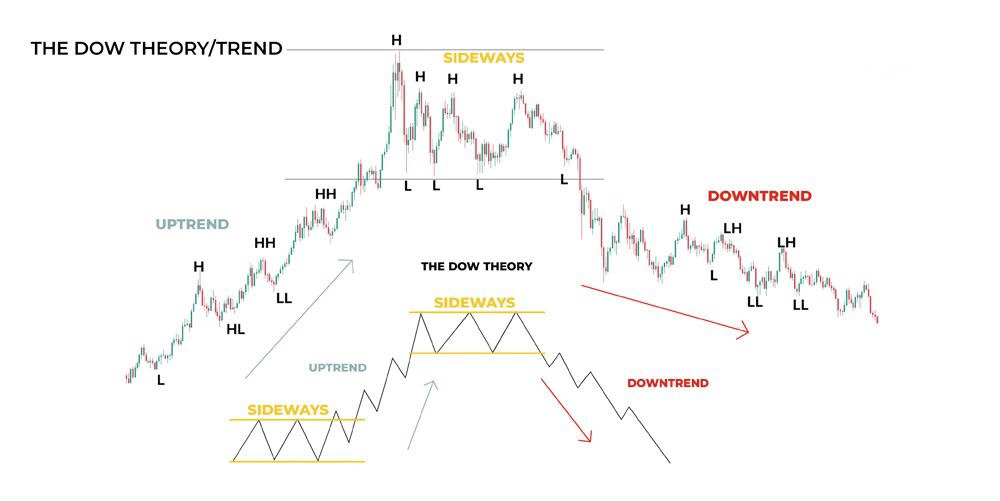
1. Primary (Main) trend: Lasts from one to several years. This is a 'tide' or 'ebb'.
2. Secondary trend: Corrections that last from three weeks to three months. These are 'waves' that go against the tide.
3. Minor trends: Market 'noise' that lasts less than three weeks. Dow considered them insignificant and manipulative.

3. Defining the trend through highs and lows
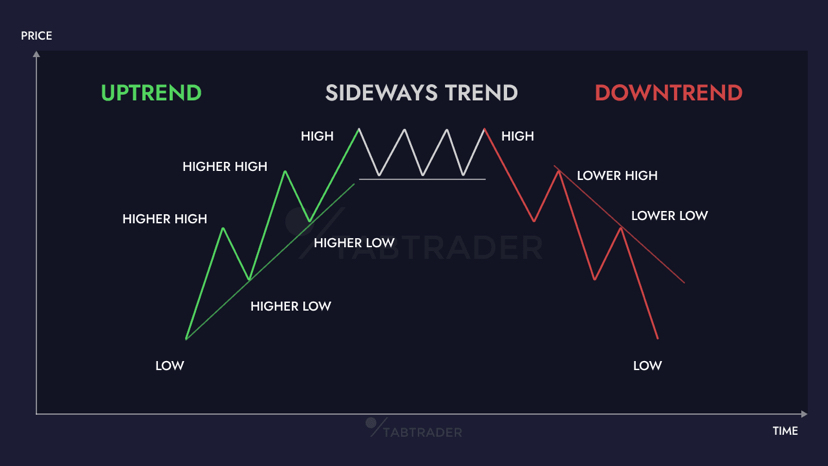
This is what we today call market structure (Market Structure):
• Upward trend (Bullish): Each subsequent peak is higher than the previous one (HH — Higher High), and each low is higher than the previous one (HL — Higher Low).
• Downward trend (Bearish): Each peak is lower than the previous one (LH — Lower High), and each low is lower than the previous one (LL — Lower Low).
❗️ Important: A trend is considered valid until a clear reversal signal appears (for example, breaking the previous HL into a downward LL). ❗️
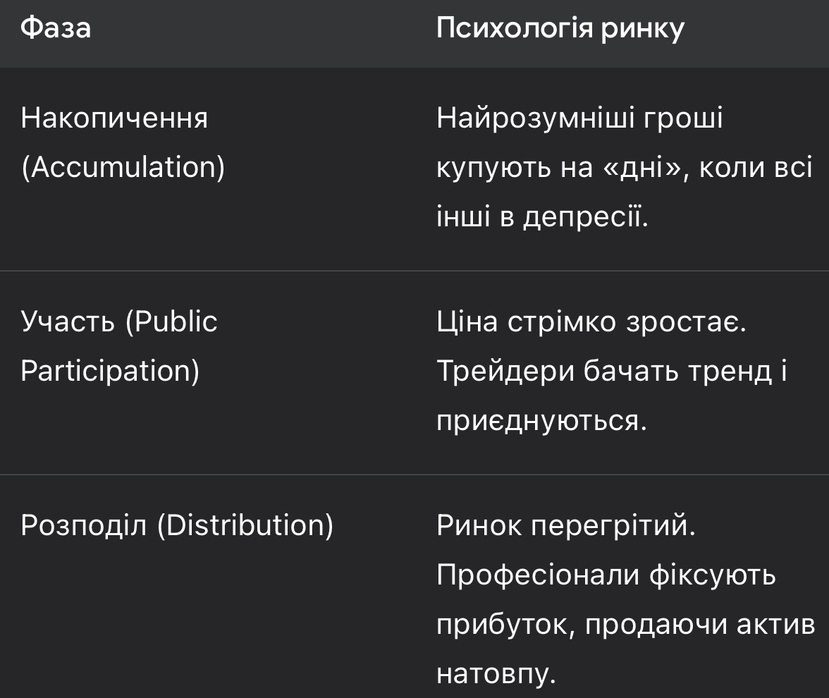
4. Three phases of the main trend
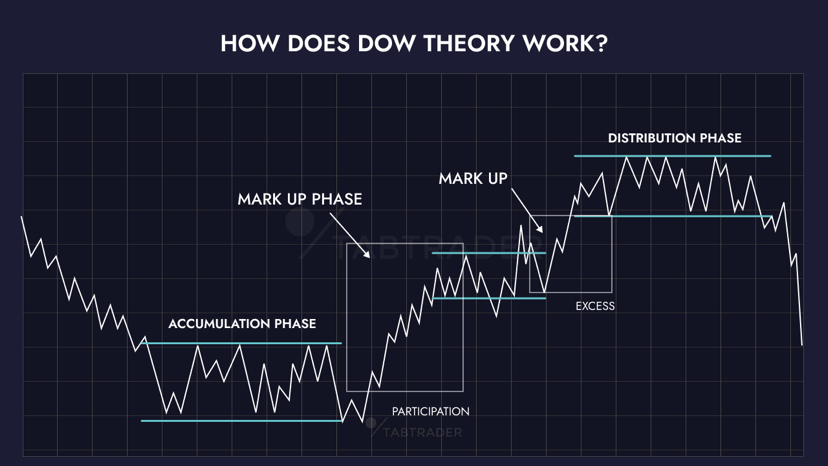
The market does not move chaotically; it goes through psychological stages:
5. Volumes must confirm the trend
Price is the direction, and volume is the fuel.
• If the price goes up, the volume must also increase. This means that buyers are strong.
• If the price rises while volumes fall — the trend is 'exhausting' and may soon reverse.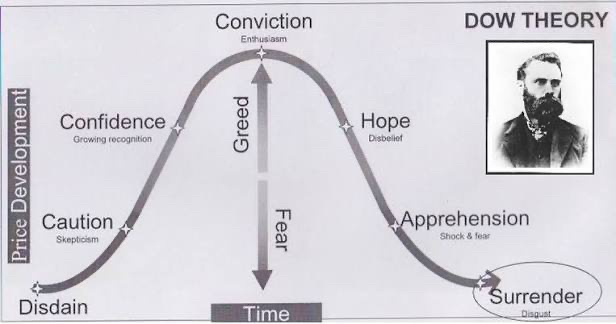
6. Indices must confirm each other
Charles Dow analyzed the Industrial Index and the Railroads Index. He believed that if factories produce goods (growth in Industrial), but the railroad does not transport them (decline in Transportation) — the economy is sick.
Modern interpretation: For sustainable growth, several key sectors of the stock market must rise simultaneously (for example, S&P 500 and Nasdaq).
Why does this still work?
Dow's theory is based not on algorithms but on human psychology, which has not changed in 100 years. Fear, greed, and the logic of large capital remain the same, regardless of whether you are trading railroad stocks in the 1890s or bitcoin in 2026.