


Recently, there has been a major event in the stablecoin market, a stablecoin called USDD has quietly surpassed a total value locked of 1 billion USD, and it has also promoted itself as the 'interest-bearing version of USDT,' offering up to 12% annual yield.
A 12% stablecoin yield, doesn't that sound tempting? But at the same time, many people might be wondering: is this the next once-in-a-lifetime wealth code, or just another beautifully packaged algorithmic trap? Today, let's delve into the details of USDD.
Who is USDD?
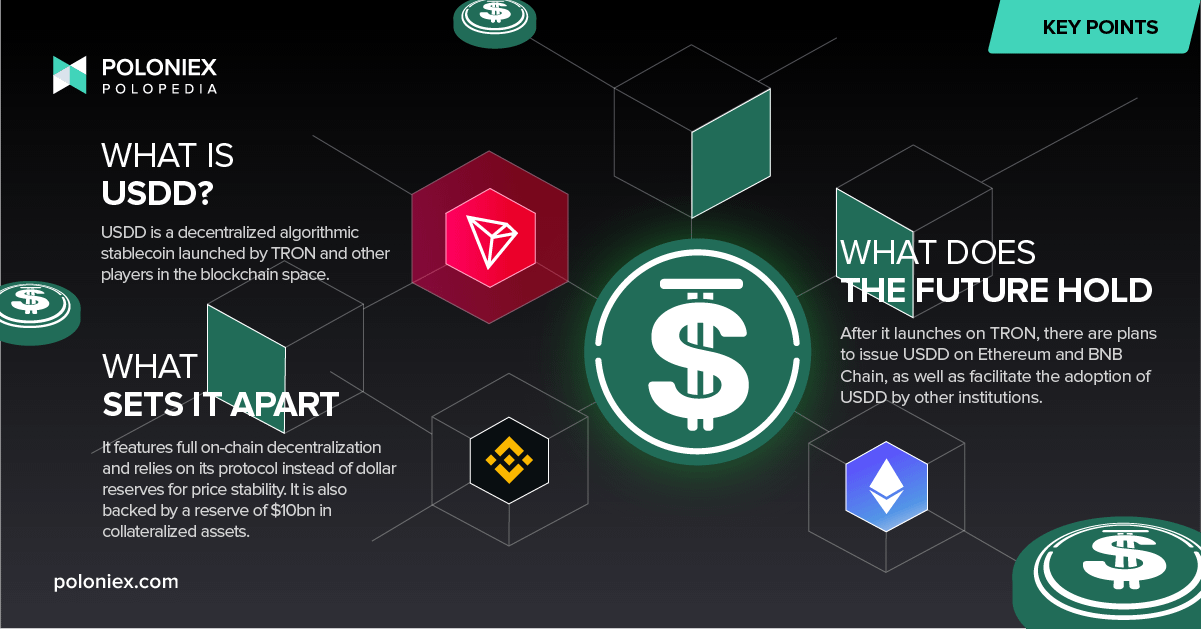
First of all, what is USDD? In simple terms, it is backed by the TRON network (@TRON DAO Decentralized stablecoin launched by the ecosystem. As we all know, Tron is the largest issuance network for the stablecoin USDT, with a huge user base and trading volume. USDD is an important piece that Tron wants to place in the decentralized stablecoin field.
Just a year ago, USDD underwent a critical 2.0 upgrade, transforming from a controversial hybrid algorithmic stablecoin to an over-collateralized stablecoin. It was this upgrade that allowed its TVL to break through the $1 billion mark within a year, officially entering the mainstream table of stablecoins. So, what magic does this upgrade hold? How did USDD achieve the transformation from 'blood transfusion' to 'self-sustaining'?
The transformation from 'blood transfusion' to 'self-sustaining'
In its early days, USDD, like many new projects, heavily relied on official 'blood transfusions'. Attracting users with subsidies of up to 20% APY, while the short-term effects were significant, everyone understood that this was not a long-term solution.
The real turning point was the USDD 2.0 upgrade. The core of this upgrade was to completely abandon the previous algorithm-dependent model and transition to over-collateralization. In other words, every USDD issued is backed by over 100% real assets, fundamentally ensuring its stability.
To further consolidate this stability, USDD has also launched two key modules:
The first is the PSM (Price Stability Module). It allows users to seamlessly exchange between USDD and other mainstream stablecoins (such as USDT and USDC) at a 1:1 ratio with nearly zero fees. This way, once there is a slight fluctuation in the price of USDD, arbitrageurs will immediately step in to pull it back to $1.
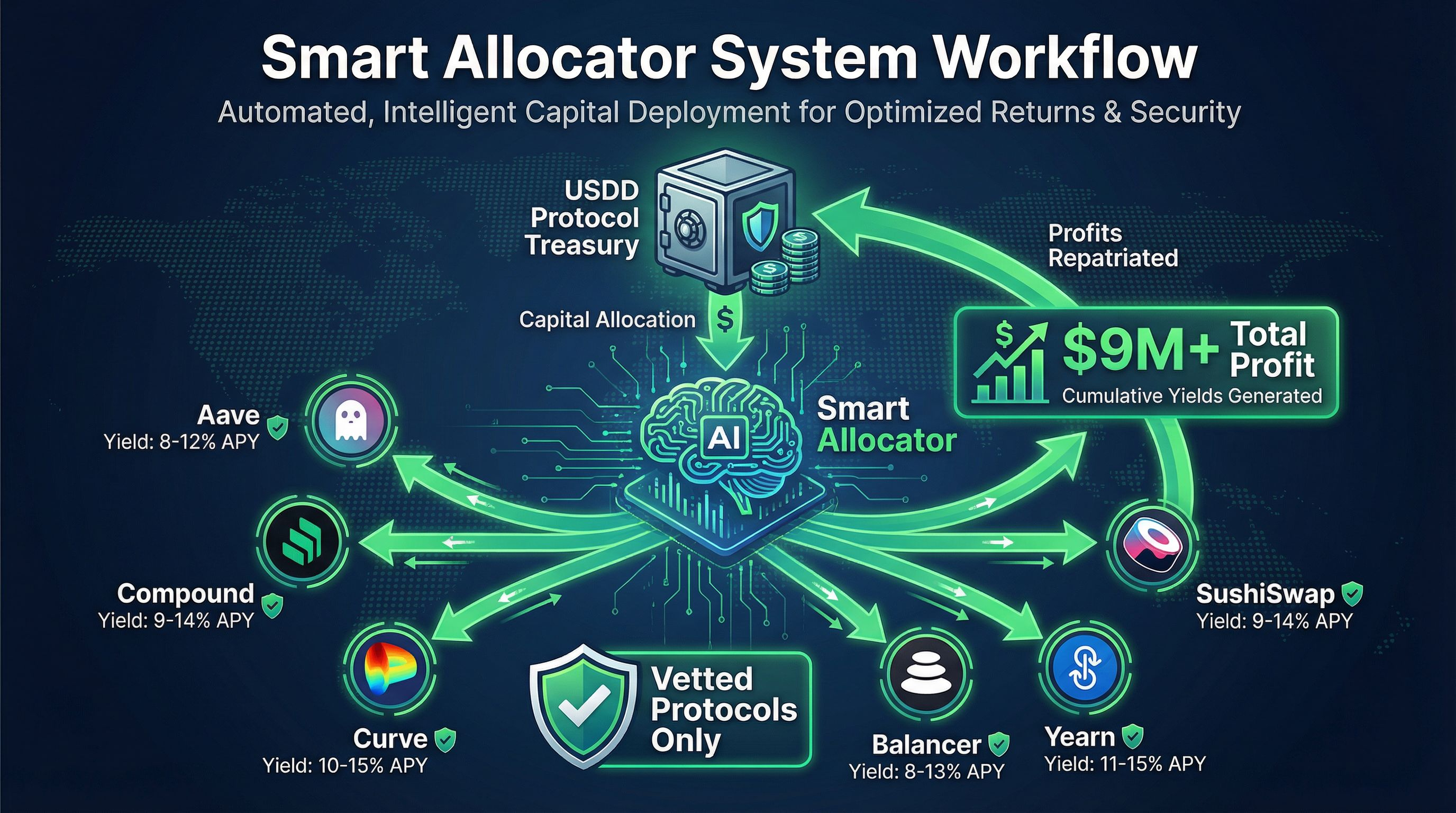
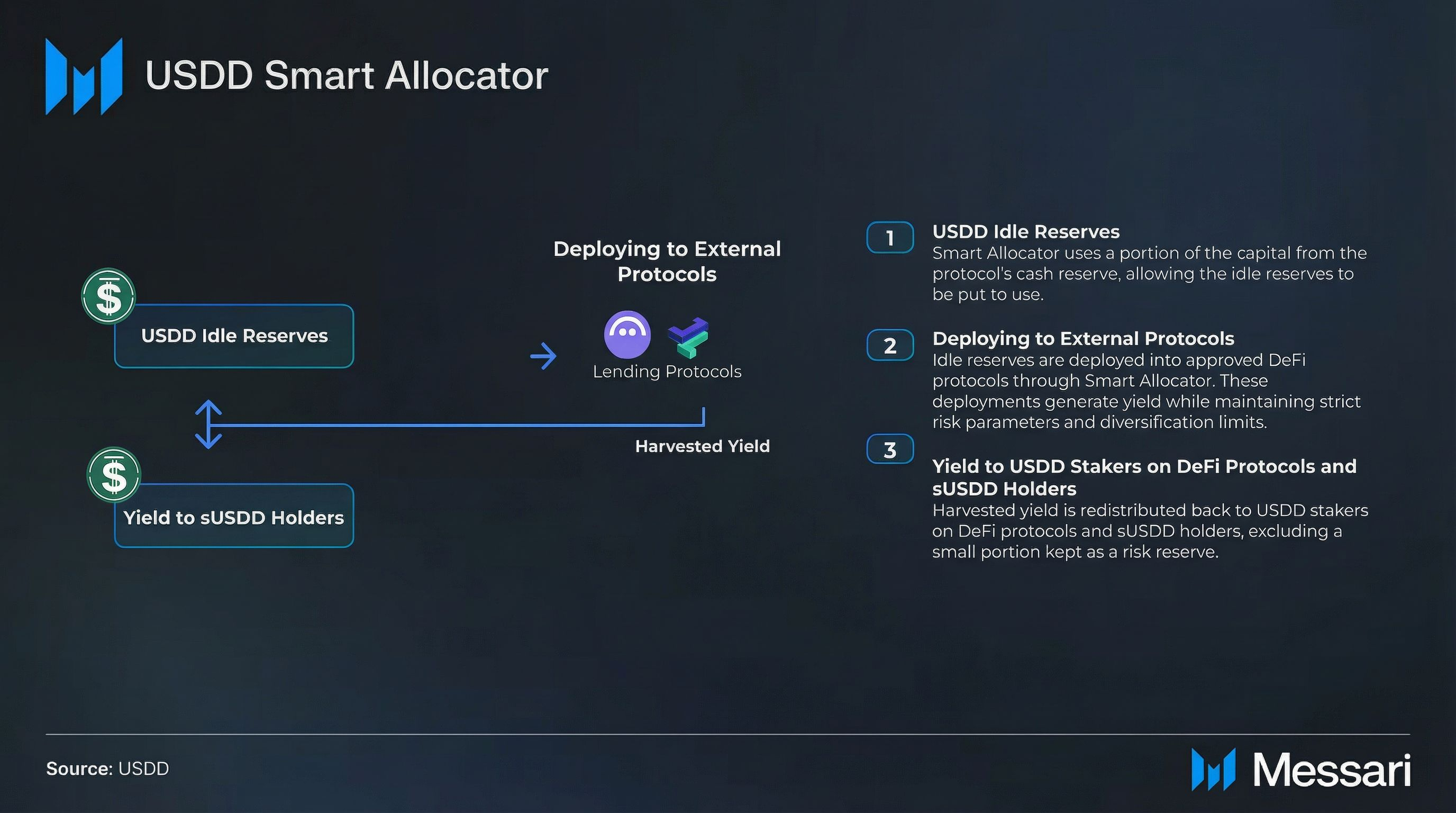
The second, and most crucial, is called Smart Allocator. This mechanism automatically deploys idle funds from the protocol's treasury into rigorously selected and secure DeFi protocols to earn returns, and then feeds these 'real profits' back into the USDD ecosystem. So far, this 'smart investment manager' has earned over $9 million in profits for USDD.
Do you understand? Through over-collateralization, PSM, and Smart Allocator, USDD has successfully established an endogenous, sustainable 'self-sustaining' system, completely breaking away from the reliance on early high subsidies.
Where are the opportunities for the 'income-generating version of USDT'?
Since USDD can 'self-sustain', how much can ordinary investors benefit? This is the biggest narrative highlight of USDD—'income-generating version of USDT'.
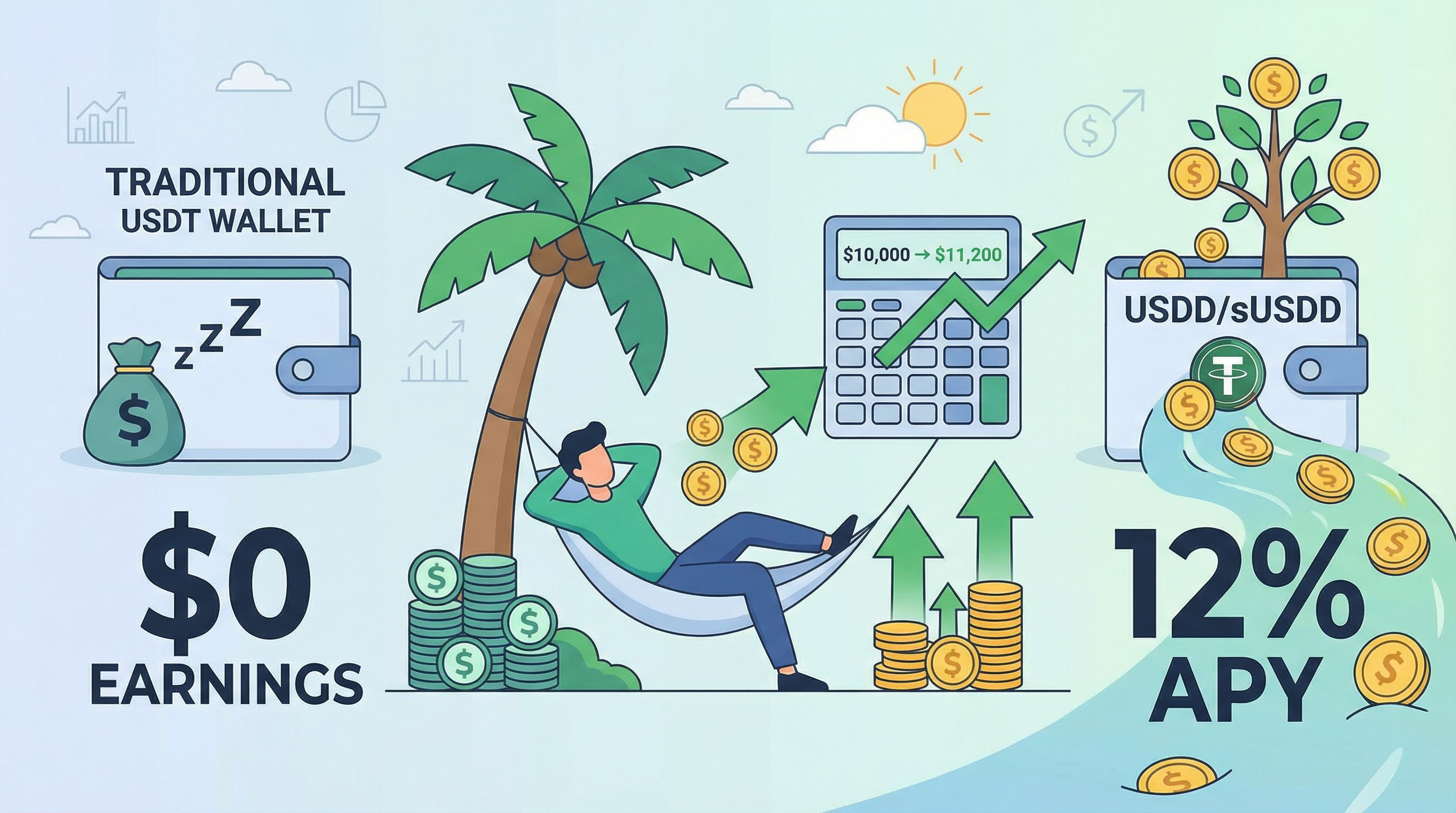
The USDT and USDC we hold are essentially 'dead money', sitting in wallets without generating any yield. But USDD is different; through a token called sUSDD, you can easily obtain about 12% annualized returns. This is a very attractive yield for stablecoins in the current market environment.
Moreover, let's look at a set of data. Currently, the number of USDD holding addresses exceeds 460,000, a number far exceeding its competitors, such as PayPal's PYUSD, which has only 100,000 addresses. What does this indicate? It indicates that USDD has a broader user base and is more 'decentralized', rather than being held in the hands of a few whales. This kind of bottom-up growth is often healthier and more promising.
Therefore, the opportunity for USDD lies in the fact that it is not just a stable value storage tool, but also a financial asset that can continuously generate passive income. For investors seeking stable returns, this is undoubtedly a noteworthy option.
Risks and challenges: Is this 12% return stable?
Of course, the higher the yield, the greater the risk may also be. Is a 12% annualized return really stable? Let's break down the risks behind it in detail. First, we need to know where this yield comes from. According to our previous analysis, it mainly comes from the investment returns of the Smart Allocator in DeFi protocols. This means that the yield will be affected by the overall DeFi market environment; it is not fixed. If the market enters a bear market and DeFi yields generally decline, the yield of USDD may also decrease accordingly.
Secondly, although USDD is currently over-collateralized, we must never forget the lessons from LUNA and UST. Although the models are completely different, we need to scrutinize the safety mechanisms of any stablecoin linked to 'algorithms' and 'high yields' with the strictest standards. Fortunately, all collateral for USDD is publicly transparent on-chain and has been audited by several top security firms, which somewhat increases its credibility.
Finally, the competition in the stablecoin track is exceptionally fierce. With giants like USDT and USDC in front, and various public chains and project parties launching native stablecoins behind, whether USDD can carve out a niche in this red ocean still requires time and continuous market validation.
Summary and personal opinion
In conclusion, through the 2.0 upgrade, USDD has successfully transitioned from a subsidy-dependent 'blood transfusion' model to a self-sustaining, over-collateralized income-generating stablecoin. It provides stablecoin holders with a new option for gaining passive income.
My view is: the narrative of USDD as the 'income-generating version of USDT' indeed has strong appeal in the current market environment. It has found a relatively good balance between stability, safety, and yield.
However, this does not mean that you can invest blindly. For ordinary investors, if you are tired of the zero yields from USDT and want to find some stable cash flow in a bear market, you might consider allocating a small portion of your funds to the USDD ecosystem to experience its income-generating capabilities. But please remember, do not put all your eggs in one basket, and continuously monitor its collateralization rate and changes in yield sources.
