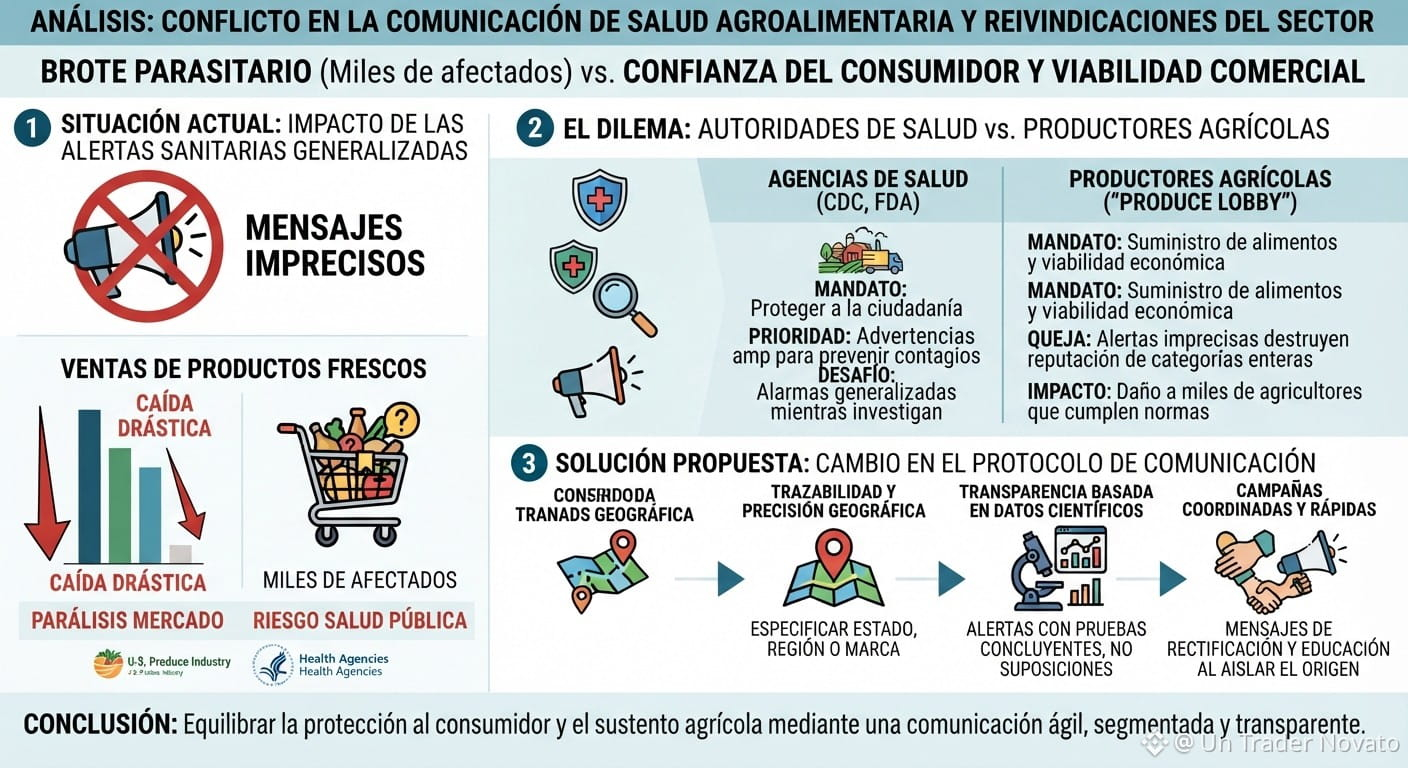
The US agribusiness sector is facing a very delicate moment after a massive parasitic outbreak that has affected thousands of consumers 📉. The severity of the situation not only impacts public health, but also the economy of the agricultural supply chain 🚜. That is why a major pressure group from the fruit and vegetable industry (produce lobby) has demanded that federal health authorities make a radical change to their communication strategy, according to Bloomberg 📰.
The request arises because consumer trust has been damaged 🛑 and sales of fresh fruits and vegetables have fallen dramatically 📉. The sector argues that the current health alerts are imprecise and overly broad, causing unnecessary paralysis in the market that affects both safe products and those presumably involved 🚫🛒.
🔍 The Conflict: Public Health vs. Commercial Viability
The tension between the authorities (CDC and FDA) and producers brings to the table a complex dilemma:
Health agencies: Prioritize broad warnings to prevent infections, even if they generate widespread alarm while investigations are ongoing 🛡️🧪.
Producing sector: Argue that imprecise alerts destroy the reputation of entire categories of food within hours, affecting thousands of farmers who meet strict standards 🌾💔.
Consumer: Experiences confusion and food-related anxiety 🛒❓, reducing their intake of fresh products 🥗.
🛠️ The Sector’s Demands
Producers are calling for a protocol based on three pillars:
Geographical precision: Specify the state, region, or responsible distributor, avoiding demonizing healthy products 🗺️🎯.
Scientific transparency: Issue public warnings with conclusive evidence and not with preliminary assumptions 🔬📋.
Coordinated campaigns: Collaborate to launch rapid correction messages as soon as the source of contamination is identified 📢🤝.
This episode marks a turning point in the management of food crises 🇺🇸.
The request arises because consumer trust has been damaged 🛑 and sales of fresh fruits and vegetables have fallen dramatically 📉. The sector argues that the current health alerts are imprecise and overly broad, causing unnecessary paralysis in the market that affects both safe products and those presumably involved 🚫🛒.
🔍 The Conflict: Public Health vs. Commercial Viability
The tension between the authorities (CDC and FDA) and producers brings to the table a complex dilemma:
Health agencies: Prioritize broad warnings to prevent infections, even if they generate widespread alarm while investigations are ongoing 🛡️🧪.
Producing sector: Argue that imprecise alerts destroy the reputation of entire categories of food within hours, affecting thousands of farmers who meet strict standards 🌾💔.
Consumer: Experiences confusion and food-related anxiety 🛒❓, reducing their intake of fresh products 🥗.
🛠️ The Sector’s Demands
Producers are calling for a protocol based on three pillars:
Geographical precision: Specify the state, region, or responsible distributor, avoiding demonizing healthy products 🗺️🎯.
Scientific transparency: Issue public warnings with conclusive evidence and not with preliminary assumptions 🔬📋.
Coordinated campaigns: Collaborate to launch rapid correction messages as soon as the source of contamination is identified 📢🤝.
This episode marks a turning point in the management of food crises 🇺🇸.