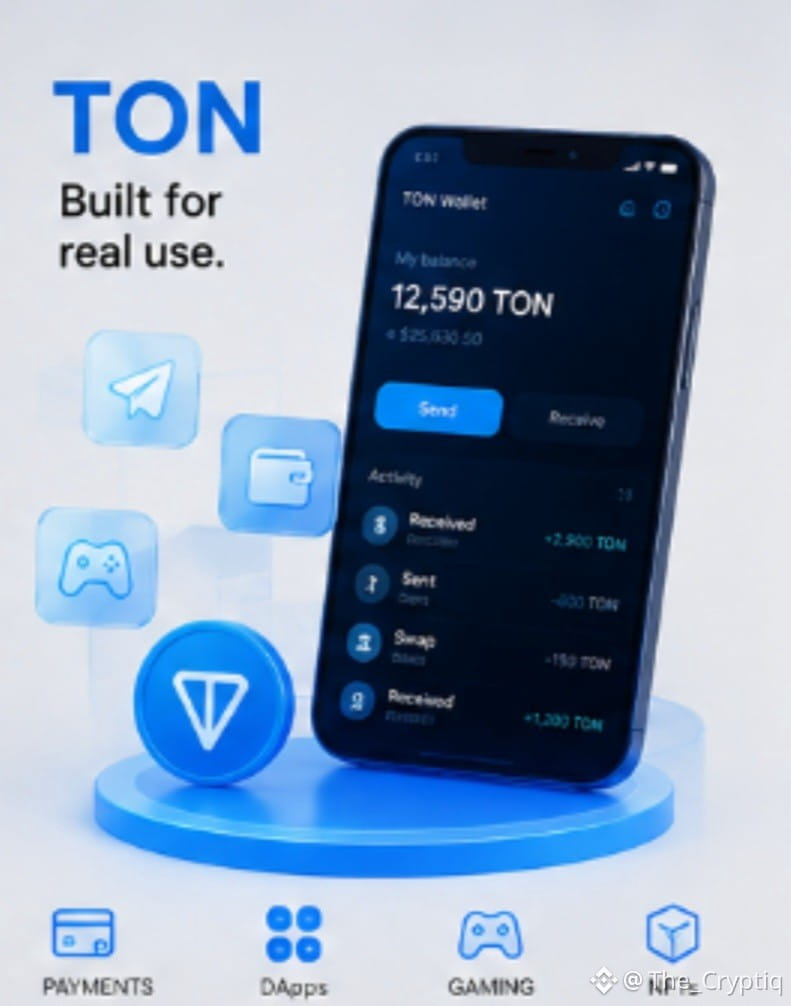
𝗧𝗛𝗘 𝗦𝗧𝗥𝗢𝗡𝗚𝗘𝗦𝗧 𝗧𝗢𝗡 𝗧𝗛𝗘𝗦𝗜𝗦 𝗜𝗦𝗡’𝗧 𝗝𝗨𝗦𝗧 “𝗧𝗘𝗟𝗘𝗚𝗥𝗔𝗠 𝗛𝗔𝗦 𝗔 𝗟𝗢𝗧 𝗢𝗙 𝗨𝗦𝗘𝗥𝗦”
A large audience doesn't automatically become blockchain users.
The stronger thesis is the infrastructure connecting that audience to on-chain utility.
Telegram → distribution.
Mini Apps → application interface.
TON → settlement.
Wallets → authorization.
Jettons → programmable value.
Smart contracts → application logic.
If these layers reinforce one another, TON can shorten the distance between discovering a product and using blockchain functionality.
That is much more interesting than a headline user number.
The infrastructure connecting people to useful applications is what matters.
@ston_fi
A large audience doesn't automatically become blockchain users.
The stronger thesis is the infrastructure connecting that audience to on-chain utility.
Telegram → distribution.
Mini Apps → application interface.
TON → settlement.
Wallets → authorization.
Jettons → programmable value.
Smart contracts → application logic.
If these layers reinforce one another, TON can shorten the distance between discovering a product and using blockchain functionality.
That is much more interesting than a headline user number.
The infrastructure connecting people to useful applications is what matters.
@ston_fi