GEN Z & CRYPTO - EP. 05
If the Old Path to Wealth Feels Impossible, What Comes Next?
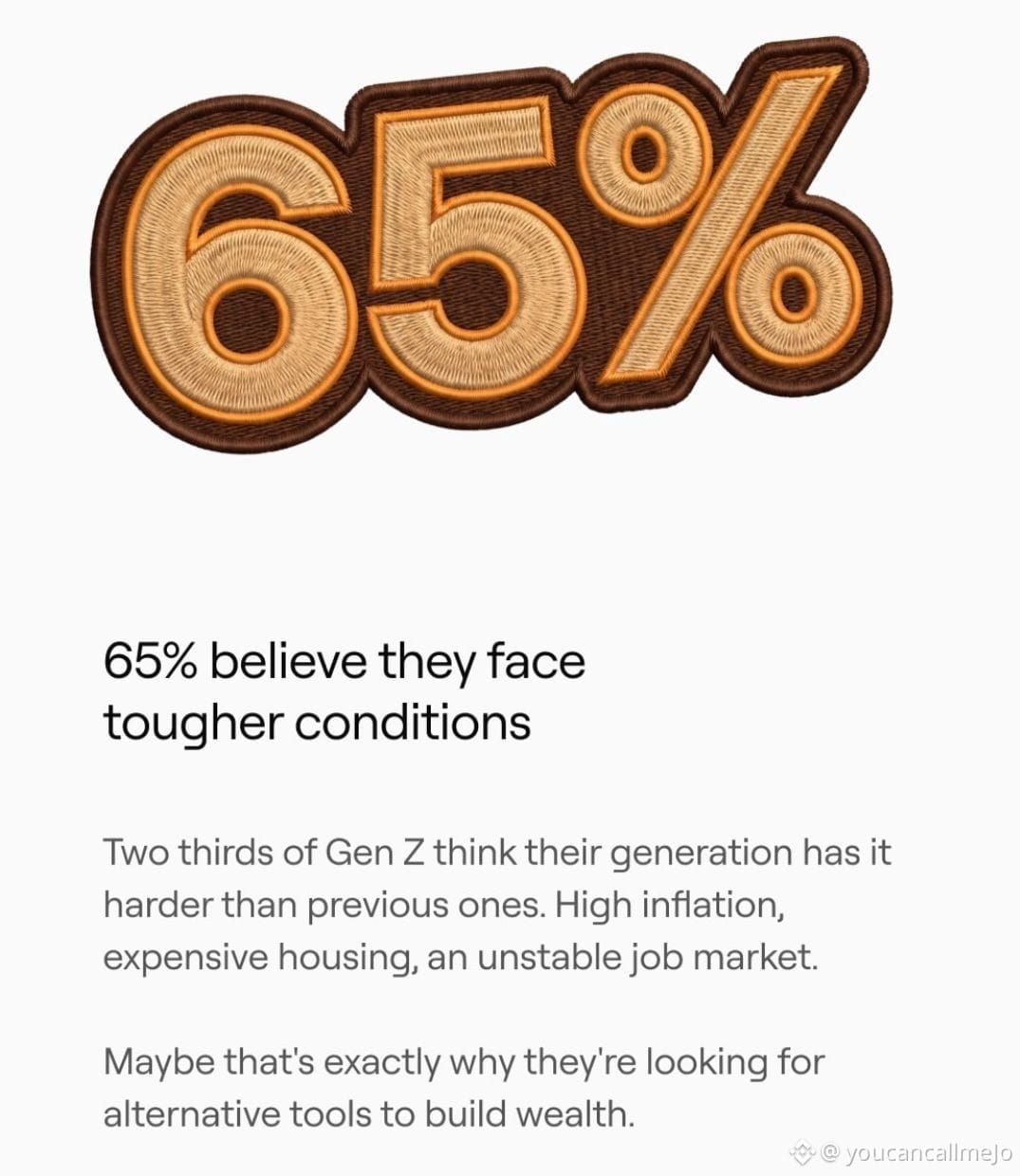
One number really stood out to me:65% of Gen Z say their generation faces tougher economic conditions than previous generations. Even more interesting,52% believe they need to take more risks to reach their financial goals. And honestly,I think this helps explain part of Gen Z's attraction to crypto.
Think about the environment they're entering adulthood in: expensive housing, persistent cost-of-living pressure, uncertain career paths, and a traditional idea of wealth that can feel increasingly difficult to reach.
Deloitte's 2026 research also found that 69% of Gen Z say housing affordability affects their career decisions,while 55% say financial constraints have delayed major life decisions. So when someone looks at a house that costs hundreds of thousands of dollars and compares that with being able to start investing in Bitcoin with 10$,the appeal of an alternative financial path becomes pretty obvious.
But here's where I think we need to be careful:Crypto isn't an “easy money” machine. The fact that GenZ feels economically squeezed doesn't make risky assets safer. In fact, it can make the temptation to chase quick returns even stronger. The Urban Institute found that some young adults are combining traditional saving with more speculative strategies such as crypto, retail investing, and sports betting. My interpretation is that Gen Z isn't necessarily saying,“I want to gamble.” It may be saying,“The traditional route doesn't feel sufficient, so I need more options.”And that could have a huge impact on crypto. If this generation eventually turns its economic frustration into financial education,disciplined investing and longterm participation,crypto could gain an enormous generation of users who treat it as part of their wealth-building strategy. But if the same frustration turns into“I need to get rich quickly,”we could see the opposite: more leverage, more speculation, more meme-driven cycles and more people taking risks they don't fully understand.
If the Old Path to Wealth Feels Impossible, What Comes Next?
One number really stood out to me:65% of Gen Z say their generation faces tougher economic conditions than previous generations. Even more interesting,52% believe they need to take more risks to reach their financial goals. And honestly,I think this helps explain part of Gen Z's attraction to crypto.
Think about the environment they're entering adulthood in: expensive housing, persistent cost-of-living pressure, uncertain career paths, and a traditional idea of wealth that can feel increasingly difficult to reach.
Deloitte's 2026 research also found that 69% of Gen Z say housing affordability affects their career decisions,while 55% say financial constraints have delayed major life decisions. So when someone looks at a house that costs hundreds of thousands of dollars and compares that with being able to start investing in Bitcoin with 10$,the appeal of an alternative financial path becomes pretty obvious.
But here's where I think we need to be careful:Crypto isn't an “easy money” machine. The fact that GenZ feels economically squeezed doesn't make risky assets safer. In fact, it can make the temptation to chase quick returns even stronger. The Urban Institute found that some young adults are combining traditional saving with more speculative strategies such as crypto, retail investing, and sports betting. My interpretation is that Gen Z isn't necessarily saying,“I want to gamble.” It may be saying,“The traditional route doesn't feel sufficient, so I need more options.”And that could have a huge impact on crypto. If this generation eventually turns its economic frustration into financial education,disciplined investing and longterm participation,crypto could gain an enormous generation of users who treat it as part of their wealth-building strategy. But if the same frustration turns into“I need to get rich quickly,”we could see the opposite: more leverage, more speculation, more meme-driven cycles and more people taking risks they don't fully understand.