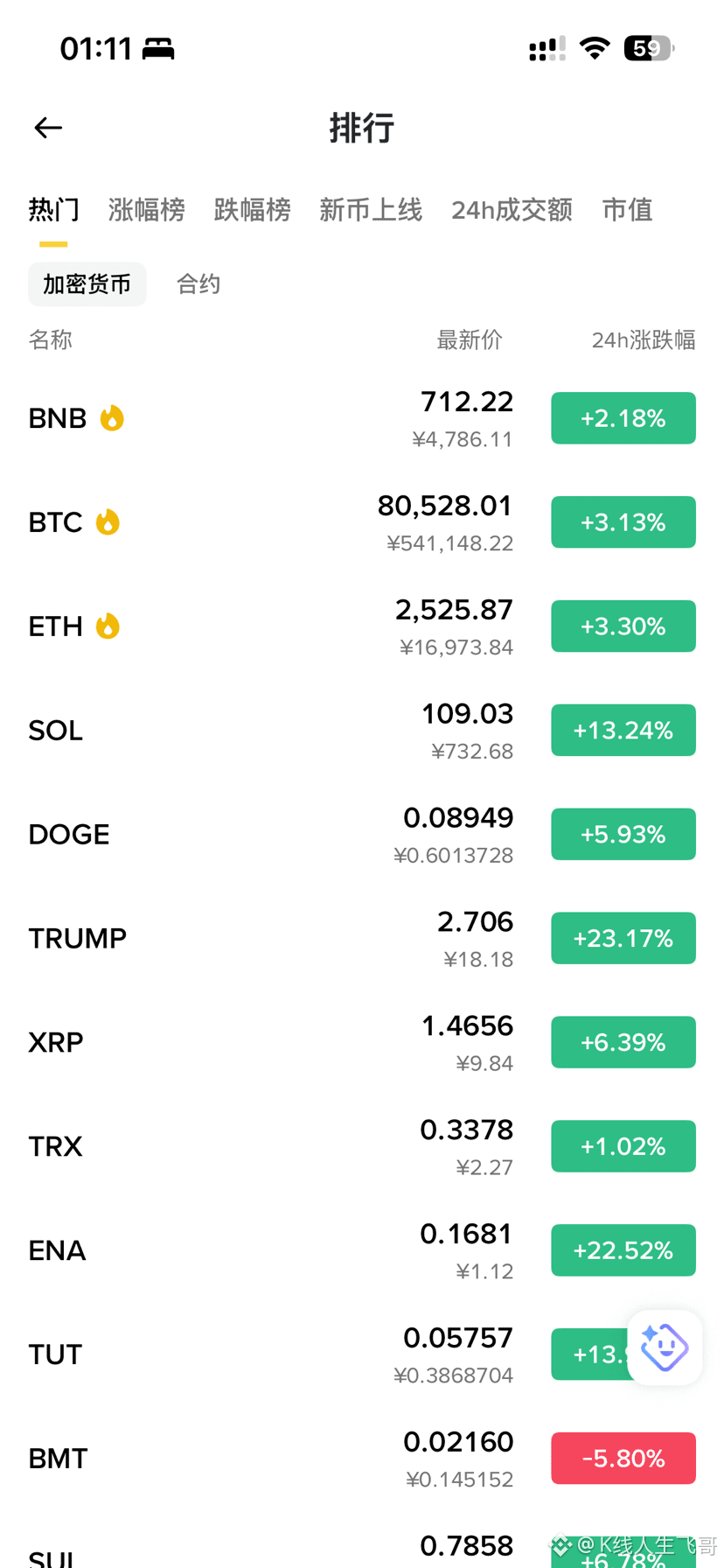
If you miss the bottom, what should you do next?
First of all, missing the bottom isn’t the scary part. What’s truly scary is missing 57,700, then constantly waiting for an even cheaper price, and finally missing out on the entire round of the market.
For those who have missed the entry point, my core idea is simple: get on the train first, then wait for opportunities to increase your position size. No matter the trading volume, price increase, or market sentiment, everything is already completely different from a bear market. The biggest risk is actually missing the market.
In the early stages of a bull market, you don’t need to obsess over your cost basis too much. Even if your eventual spot average cost ends up at 70k, 75k, or even 80k, it’s still better than staying in cash all the time. Of course, the premise is that the logic of the bull/bear transition hasn’t been broken—and for this BTC cycle, we at least need to look for a breakout above the previous high at 12.6W.
A practical approach is a three-step plan: “build a baseline position + DCA + bottom-catching.” First, take some spot exposure—say you’ve already allocated 20%. Don’t go all-in at once, because there’s still resistance around 80k and 82k. Then use 3–5 months to DCA and slowly deploy the remaining position. For a real big pullback, then add aggressively in a concentrated way. Focus on levels such as 73k–74k, 70k, 68k, and 62k. The one I care about most is 73k–74k. If it truly drops back into the 62k–67k range, then you should actually consider increasing your position significantly.
In the early bull market, you should start increasing your sources of funds outside the market—don’t wait until BTC has already risen a lot before you think about depositing funds. Your position size determines the scale of your profits, so your “ammo” needs to be prepared in advance.
As for coin-margined perpetual contracts, they can be used as the final “multiplier,” but only after your spot position is already fairly sufficient—and only low leverage. For example, at around 67,000, a 1x long: liquidation is roughly around 36,000. If you go to 2x, liquidation is roughly around 48,000—its safety margin is clearly much lower. In a bull market, the least necessary thing to do is use high leverage to earn a bit more, by risking a liquidation blow-up—using your spot base as the collateral.
So after missing the bottom, don’t keep thinking, “I must buy at 57,700.” The bottom is for spotting the trend, not for obsessing over cost. The most important thing now isn’t to recover the profits you missed—it’s to truly capture the market action ahead.
First of all, missing the bottom isn’t the scary part. What’s truly scary is missing 57,700, then constantly waiting for an even cheaper price, and finally missing out on the entire round of the market.
For those who have missed the entry point, my core idea is simple: get on the train first, then wait for opportunities to increase your position size. No matter the trading volume, price increase, or market sentiment, everything is already completely different from a bear market. The biggest risk is actually missing the market.
In the early stages of a bull market, you don’t need to obsess over your cost basis too much. Even if your eventual spot average cost ends up at 70k, 75k, or even 80k, it’s still better than staying in cash all the time. Of course, the premise is that the logic of the bull/bear transition hasn’t been broken—and for this BTC cycle, we at least need to look for a breakout above the previous high at 12.6W.
A practical approach is a three-step plan: “build a baseline position + DCA + bottom-catching.” First, take some spot exposure—say you’ve already allocated 20%. Don’t go all-in at once, because there’s still resistance around 80k and 82k. Then use 3–5 months to DCA and slowly deploy the remaining position. For a real big pullback, then add aggressively in a concentrated way. Focus on levels such as 73k–74k, 70k, 68k, and 62k. The one I care about most is 73k–74k. If it truly drops back into the 62k–67k range, then you should actually consider increasing your position significantly.
In the early bull market, you should start increasing your sources of funds outside the market—don’t wait until BTC has already risen a lot before you think about depositing funds. Your position size determines the scale of your profits, so your “ammo” needs to be prepared in advance.
As for coin-margined perpetual contracts, they can be used as the final “multiplier,” but only after your spot position is already fairly sufficient—and only low leverage. For example, at around 67,000, a 1x long: liquidation is roughly around 36,000. If you go to 2x, liquidation is roughly around 48,000—its safety margin is clearly much lower. In a bull market, the least necessary thing to do is use high leverage to earn a bit more, by risking a liquidation blow-up—using your spot base as the collateral.
So after missing the bottom, don’t keep thinking, “I must buy at 57,700.” The bottom is for spotting the trend, not for obsessing over cost. The most important thing now isn’t to recover the profits you missed—it’s to truly capture the market action ahead.