
Aria Bloom 阿莉娅
504 Posts

Aria Bloom 阿莉娅
Aria Bloom | Learning, growing, and exploring crypto with patience and purpose. Every step is progress 💞
Open Trade
High-Frequency Trader
1.5 Years
293 Following
8.6K+ Followers
3.4K+ Liked
Posts
Portfolio
All
Quotes
PINNED
The journey isn’t always about numbers, markets, and targets. Sometimes, it’s about stepping away for a moment, enjoying the beauty of nature, and appreciating the peaceful moments that make life meaningful. ✨
A beautiful view, calm waters, and my little companion by my side. 🐱🤍
Simple moments, unforgettable memories.
Keep moving forward, stay positive, and enjoy every part of the journey. 🚀✨
$BTR $GIGGLE $SOL
A beautiful view, calm waters, and my little companion by my side. 🐱🤍
Simple moments, unforgettable memories.
Keep moving forward, stay positive, and enjoy every part of the journey. 🚀✨
$BTR $GIGGLE $SOL

😍


Ayan -X
·
--
🔥 Engage & Claim Your Reward!
Like ❤️ Comment 💬 Repost 🔄
Complete the tasks and claim your reward 🎁
Don’t miss out. Let’s support each other and grow together! 🚀
Like ❤️ Comment 💬 Repost 🔄
Complete the tasks and claim your reward 🎁
Don’t miss out. Let’s support each other and grow together! 🚀
😇

唯一 BRUCE
·
--
Bullish$TUT
$MELANIA
$ZEC #BankOfKoreaHikesRatesTo3%
#DollarPostsBiggestGainInNearlyFourWeeks
#NvidiaRises4%OnRevenueBeat
#XRPRallies44%InAWeek
#CryptoFearGreedIndexHits74
$MELANIA
$ZEC #BankOfKoreaHikesRatesTo3%
#DollarPostsBiggestGainInNearlyFourWeeks
#NvidiaRises4%OnRevenueBeat
#XRPRallies44%InAWeek
#CryptoFearGreedIndexHits74


😍

橙子Joyce
·
--
Has Nvidia fully transformed into the “central bank for AI”?
By the end of July, the chipmaker Nvidia’s equity value in both listed and unlisted companies had reached $95.6 billion, while the figure at the start of 2020 was less than $100 million. Nvidia said its total equity investments are currently about $99 billion.① Nvidia made its fortune riding the AI boom, and now it is also “stepping in the middle” to help the next phase of that wave develop… ② Compared with the impressive profit statement figures unveiled on Wednesday, some industry insiders believe Nvidia’s bigger change may be showing up on its balance sheet. Faced with such astonishing capital expansion, Nvidia CEO Jensen Huang showed no sign of concern on Wednesday—instead, he seemed calm: “If I have any regrets, it’s that at the time we didn’t invest more, and earlier, in these AI labs.” And perhaps these massive equity investments are only the tip of the iceberg in Nvidia’s broader capital chess game… $Nvidia (NVDA.US)$ Chief Financial Officer Colette Kress said that frontier AI labs’ demand for computing power is growing “explosively,” but its “expansion speed has far outstripped the limits that their own balance sheets and creditworthiness can support.” Put simply, the fastest-growing Nvidia’s core customers urgently need large-scale AI infrastructure, but their own financial conditions are simply unable to foot such expensive bills. And Nvidia is filling that gap. This capital-support strategy is gradually becoming an increasingly important part of Nvidia’s core business. Kress revealed that by next year, those AI labs supported by Nvidia’s balance sheet backing are expected to contribute about one-quarter of the company’s business share. In recent months, as the “Balance-Sheet-as-a-Service” model has taken off, Wall Street investors have begun to frequently jokingly call Nvidia the “central bank for AI.” The “Balance-Sheet-as-a-Service” model led by Nvidia—using Nvidia’s strong financial backing to continuously “pump blood” into customers so they can maintain their high procurement spending—has even given rise to a rare practice in the industry: allowing some large customers to delay payment for data center procurement for up to a year. According to the results released on Wednesday, $Nvidia (NVDA.US)$ accounts receivable (customer unpaid amounts) jumped to $63.1 billion, and the average days sales outstanding also extended from the prior 45 days to 60 days. Not only that, Nvidia is also “guarding the road” for customers in a more direct way. For some AI cloud service providers, Nvidia sets a minimum revenue guarantee to help them obtain financing smoothly; once a customer’s actual revenue exceeds that threshold, Nvidia can take a share of the upside. “Under this model, we are not just making loans,” we candidly acknowledge. “Under this model we can earn a double return: not only profit from front-end hardware sales, but also share in the returns from leasing income.” Nvidia’s $Nvidia (NVDA.US)$ results on Wednesday also disclosed guarantee facilities as high as $108.5 billion. The vast majority—$105 billion—is closely tied to the construction projects of the SB Energy data centers built for OpenAI. A clarification is needed: this massive amount of money is not cash that Nvidia needs to directly pay out right now. As nine data centers are scheduled to come online around fiscal year 2029, the guarantee obligation will take effect in stages and decline correspondingly as OpenAI gradually settles its outstanding payments. At the same time, $Nvidia (NVDA.US)$ is actively guiding more external capital to be injected into this construction boom. The company said it has already reached preliminary agreements with multiple large investment institutions, with the intention of raising more than $500 billion of social capital to flow into AI infrastructure construction. Its logic is simple: Nvidia does not want to shoulder all the costs of the boom by itself; instead, it wants to help these projects obtain financing more easily. This aligns with Nvidia’s view of AI infrastructure as an “investable asset class.” The strategy also follows a trend the company showed signs of in the previous quarter: at that time, Nvidia’s massive “cash-generating engine” was already injecting capital into both sides of AI trading—supply and demand. Now, major tech giants are also increasingly relying on debt financing to keep their AI mega-construction plans afloat. In any case, Nvidia’s current portfolio size is already large enough to affect its profits, and its balance sheet itself is also evolving into an indispensable underlying pillar for AI infrastructure. Investing regularly in $Nvidia (NVDA.US)$ stock is a very good strategy. Come on!$NVDAB
😇

Sonu7856
·
--
Ethereum (ETH) is one of the most important cryptocurrencies because it powers smart contracts and decentralized applications (dApps). Unlike digital currencies used only for payments, Ethereum enables developers to build DeFi platforms, NFTs, blockchain games, and other innovative services. ETH is also used to pay network transaction fees and secure the blockchain through staking, making it a key part of the growing Web3 ecosystem.
#ClaimYourReward #claimRedPacket #Ethereum #BinanceSquareFamily
#ClaimYourReward #claimRedPacket #Ethereum #BinanceSquareFamily

😍
crypto-MS
·
--
🎁 Red Envelope Alert — $SOL 🎁
Reply today for your chance to claim the red envelope! 🔥
🌹 Follow me, share this post, and spread the word.
Let’s grow together and catch the next opportunity! 🚀
Good luck everyone! ❤️#Crypto_Jobs🎯
Reply today for your chance to claim the red envelope! 🔥
🌹 Follow me, share this post, and spread the word.
Let’s grow together and catch the next opportunity! 🚀
Good luck everyone! ❤️#Crypto_Jobs🎯

😇

燕寶Melissa
·
--
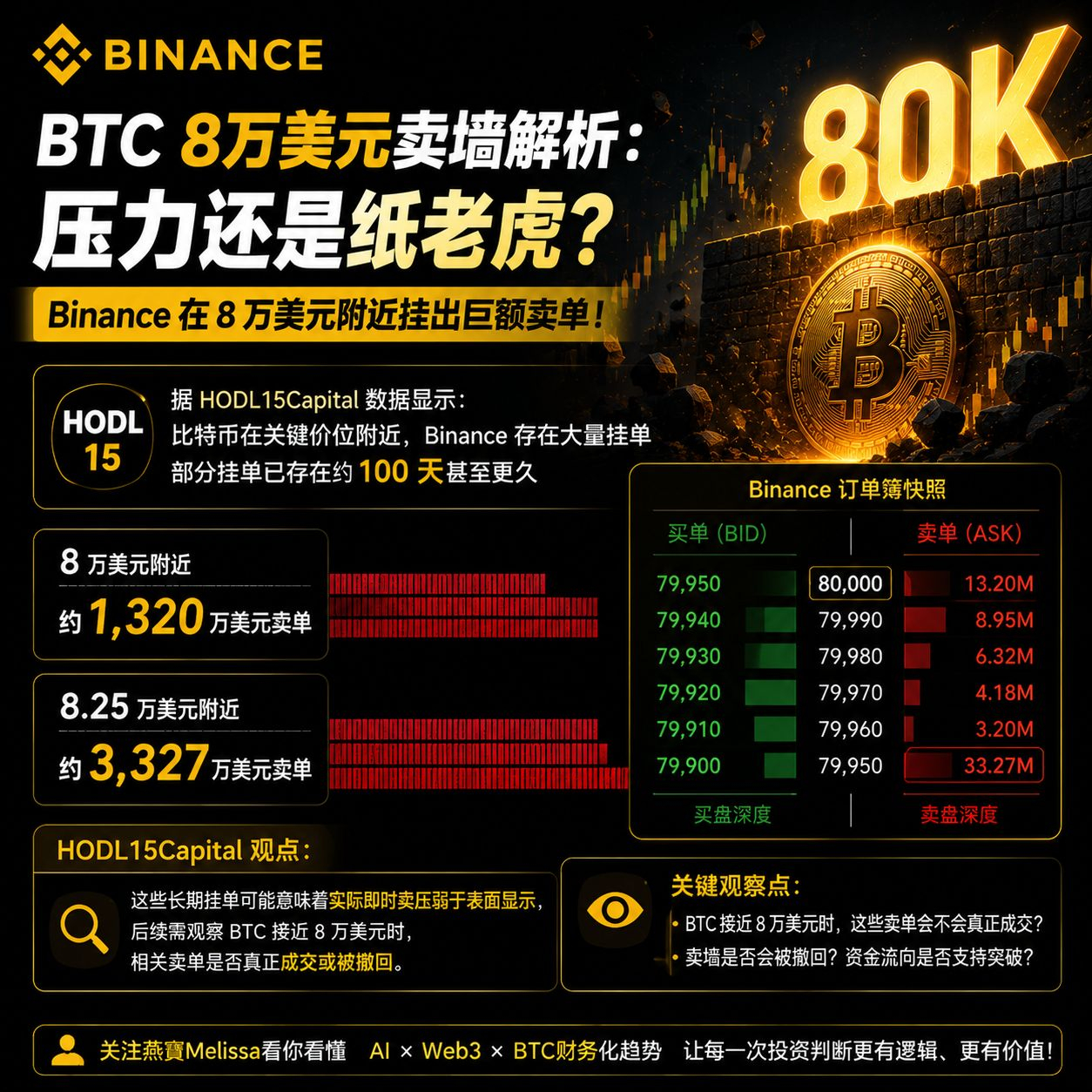
Bearish【BTC facing the $80,000 level again; what signals are hidden behind Binance’s “sell wall”?】
Bitcoin is once again at a critical spot the market is watching.
According to HODL15Capital data:
📊 Clear sell-side pressure shows up near $80,000 on Binance’s order book:
🔸 Near $80,000: about $13.2 million in sell orders
🔸 Near $82,500: about $33.27 million in sell orders
What’s even more worth paying attention to is:
Some of the orders have been sitting there for 100 days or even longer.
So what does that mean?
On the surface, these sell orders look like a “pressure wall.”
But from another perspective:
If long-standing orders never get filled, they might just be the price levels traders set as expectations, not necessarily real, immediate sell pressure.
Next, the market will focus on whether:
📌 When BTC nears $80,000
Will these sell orders actually get filled?
📌 Will the sell wall be withdrawn?
📌 Will the capital flow continue to support a breakout?
In the crypto market:
The order book reflects sentiment, but volume reflects where funds actually choose to go.
Real market moves are often not about where the wall is—it’s about which side ultimately breaks through it.
$80,000 may be not just a price checkpoint, but a new battleground where bulls and bears test each other’s strength.
#比特币64亿美元期权将到期
$BTC
$ETH
$BNB
Bitcoin is once again at a critical spot the market is watching.
According to HODL15Capital data:
📊 Clear sell-side pressure shows up near $80,000 on Binance’s order book:
🔸 Near $80,000: about $13.2 million in sell orders
🔸 Near $82,500: about $33.27 million in sell orders
What’s even more worth paying attention to is:
Some of the orders have been sitting there for 100 days or even longer.
So what does that mean?
On the surface, these sell orders look like a “pressure wall.”
But from another perspective:
If long-standing orders never get filled, they might just be the price levels traders set as expectations, not necessarily real, immediate sell pressure.
Next, the market will focus on whether:
📌 When BTC nears $80,000
Will these sell orders actually get filled?
📌 Will the sell wall be withdrawn?
📌 Will the capital flow continue to support a breakout?
In the crypto market:
The order book reflects sentiment, but volume reflects where funds actually choose to go.
Real market moves are often not about where the wall is—it’s about which side ultimately breaks through it.
$80,000 may be not just a price checkpoint, but a new battleground where bulls and bears test each other’s strength.
#比特币64亿美元期权将到期
$BTC
$ETH
$BNB
😇

JANNAT BM_
·
--
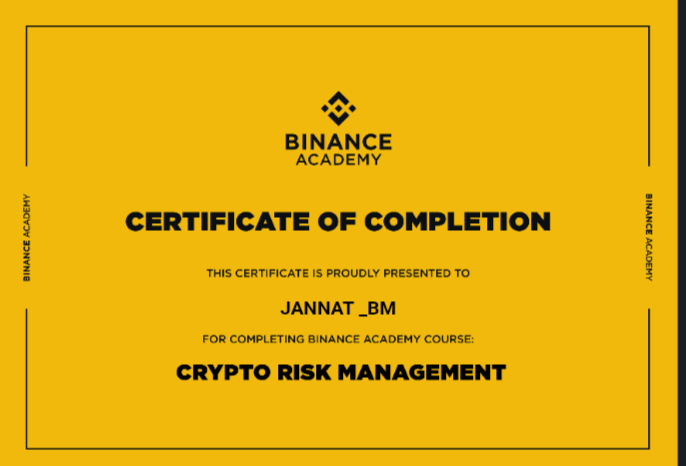
Thank you #Binance 💛
My first certificate form @Binance Academy 💛💛💛
My first certificate form @Binance Academy 💛💛💛
😍

CoinVision110
·
--
claim reward 🛄🛄🛄🥰😍😍😍😍
follow support
and please must repost and share among friends for support
#DollarPostsBiggestGainInNearlyFourWeeks
follow support
and please must repost and share among friends for support
#DollarPostsBiggestGainInNearlyFourWeeks
😍

Shaheen 69
·
--
🎁 A Little Red Packet Surprise for My Amazing Followers! 🧧
You’ve supported, liked, commented, and shared my content throughout the journey — and now it’s time to give something back! ❤️
I’m sending out a Red Packet Gift as a small thank-you to my amazing community. 🧧✨
Keep following, stay active, and don’t miss the drop — you never know when the next surprise will arrive! 👀🔥
Your support means more than numbers on a screen. Every follower is part of this journey, and I truly appreciate you. 🙏
Good luck everyone! 🍀 May your Red Packet bring you a little extra happiness today! 🚀🧧
Stay connected. Stay active. Stay winning! 💎
$TUT
$BEAMX
You’ve supported, liked, commented, and shared my content throughout the journey — and now it’s time to give something back! ❤️
I’m sending out a Red Packet Gift as a small thank-you to my amazing community. 🧧✨
Keep following, stay active, and don’t miss the drop — you never know when the next surprise will arrive! 👀🔥
Your support means more than numbers on a screen. Every follower is part of this journey, and I truly appreciate you. 🙏
Good luck everyone! 🍀 May your Red Packet bring you a little extra happiness today! 🚀🧧
Stay connected. Stay active. Stay winning! 💎
$TUT
$BEAMX

😍

NAJAF_加密 143
·
--
BNB is showing strong momentum as the broader crypto market turns bullish. BNB recently climbed to around $670, gaining more than 10% over just a few days. Bitcoin’s strong weekly rally and improving market sentiment are also supporting altcoins. BNB’s utility across the Binance ecosystem remains a key fundamental strength. The market still carries volatility, so traders should watch resistance near recent highs and manage risk carefully.
#BNB #Binance #Crypto #BNBChain #Bitcoin
#BNB #Binance #Crypto #BNBChain #Bitcoin

😍

⁰MR RAJ⁰
·
--
Bullish💰 In 2015, Gravity Payments CEO Dan Price made headlines by cutting his own salary from about $1 million to $70,000 — a roughly 94% reduction. He used the move to help raise the company’s minimum salary to $70,000 for employees.
❤️🏢 Price said the decision was about giving his Seattle-based team greater financial stability, after seeing employees struggle with rising living costs. The move sparked a huge debate about CEO pay and fair wages.
$DUSK $RIVER $POWER
#XRPRallies44%InAWeek #IranSaysHormuzOmanDealNotFinalized #SECSendsCryptoCustodyRuleToWhiteHouse #CryptoFearGreedIndexHits74 #USBitcoinETFsExtendInflowsToSixthDay
❤️🏢 Price said the decision was about giving his Seattle-based team greater financial stability, after seeing employees struggle with rising living costs. The move sparked a huge debate about CEO pay and fair wages.
$DUSK $RIVER $POWER
#XRPRallies44%InAWeek #IranSaysHormuzOmanDealNotFinalized #SECSendsCryptoCustodyRuleToWhiteHouse #CryptoFearGreedIndexHits74 #USBitcoinETFsExtendInflowsToSixthDay

😍

Sara_ k
·
--
click here 👈
.
.
$BNB $GIGGLE $AMZN
Join & claim web3 benefits 🌹👈
.
.
$BNB $GIGGLE $AMZN
Join & claim web3 benefits 🌹👈
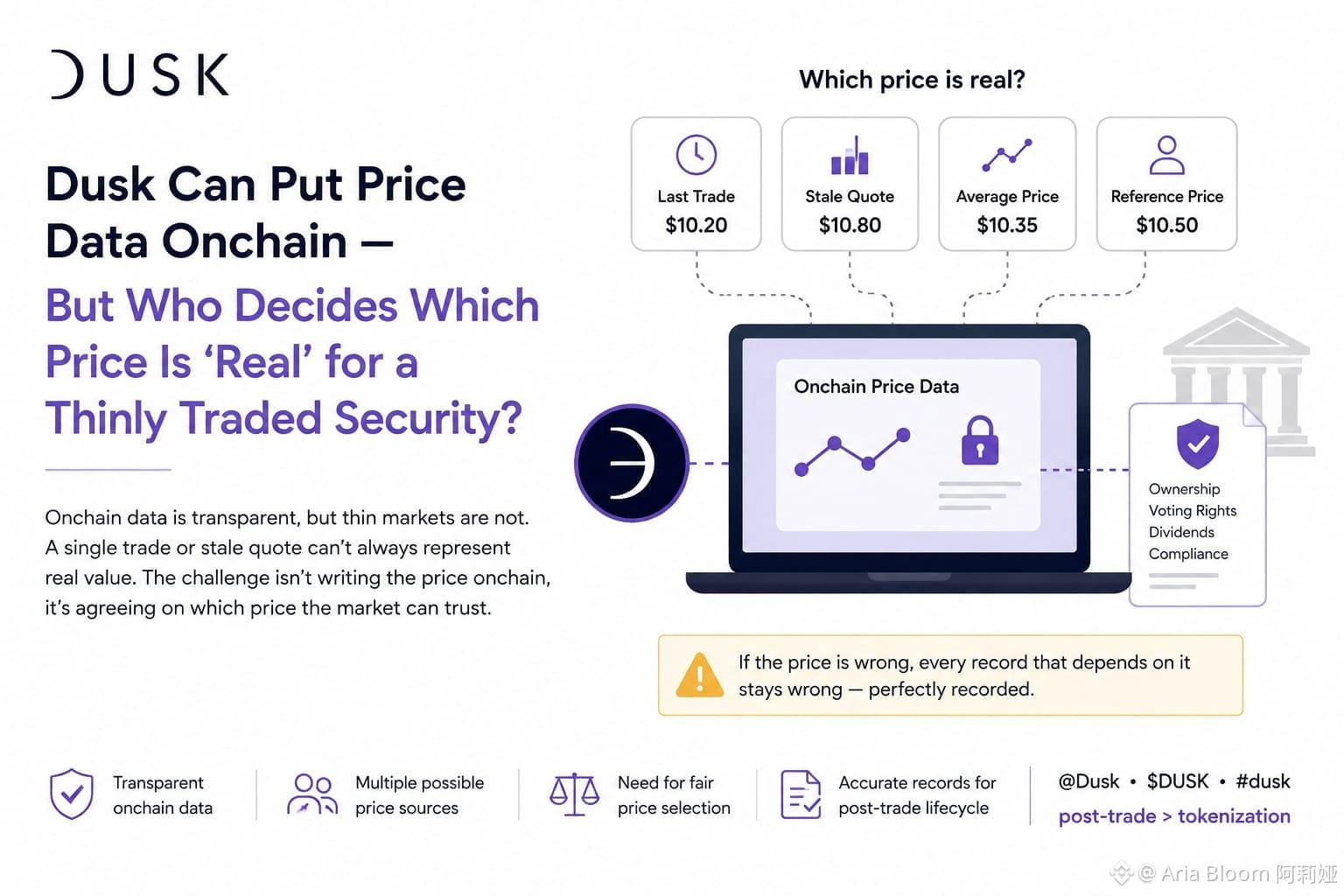
I’ve been thinking about Dusk’s onchain price data a bit differently lately. Putting a price onchain sounds straightforward until I imagine a security that barely trades. If it moves once every few days which price actually represents the market? The last trade? A stale quote? An average? Or some reference value agreed by the system?
That matters because tokenization doesn’t automatically make the underlying asset more measurable. The chain can preserve a number very accurately but it can’t decide by itself whether that number still reflects reality. For a thinly traded security a single small transaction could look meaningful even when it tells us very little about what another buyer would actually pay.
I think this is where Dusk’s post-trade focus gets more interesting to me. The source material makes the point that the hard part is keeping records correct after trading including rights payments and compliance. But there’s another dependency sitting underneath those records: the inputs have to be trustworthy in the first place. If eligibility or valuation eventually depends on price data.
bad inputs can stay perfectly recorded onchain.
I’d want to see how Dusk handles stale or disputed prices in practice. Who gets the final say when the market itself barely speaks?
#dusk $DUSK @Dusk
That matters because tokenization doesn’t automatically make the underlying asset more measurable. The chain can preserve a number very accurately but it can’t decide by itself whether that number still reflects reality. For a thinly traded security a single small transaction could look meaningful even when it tells us very little about what another buyer would actually pay.
I think this is where Dusk’s post-trade focus gets more interesting to me. The source material makes the point that the hard part is keeping records correct after trading including rights payments and compliance. But there’s another dependency sitting underneath those records: the inputs have to be trustworthy in the first place. If eligibility or valuation eventually depends on price data.
bad inputs can stay perfectly recorded onchain.
I’d want to see how Dusk handles stale or disputed prices in practice. Who gets the final say when the market itself barely speaks?
#dusk $DUSK @Dusk
#dusk $DUSK @Dusk
Dusk’s approach feels genuinely refreshing in crypto.
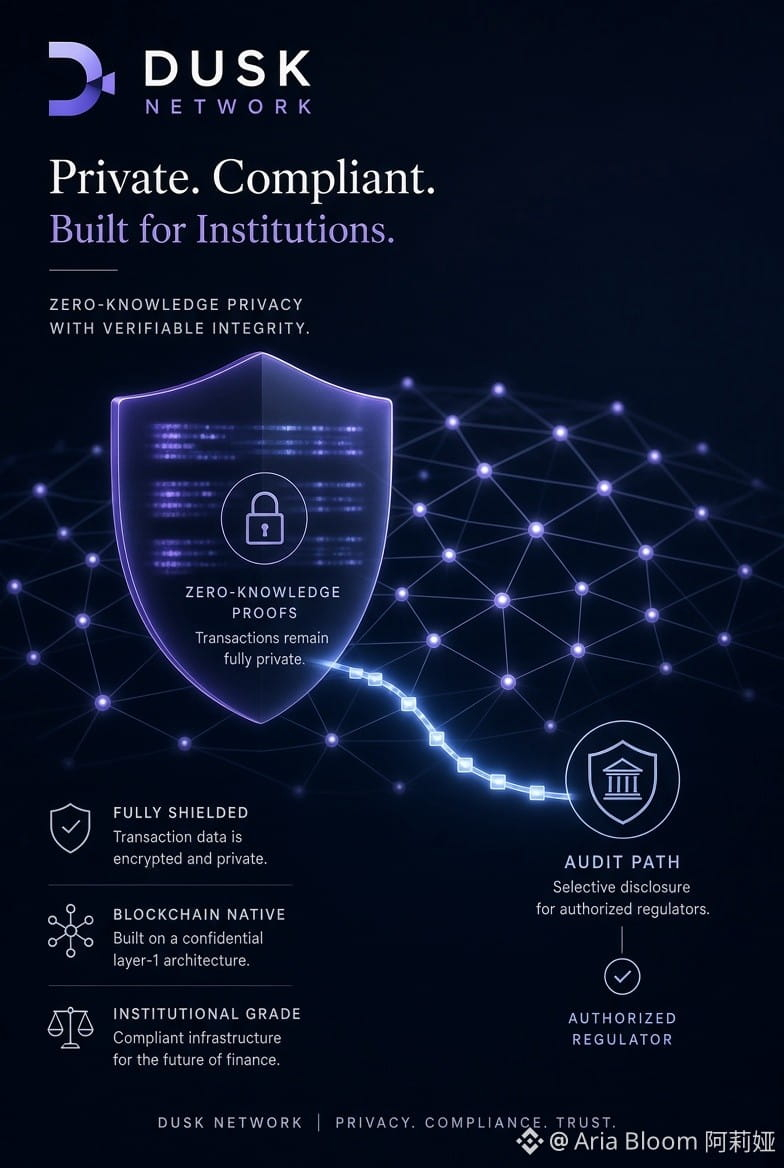
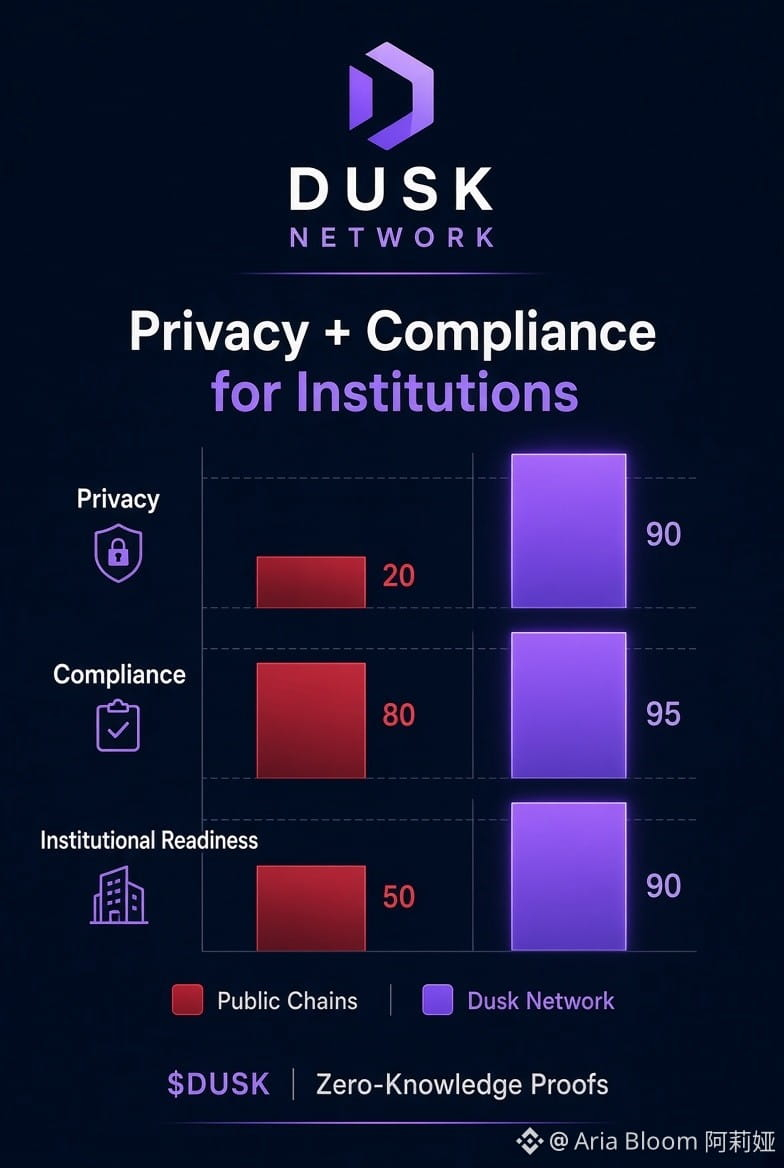
On most chains, every transaction is fully public amounts, parties, everything. Institutions hate this. They need privacy, yet regulators still demand full audit trails. It’s a hard conflict.
Dusk solves it cleanly. Their system separates transaction truth from transaction disclosure Using zero-knowledge proofs, the network can verify that a transaction is valid, rules were followed, and balances check out without revealing the actual details.
Only authorized parties and regulators can see the real data. Everyone else just sees confirmation that it’s legitimate.
That’s why Dusk is becoming a serious contender for real-world assets and regulated finance. Privacy and compliance finally work together.
For institutions, this removes a major barrier. Public chains no longer feel like such a risk.
They’re quietly building something that actually solves a real problem. Worth watching.
Dusk’s approach feels genuinely refreshing in crypto.
On most chains, every transaction is fully public amounts, parties, everything. Institutions hate this. They need privacy, yet regulators still demand full audit trails. It’s a hard conflict.
Dusk solves it cleanly. Their system separates transaction truth from transaction disclosure Using zero-knowledge proofs, the network can verify that a transaction is valid, rules were followed, and balances check out without revealing the actual details.
Only authorized parties and regulators can see the real data. Everyone else just sees confirmation that it’s legitimate.
That’s why Dusk is becoming a serious contender for real-world assets and regulated finance. Privacy and compliance finally work together.
For institutions, this removes a major barrier. Public chains no longer feel like such a risk.
They’re quietly building something that actually solves a real problem. Worth watching.
Night by the sea, soft lights, and a little peace in the air 🌊
Just me, the waves, and this quiet moment.
Ocean breeze, string lights, and a soft smile ✨
Sometimes the best nights are the quiet ones.
Sea, lights, aur thodi si sukoon 🌊
Bas yahi moment feel kar rahi hun.
Night vibes only 🌙🌊
Soft lights, soft smile.
Where the waves meet the lights and everything feels a little softer $DUSK #BTC
Just me, the waves, and this quiet moment.
Ocean breeze, string lights, and a soft smile ✨
Sometimes the best nights are the quiet ones.
Sea, lights, aur thodi si sukoon 🌊
Bas yahi moment feel kar rahi hun.
Night vibes only 🌙🌊
Soft lights, soft smile.
Where the waves meet the lights and everything feels a little softer $DUSK #BTC

Sometimes the best moments are the simplest ones ☕🌹✨
A peaceful moment, a warm cup of coffee, and a little beauty in the day. ❤️
$DUSK $BTC
A peaceful moment, a warm cup of coffee, and a little beauty in the day. ❤️
$DUSK $BTC

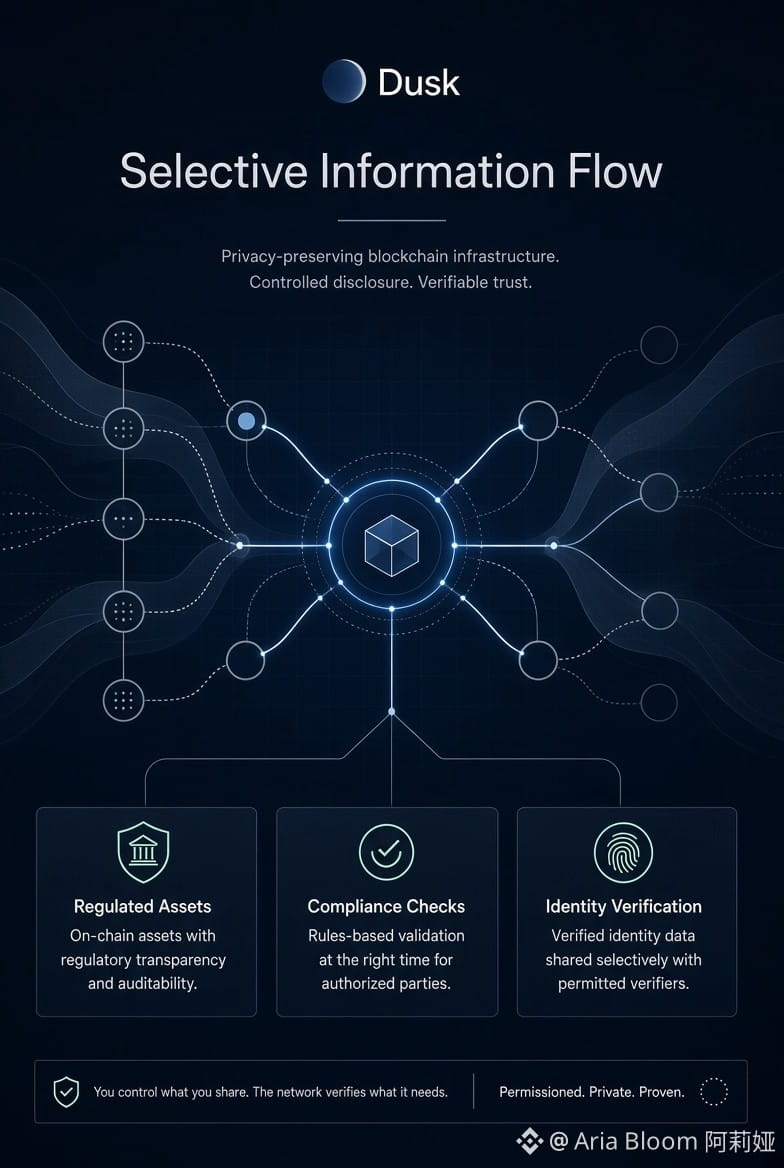
I’ve started thinking about Dusk’s privacy model less as hiding transactions and more as controlling how information moves.
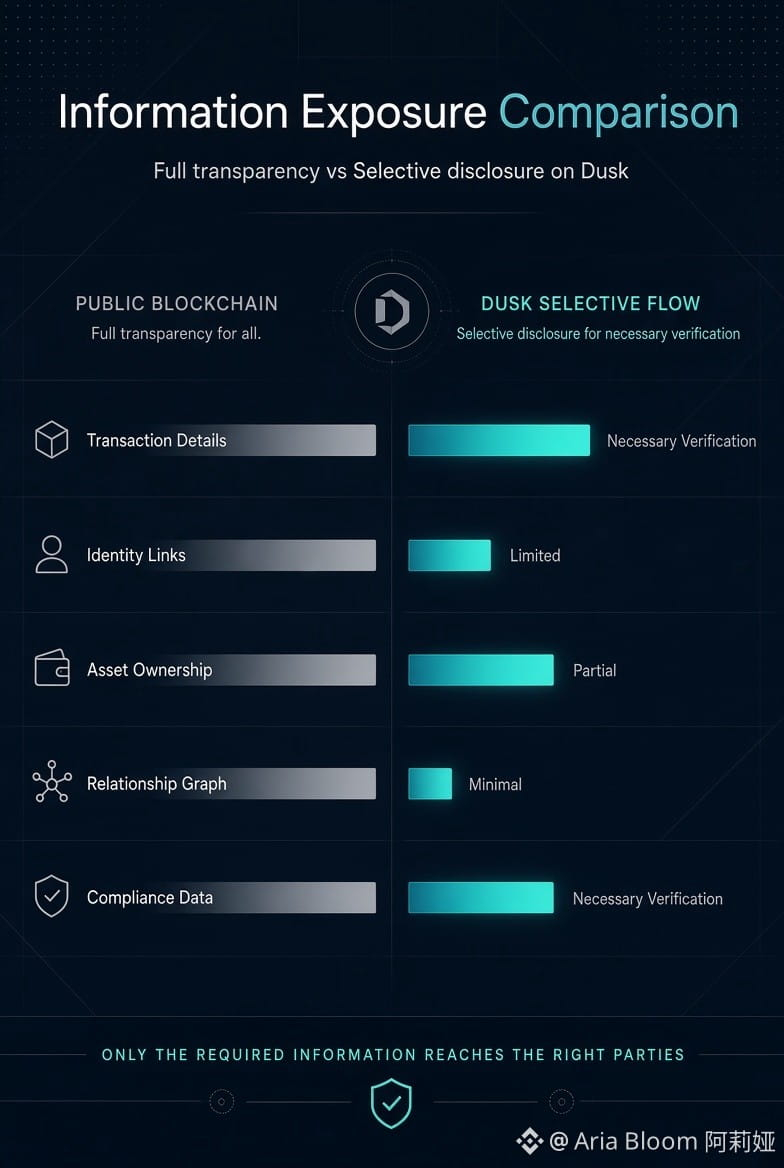
That distinction matters. On a public blockchain the problem isn’t only that data is visible. It’s that small pieces of visible information can be connected over time. A transaction an identity check, an asset transfer or a relationship between addresses can become part of a much larger picture.
What interests me about @Dusk is the idea that privacy can be designed around selective information flow instead. The goal isn’t necessarily to make everything invisible. It’s to let the network verify what actually needs to be verified without automatically exposing everything surrounding it.
That feels particularly important for regulated assets. Institutions may need to prove compliance, ownership, eligibility, or transaction validity, but that doesn’t mean every participant should receive the full underlying dataset.
The difficult part is getting the balance right. Too much transparency creates unnecessary exposure. Too much privacy can make verification and compliance harder.
For me, that’s where $DUSK becomes interesting. The real question isn’t simply whether a transaction is private. It’s who gets to learn what, when they learn it, and why that information is necessary.
That’s a much more useful way to think about blockchain privacy.
#dusk $DUSK @Dusk
That distinction matters. On a public blockchain the problem isn’t only that data is visible. It’s that small pieces of visible information can be connected over time. A transaction an identity check, an asset transfer or a relationship between addresses can become part of a much larger picture.
What interests me about @Dusk is the idea that privacy can be designed around selective information flow instead. The goal isn’t necessarily to make everything invisible. It’s to let the network verify what actually needs to be verified without automatically exposing everything surrounding it.
That feels particularly important for regulated assets. Institutions may need to prove compliance, ownership, eligibility, or transaction validity, but that doesn’t mean every participant should receive the full underlying dataset.
The difficult part is getting the balance right. Too much transparency creates unnecessary exposure. Too much privacy can make verification and compliance harder.
For me, that’s where $DUSK becomes interesting. The real question isn’t simply whether a transaction is private. It’s who gets to learn what, when they learn it, and why that information is necessary.
That’s a much more useful way to think about blockchain privacy.
#dusk $DUSK @Dusk
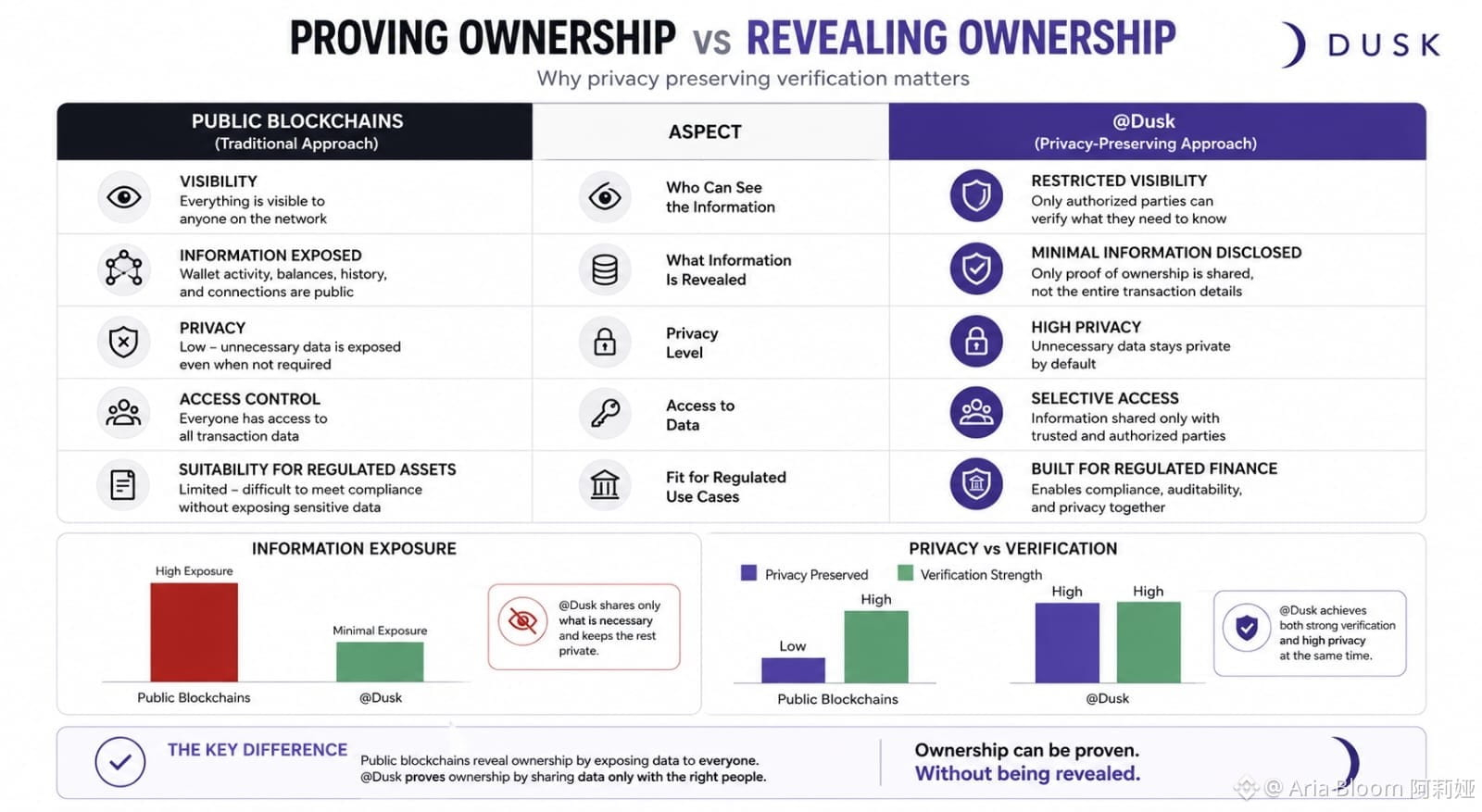
I think one of the biggest misconceptions in crypto is that ownership always has to be visible in order to be trusted.
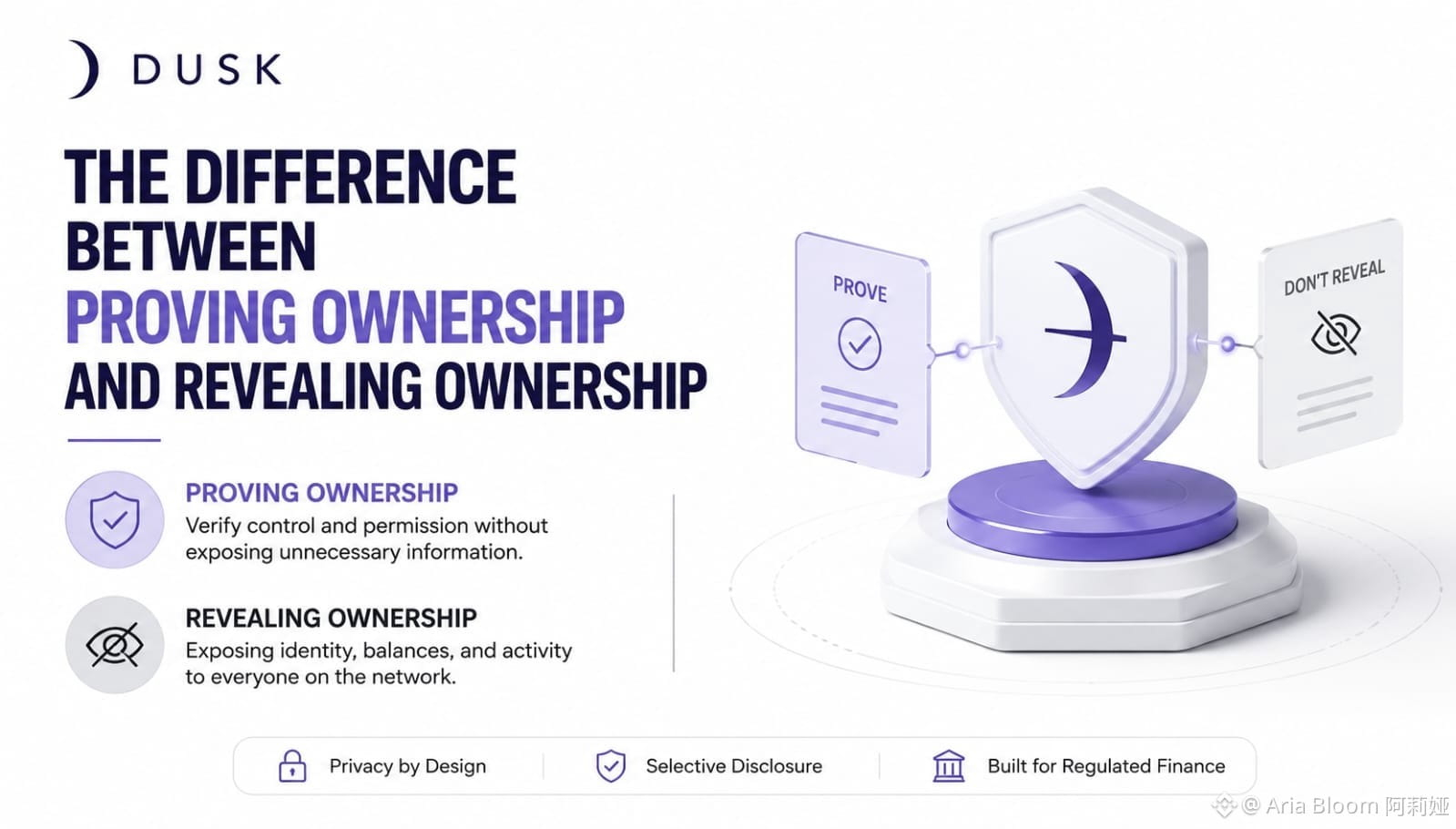
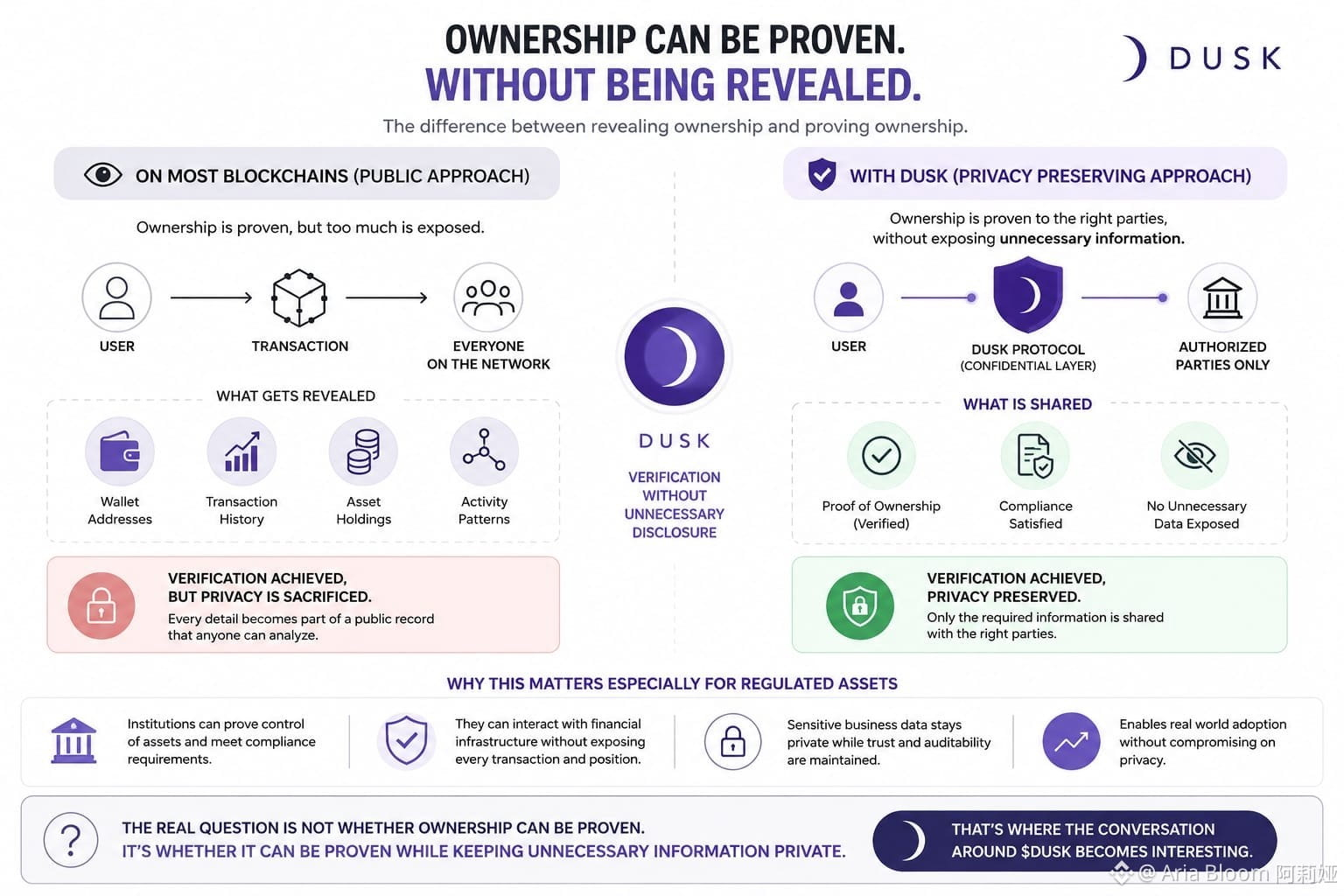
When someone proves ownership on most blockchains they often reveal much more than necessary. Wallet activity asset holdings and transaction history can become part of a public record that anyone can analyze. Verification is achieved but privacy is sacrificed along the way.
What caught my attention about @Dusk is the different approach. The goal is not to hide ownership from those who need to verify it. The goal is to allow verification without turning every detail into public information.
That distinction becomes more interesting when thinking about regulated assets. Businesses and institutions may need to prove control satisfy compliance requirements and interact with financial infrastructure but they may not want every movement and position exposed to the entire network.
To me the future question is not whether ownership can be proven. Blockchain already solved that. The more important question is whether ownership can be proven while keeping unnecessary information private.
That is where the conversation around becomes interesting.
#dusk $DUSK @Dusk
When someone proves ownership on most blockchains they often reveal much more than necessary. Wallet activity asset holdings and transaction history can become part of a public record that anyone can analyze. Verification is achieved but privacy is sacrificed along the way.
What caught my attention about @Dusk is the different approach. The goal is not to hide ownership from those who need to verify it. The goal is to allow verification without turning every detail into public information.
That distinction becomes more interesting when thinking about regulated assets. Businesses and institutions may need to prove control satisfy compliance requirements and interact with financial infrastructure but they may not want every movement and position exposed to the entire network.
To me the future question is not whether ownership can be proven. Blockchain already solved that. The more important question is whether ownership can be proven while keeping unnecessary information private.
That is where the conversation around becomes interesting.
#dusk $DUSK @Dusk
Verified
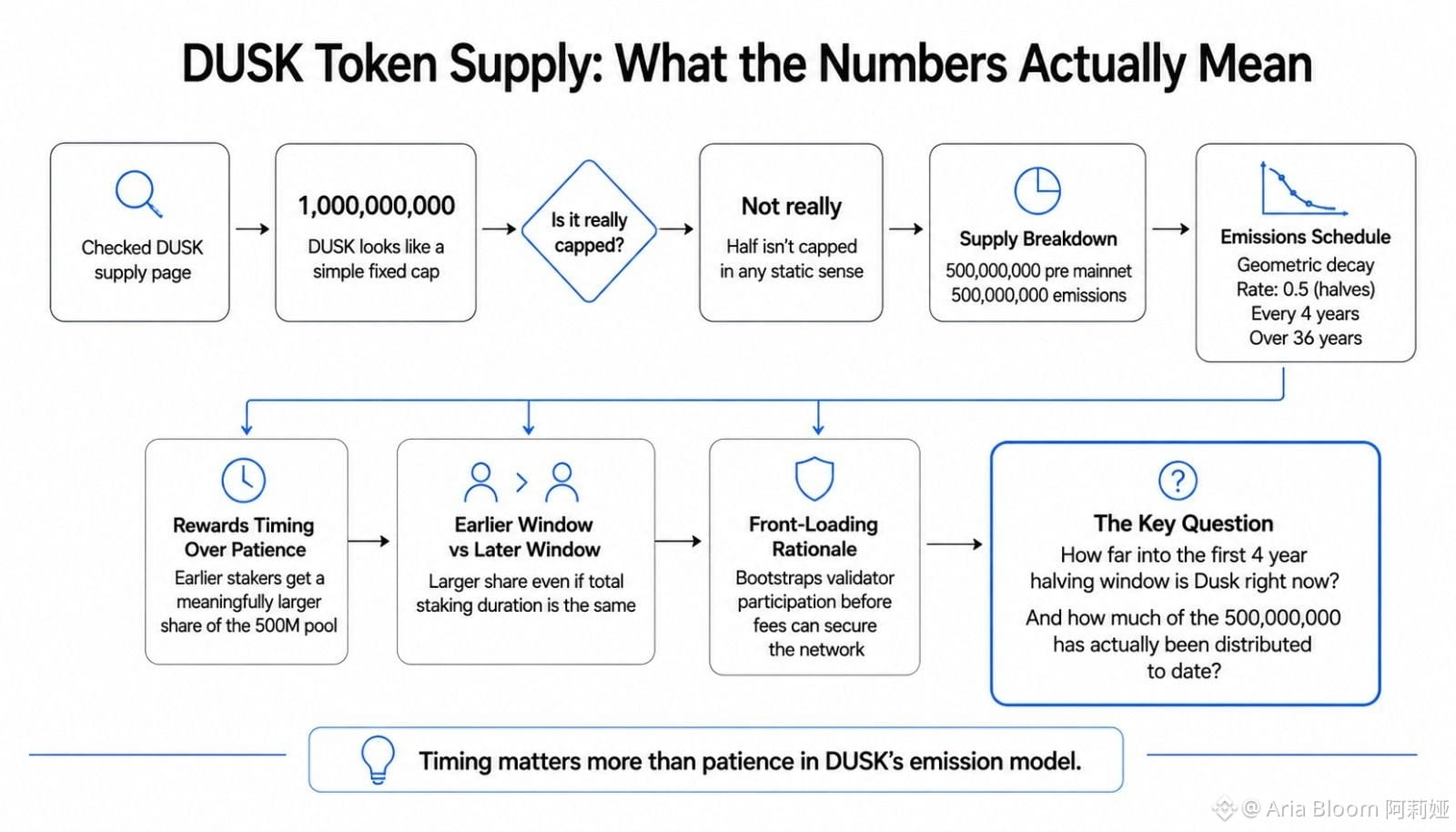
I checked DUSK's supply page expecting a simple fixed cap 1,000,000,000 DUSK looked like exactly that at first glance.
The figure alone is weak here since half of it isn't really capped in any static sense 500,000,000 DUSK already exists from the pre mainnet supply.The remaining 500,000,000 gets released through a geometric decay schedule with a reduction rate of 0.5.It halves every 4 years across a full 36 year emission window rather than arriving all at once.
That structure quietly rewards timing more than patience alone,a provisioner staking during an earlier 4 year window collects a meaningfully larger share of that 500,000,000 pool than one joining after several halvings have already passed.That holds even if both eventually stake for the same total number of years.
Front loading emissions this way is a reasonable design choicen it helps bootstrap validator participation before transaction fees alone could sustain network security.
Which raises a specific question nobody seems to track publicly how far into that first 4 year halving window is Dusk right now?And how much of the 500,000,000 has actually been distributed to date?
#dusk $DUSK @Dusk
The figure alone is weak here since half of it isn't really capped in any static sense 500,000,000 DUSK already exists from the pre mainnet supply.The remaining 500,000,000 gets released through a geometric decay schedule with a reduction rate of 0.5.It halves every 4 years across a full 36 year emission window rather than arriving all at once.
That structure quietly rewards timing more than patience alone,a provisioner staking during an earlier 4 year window collects a meaningfully larger share of that 500,000,000 pool than one joining after several halvings have already passed.That holds even if both eventually stake for the same total number of years.
Front loading emissions this way is a reasonable design choicen it helps bootstrap validator participation before transaction fees alone could sustain network security.
Which raises a specific question nobody seems to track publicly how far into that first 4 year halving window is Dusk right now?And how much of the 500,000,000 has actually been distributed to date?
#dusk $DUSK @Dusk
Log in to explore more content