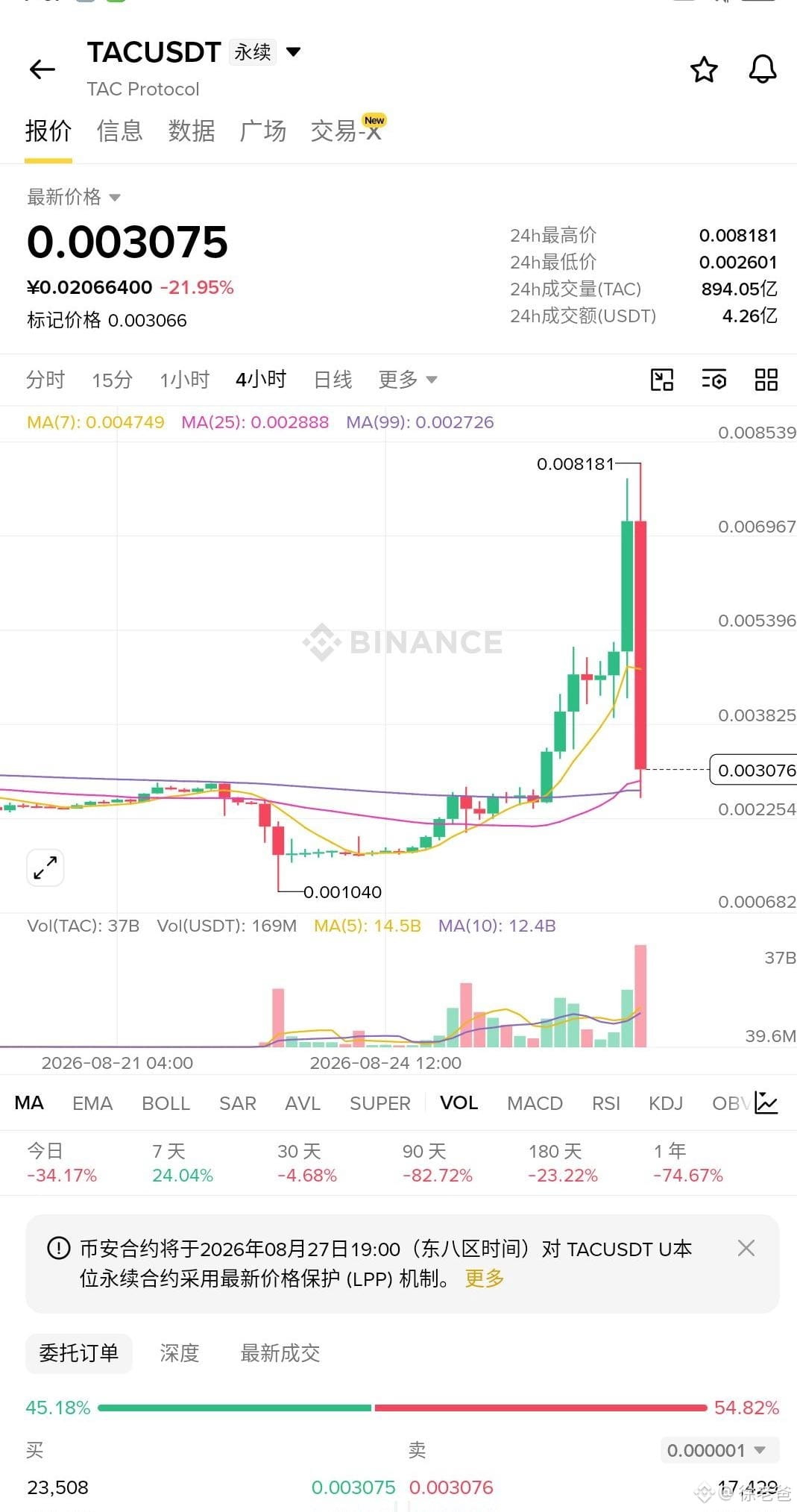
TAC surged from 0.00104 to 0.00818 at around 8:00 AM—an eightfold jump. After that move, a single four-hour candle collapsed straight down by 55%; the current price is now only 0.00302. The market looks like it has finished moving, but when you pull up the position data, the flavor is wrong: with prices collapsing like this, the open interest actually increased by 41.6% in one day—none of it was closed.
Most striking of all is that the funding rate hit -0.17485%, and the order book depth is negative. After the crash, the masses didn’t buy the dip; instead, they followed the panic to chase shorts, squeezing the shorts together into a line waiting to hand money to longs. This kind of funding rate is “short-squeeze fuel”: the thicker the pile of shorts, the harder the rebound.
The funding data also confirms it: contract count rose another 23.4% in 7 hours, yet the USD value shrank by 26.4%. As it fell, new positions kept being added. Whale accounts show longs at 64.6%—up 77% in 7 hours. Big players are picking up chips against the trend right in this muddy mess.
Of course, it isn’t clean: net inflow for spot large orders is zero. This move is driven by contract funding used to squeeze shorts—not genuine spot buyers using real money. The stance is clear: go long, and if you’re going up, first look at 0.0045, the platform before the crash. Set the stop loss at 0.0026 below.
When to flip to short? If it breaks 0.0026, it means this isn’t liquidation-style dumping—it’s real selling, and you should close all long positions and reverse to short. Or if whale long positioning turns downward and the funding rate turns positive—once the fuel is burned off, they leave the same way.
#tac $TAC
Most striking of all is that the funding rate hit -0.17485%, and the order book depth is negative. After the crash, the masses didn’t buy the dip; instead, they followed the panic to chase shorts, squeezing the shorts together into a line waiting to hand money to longs. This kind of funding rate is “short-squeeze fuel”: the thicker the pile of shorts, the harder the rebound.
The funding data also confirms it: contract count rose another 23.4% in 7 hours, yet the USD value shrank by 26.4%. As it fell, new positions kept being added. Whale accounts show longs at 64.6%—up 77% in 7 hours. Big players are picking up chips against the trend right in this muddy mess.
Of course, it isn’t clean: net inflow for spot large orders is zero. This move is driven by contract funding used to squeeze shorts—not genuine spot buyers using real money. The stance is clear: go long, and if you’re going up, first look at 0.0045, the platform before the crash. Set the stop loss at 0.0026 below.
When to flip to short? If it breaks 0.0026, it means this isn’t liquidation-style dumping—it’s real selling, and you should close all long positions and reverse to short. Or if whale long positioning turns downward and the funding rate turns positive—once the fuel is burned off, they leave the same way.
#tac $TAC