#韩国央行加息25基点至3%
Korea’s central bank raises rates by 25 bps to 3%: hawkish, but limited impact on Korean stocks
On August 27, the Bank of Korea raised the benchmark rate by 25 basis points from 2.75% to 3.00%, marking the second consecutive rate hike. Of the seven members, six voted for the hike and one for holding rates steady.
Why the rate hike?
The economy is clearly stronger than expected: The Bank of Korea raised its 2026 GDP growth forecast significantly from 2.6% to 3.3%, mainly driven by semiconductor exports and AI investment.
Inflation remains above target: The bank believes inflation will stay above the 2% target for a longer period and that it needs to curb the spread of inflation early.
Pressure from real estate and financial stability: Rising housing prices and risks to financial market stability are also key reasons for the consecutive hikes.
Market impact
1. Korean won (KRW): Positive 🇰🇷
The rate hike increases the yield on won-denominated assets, which is theoretically supportive for the KRW. However, if the Federal Reserve later shifts toward easing, the interest-rate advantage for the KRW could widen further.
2. KOSPI: Slightly bearish in the short term, but not necessarily a big drop
The hike itself suppresses valuations and financing demand. But behind this decision, semiconductor exports and AI demand are exceptionally strong. Today, the KOSPI actually rose by about 1%, suggesting the market is focusing more on Nvidia’s strong performance and the Korean chip cycle, rather than the rate hike alone.
3. Samsung and SK Hynix: Mixed effects
Higher rates are unfavorable for valuations, but strong demand for AI servers, HBM, and memory chips may offset some of the negative factors. Therefore, for now, the key variables for Korea’s semiconductor stocks remain AI capex + HBM pricing + semiconductor export growth.
---------------
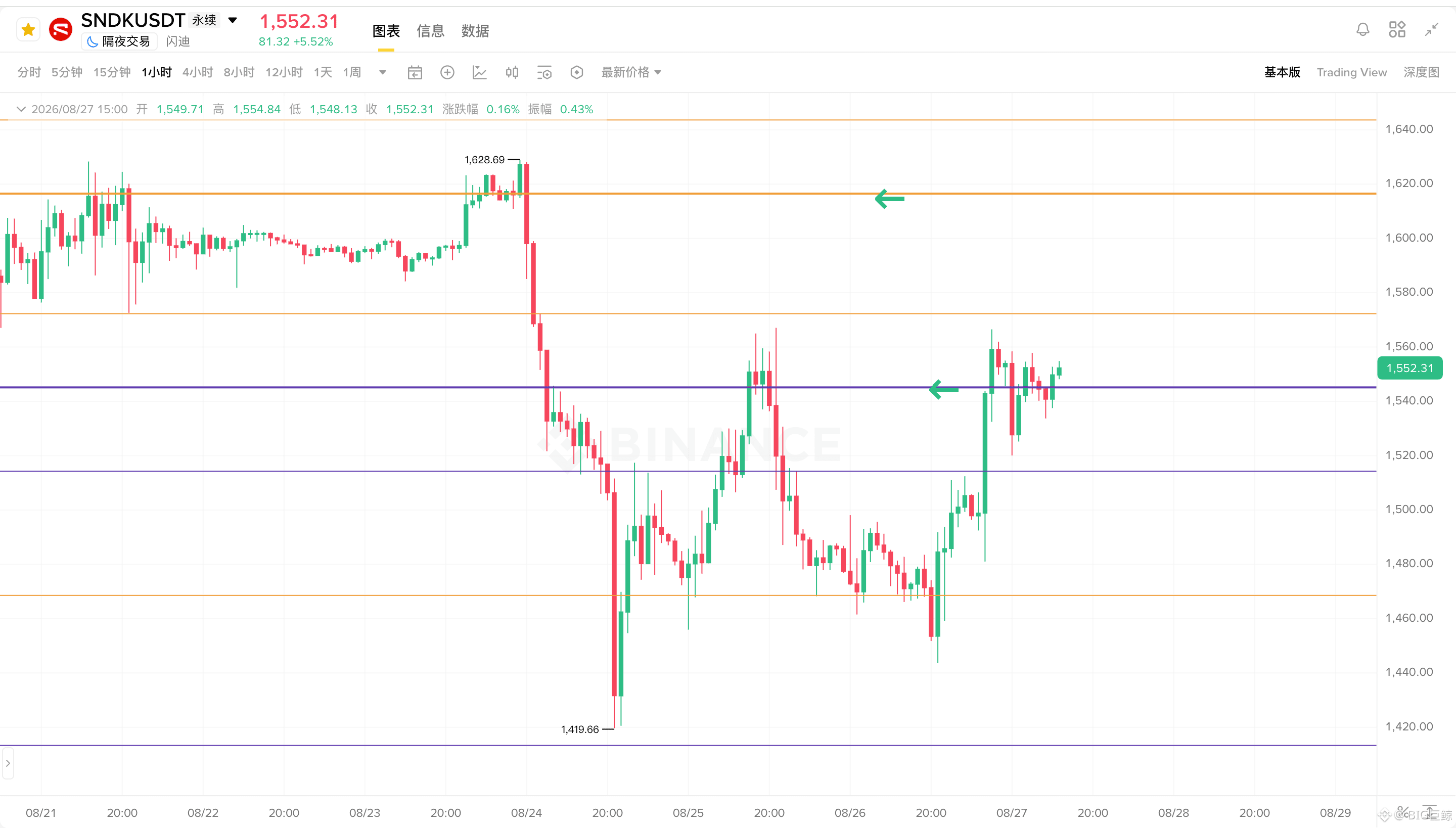
$SNDK Trading strategy
After 1,545 stabilizes, go long
Stop loss: 1,526
Target: around 1,615, reduce position or take profit
【👇👇Click below to trade👇👇】🚀🚀🚀🎉🎉🎉🎉🎉
Korea’s central bank raises rates by 25 bps to 3%: hawkish, but limited impact on Korean stocks
On August 27, the Bank of Korea raised the benchmark rate by 25 basis points from 2.75% to 3.00%, marking the second consecutive rate hike. Of the seven members, six voted for the hike and one for holding rates steady.
Why the rate hike?
The economy is clearly stronger than expected: The Bank of Korea raised its 2026 GDP growth forecast significantly from 2.6% to 3.3%, mainly driven by semiconductor exports and AI investment.
Inflation remains above target: The bank believes inflation will stay above the 2% target for a longer period and that it needs to curb the spread of inflation early.
Pressure from real estate and financial stability: Rising housing prices and risks to financial market stability are also key reasons for the consecutive hikes.
Market impact
1. Korean won (KRW): Positive 🇰🇷
The rate hike increases the yield on won-denominated assets, which is theoretically supportive for the KRW. However, if the Federal Reserve later shifts toward easing, the interest-rate advantage for the KRW could widen further.
2. KOSPI: Slightly bearish in the short term, but not necessarily a big drop
The hike itself suppresses valuations and financing demand. But behind this decision, semiconductor exports and AI demand are exceptionally strong. Today, the KOSPI actually rose by about 1%, suggesting the market is focusing more on Nvidia’s strong performance and the Korean chip cycle, rather than the rate hike alone.
3. Samsung and SK Hynix: Mixed effects
Higher rates are unfavorable for valuations, but strong demand for AI servers, HBM, and memory chips may offset some of the negative factors. Therefore, for now, the key variables for Korea’s semiconductor stocks remain AI capex + HBM pricing + semiconductor export growth.
---------------
$SNDK Trading strategy
After 1,545 stabilizes, go long
Stop loss: 1,526
Target: around 1,615, reduce position or take profit
【👇👇Click below to trade👇👇】🚀🚀🚀🎉🎉🎉🎉🎉