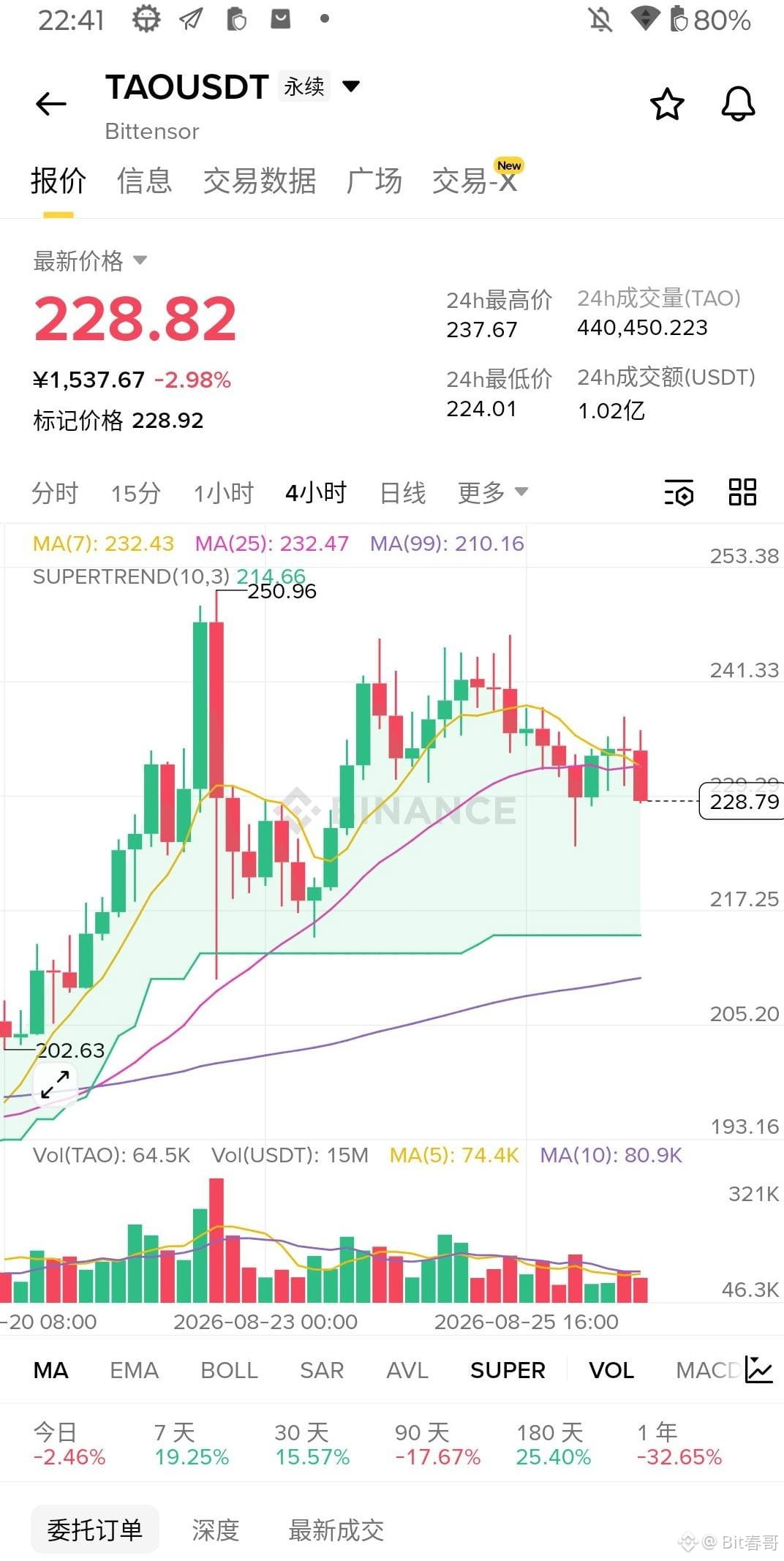
TAO jumped 20% over seven days, rising steadily from 188 to 250, then in the next 24 hours it fell back to 229, with the futures contract down nearly 5% in a single day. Falling isn’t unusual—but what’s strange is how it fell: open interest was cut by 6.8% in one day, the chart was instantly marked as a bearish “capitulation,” and in the spot market there were 12 K-bars within three hours with not a single one showing net inflow.
This rally ran out of steam at 250; the four-hour timeframe even reads like it’s “exhausting.” In the futures market, sell orders pushed in ahead of buys, and in the spot market, large orders were net outflow for nearly five K-bars—about 14.6k. Money was withdrawing, positions were being closed, and the direction was clean and decisive—price broke below both the 20- and 50-day moving averages on trend, leaving no decent support behind.
In the whole room, only one kind of force is still holding on: whales. The big players’ positions account for 80.8% on the long side; over another seven hours they even added nearly 5%, and leverage borrowed over a 12-hour span surged 26.5%. But this persistence looks more like trapped positions than a true bottom—funds are already running while price sinks below the moving averages; the heavier the long positions, the more they turn into a larger source of sell pressure once support breaks.
So I’m on the side of the capital flow now: I’m going short. First look for the 24-hour low at 224—only if it breaks below that is it a real breakdown. When will it reverse? When price reclaims 233 (above the 20/50 moving averages) and the spot market’s net inflow from big orders flips from negative to positive, showing that the whales truly caught it—then this short trade must exit and admit being wrong. #tao $TAO
This rally ran out of steam at 250; the four-hour timeframe even reads like it’s “exhausting.” In the futures market, sell orders pushed in ahead of buys, and in the spot market, large orders were net outflow for nearly five K-bars—about 14.6k. Money was withdrawing, positions were being closed, and the direction was clean and decisive—price broke below both the 20- and 50-day moving averages on trend, leaving no decent support behind.
In the whole room, only one kind of force is still holding on: whales. The big players’ positions account for 80.8% on the long side; over another seven hours they even added nearly 5%, and leverage borrowed over a 12-hour span surged 26.5%. But this persistence looks more like trapped positions than a true bottom—funds are already running while price sinks below the moving averages; the heavier the long positions, the more they turn into a larger source of sell pressure once support breaks.
So I’m on the side of the capital flow now: I’m going short. First look for the 24-hour low at 224—only if it breaks below that is it a real breakdown. When will it reverse? When price reclaims 233 (above the 20/50 moving averages) and the spot market’s net inflow from big orders flips from negative to positive, showing that the whales truly caught it—then this short trade must exit and admit being wrong. #tao $TAO