I've started paying attention to something I used to ignore.
The best financial infrastructure often looks... uneventful.
No headlines.
No dramatic moments.
No obvious signs that anything extraordinary happened.
At first, I thought that meant nothing interesting was taking place.
Now I think it usually means the infrastructure is doing its job.
That perspective changed the way I evaluate projects like DUSK.
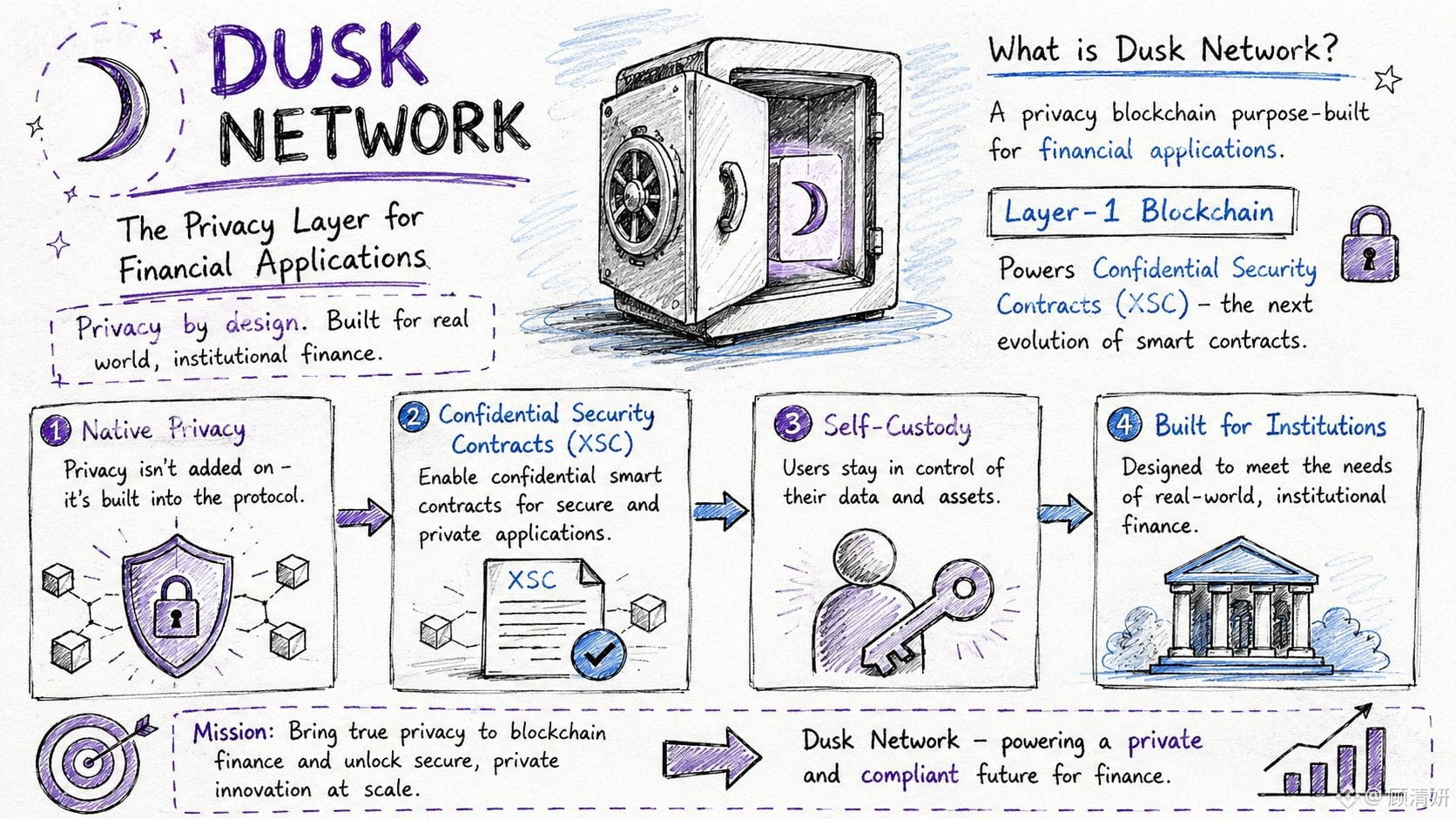
The more I explored Confidential Security Contracts (XSC), the less I focused on what they enable.
Instead, I started thinking about what they help prevent.
Unnecessary exposure.
Repeated operational friction.
Unclear access to sensitive financial information.
Those aren't the kinds of problems that generate excitement on social media.
But they're exactly the kinds of problems institutions spend years trying to reduce.
I've realized that mature financial systems rarely create value through constant disruption.
They create value by making important processes feel predictable enough that people stop noticing them.
For me, that's one of the most interesting aspects of DUSK.
Its long-term success won't be measured only by what happens on-chain.
It may also be measured by the operational problems that quietly stop happening because the infrastructure was designed with regulated markets in mind.
Honestly, I think that's a much deeper way to judge financial technology.
@Dusk $DUSK #dusk
The best financial infrastructure often looks... uneventful.
No headlines.
No dramatic moments.
No obvious signs that anything extraordinary happened.
At first, I thought that meant nothing interesting was taking place.
Now I think it usually means the infrastructure is doing its job.
That perspective changed the way I evaluate projects like DUSK.
The more I explored Confidential Security Contracts (XSC), the less I focused on what they enable.
Instead, I started thinking about what they help prevent.
Unnecessary exposure.
Repeated operational friction.
Unclear access to sensitive financial information.
Those aren't the kinds of problems that generate excitement on social media.
But they're exactly the kinds of problems institutions spend years trying to reduce.
I've realized that mature financial systems rarely create value through constant disruption.
They create value by making important processes feel predictable enough that people stop noticing them.
For me, that's one of the most interesting aspects of DUSK.
Its long-term success won't be measured only by what happens on-chain.
It may also be measured by the operational problems that quietly stop happening because the infrastructure was designed with regulated markets in mind.
Honestly, I think that's a much deeper way to judge financial technology.
@Dusk $DUSK #dusk