
Aria Bloom 阿莉娅
481 Posts

Aria Bloom 阿莉娅
Aria Bloom | Learning, growing, and exploring crypto with patience and purpose. Every step is progress 💞
Open Trade
High-Frequency Trader
1.5 Years
300 Following
7.6K+ Followers
3.0K+ Liked
Posts
Portfolio
All
Quotes
Live
PINNED
Night by the sea, soft lights, and a little peace in the air 🌊
Just me, the waves, and this quiet moment.
Ocean breeze, string lights, and a soft smile ✨
Sometimes the best nights are the quiet ones.
Sea, lights, aur thodi si sukoon 🌊
Bas yahi moment feel kar rahi hun.
Night vibes only 🌙🌊
Soft lights, soft smile.
Where the waves meet the lights and everything feels a little softer $DUSK #BTC
Just me, the waves, and this quiet moment.
Ocean breeze, string lights, and a soft smile ✨
Sometimes the best nights are the quiet ones.
Sea, lights, aur thodi si sukoon 🌊
Bas yahi moment feel kar rahi hun.
Night vibes only 🌙🌊
Soft lights, soft smile.
Where the waves meet the lights and everything feels a little softer $DUSK #BTC

😍

AYESHA ABID 阿伊莎 阿比德
·
--
🎁 SOL Red Packet is here! Claim your reward before it’s gone.

😍

Sam G 19
·
--
..Red 🧧
🧧 Packet. .
..Claim 🧧
🧧 Packet. .
..Claim 🧧

😍


Elena神话MUA
·
--
#MUA
Your good and bad are determined in other people’s eyes,
and it only has to do with their interests.$BTC
If you fit what they want, they praise and compliment you;
if you don’t, they belittle you, slander you.
Other people’s approval is the cheapest kind of chain,$BNB
So you only need to protect your own feelings and interests;
as for other people’s feelings and interests, they will fight for them themselves.$ETH
Your good and bad are determined in other people’s eyes,
and it only has to do with their interests.$BTC
If you fit what they want, they praise and compliment you;
if you don’t, they belittle you, slander you.
Other people’s approval is the cheapest kind of chain,$BNB
So you only need to protect your own feelings and interests;
as for other people’s feelings and interests, they will fight for them themselves.$ETH
😍

Ahli Hidaya Doka hy Sab Kuch
·
--
Bullish🔥 BlackRock Hits Massive Milestone: $5B in Tax-Deferred Bitcoin-to-ETF Swaps!
Institutional adoption is shifting into hyper-drive! 🚀 According to Bloomberg reports, BlackRock has successfully executed over $5 billion in tax-deferred Bitcoin-to-ETF (IBIT) swaps.
Here is why this is a massive deal for the crypto market:
Tax-Deferred Advantage: Instead of selling Bitcoin for cash (which triggers capital gains tax), eligible institutions can transfer spot BTC directly into ETF shares, deferring taxes and carrying over their original cost basis.
Lower Barrier to Entry: BlackRock’s Head of Digital Assets, Robbie Mitchnick, highlighted that the firm is expanding market access, with swap minimums starting as low as $1 million (significantly down from earlier higher thresholds).
Bridging TradFi & Crypto: This seamless "in-kind" infrastructure allows major funds, family offices, and corporate treasuries to move heavy capital into regulated wrappers without friction.
As traditional finance giants continue to build smoother on-ramps, the pipeline between spot Bitcoin and institutional ETFs keeps getting stronger.
What do you think? Will this trigger the next wave of massive institutional inflows? Let's discuss in the comments! 👇
#Bitcoin #BlackRock #CryptoNews #InstitutionalCrypto #ETFs #BinanceSquare$BTC $USDC
#DYOR🟢.
Institutional adoption is shifting into hyper-drive! 🚀 According to Bloomberg reports, BlackRock has successfully executed over $5 billion in tax-deferred Bitcoin-to-ETF (IBIT) swaps.
Here is why this is a massive deal for the crypto market:
Tax-Deferred Advantage: Instead of selling Bitcoin for cash (which triggers capital gains tax), eligible institutions can transfer spot BTC directly into ETF shares, deferring taxes and carrying over their original cost basis.
Lower Barrier to Entry: BlackRock’s Head of Digital Assets, Robbie Mitchnick, highlighted that the firm is expanding market access, with swap minimums starting as low as $1 million (significantly down from earlier higher thresholds).
Bridging TradFi & Crypto: This seamless "in-kind" infrastructure allows major funds, family offices, and corporate treasuries to move heavy capital into regulated wrappers without friction.
As traditional finance giants continue to build smoother on-ramps, the pipeline between spot Bitcoin and institutional ETFs keeps getting stronger.
What do you think? Will this trigger the next wave of massive institutional inflows? Let's discuss in the comments! 👇
#Bitcoin #BlackRock #CryptoNews #InstitutionalCrypto #ETFs #BinanceSquare$BTC $USDC
#DYOR🟢.


😍

阿波罗1111
·
--
What you fail to cherish is what you will hardly obtain for the rest of your life.
Opportunities vanish in a flash. For most people, once you miss LUCiC, you will never encounter it again.
What you fail to cherish is what you will hardly obtain for the rest of your life.
Opportunities vanish in a flash. For most people, once you miss LUCiC, you will never encounter it again.
Opportunities vanish in a flash. For most people, once you miss LUCiC, you will never encounter it again.
What you fail to cherish is what you will hardly obtain for the rest of your life.
Opportunities vanish in a flash. For most people, once you miss LUCiC, you will never encounter it again.

😍

Suadagar Ali
·
--
#BTC BNB ETH$
Best coin🥀🌹🥀
Follow 👍like and
Comments
Best coin🥀🌹🥀
Follow 👍like and
Comments
😍
Bilverse
·
--
🧧 EXCLUSIVE ETH GIVEAWAY IS LIVE! 🧧
I’m giving back to the community! Want a piece of the pie? Here is your chance to claim your share of Ethereum.
How to Enter:
1. 💬 Comment "ETH" below
2. 🔄 Share this post to spread the word.
3. 🔔 Follow @Bilverse for future drops and giveaways.
⚡ Limited slots available—first come, first served!
Click here to DOUBLE your Rewards! 🧧🚀
Drop your comments now! 👇
#ETH #RedPacketMission #Bilverse #CryptoCommunity
I’m giving back to the community! Want a piece of the pie? Here is your chance to claim your share of Ethereum.
How to Enter:
1. 💬 Comment "ETH" below
2. 🔄 Share this post to spread the word.
3. 🔔 Follow @Bilverse for future drops and giveaways.
⚡ Limited slots available—first come, first served!
Click here to DOUBLE your Rewards! 🧧🚀
Drop your comments now! 👇
#ETH #RedPacketMission #Bilverse #CryptoCommunity

😍

远方1688 BNB
·
--
The market takes turns to stage joys and sorrows—some ride the waves and reap surprises, while others miss out and quietly regret. Markets rise and fall; there’s no need to chase hot trends blindly and impulsively—preserving your principal is the foundation. Keep a good mindset and wait calmly for the opportunity that belongs to you. Wishing everyone’s current holdings keep climbing steadily, and that you handle gains and losses with composure, with rewards at every step 🧧

😍

Sonu7856
·
--
Ethereum (ETH) is one of the most important cryptocurrencies because it powers smart contracts and decentralized applications (dApps). Unlike digital currencies used only for payments, Ethereum enables developers to build DeFi platforms, NFTs, blockchain games, and other innovative services. ETH is also used to pay network transaction fees and secure the blockchain through staking, making it a key part of the growing Web3 ecosystem.
#ClaimYourReward #claimRedPacket #Ethereum #BinanceSquareFamily
#ClaimYourReward #claimRedPacket #Ethereum #BinanceSquareFamily
😍

奕澤YiiiiiZze
·
--
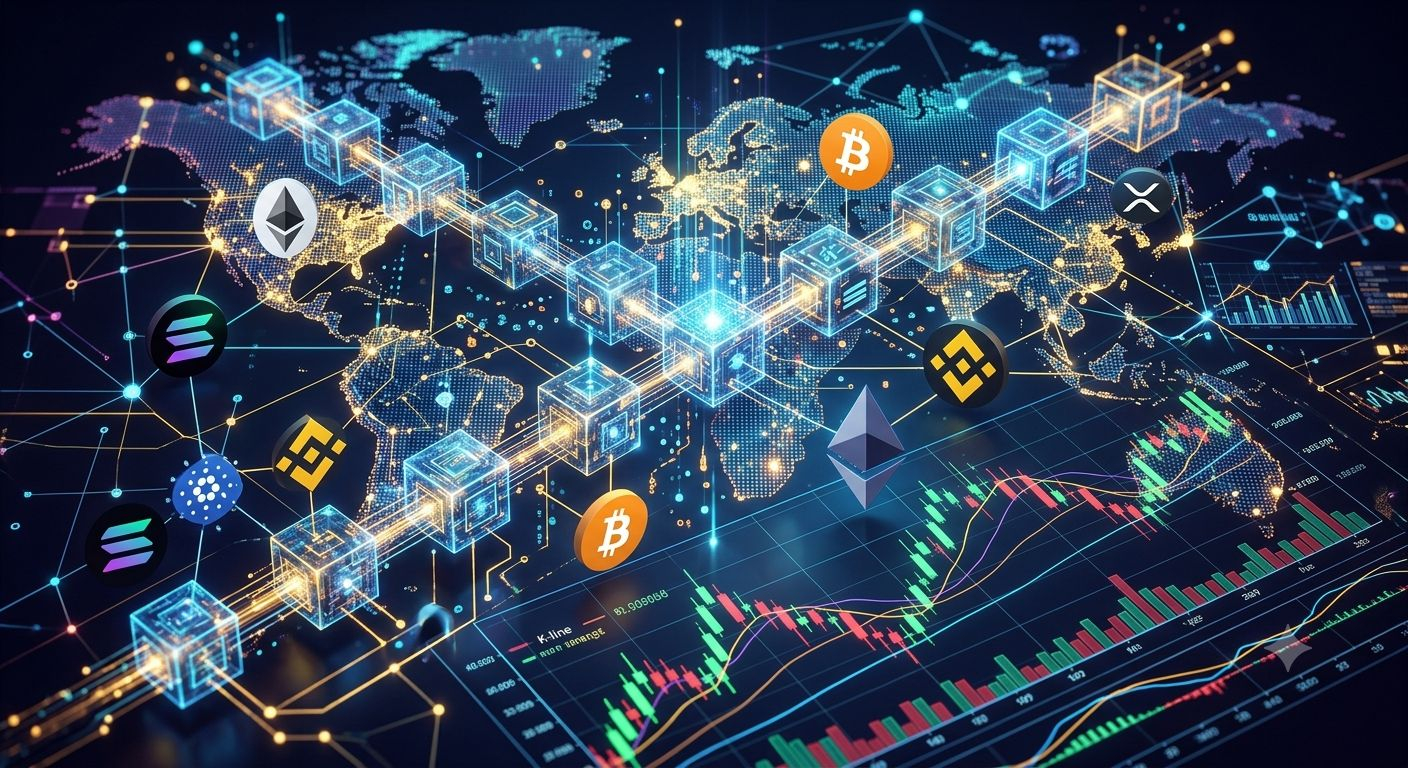
BTC successfully broke through the $80,000 mark, setting a new high in nearly three months. This strong rebound is mainly driven by improvements in the macro environment—especially the market reaction triggered by the U.S. Treasury increasing its bond buyback efforts. At the same time, spot ETFs also saw a long-awaited return to large-scale net inflows. This “violent” short squeeze not only liquidated tens of billions of dollars worth of leveraged positions, but also reignited long-term optimism toward crypto assets in the market. Whether the bulls can hold this key level is something to watch closely in the next phase!
Follow& like& share to get SOL🎁🎁🎁
Follow& like& share to get SOL🎁🎁🎁
😍
king Gulfam
·
--
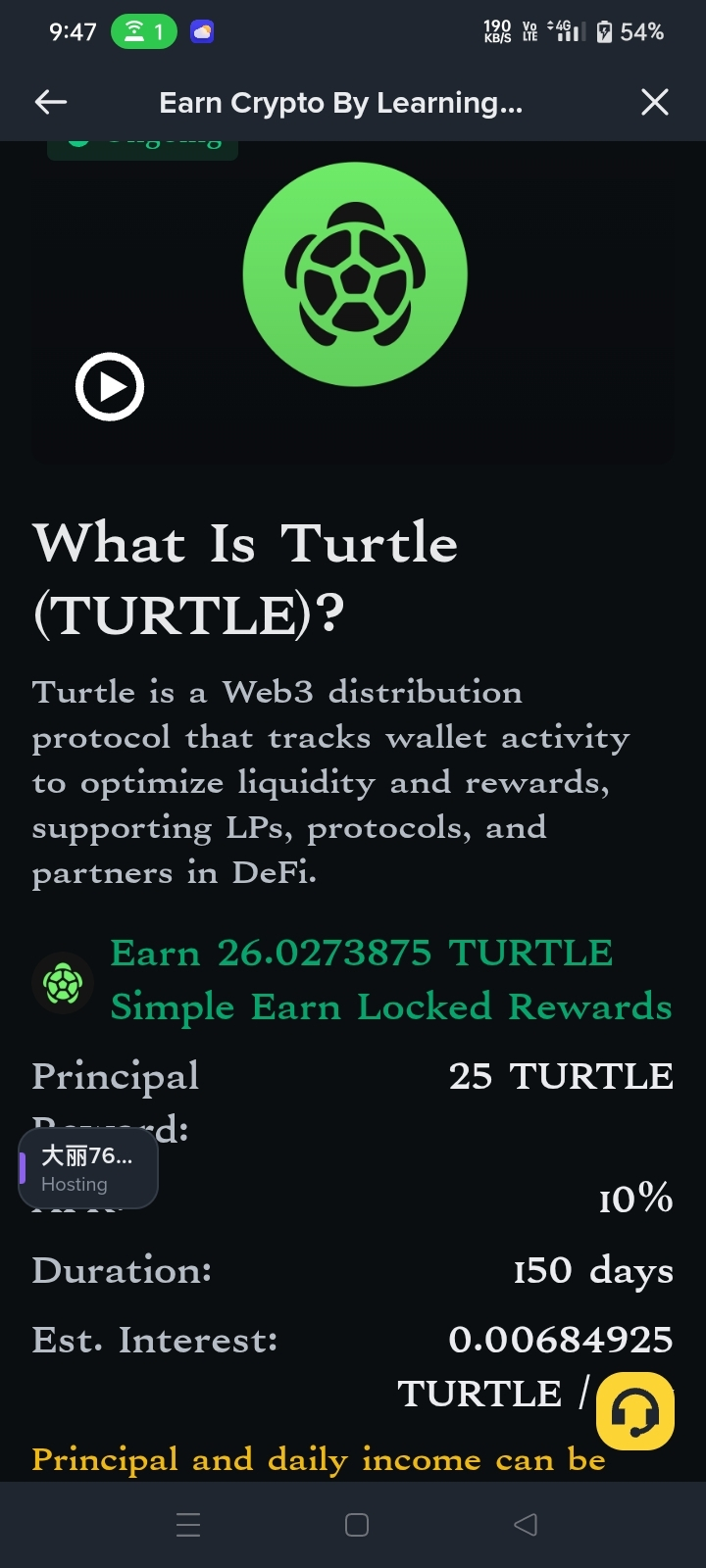
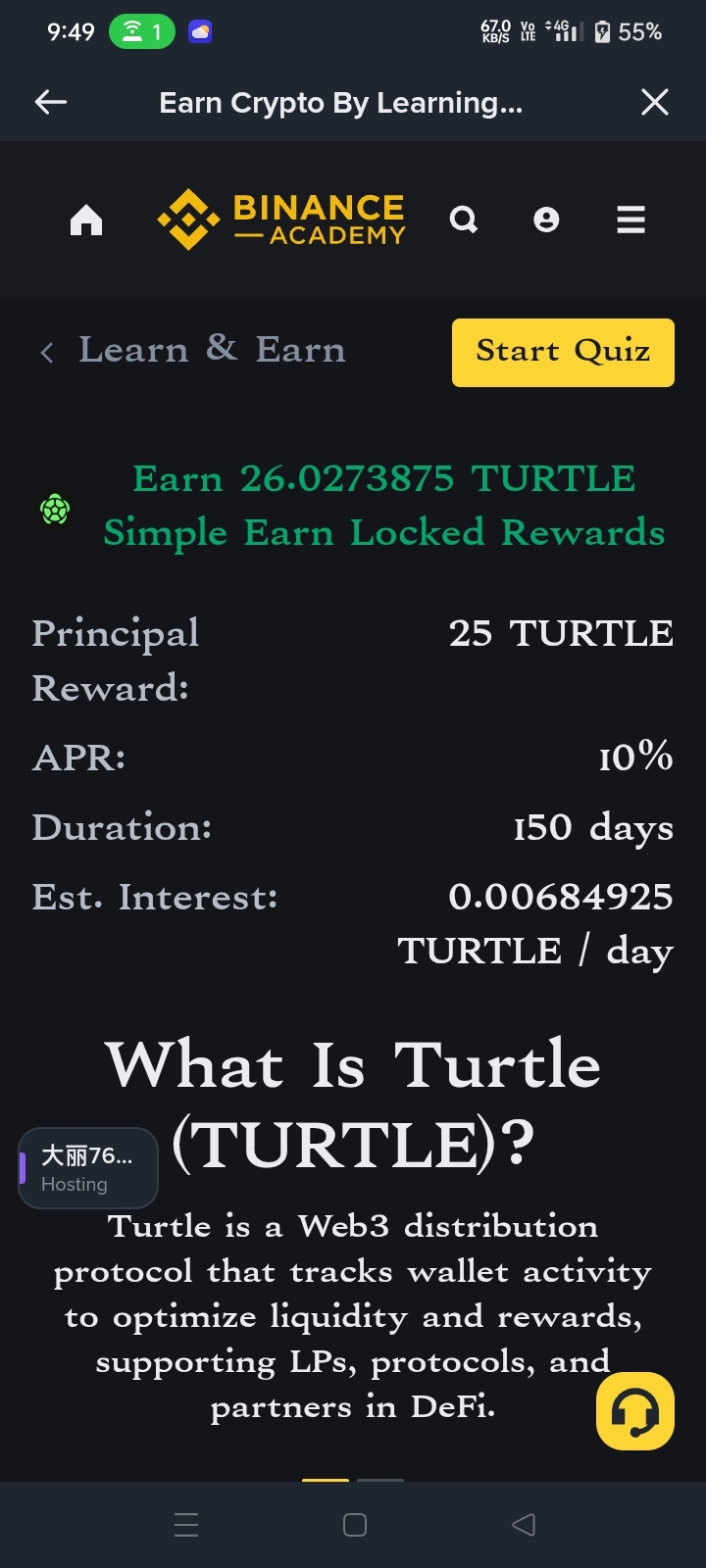
LAREN AND EARN
Earn free crypto through learning
👉🏻Build your blockchain knowledge, complete quizzes, and earn free crypto.
$SPK
$TURBO
$TURTLE
Earn free crypto through learning
👉🏻Build your blockchain knowledge, complete quizzes, and earn free crypto.
$SPK
$TURBO
$TURTLE
😍

NAJAF_加密 143
·
--
BNB is showing strong momentum as the broader crypto market turns bullish. BNB recently climbed to around $670, gaining more than 10% over just a few days. Bitcoin’s strong weekly rally and improving market sentiment are also supporting altcoins. BNB’s utility across the Binance ecosystem remains a key fundamental strength. The market still carries volatility, so traders should watch resistance near recent highs and manage risk carefully.
#BNB #Binance #Crypto #BNBChain #Bitcoin
#BNB #Binance #Crypto #BNBChain #Bitcoin

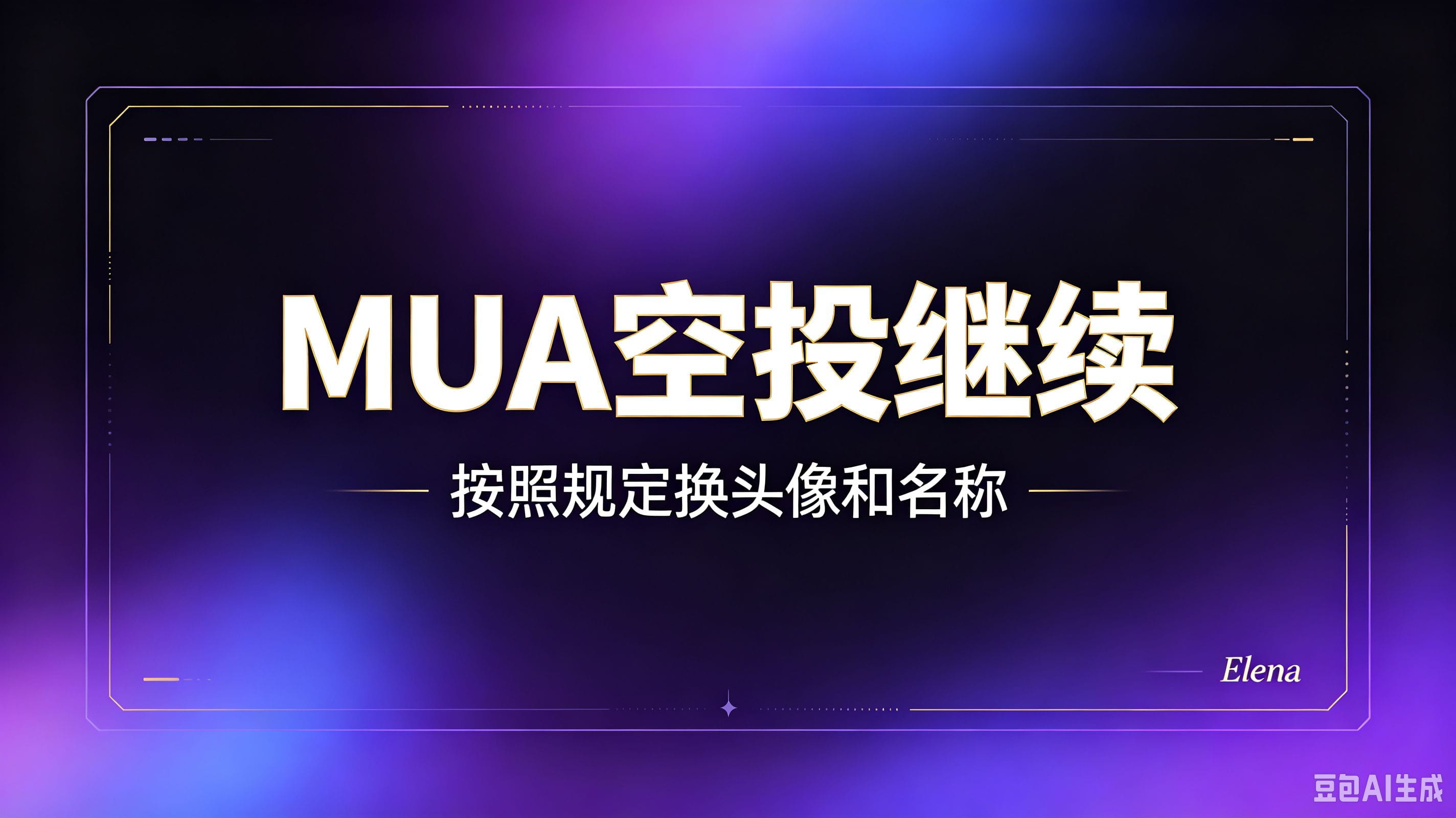
🎙️ Mythology MUA airdrop continues—let’s also talk about the new ecosystem
End
03 h 57 m 59 s
2.5k
16
😍

圣克斯Lucky1688
·
--
🧧🧧🧧🌹🧧🧧🧧Solana on-chain real-world asset (RWA) holders have exceeded 300,000, while the network’s total value locked (TVL) in DeFi has risen to $10.7 billion. Follow me and take the $SOL red packet! There’s nothing to worry about this time—the direct answer is 1!🧧🧧🧧🌹🧧🧧🧧

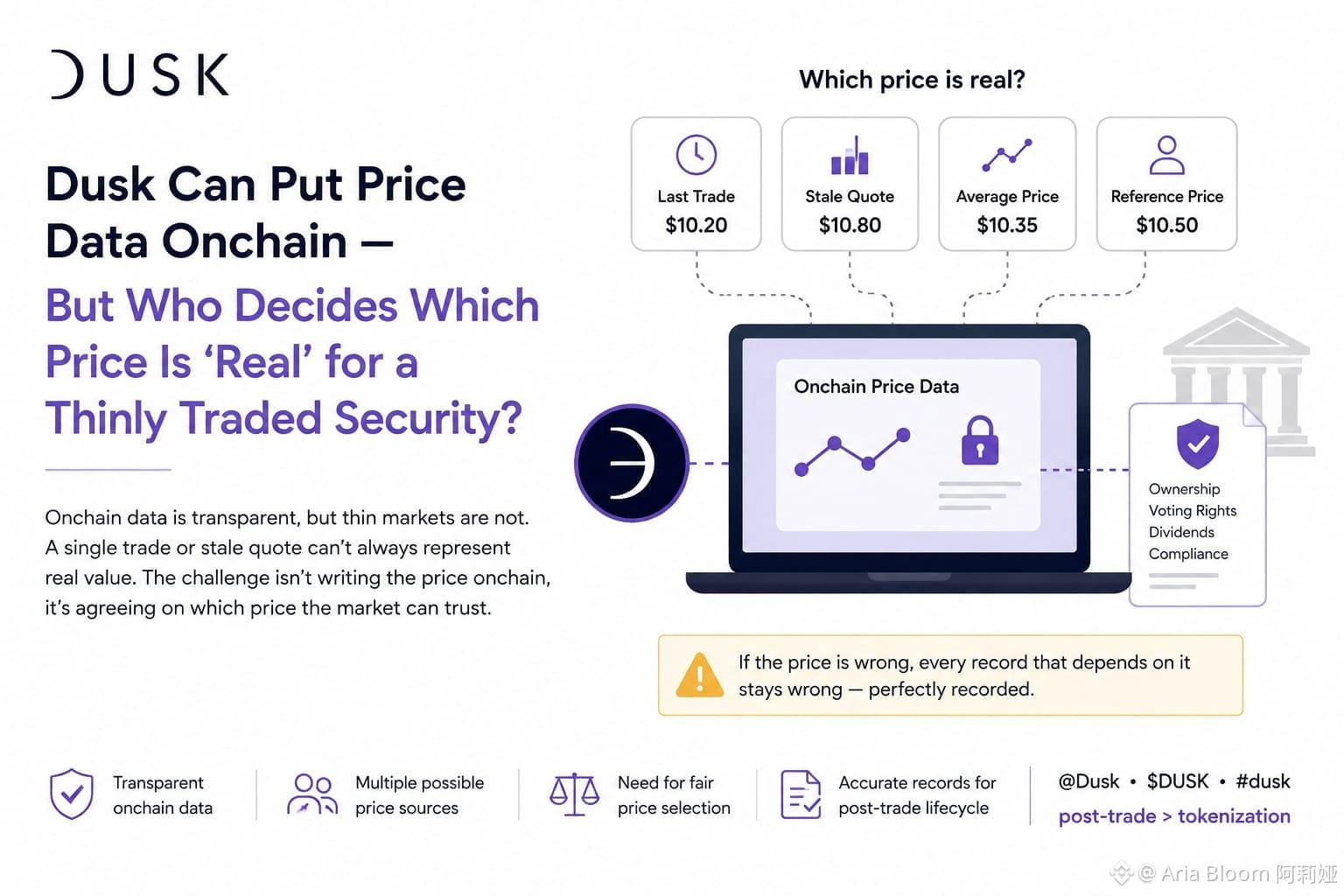
I’ve been thinking about Dusk’s onchain price data a bit differently lately. Putting a price onchain sounds straightforward until I imagine a security that barely trades. If it moves once every few days which price actually represents the market? The last trade? A stale quote? An average? Or some reference value agreed by the system?
That matters because tokenization doesn’t automatically make the underlying asset more measurable. The chain can preserve a number very accurately but it can’t decide by itself whether that number still reflects reality. For a thinly traded security a single small transaction could look meaningful even when it tells us very little about what another buyer would actually pay.
I think this is where Dusk’s post-trade focus gets more interesting to me. The source material makes the point that the hard part is keeping records correct after trading including rights payments and compliance. But there’s another dependency sitting underneath those records: the inputs have to be trustworthy in the first place. If eligibility or valuation eventually depends on price data.
bad inputs can stay perfectly recorded onchain.
I’d want to see how Dusk handles stale or disputed prices in practice. Who gets the final say when the market itself barely speaks?
#dusk $DUSK @Dusk
That matters because tokenization doesn’t automatically make the underlying asset more measurable. The chain can preserve a number very accurately but it can’t decide by itself whether that number still reflects reality. For a thinly traded security a single small transaction could look meaningful even when it tells us very little about what another buyer would actually pay.
I think this is where Dusk’s post-trade focus gets more interesting to me. The source material makes the point that the hard part is keeping records correct after trading including rights payments and compliance. But there’s another dependency sitting underneath those records: the inputs have to be trustworthy in the first place. If eligibility or valuation eventually depends on price data.
bad inputs can stay perfectly recorded onchain.
I’d want to see how Dusk handles stale or disputed prices in practice. Who gets the final say when the market itself barely speaks?
#dusk $DUSK @Dusk
#dusk $DUSK @Dusk
Dusk’s approach feels genuinely refreshing in crypto.
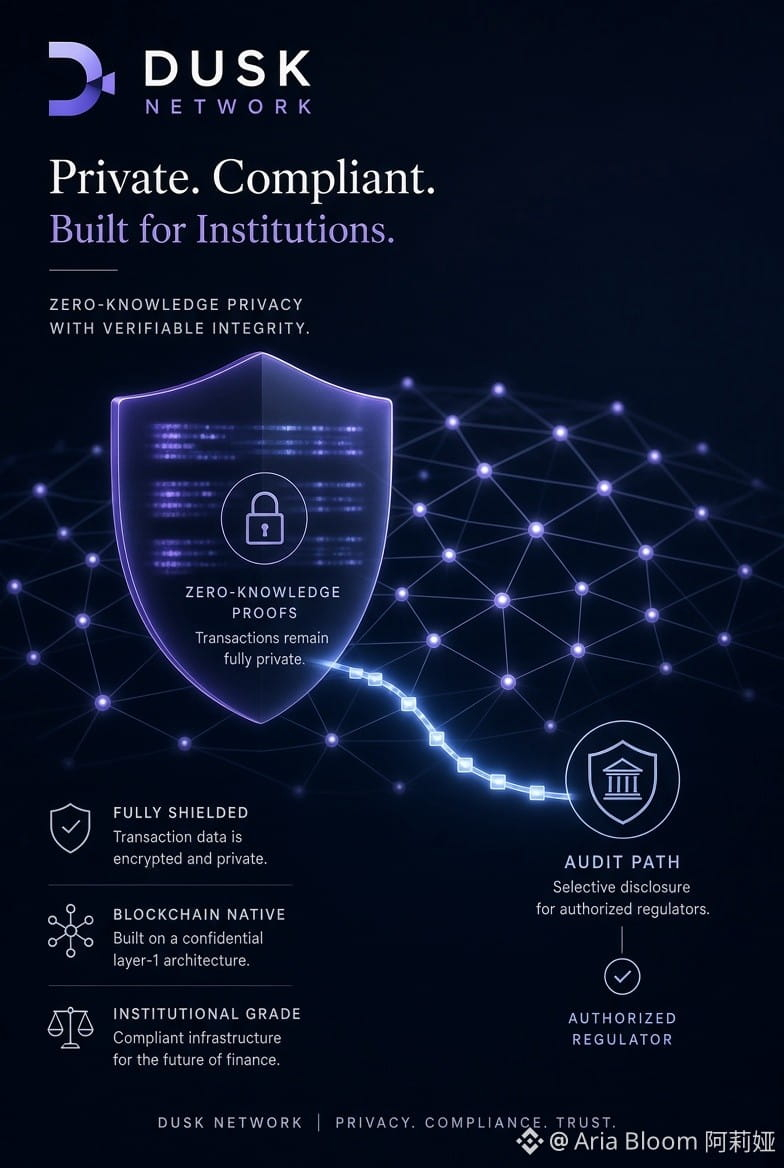
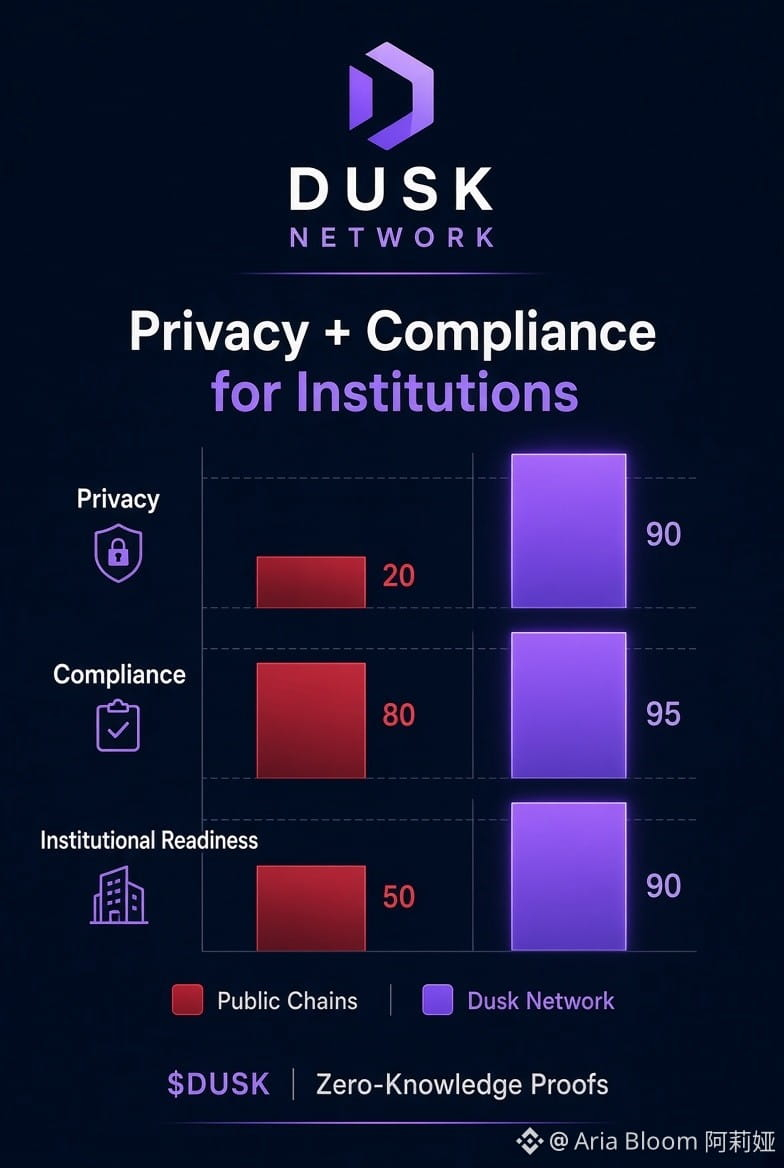
On most chains, every transaction is fully public amounts, parties, everything. Institutions hate this. They need privacy, yet regulators still demand full audit trails. It’s a hard conflict.
Dusk solves it cleanly. Their system separates transaction truth from transaction disclosure Using zero-knowledge proofs, the network can verify that a transaction is valid, rules were followed, and balances check out without revealing the actual details.
Only authorized parties and regulators can see the real data. Everyone else just sees confirmation that it’s legitimate.
That’s why Dusk is becoming a serious contender for real-world assets and regulated finance. Privacy and compliance finally work together.
For institutions, this removes a major barrier. Public chains no longer feel like such a risk.
They’re quietly building something that actually solves a real problem. Worth watching.
Dusk’s approach feels genuinely refreshing in crypto.
On most chains, every transaction is fully public amounts, parties, everything. Institutions hate this. They need privacy, yet regulators still demand full audit trails. It’s a hard conflict.
Dusk solves it cleanly. Their system separates transaction truth from transaction disclosure Using zero-knowledge proofs, the network can verify that a transaction is valid, rules were followed, and balances check out without revealing the actual details.
Only authorized parties and regulators can see the real data. Everyone else just sees confirmation that it’s legitimate.
That’s why Dusk is becoming a serious contender for real-world assets and regulated finance. Privacy and compliance finally work together.
For institutions, this removes a major barrier. Public chains no longer feel like such a risk.
They’re quietly building something that actually solves a real problem. Worth watching.
Sometimes the best moments are the simplest ones ☕🌹✨
A peaceful moment, a warm cup of coffee, and a little beauty in the day. ❤️
$DUSK $BTC
A peaceful moment, a warm cup of coffee, and a little beauty in the day. ❤️
$DUSK $BTC

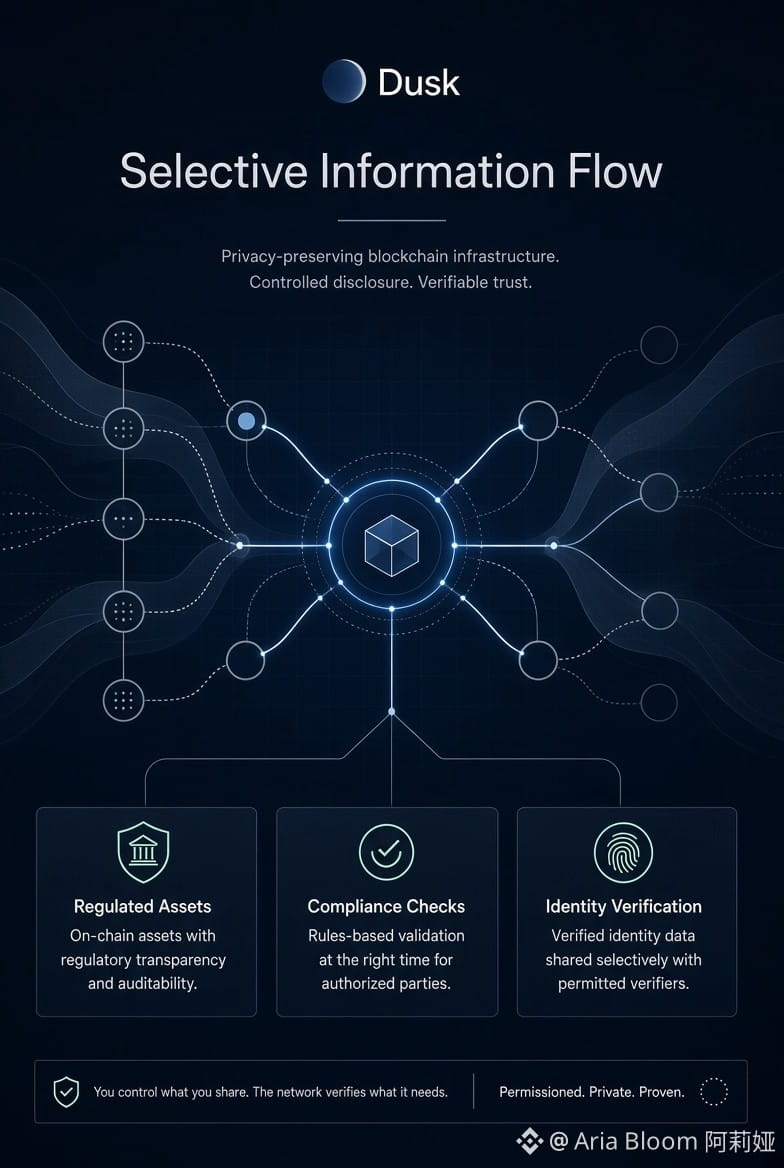
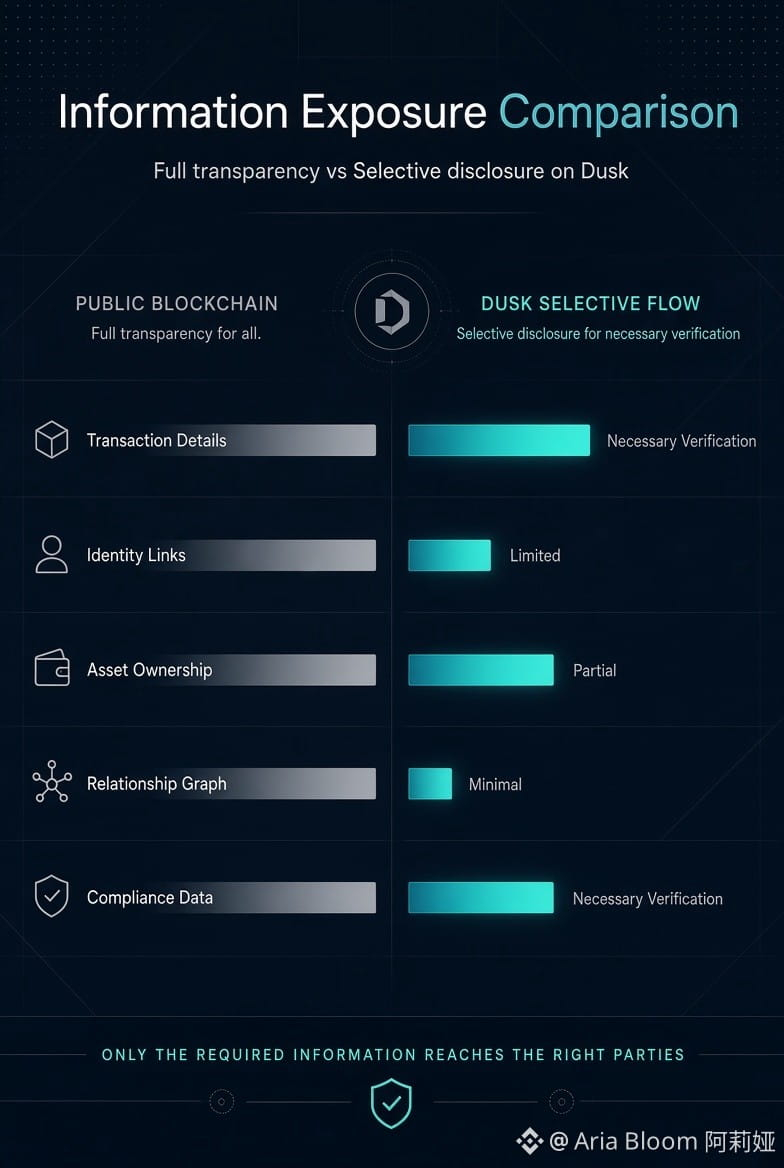
I’ve started thinking about Dusk’s privacy model less as hiding transactions and more as controlling how information moves.
That distinction matters. On a public blockchain the problem isn’t only that data is visible. It’s that small pieces of visible information can be connected over time. A transaction an identity check, an asset transfer or a relationship between addresses can become part of a much larger picture.
What interests me about @Dusk is the idea that privacy can be designed around selective information flow instead. The goal isn’t necessarily to make everything invisible. It’s to let the network verify what actually needs to be verified without automatically exposing everything surrounding it.
That feels particularly important for regulated assets. Institutions may need to prove compliance, ownership, eligibility, or transaction validity, but that doesn’t mean every participant should receive the full underlying dataset.
The difficult part is getting the balance right. Too much transparency creates unnecessary exposure. Too much privacy can make verification and compliance harder.
For me, that’s where $DUSK becomes interesting. The real question isn’t simply whether a transaction is private. It’s who gets to learn what, when they learn it, and why that information is necessary.
That’s a much more useful way to think about blockchain privacy.
#dusk $DUSK @Dusk
That distinction matters. On a public blockchain the problem isn’t only that data is visible. It’s that small pieces of visible information can be connected over time. A transaction an identity check, an asset transfer or a relationship between addresses can become part of a much larger picture.
What interests me about @Dusk is the idea that privacy can be designed around selective information flow instead. The goal isn’t necessarily to make everything invisible. It’s to let the network verify what actually needs to be verified without automatically exposing everything surrounding it.
That feels particularly important for regulated assets. Institutions may need to prove compliance, ownership, eligibility, or transaction validity, but that doesn’t mean every participant should receive the full underlying dataset.
The difficult part is getting the balance right. Too much transparency creates unnecessary exposure. Too much privacy can make verification and compliance harder.
For me, that’s where $DUSK becomes interesting. The real question isn’t simply whether a transaction is private. It’s who gets to learn what, when they learn it, and why that information is necessary.
That’s a much more useful way to think about blockchain privacy.
#dusk $DUSK @Dusk
I think one of the biggest misconceptions in crypto is that ownership always has to be visible in order to be trusted.
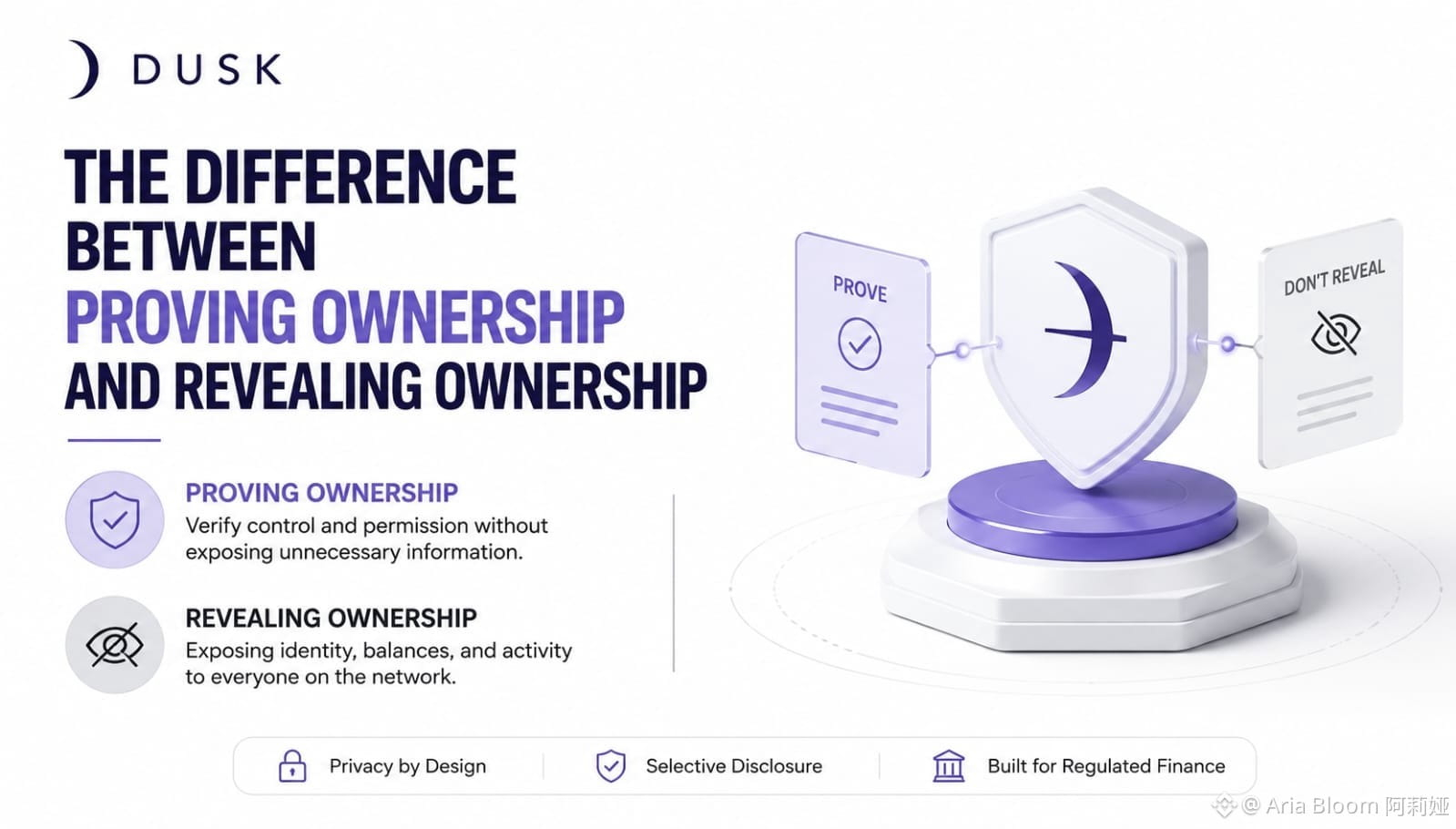
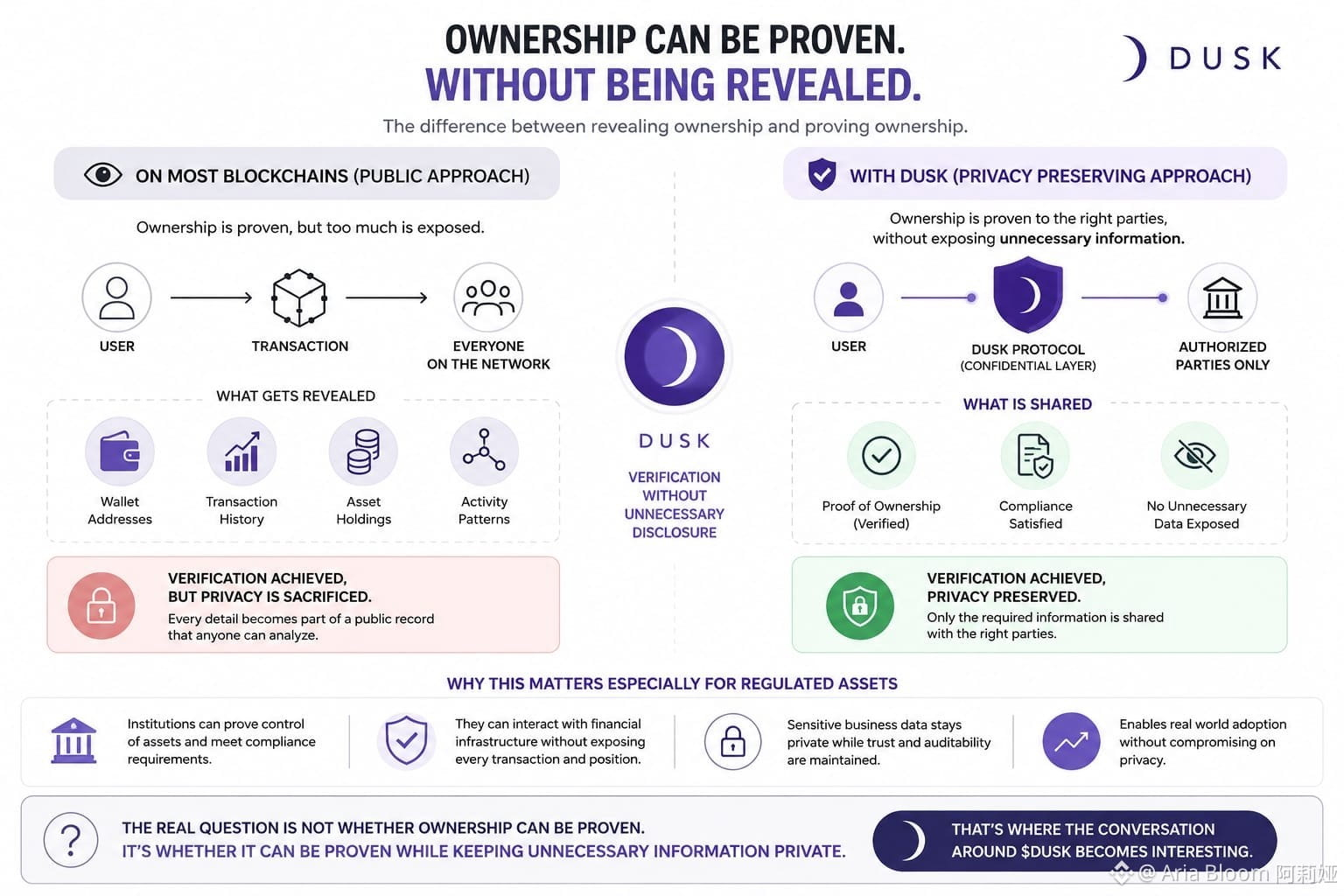
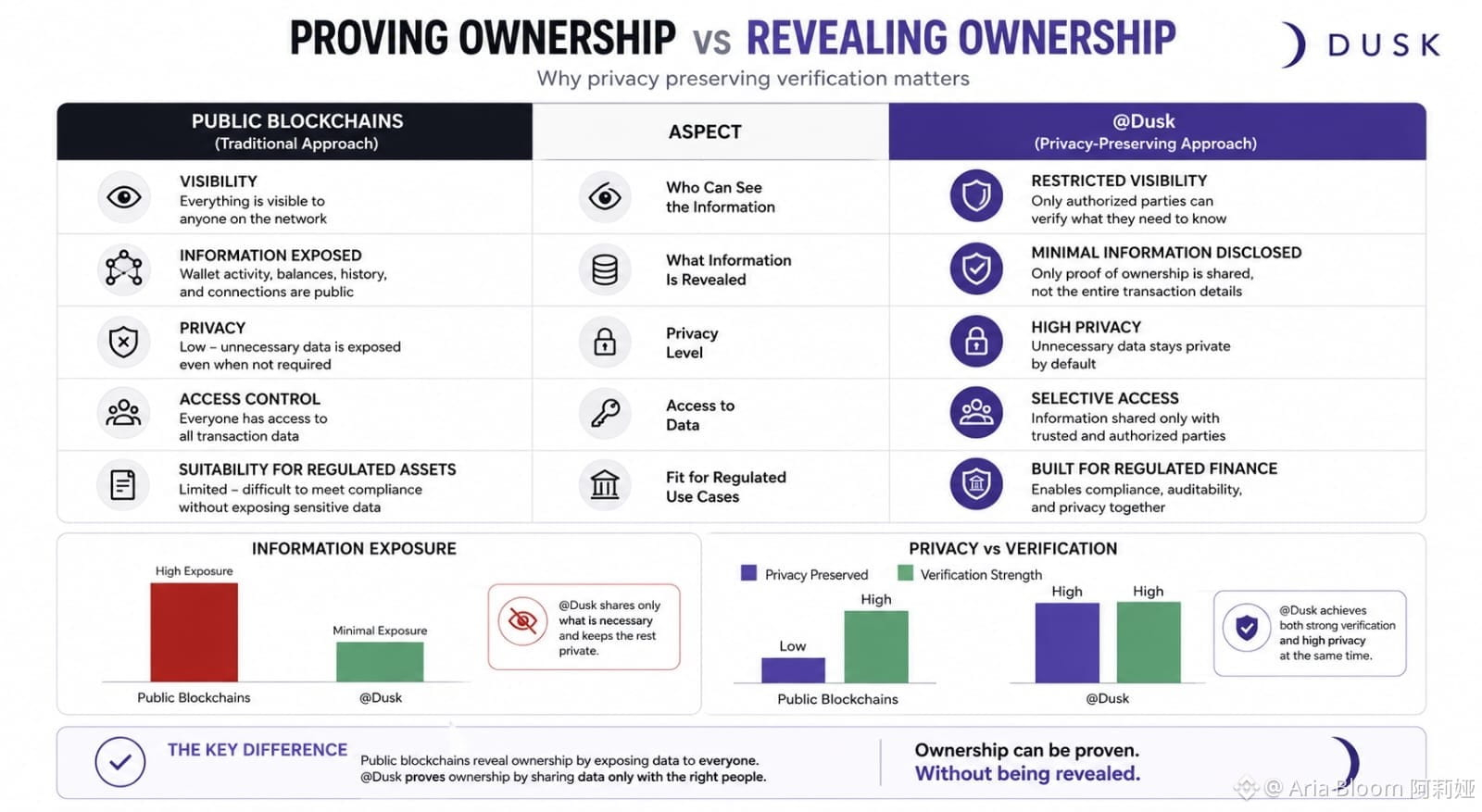
When someone proves ownership on most blockchains they often reveal much more than necessary. Wallet activity asset holdings and transaction history can become part of a public record that anyone can analyze. Verification is achieved but privacy is sacrificed along the way.
What caught my attention about @Dusk is the different approach. The goal is not to hide ownership from those who need to verify it. The goal is to allow verification without turning every detail into public information.
That distinction becomes more interesting when thinking about regulated assets. Businesses and institutions may need to prove control satisfy compliance requirements and interact with financial infrastructure but they may not want every movement and position exposed to the entire network.
To me the future question is not whether ownership can be proven. Blockchain already solved that. The more important question is whether ownership can be proven while keeping unnecessary information private.
That is where the conversation around becomes interesting.
#dusk $DUSK @Dusk
When someone proves ownership on most blockchains they often reveal much more than necessary. Wallet activity asset holdings and transaction history can become part of a public record that anyone can analyze. Verification is achieved but privacy is sacrificed along the way.
What caught my attention about @Dusk is the different approach. The goal is not to hide ownership from those who need to verify it. The goal is to allow verification without turning every detail into public information.
That distinction becomes more interesting when thinking about regulated assets. Businesses and institutions may need to prove control satisfy compliance requirements and interact with financial infrastructure but they may not want every movement and position exposed to the entire network.
To me the future question is not whether ownership can be proven. Blockchain already solved that. The more important question is whether ownership can be proven while keeping unnecessary information private.
That is where the conversation around becomes interesting.
#dusk $DUSK @Dusk
Log in to explore more content