#dusk $DUSK @Dusk I was digging through Dusk’s docs and the cryptography wasn’t what stopped me. The bridge architecture did.
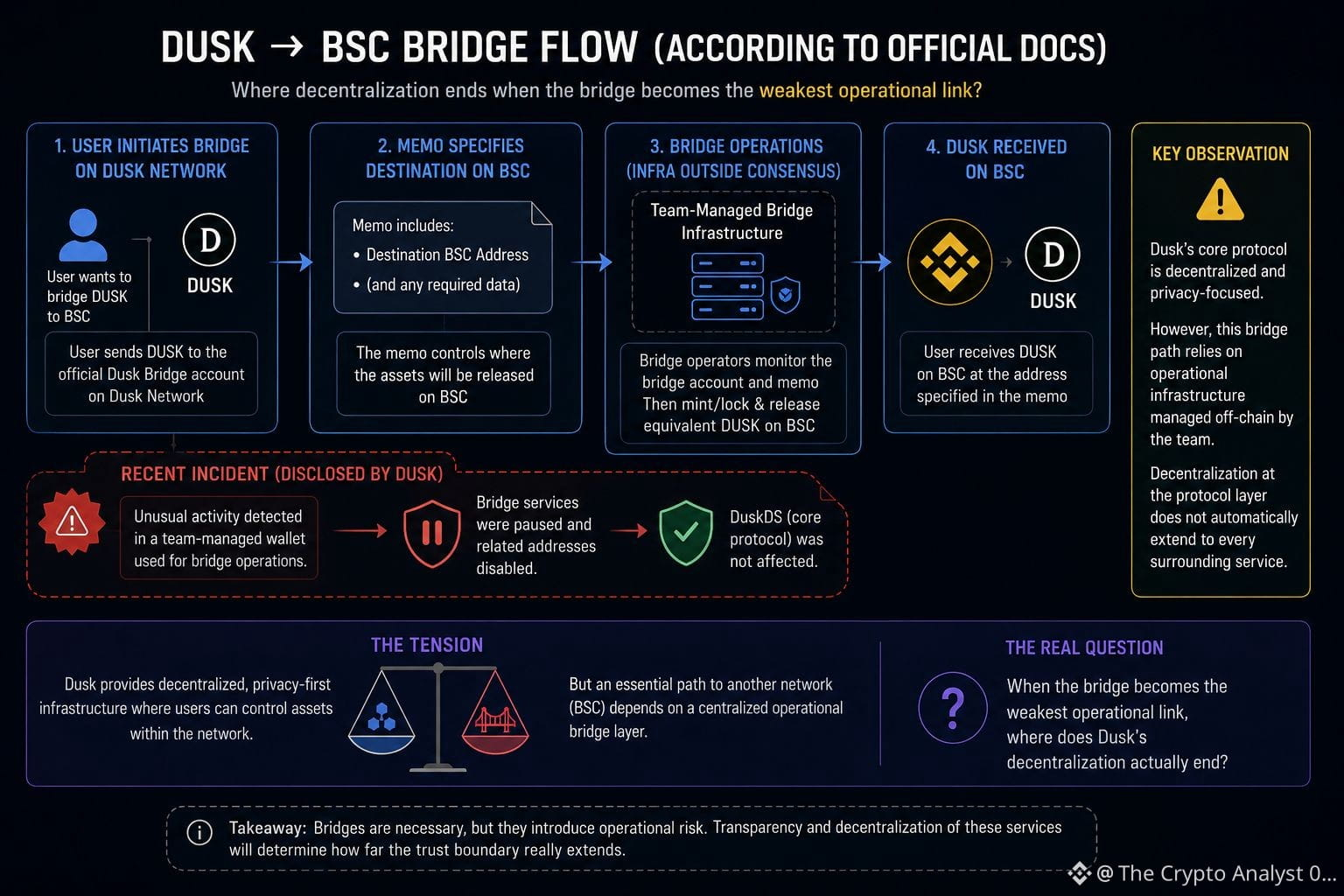
Dusk’s official docs show that bridging DUSK to BSC involves sending funds to an official bridge account, with the destination controlled through a memo.
Hold up… that creates an interesting tension. Dusk is building privacy-focused infrastructure where users can control assets, yet one important path into another network depends on operational infrastructure outside the core consensus layer.
That became more interesting after Dusk disclosed unusual activity involving a team-managed wallet used for bridge operations. The team paused bridge services and disabled related addresses, while stating DuskDS itself was not affected.
Honestly, the response looks like sensible risk containment. But it also exposes something worth watching: decentralization at the protocol layer does not automatically mean every surrounding service is decentralized.
So when the bridge becomes the weakest operational link, where does Dusk’s decentralization actually end?
Dusk’s official docs show that bridging DUSK to BSC involves sending funds to an official bridge account, with the destination controlled through a memo.
Hold up… that creates an interesting tension. Dusk is building privacy-focused infrastructure where users can control assets, yet one important path into another network depends on operational infrastructure outside the core consensus layer.
That became more interesting after Dusk disclosed unusual activity involving a team-managed wallet used for bridge operations. The team paused bridge services and disabled related addresses, while stating DuskDS itself was not affected.
Honestly, the response looks like sensible risk containment. But it also exposes something worth watching: decentralization at the protocol layer does not automatically mean every surrounding service is decentralized.
So when the bridge becomes the weakest operational link, where does Dusk’s decentralization actually end?