
路人1688-luren
863 Posts

路人1688-luren
Open Trade

BNB Holder
High-Frequency Trader
5.6 Months
644 Following
25.9K+ Followers
11.5K+ Liked
Posts
Portfolio
All
Quotes
Live
PINNED
Many people take treating others with harmony as the highest principle and regard making concessions and seeking peace as magnanimity. So when they are offended, they smile and say it’s okay; when someone oversteps, they tell themselves not to mind. Even though, deep down, they are already furious, they still force themselves to swallow it and not react—thinking this is genuine magnanimity and open-mindedness. But you should know: every time you overstep boundaries and concede without principles, you are inflicting wounds on your own mind and body. Don’t assume that if you just endure for a moment, things will become calm and peaceful; don’t believe that taking a step back will make the world feel as vast as the open sky. There are some people in this world who won’t rein in their behavior because of your tolerance. The more you keep compromising and enduring, the more they will grow bolder and act with greater recklessness. The more you keep giving in, the more others will see you as a soft target—and the more they will push further. Don’t mistake suppressing your anger for inner strength, and don’t confuse endless, boundary-less retreat with caring about the whole world. As the book 《“忍”的思考》 puts it: when it is time to endure, you should endure—endurance is beneficial; when it is not time to endure, not enduring is right—endurance then becomes harmful. One overstep deserves a kind reminder; a second offense may be forgiven; but after a third time of trampling, there’s no need to keep up appearances. Once the opportunity has been given, there’s no need to give it again; once your tolerance has been enough, you no longer need to endure.



PINNED
A leader who could clearly make a living on looks, but instead relies on skill—and works so hard. Really, the more outstanding the person, the more they work... $NVDA.US




NVDAUS+5.24%


周周1688
·
--
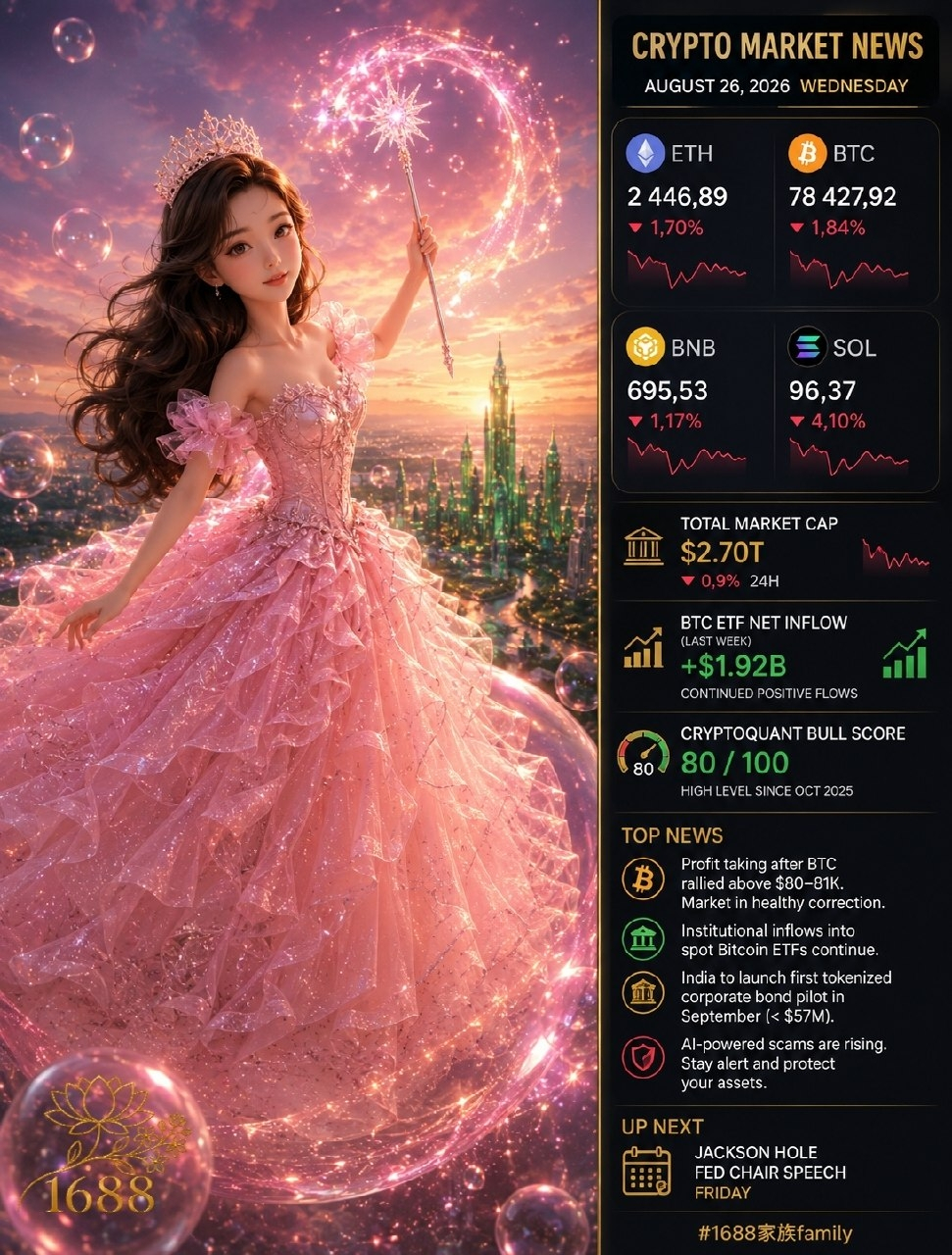
🚀 August 26|Crypto Market Snapshot
$BNB 🧧🧧
📉 BTC dips to $79K, entering a phase of taking profits
BTC briefly surged to over $81,000 yesterday, setting a new high since May, before pulling back to about $78,500–$79,500.
Despite short-term cooling, BTC is still up roughly 22–23% over the past week. ETH is around $2,450–$2,470, with a weekly gain close to 29%.
Total market cap has fallen back to about $2.7 trillion.
💰 BTC ETF inflows remain the core support
In the previous week, US spot BTC ETFs saw net inflows of about $1.92B and maintained positive flows for multiple consecutive days.
Institutional demand remains an important driver behind this leg of gains.
🐂 CryptoQuant Bull Score rises to 80
CryptoQuant Bull Score climbed from 30 to 80 within a week, reaching the highest level since October 2025.
More importantly, spot and futures demand are growing in sync—of 10 market indicators, 8 have turned bullish.
However, for BTC to confirm the next phase of a major bull run, the market is still watching the key zone around $83K.
🏦 Jackson Hole is the biggest catalyst this week
The market is waiting for Federal Reserve Chair Kevin Warsh’s speech at Jackson Hole on Friday.
Meanwhile, US GDP, PCE inflation data, and Nvidia’s earnings report will also be released this week.
Interest-rate and liquidity expectations may determine BTC’s next move around the $80K level.
🇮🇳 India to issue its first batch of tokenized corporate bonds in September
India plans to launch the first tokenized corporate bond pilot in September, with a size of less than ₹5 billion (about $57M).
The project will combine blockchain with India’s central bank CBDC to digitize bond issuance, holding, and settlement.
Traditional finance is gradually moving onto the blockchain.
🟣 ZEC: After ETF launch, a pullback follows
Zcash previously surged to around $850; now it’s following the market pullback.
Notably, the ZEC spot ETF is already live in the US—institutionalization of crypto assets is expanding from BTC and ETH into more assets.
⚠️ AI is becoming a new tool for crypto scams
Voice cloning, AI-generated phishing messages, and automated scamming are increasing.
Don’t verify identity using only voice, profile photos, or chat records. Before transferring funds, double-check the wallet address.
🚀 Top gainers
ONG +36.9%
TLM +18.2%
AMP +16.2%
🧭 After the big surge, the market is “catching its breath.”
Can BTC reclaim and hold above $80K?
#1688家族family
$BTC $BNB
$BNB 🧧🧧
📉 BTC dips to $79K, entering a phase of taking profits
BTC briefly surged to over $81,000 yesterday, setting a new high since May, before pulling back to about $78,500–$79,500.
Despite short-term cooling, BTC is still up roughly 22–23% over the past week. ETH is around $2,450–$2,470, with a weekly gain close to 29%.
Total market cap has fallen back to about $2.7 trillion.
💰 BTC ETF inflows remain the core support
In the previous week, US spot BTC ETFs saw net inflows of about $1.92B and maintained positive flows for multiple consecutive days.
Institutional demand remains an important driver behind this leg of gains.
🐂 CryptoQuant Bull Score rises to 80
CryptoQuant Bull Score climbed from 30 to 80 within a week, reaching the highest level since October 2025.
More importantly, spot and futures demand are growing in sync—of 10 market indicators, 8 have turned bullish.
However, for BTC to confirm the next phase of a major bull run, the market is still watching the key zone around $83K.
🏦 Jackson Hole is the biggest catalyst this week
The market is waiting for Federal Reserve Chair Kevin Warsh’s speech at Jackson Hole on Friday.
Meanwhile, US GDP, PCE inflation data, and Nvidia’s earnings report will also be released this week.
Interest-rate and liquidity expectations may determine BTC’s next move around the $80K level.
🇮🇳 India to issue its first batch of tokenized corporate bonds in September
India plans to launch the first tokenized corporate bond pilot in September, with a size of less than ₹5 billion (about $57M).
The project will combine blockchain with India’s central bank CBDC to digitize bond issuance, holding, and settlement.
Traditional finance is gradually moving onto the blockchain.
🟣 ZEC: After ETF launch, a pullback follows
Zcash previously surged to around $850; now it’s following the market pullback.
Notably, the ZEC spot ETF is already live in the US—institutionalization of crypto assets is expanding from BTC and ETH into more assets.
⚠️ AI is becoming a new tool for crypto scams
Voice cloning, AI-generated phishing messages, and automated scamming are increasing.
Don’t verify identity using only voice, profile photos, or chat records. Before transferring funds, double-check the wallet address.
🚀 Top gainers
ONG +36.9%
TLM +18.2%
AMP +16.2%
🧭 After the big surge, the market is “catching its breath.”
Can BTC reclaim and hold above $80K?
#1688家族family
$BTC $BNB
Hello everyone

virus-可凡2786BNB
·
--
🧧Each cycle will give birth to new stories and also phase out old narratives. Keep learning—that’s the best defense🧧。







Hello everyone

大仁Jaron
·
--
Analysts Weigh the Impact of OpenAI’s In-House Chip: NVIDIA Profit Margins May Face New Challenges
With OpenAI and other tech giants rolling out their own chips, analysts have begun to believe that $NVIDIA (NVDA.US)$'s near-monopoly position in the advanced AI chip arena is facing a “threat.”
On Tuesday (August 25), OpenAI disclosed technical details of the company’s first custom inference chip, Jalapeno, claiming that the chip’s response speed and energy efficiency performance have surpassed NVIDIA’s GB300. At present, $Google-C (GOOG.US)$, $Amazon (AMZN.US)$, $Meta Platforms (META.US)$, and others are also developing their own AI chips.
Yole Group technology analyst Adrien Sanchez said Jalapeno is a chip designed specifically for inference, indicating that “chips designed by ultra-large cloud service providers (hyperscalers) can now match—and even exceed—NVIDIA Blackwell-class GPUs in inference energy efficiency.”
On Tuesday (August 25), OpenAI disclosed technical details of the company’s first custom inference chip, Jalapeno, claiming that the chip’s response speed and energy efficiency performance have surpassed NVIDIA’s GB300. At present, $Google-C (GOOG.US)$, $Amazon (AMZN.US)$, $Meta Platforms (META.US)$, and others are also developing their own AI chips.
Yole Group technology analyst Adrien Sanchez said Jalapeno is a chip designed specifically for inference, indicating that “chips designed by ultra-large cloud service providers (hyperscalers) can now match—and even exceed—NVIDIA Blackwell-class GPUs in inference energy efficiency.”

Hello everyone

@大丽7613
is speaking[LIVE] 🎙️ Invest in BNB Regularly
13.5k listens

Hello everyone

花涧空
·
--
📢 Oil prices keep climbing; Russia plans to intensify strikes on Ukraine; peace talks enter a dead end
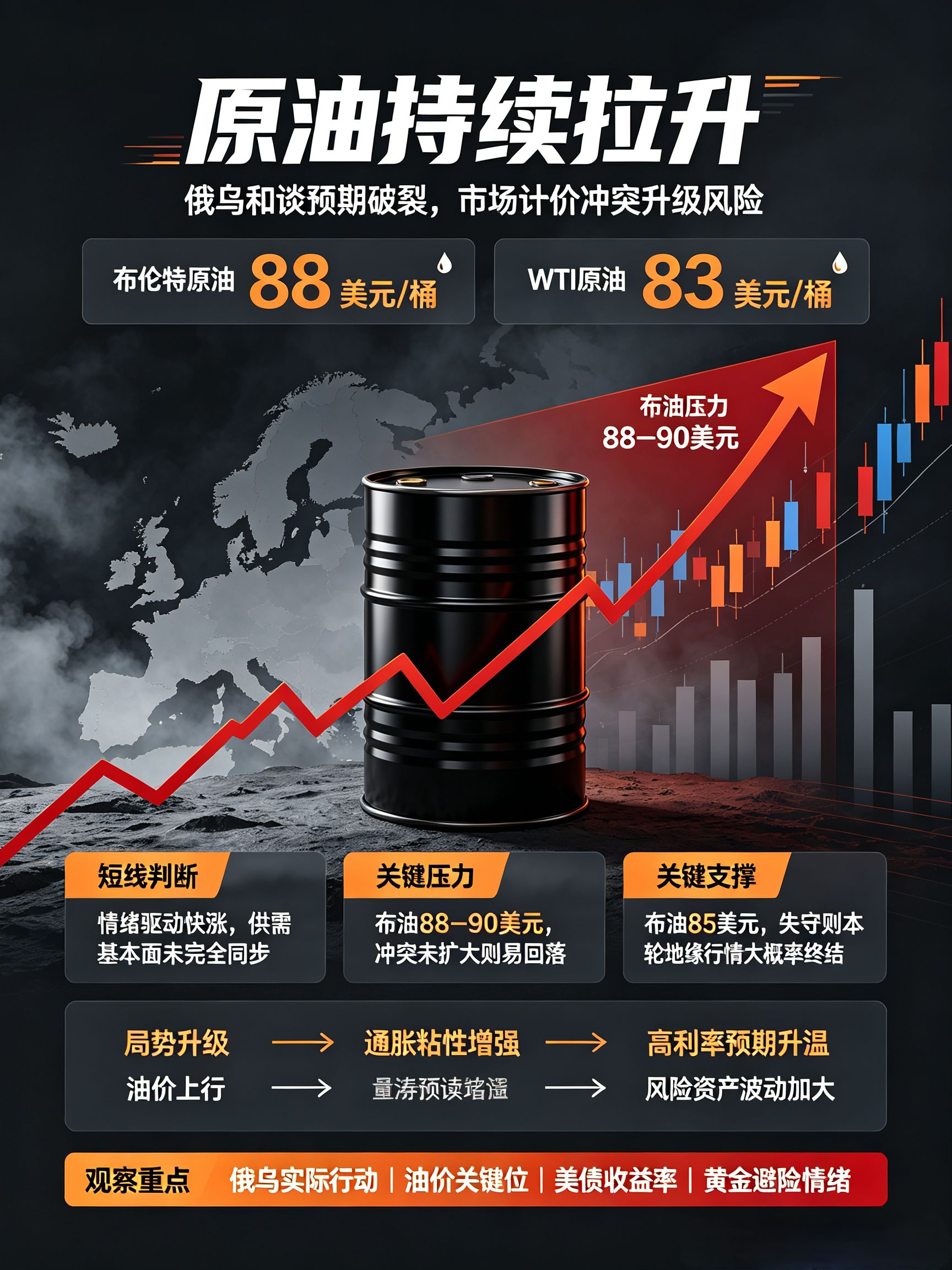
Huajian Air Express News: On August 27, the situation between Russia and Ukraine deteriorated rapidly. Russia sent signals indicating that the existing peace-talk route has effectively broken down. Plans are in place to upgrade military operations, increasing the risk of a widening conflict being priced in by the market. Brent crude is holding above $88 per barrel, while WTI crude remains steady above $83 per barrel. The geopolitical risk premium has risen rapidly. (😟 bearish)
Oil market outlook: The current market is driven by geopolitical sentiment rather than fundamentals of supply and demand. In the short term, Brent at $88–90 is a strong resistance zone. If the conflict does not materially expand, it is likely that “good news” will be cashed in and prices may pull back. If military actions are upgraded, oil prices may test levels above $92. Key support below is Brent at $85; once that level is broken, this round of geopolitical-driven upside is likely to end. $CL
Higher oil prices will boost the stickiness of inflation in Europe and the U.S., weigh on expectations for rate cuts by the Fed, and make U.S. Treasury yields more likely to rise, tightening liquidity for risk assets such as stocks and crypto and amplifying volatility. From a trading perspective, focus on Russia–Ukraine’s real-world actions and oil’s key price levels. For hedging, gold may be a safer avenue; risk assets should not be chased higher.
⚠️ Information summary only; not investment advice. Geopolitical markets can reverse quickly—strictly control position size.
Huajian Air Express News: On August 27, the situation between Russia and Ukraine deteriorated rapidly. Russia sent signals indicating that the existing peace-talk route has effectively broken down. Plans are in place to upgrade military operations, increasing the risk of a widening conflict being priced in by the market. Brent crude is holding above $88 per barrel, while WTI crude remains steady above $83 per barrel. The geopolitical risk premium has risen rapidly. (😟 bearish)
Oil market outlook: The current market is driven by geopolitical sentiment rather than fundamentals of supply and demand. In the short term, Brent at $88–90 is a strong resistance zone. If the conflict does not materially expand, it is likely that “good news” will be cashed in and prices may pull back. If military actions are upgraded, oil prices may test levels above $92. Key support below is Brent at $85; once that level is broken, this round of geopolitical-driven upside is likely to end. $CL
Higher oil prices will boost the stickiness of inflation in Europe and the U.S., weigh on expectations for rate cuts by the Fed, and make U.S. Treasury yields more likely to rise, tightening liquidity for risk assets such as stocks and crypto and amplifying volatility. From a trading perspective, focus on Russia–Ukraine’s real-world actions and oil’s key price levels. For hedging, gold may be a safer avenue; risk assets should not be chased higher.
⚠️ Information summary only; not investment advice. Geopolitical markets can reverse quickly—strictly control position size.
Hello everyone

VICTORIA _777
·
--
The 8% Privacy Question I Can’t Ignore
I pulled up the live explorer and honestly… the numbers made me stop for a second.
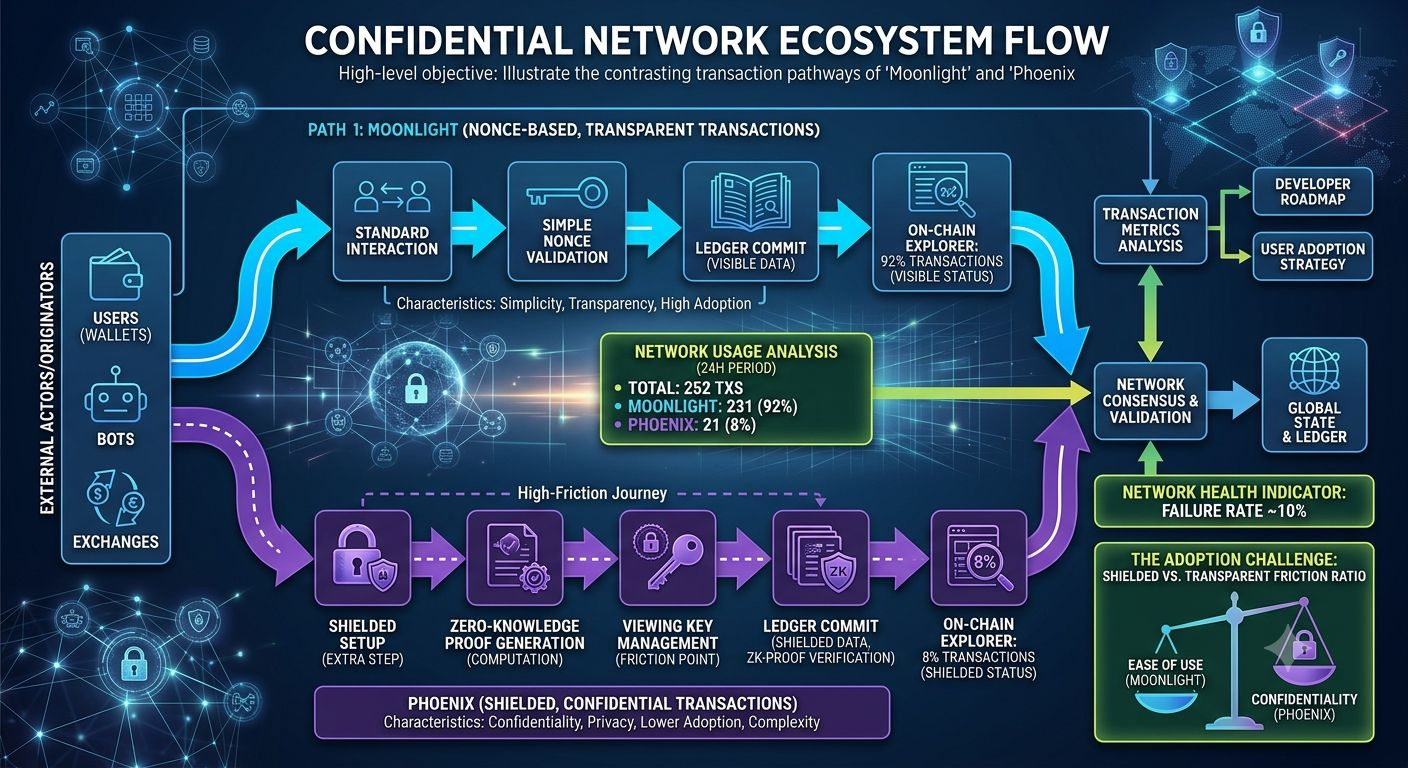
252 transactions in 24h.
231 through Moonlight.
Only 21 through Phoenix.
That’s roughly 92% transparent vs 8% shielded.
And this is a chain built around confidentiality.
At first, that feels strange.
Then I started thinking about the actual user journey.
Moonlight is simple. Nonce-based. Easier for exchanges, bots, and everyday transfers to integrate.
Phoenix is different. Shielded flow, viewing keys, extra setup, more friction.
So maybe this isn’t a privacy problem at all.
Maybe it’s an adoption problem.
I kept refreshing the explorer, and another number caught my attention: the failure rate was hovering around 10%.
Now that’s where things get interesting.
Because the real question isn’t whether confidential transactions exist.
They clearly do.
The question is:
What makes users choose them?
If privacy requires an extra step every time, most users will probably take the path with less friction.
That’s why I’m watching this ratio.
If Phoenix eventually moves from 8% toward 20%, 40%, or higher, that could tell us something much bigger about whether privacy becomes a default behavior or remains an advanced feature for users who deliberately seek it.
I’m not calling the design wrong.
I’m watching the behavior.
Because the explorer tells a story the roadmap can’t.
@Dusk #DUSK $DUSK
I pulled up the live explorer and honestly… the numbers made me stop for a second.
252 transactions in 24h.
231 through Moonlight.
Only 21 through Phoenix.
That’s roughly 92% transparent vs 8% shielded.
And this is a chain built around confidentiality.
At first, that feels strange.
Then I started thinking about the actual user journey.
Moonlight is simple. Nonce-based. Easier for exchanges, bots, and everyday transfers to integrate.
Phoenix is different. Shielded flow, viewing keys, extra setup, more friction.
So maybe this isn’t a privacy problem at all.
Maybe it’s an adoption problem.
I kept refreshing the explorer, and another number caught my attention: the failure rate was hovering around 10%.
Now that’s where things get interesting.
Because the real question isn’t whether confidential transactions exist.
They clearly do.
The question is:
What makes users choose them?
If privacy requires an extra step every time, most users will probably take the path with less friction.
That’s why I’m watching this ratio.
If Phoenix eventually moves from 8% toward 20%, 40%, or higher, that could tell us something much bigger about whether privacy becomes a default behavior or remains an advanced feature for users who deliberately seek it.
I’m not calling the design wrong.
I’m watching the behavior.
Because the explorer tells a story the roadmap can’t.
@Dusk #DUSK $DUSK
Hello everyone

阿波罗1111
·
--
With enthusiasm in heart, seize the present moment, every opportunity deserves our full effort.
With enthusiasm in heart, seize the present moment, every opportunity deserves our full effort.
#BNB #LUCiC
With enthusiasm in heart, seize the present moment, every opportunity deserves our full effort.
#BNB #LUCiC

Hello everyone
VICTORIA _777
·
--
The 8% Privacy Question I Can’t Ignore
I pulled up the live explorer and honestly… the numbers made me stop for a second.
252 transactions in 24h.
231 through Moonlight.
Only 21 through Phoenix.
That’s roughly 92% transparent vs 8% shielded.
And this is a chain built around confidentiality.
At first, that feels strange.
Then I started thinking about the actual user journey.
Moonlight is simple. Nonce-based. Easier for exchanges, bots, and everyday transfers to integrate.
Phoenix is different. Shielded flow, viewing keys, extra setup, more friction.
So maybe this isn’t a privacy problem at all.
Maybe it’s an adoption problem.
I kept refreshing the explorer, and another number caught my attention: the failure rate was hovering around 10%.
Now that’s where things get interesting.
Because the real question isn’t whether confidential transactions exist.
They clearly do.
The question is:
What makes users choose them?
If privacy requires an extra step every time, most users will probably take the path with less friction.
That’s why I’m watching this ratio.
If Phoenix eventually moves from 8% toward 20%, 40%, or higher, that could tell us something much bigger about whether privacy becomes a default behavior or remains an advanced feature for users who deliberately seek it.
I’m not calling the design wrong.
I’m watching the behavior.
Because the explorer tells a story the roadmap can’t.
@Dusk #DUSK $DUSK
I pulled up the live explorer and honestly… the numbers made me stop for a second.
252 transactions in 24h.
231 through Moonlight.
Only 21 through Phoenix.
That’s roughly 92% transparent vs 8% shielded.
And this is a chain built around confidentiality.
At first, that feels strange.
Then I started thinking about the actual user journey.
Moonlight is simple. Nonce-based. Easier for exchanges, bots, and everyday transfers to integrate.
Phoenix is different. Shielded flow, viewing keys, extra setup, more friction.
So maybe this isn’t a privacy problem at all.
Maybe it’s an adoption problem.
I kept refreshing the explorer, and another number caught my attention: the failure rate was hovering around 10%.
Now that’s where things get interesting.
Because the real question isn’t whether confidential transactions exist.
They clearly do.
The question is:
What makes users choose them?
If privacy requires an extra step every time, most users will probably take the path with less friction.
That’s why I’m watching this ratio.
If Phoenix eventually moves from 8% toward 20%, 40%, or higher, that could tell us something much bigger about whether privacy becomes a default behavior or remains an advanced feature for users who deliberately seek it.
I’m not calling the design wrong.
I’m watching the behavior.
Because the explorer tells a story the roadmap can’t.
@Dusk #DUSK $DUSK
Hello everyone
万亿88
·
--
Get red envelopes 🧧🧧🧧🧧
Hello everyone

融易挣乾-佳佳
·
--
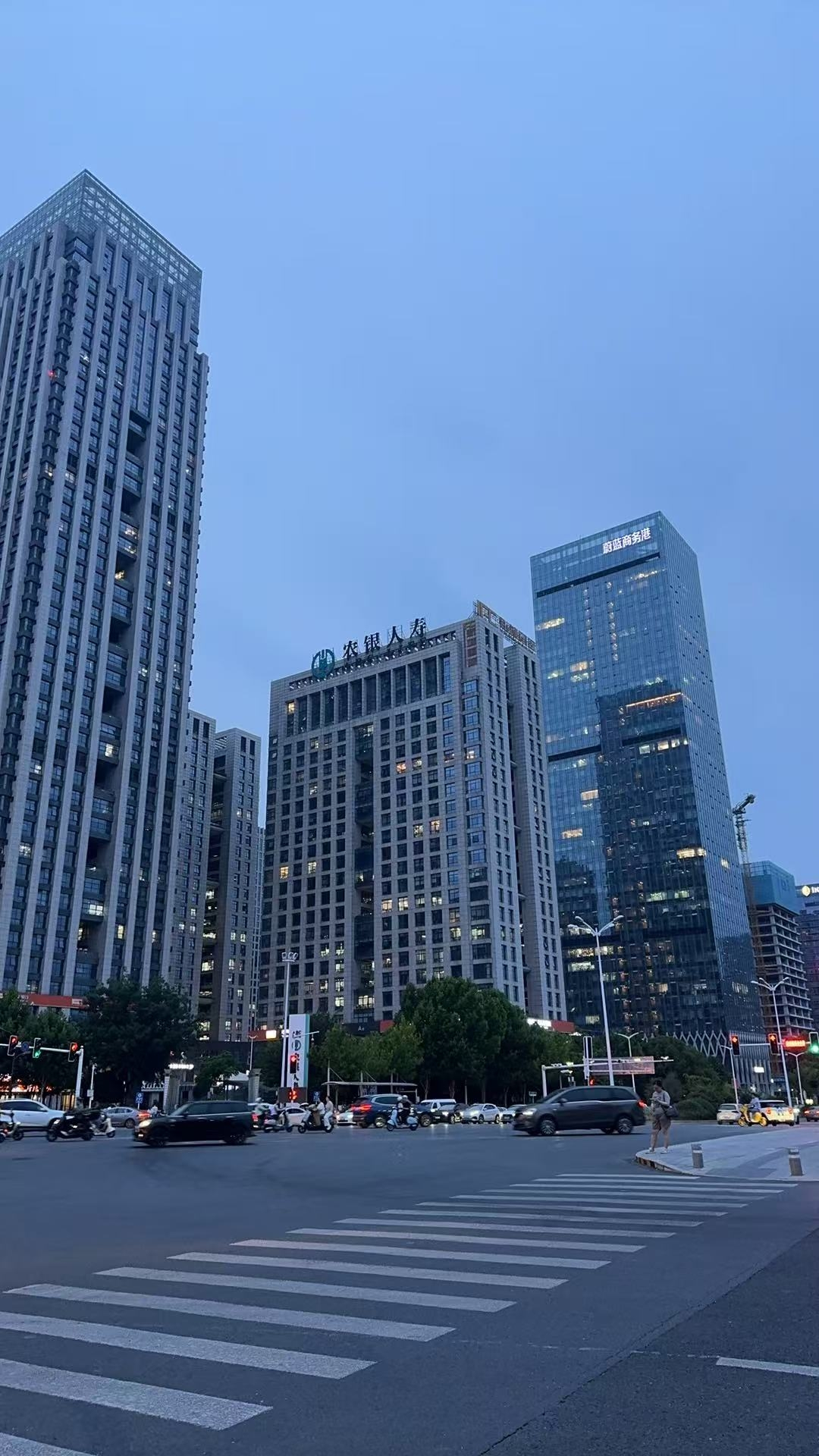
A seaside night, soft lights, and in the air there’s a little extra calm 🌊
Only me, the waves, and the quiet of this moment.
Sea breeze, string lights, and a gentle smile ✨
Sometimes, the best kind of night is the quiet kind.
Sea, lights, aur thodi si sukoon 🌊
Bas yahi moment feel kar rahi hun.
Just the vibe of the night 🌙🌊
Soft lights, a gentle smile.
When the waves meet the lights, everything seems a bit softer too
Only me, the waves, and the quiet of this moment.
Sea breeze, string lights, and a gentle smile ✨
Sometimes, the best kind of night is the quiet kind.
Sea, lights, aur thodi si sukoon 🌊
Bas yahi moment feel kar rahi hun.
Just the vibe of the night 🌙🌊
Soft lights, a gentle smile.
When the waves meet the lights, everything seems a bit softer too

Hello everyone

生蚝哥Oyster
·
--
BullishHuang Renxun Tells the Truth: Actual Compute Demand Exceeds 70%, and Capacity Constraints Hold Back Performance
At NVIDIA’s quarterly earnings call for fiscal Q2 2027, the company delivered major guidance. CFO Colette Kress revealed that NVIDIA expects full-year revenue growth of up to 70% for fiscal 2028—significantly higher than the 44% consensus forecast compiled by market data provider LSEG.
Based on market estimates that NVIDIA’s revenue for fiscal 2027 will be $396 billion, if the 70% growth target is achieved, NVIDIA’s fiscal 2028 revenue would rise to about $673 billion. This scale is expected to surpass Apple and Alphabet, placing NVIDIA second among U.S. technology companies, behind Amazon, whose primary business is retail.
During the call, Huang Renxun admitted that the growth rate of real market demand is actually higher than 70%. Due to supply bottlenecks for components such as memory chips, NVIDIA’s production capacity ceiling limits the ability to provide an even higher performance outlook. The company is expanding capacity in coordination across its entire supply chain to do its best to ease supply pressure.
He said NVIDIA rarely issues revenue forecasts spanning more than a year. Now that it can anticipate next year’s compute demand—alongside large-scale investments in resources such as land and electricity for data center infrastructure—it needs to give clear expectations to both upstream and downstream partners.
AI compute demand is no longer coming solely from leading cloud providers and top research labs. Regional AI companies, next-generation cloud service providers, startups, traditional enterprises, open-source model ecosystems, and even the physical AI sector have all become key incremental customer groups.
#NVIDIA
At NVIDIA’s quarterly earnings call for fiscal Q2 2027, the company delivered major guidance. CFO Colette Kress revealed that NVIDIA expects full-year revenue growth of up to 70% for fiscal 2028—significantly higher than the 44% consensus forecast compiled by market data provider LSEG.
Based on market estimates that NVIDIA’s revenue for fiscal 2027 will be $396 billion, if the 70% growth target is achieved, NVIDIA’s fiscal 2028 revenue would rise to about $673 billion. This scale is expected to surpass Apple and Alphabet, placing NVIDIA second among U.S. technology companies, behind Amazon, whose primary business is retail.
During the call, Huang Renxun admitted that the growth rate of real market demand is actually higher than 70%. Due to supply bottlenecks for components such as memory chips, NVIDIA’s production capacity ceiling limits the ability to provide an even higher performance outlook. The company is expanding capacity in coordination across its entire supply chain to do its best to ease supply pressure.
He said NVIDIA rarely issues revenue forecasts spanning more than a year. Now that it can anticipate next year’s compute demand—alongside large-scale investments in resources such as land and electricity for data center infrastructure—it needs to give clear expectations to both upstream and downstream partners.
AI compute demand is no longer coming solely from leading cloud providers and top research labs. Regional AI companies, next-generation cloud service providers, startups, traditional enterprises, open-source model ecosystems, and even the physical AI sector have all become key incremental customer groups.
#NVIDIA

Hello everyone
灼见
·
--
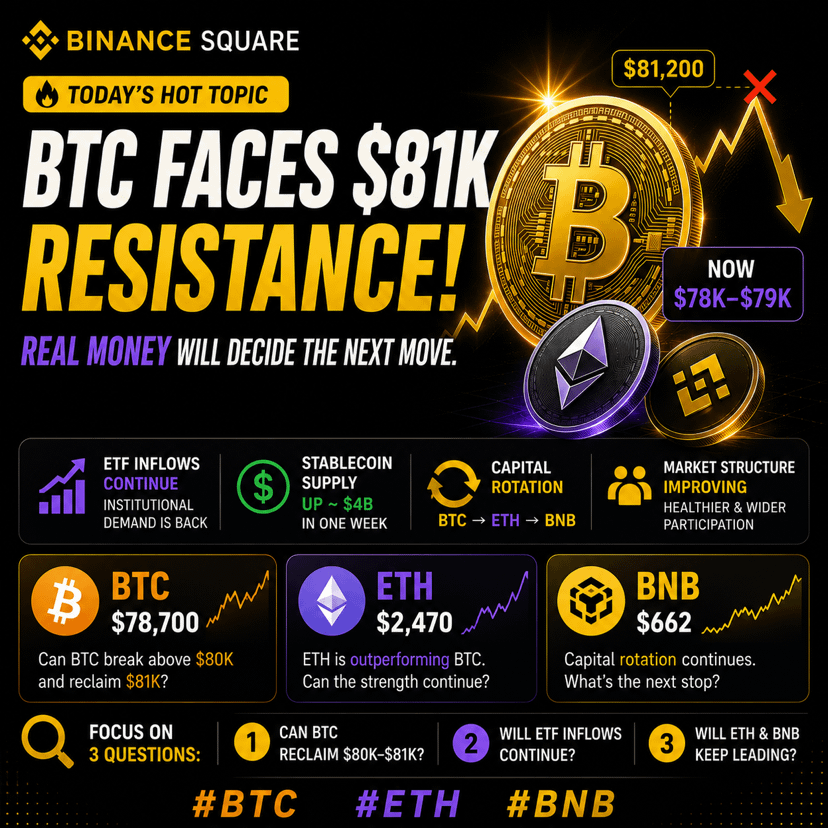
🔥 After BTC breaks through $80K, the market is starting to show a new shift.
Over the past week, $BTC has completed a round of rapid rallies and even broke above $80K at one point.
But what’s truly worth watching today isn’t “when BTC will break out.”
It’s—
When BTC consolidates at high levels, where will the capital go?
At the moment, the market is showing some interesting signals:
🔹 After the breakout, BTC is entering a high-level digestion phase
🔹 Spot BTC ETF inflows are becoming active again
🔹 ETH’s performance today is starting to outperform BTC
🔹 BNB is also maintaining strong market performance
This may suggest the trend is moving from the first phase:
BTC Breakout
gradually into the second phase:
Capital Rotation
If BTC can hold at high levels, while ETH and BNB continue to attract capital, then market participation may expand from a BTC-focused move into mainstream assets over time.
Of course, after a fast rally, high-level consolidation and profit-taking are completely normal.
So instead of guessing what the next candlestick will be, I’m paying closer attention to the capital itself.
BTC opens up the space.
Whether ETH and BNB can hold and absorb that capital may determine the market structure in the next phase.
👇 If you can only choose one, who are you watching more today?
BTC / ETH / BNB
#BTC #ETH #BNB
Over the past week, $BTC has completed a round of rapid rallies and even broke above $80K at one point.
But what’s truly worth watching today isn’t “when BTC will break out.”
It’s—
When BTC consolidates at high levels, where will the capital go?
At the moment, the market is showing some interesting signals:
🔹 After the breakout, BTC is entering a high-level digestion phase
🔹 Spot BTC ETF inflows are becoming active again
🔹 ETH’s performance today is starting to outperform BTC
🔹 BNB is also maintaining strong market performance
This may suggest the trend is moving from the first phase:
BTC Breakout
gradually into the second phase:
Capital Rotation
If BTC can hold at high levels, while ETH and BNB continue to attract capital, then market participation may expand from a BTC-focused move into mainstream assets over time.
Of course, after a fast rally, high-level consolidation and profit-taking are completely normal.
So instead of guessing what the next candlestick will be, I’m paying closer attention to the capital itself.
BTC opens up the space.
Whether ETH and BNB can hold and absorb that capital may determine the market structure in the next phase.
👇 If you can only choose one, who are you watching more today?
BTC / ETH / BNB
#BTC #ETH #BNB
Hello everyone

路飞社区糖宝Luffy
·
--
Every day, stay up late to make time to breathe in some fresh air—it's great $SOL

Hello everyone

Bilverse
·
--
🔥🧧 ETH FOR EVERYONE. GIVEAWAY IS LIVE 🧧🔥
One community. One mission. One chance to be part of the ETH giveaway. 💎🚀
#Bilverse is making noise — and your ETH reward could be waiting. 👀
👇 Want to claim a portion of ETH?
💬 Comment “ETH” below to claim your reward! 🎁
The Bilverse Army is growing. 🟡
Click here to DOUBLE your Rewards! 🧧🚀
Are you in?
#Binance #RedPacketMission #CryptoCommunity
One community. One mission. One chance to be part of the ETH giveaway. 💎🚀
#Bilverse is making noise — and your ETH reward could be waiting. 👀
👇 Want to claim a portion of ETH?
💬 Comment “ETH” below to claim your reward! 🎁
The Bilverse Army is growing. 🟡
Click here to DOUBLE your Rewards! 🧧🚀
Are you in?
#Binance #RedPacketMission #CryptoCommunity

Hello everyone

帝王168
·
--
Allow me this one foolish hope.
If I should spend a lifetime loving you,
I hope I never become accustomed to it.
I hope your name continues to surprise my heart the way that the first snowfall surprises the earth.
I hope there never comes a morning when I look at youwithout quietly thanking the Almightythat of all the souls He ever fashioned,
it somehow led me to yours.
And if loving you so completely should prove to be the greatest foolishness of my life,
then I pray I am never blessed with wisdom.
$BTC
If I should spend a lifetime loving you,
I hope I never become accustomed to it.
I hope your name continues to surprise my heart the way that the first snowfall surprises the earth.
I hope there never comes a morning when I look at youwithout quietly thanking the Almightythat of all the souls He ever fashioned,
it somehow led me to yours.
And if loving you so completely should prove to be the greatest foolishness of my life,
then I pray I am never blessed with wisdom.
$BTC

Hello everyone

Seven七七
·
--
🐝 Little Honeybee — Meme Fair Launch
Most people play Meme—what’s there to be afraid of?
Afraid the house controls the supply? Afraid of a dump? Afraid of being the last one holding the bag?
The Honeybee solution: lock 80% of the tokens, and let everyone buy them out from the liquidity pool.
You can’t get the presale—I can’t get it either.
Fairness, that’s all there is to it.
📌 Three foundational logics
① Third-party launcher fires
The liquidity pool is secure; the project team can’t touch it—no one can tamper with it
② 300+ community members jointly initiate, with 80% locked
All community participation buys fairly from the liquidity pool
No reserved allocation, no backroom dealing, no "team allocation"
③ Community model obtains 80% of the tokens
Fair, transparent, earned through participation—not connections
💰 Community model: don’t fear the dip—earn more when it rises
▸ Entry: $100 minimum
▸ Release: 3% per day, 60 days to fully receive 1.8x computing power
▸ Core: gold standard—no mood swings based on the coin price
If it drops? Keep releasing anyway—hold with peace of mind
If it rises? Computing power rewards fly along
Either way, there’s a path—this is the model people can actually stick with
⚡ Genesis Node · Limited to 1000 seats
Price: $300 per share
Allocation: 1000 seats—first come, first served
Core advantage: buy early, get more coins
Node benefits:
1. Node computing power is 3x (1.2x more than the launch tier)
2. Transaction slippage of 2% permanently rebated
3. Share 20 nodes → advance to the large community (up to 50 seats, enjoy 2% slippage rebate)
🔄 Deflationary engine: the more you trade, the fewer coins
Transaction slippage: 3% buy + 3% sell = total 6%
→ 4% distributed to nodes and the community
→ 2% endless token burn
Every trade reduces circulating supply.
Judge for yourself.
While others are still selling dreams, the Honeybee locks the “pie” down directly.
🐝 Genesis node countdown—DM me to get on board: @小蜜蜂官方 @Seven七七 #bnb #meme板块关注热点
Most people play Meme—what’s there to be afraid of?
Afraid the house controls the supply? Afraid of a dump? Afraid of being the last one holding the bag?
The Honeybee solution: lock 80% of the tokens, and let everyone buy them out from the liquidity pool.
You can’t get the presale—I can’t get it either.
Fairness, that’s all there is to it.
📌 Three foundational logics
① Third-party launcher fires
The liquidity pool is secure; the project team can’t touch it—no one can tamper with it
② 300+ community members jointly initiate, with 80% locked
All community participation buys fairly from the liquidity pool
No reserved allocation, no backroom dealing, no "team allocation"
③ Community model obtains 80% of the tokens
Fair, transparent, earned through participation—not connections
💰 Community model: don’t fear the dip—earn more when it rises
▸ Entry: $100 minimum
▸ Release: 3% per day, 60 days to fully receive 1.8x computing power
▸ Core: gold standard—no mood swings based on the coin price
If it drops? Keep releasing anyway—hold with peace of mind
If it rises? Computing power rewards fly along
Either way, there’s a path—this is the model people can actually stick with
⚡ Genesis Node · Limited to 1000 seats
Price: $300 per share
Allocation: 1000 seats—first come, first served
Core advantage: buy early, get more coins
Node benefits:
1. Node computing power is 3x (1.2x more than the launch tier)
2. Transaction slippage of 2% permanently rebated
3. Share 20 nodes → advance to the large community (up to 50 seats, enjoy 2% slippage rebate)
🔄 Deflationary engine: the more you trade, the fewer coins
Transaction slippage: 3% buy + 3% sell = total 6%
→ 4% distributed to nodes and the community
→ 2% endless token burn
Every trade reduces circulating supply.
Judge for yourself.
While others are still selling dreams, the Honeybee locks the “pie” down directly.
🐝 Genesis node countdown—DM me to get on board: @小蜜蜂官方 @Seven七七 #bnb #meme板块关注热点

Hello everyone

Noor221
·
--
$BTR
just ripped +336% today. 🚀
While most of the market is flat, BTR isn't waiting around. Strong volume, clear momentum, and a massive break past resistance.
This is a proper rally. 💸📈
#BTR #Bitrue #Crypto #CryptocurrencyWealth
Do you guys Trade $BTR ????
just ripped +336% today. 🚀
While most of the market is flat, BTR isn't waiting around. Strong volume, clear momentum, and a massive break past resistance.
This is a proper rally. 💸📈
#BTR #Bitrue #Crypto #CryptocurrencyWealth
Do you guys Trade $BTR ????
Log in to explore more content