$ETH Three Laws of the Trade:
1: The 2-6 Rule. Strictly set your position size so that any single trade’s loss does not exceed 2% of your principal, and your total loss for the day does not exceed 6% of your principal. Losses are not recovered linearly. A 10% loss requires an 11% gain to get your principal back; a 50% loss requires a 100% rally; and when losses reach 70%, you’d need a 233% increase to make up the gap. By then, “getting back to break-even” has already lost all real meaning. The larger the loss, the easier it is for your mindset to get thrown off. You’ll start staring at the order book anxiously, thinking about the next trade, and taking a high leverage position—betting on getting back to even in one shot.
Each trade carries 2% risk, so three trades add up to 6%. Once you exceed that, it means either today’s market rhythm isn’t suitable for you, or your condition isn’t suitable for trading anymore. Continuing only magnifies the losses.
Second, no matter how much capital you have, you only get two opportunities to act.
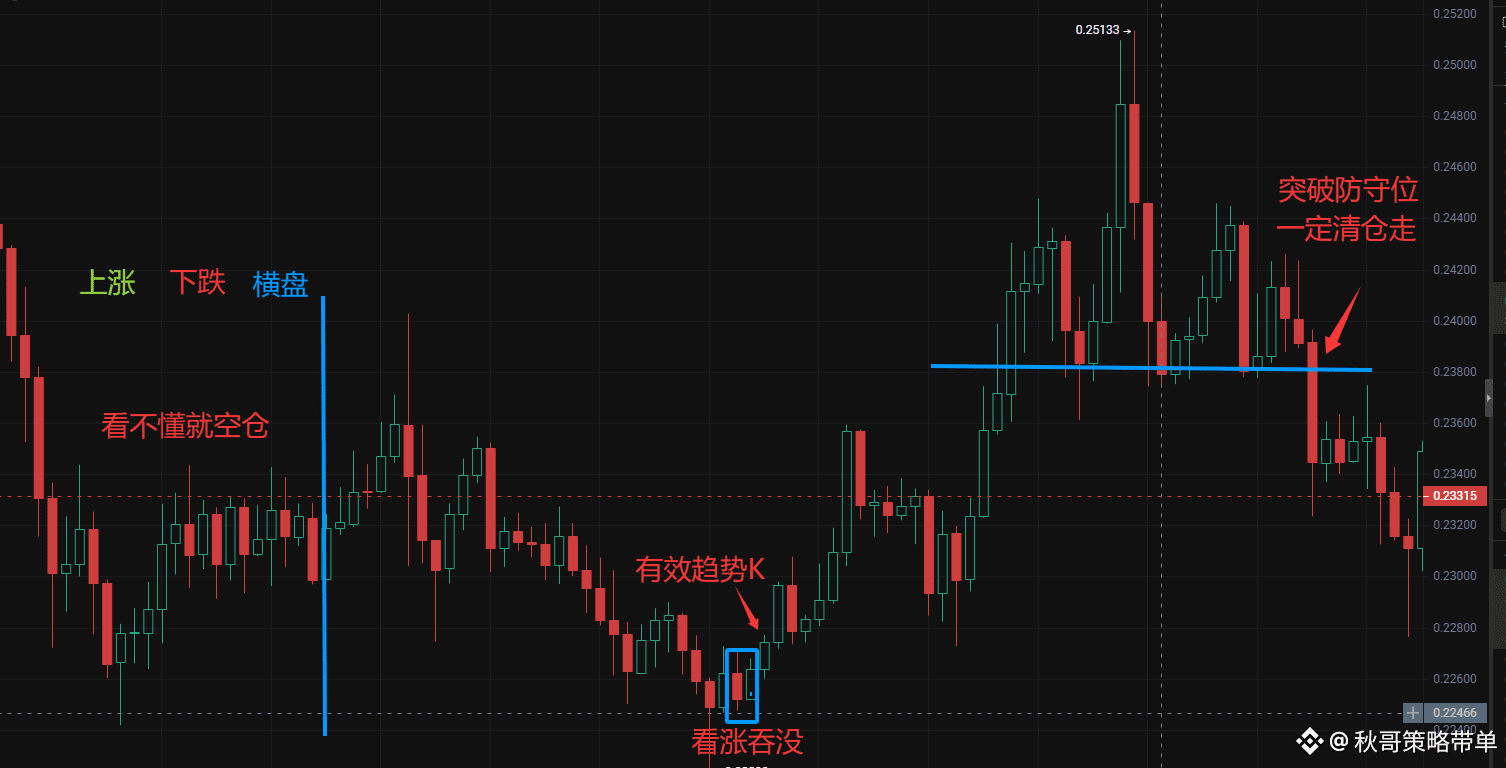
When your first entry gets stopped out, as long as the bigger-picture trend is still intact and hasn’t reversed, give yourself one chance for “revenge.” Specifically, when trading with the trend, identify in advance two key support levels. If the price pulls back to the first key level and you see a needle/pin that stabilizes the move, that’s your signal—you can enter directly. If you’re unfortunately stopped out, that’s fine; patiently wait for the price to drop to the next lower support level. When a clear reversal candlestick signal appears again, we then wait for one more confirming candle that validates the trend is effective, and we enter once more. Put your stop loss at the lowest point. This time, if your “revenge” is successful—of course the market won’t always cooperate. Sometimes after your first trade gets stopped out, the price immediately rockets. Other times, after you take the second attempt, you’re still stopped out. That’s real trading. Mature traders don’t force profits on every trade—they know when to exit.
$BTR
Third: If the price breaks your level, you must leave—don’t try to predict the market!
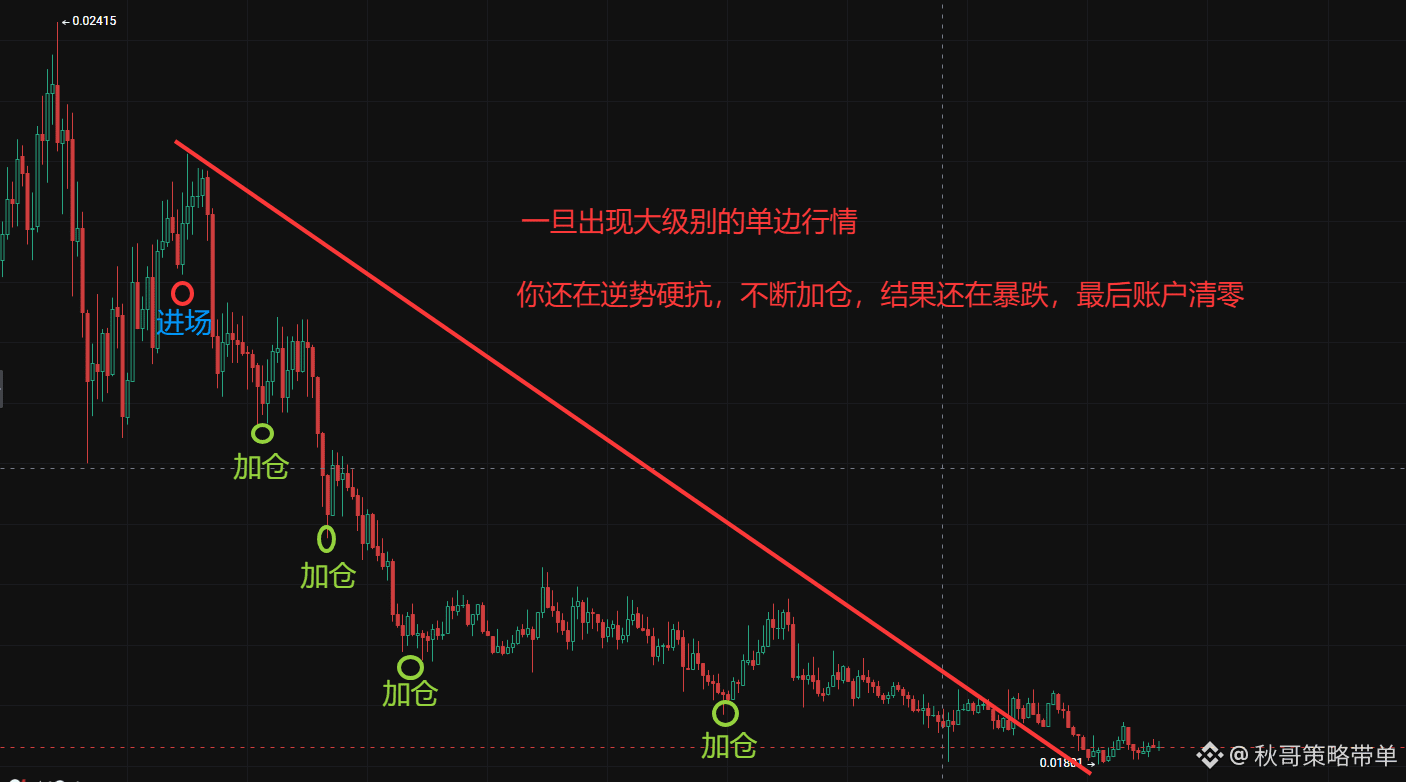
When the price has already broken below your final line of defense, don’t entertain any illusions. Immediately close out and get out. For trades against the trend, in a floating loss, you must be absolutely alert—don’t average down or add risk. Setting your last line of defense is to capture signals of a potential shift between long and short. Once the trend turns bad, if you’re still foolishly “adding” while waiting for a rebound, that’s essentially handing money to the main players. The logic is something basically everyone understands. But once you’re in a live market with real money on the line, greed and fear caused by actual price movements will still distort your actions completely. If you choose to “hold through drawdowns” whenever they happen, then what you lacked wasn’t theory and good material—you lacked the forced training of muscle memory.
$TAC
1: The 2-6 Rule. Strictly set your position size so that any single trade’s loss does not exceed 2% of your principal, and your total loss for the day does not exceed 6% of your principal. Losses are not recovered linearly. A 10% loss requires an 11% gain to get your principal back; a 50% loss requires a 100% rally; and when losses reach 70%, you’d need a 233% increase to make up the gap. By then, “getting back to break-even” has already lost all real meaning. The larger the loss, the easier it is for your mindset to get thrown off. You’ll start staring at the order book anxiously, thinking about the next trade, and taking a high leverage position—betting on getting back to even in one shot.
Each trade carries 2% risk, so three trades add up to 6%. Once you exceed that, it means either today’s market rhythm isn’t suitable for you, or your condition isn’t suitable for trading anymore. Continuing only magnifies the losses.
Second, no matter how much capital you have, you only get two opportunities to act.
When your first entry gets stopped out, as long as the bigger-picture trend is still intact and hasn’t reversed, give yourself one chance for “revenge.” Specifically, when trading with the trend, identify in advance two key support levels. If the price pulls back to the first key level and you see a needle/pin that stabilizes the move, that’s your signal—you can enter directly. If you’re unfortunately stopped out, that’s fine; patiently wait for the price to drop to the next lower support level. When a clear reversal candlestick signal appears again, we then wait for one more confirming candle that validates the trend is effective, and we enter once more. Put your stop loss at the lowest point. This time, if your “revenge” is successful—of course the market won’t always cooperate. Sometimes after your first trade gets stopped out, the price immediately rockets. Other times, after you take the second attempt, you’re still stopped out. That’s real trading. Mature traders don’t force profits on every trade—they know when to exit.
$BTR
Third: If the price breaks your level, you must leave—don’t try to predict the market!
When the price has already broken below your final line of defense, don’t entertain any illusions. Immediately close out and get out. For trades against the trend, in a floating loss, you must be absolutely alert—don’t average down or add risk. Setting your last line of defense is to capture signals of a potential shift between long and short. Once the trend turns bad, if you’re still foolishly “adding” while waiting for a rebound, that’s essentially handing money to the main players. The logic is something basically everyone understands. But once you’re in a live market with real money on the line, greed and fear caused by actual price movements will still distort your actions completely. If you choose to “hold through drawdowns” whenever they happen, then what you lacked wasn’t theory and good material—you lacked the forced training of muscle memory.
$TAC