#加拿大对美加征最高50%反制关税
The Canadian government announced that, starting September 8, 2026, it will impose retaliatory counter-tariffs of 15%, 25%, and 50% on U.S. goods worth about **CAD 27.6 billion (about USD 20 billion)**. This involves roughly 700 categories of goods, and largely follows the approach of “dollar-for-dollar and rate-for-rate” to respond to the new U.S. tariffs.
Key areas include:
Steel, aluminum: up to 50% Home appliances, electronics Agricultural machinery Dairy products, food Pulp and paper products Some furniture, apparel, etc.
Canada also rolled out about CAD 7.5 billion in corporate and employment support measures.
What does this mean for the market?
1. The U.S.-Canada trade war has entered the “tit-for-tat tariff” stage
The U.S. had already, starting August 22, imposed new tariffs of up to 50% on about CAD 27.6 billion worth of Canadian goods. Canada is now launching a reciprocal response.
This means the difficulty of reaching a renewed agreement in the short term has clearly increased.
2. Pressure on the Canadian economy may be greater
Canada’s economy is highly dependent on the U.S. market. While retaliatory tariffs protect domestic companies, the increased cost of importing U.S. goods may ultimately feed through to:
Canadian business costs ↑ → product prices ↑ → inflation pressure ↑ → consumer spending ↓
Therefore, the Bank of Canada’s potential room to cut interest rates in the future may be somewhat limited.
3. The U.S. will also feel the backlash
Canada is a very important trading partner of the U.S., especially with highly intertwined energy, automotive, and metals/agriculture supply chains.
At present, Canada has not designated highly dependent sectors such as energy or potash as major targets for retaliation. This suggests Canada is still working to control the risk of escalation.
However, if the U.S. continues to add tariffs, there have already been political voices in Canada calling for further restrictions on exports of electricity and minerals. In that case, the market impact of the conflict would expand significantly.
-----------------
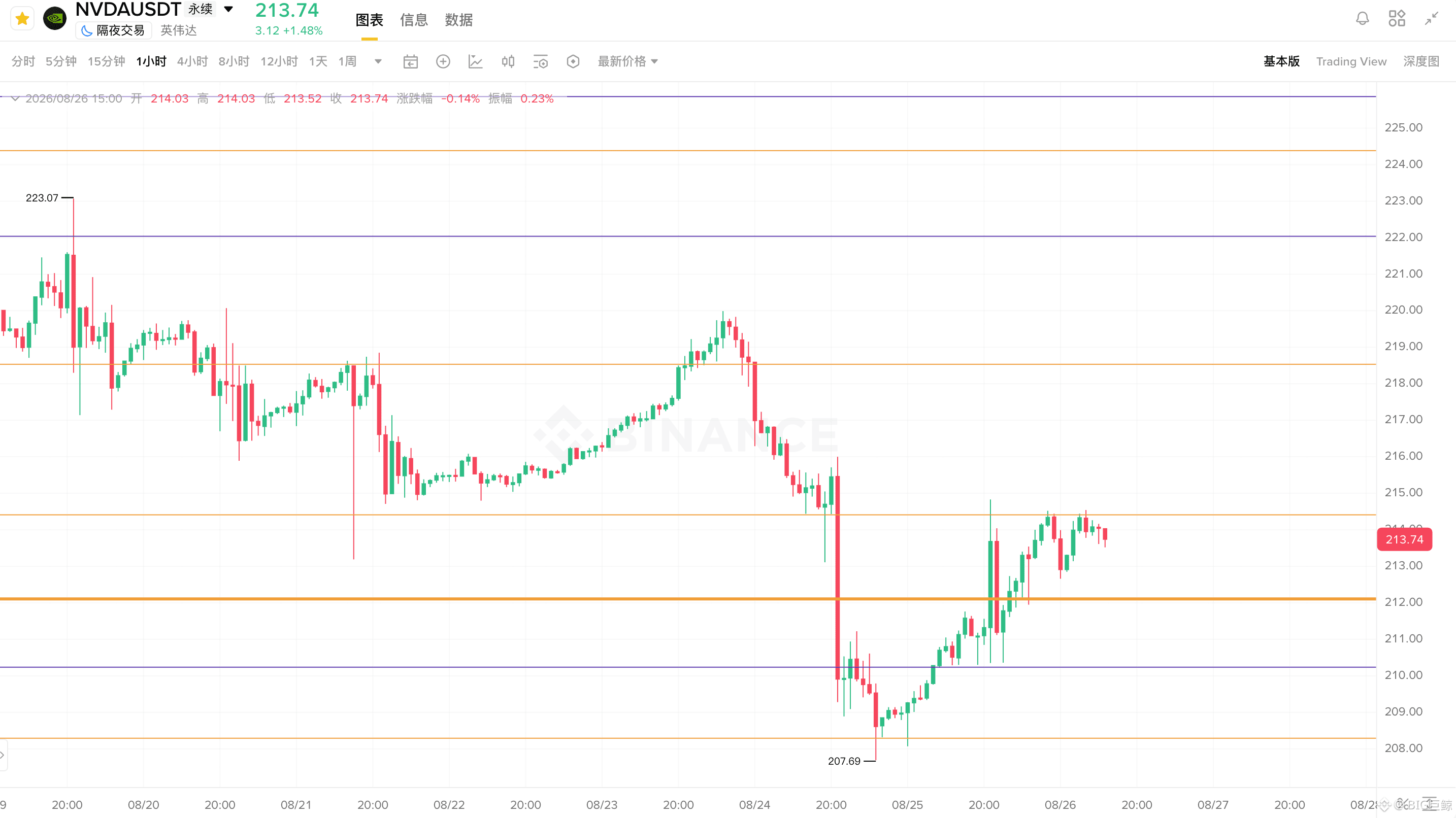
$NVDA Trading strategy
After the 213 stabilizes, go long
Stop-loss: 211.5
Target: near 218 to reduce position or take profit
【👇👇Click the trading link below👇👇】🚀🚀🚀🎉🎉🎉🎉🎉
The Canadian government announced that, starting September 8, 2026, it will impose retaliatory counter-tariffs of 15%, 25%, and 50% on U.S. goods worth about **CAD 27.6 billion (about USD 20 billion)**. This involves roughly 700 categories of goods, and largely follows the approach of “dollar-for-dollar and rate-for-rate” to respond to the new U.S. tariffs.
Key areas include:
Steel, aluminum: up to 50% Home appliances, electronics Agricultural machinery Dairy products, food Pulp and paper products Some furniture, apparel, etc.
Canada also rolled out about CAD 7.5 billion in corporate and employment support measures.
What does this mean for the market?
1. The U.S.-Canada trade war has entered the “tit-for-tat tariff” stage
The U.S. had already, starting August 22, imposed new tariffs of up to 50% on about CAD 27.6 billion worth of Canadian goods. Canada is now launching a reciprocal response.
This means the difficulty of reaching a renewed agreement in the short term has clearly increased.
2. Pressure on the Canadian economy may be greater
Canada’s economy is highly dependent on the U.S. market. While retaliatory tariffs protect domestic companies, the increased cost of importing U.S. goods may ultimately feed through to:
Canadian business costs ↑ → product prices ↑ → inflation pressure ↑ → consumer spending ↓
Therefore, the Bank of Canada’s potential room to cut interest rates in the future may be somewhat limited.
3. The U.S. will also feel the backlash
Canada is a very important trading partner of the U.S., especially with highly intertwined energy, automotive, and metals/agriculture supply chains.
At present, Canada has not designated highly dependent sectors such as energy or potash as major targets for retaliation. This suggests Canada is still working to control the risk of escalation.
However, if the U.S. continues to add tariffs, there have already been political voices in Canada calling for further restrictions on exports of electricity and minerals. In that case, the market impact of the conflict would expand significantly.
-----------------
$NVDA Trading strategy
After the 213 stabilizes, go long
Stop-loss: 211.5
Target: near 218 to reduce position or take profit
【👇👇Click the trading link below👇👇】🚀🚀🚀🎉🎉🎉🎉🎉