


Source: ZAKER Finance
On August 24, on the very same day when Xiaopeng announced good news about robot financing, a major piece of news also came out: NIO has entered embodied intelligence.
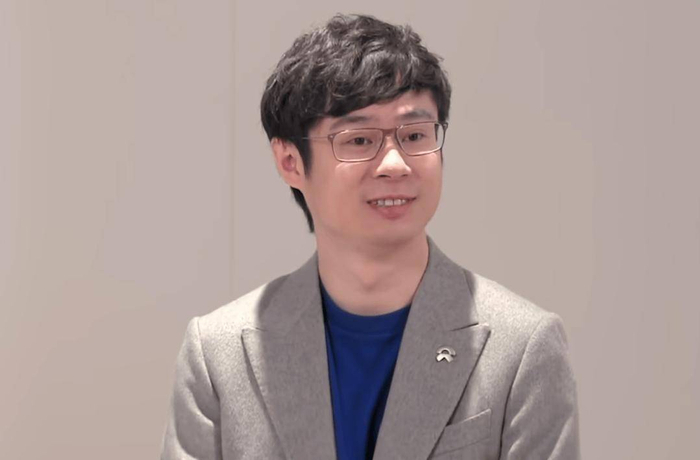
In recent years, NIO has continued to invest in key technologies such as chips and operating systems, but its performance in embodied intelligence has been relatively restrained.
On the one hand, NIO acknowledges that intelligent driving and embodied intelligence share continuity in foundational capabilities such as perception, prediction, planning, control, world models, and reinforcement learning.
On the other hand, with performance under pressure and the car industry’s playoff rounds being brutal, NIO has no choice but to go all-in on embodied intelligence.
Li Bin, founder of NIO, has always been very clear: sell the cars well first, and then talk about robots.
In January this year, he said that NIO would adopt a “follower” strategy in the robotics field, entering only after the company has sustained profitability. “We don’t have to charge at the very front in everything. In some areas, we can use a follower strategy—let others go first to scout the way.” In April, when asked whether they would build robots, Li Bin’s answer was still—“Please allow us to adopt a strategy of observing first and entering later on this matter; learn first, then enter.”
But in the car industry, watching the likes of Unitree make a roaring advance, it’s obvious some are a bit too eager.
He Xiaopeng personally also serves as CEO of the robotics company; the first round of funding exceeded $900 million, and the post-investment valuation was $6.3 billion. The IRON plan targets mass production by the end of 2026. Li Auto invested in Zhai Yue Intelligent, founded by Zhang Xiao and Chen Wei. Chery established the Momo / MojiA (墨甲) robotics company, with over 2,000 units delivered overseas cumulatively. Xiaomi’s humanoid robot has already entered factories to perform QC and carry/transport tasks.
Restraint for New Energy’s ambitions, and finally they hit the accelerator button—splitting up the business, bringing in strategic shareholders, avoiding the tug-of-war between limited funds and the problem of lack of focus, while also not falling behind.
Ren Shaoqing’s earlier exploration gave NIO the confidence.
Born in 1988, Ren Shaoqing has fully experienced China’s development of autonomous driving from 0 to 1. He held key positions at Momenta and NIO. He is not only Senior Vice President and head of intelligent driving at NIO, but also a well-known AI scientist, the author of ResNet, and Director of the Institute of General Artificial Intelligence at USTC. His two major research achievements are regarded as “one of the most influential and practical foundational technologies in the field of computer vision,” and “an important cornerstone of today’s large-model architectures.”
In 2020, Ren Shaoqing joined NIO as the Chief Expert for Autonomous Driving R&D and Vice President, completing the end-to-end in-house system from 0 to 1. He led the first proposal and implementation of China’s first large-scale, replicable production delivery of an intelligent driving world model. This world model can actively model and simulate complex real-world environments, significantly improving the system’s ability to handle generalized scenarios, and ushering in a new round of evolution in autonomous driving technology.
NIO started developing world models in 2023. In 2024, it released the industry’s first world model for intelligent assisted driving, and by 2025 it achieved full-scale rollout.
In the era of embodied intelligence, who will be the true king? NIO? Li Auto? Xiaomi?
Source: Xinghe Business Observation