


Source: ZAKER Finance
On August 24, XPeng released its interim report.
At the earnings call, He Xiaopeng left more of the microphone for the good news about robots, while slowing down and a loss of RMB 1.34 billion became supporting roles.
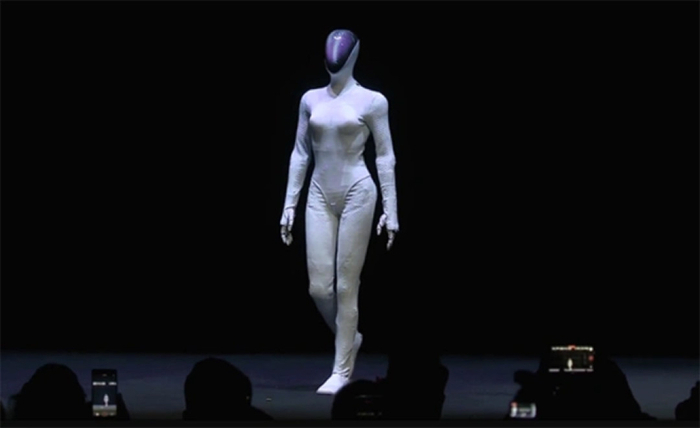
What’s worth thinking about is that on the same day, NIO also officially announced a major decision regarding embodied intelligence. More and more XPeng people are, in sync, using a more appealing story to ride out the storm.
This storm may be more violent than all the big-shot automakers have anticipated.
First, look at the stock price.
On August 25, the Hong Kong shares of XPeng Group closed at HK$43.30, plunging 9.19%. During the day, it hit a low of HK$42.66, setting a new 52-week low. On the same day, NIO’s Hong Kong shares closed at HK$33.14, down 3.45%; Li Auto’s Hong Kong shares closed at HK$47.68, down 3.60%. All three new-energy automakers fell collectively the same day, making the market sentiment overwhelmingly pessimistic.
As for market value, as of the close on August 25: NIO’s total market cap in Hong Kong was HK$85.543 billion; XPeng’s was HK$82.97 billion; and Li Auto’s was HK$97.759 billion. Both NIO and XPeng fell below the HK$90 billion mark, while Li Auto also narrowly missed the trillion-HKD threshold. Back when they were at their peak, “XPeng, NIO, Li Auto” each had market values of over HK$200 billion and even up to HK$350 billion. Now, combined, the three have evaporated more than HK$400 billion in value.
In the first half of 2026, the Hong Kong stock auto sector’s 13 leading automakers all moved lower. Beijing Automotive fell 59.6%, Seres dropped 56.7%, Li Auto’s Lotus? (Li Bin??) … (Li??) fell 54.1%... The entire sector’s market value shrank by over RMB 1.1 trillion in just six months.
Let’s talk about sales again.
In July, Leapmotor led with a delivery volume of 101,267 units, creating a clear gap and becoming the new-energy brand with the first month to surpass 100,000 deliveries in China. HarmonyOS Zhixing delivered 45,046 units to rank second; XPeng delivered 38,027 units, up 3.6% year over year to take third; NIO delivered 35,934 units, up 71.0% year over year and hit a new monthly high; Li Auto delivered 30,468 units, down slightly by 0.9% year over year, the only year-over-year decline among the leading new-energy automakers.
Cumulative for the first seven months: Leapmotor about 458,000 units; NIO about 227,000; Li Auto about 224,000; XPeng about 204,000. Once the “front-runner” among new-energy automakers, these companies have now already been left behind by Leapmotor by more than a factor of two in cumulative deliveries.
Even more brutal is the industry-wide picture. Data from the China Association of Automobile Manufacturers shows that in the first half of 2026, passenger vehicle sales were 8.288 million units, down 24.3% year over year. Chen Shihua, vice secretary-general of the China Association of Automobile Manufacturers, publicly stated that the profit margin of China’s complete vehicle manufacturing industry is only 1.5%, at a historic low.
Then there are the financial figures.
XPeng posted a net loss of 1.34 billion yuan in the second quarter, expanding 179.9% year over year. Li Auto turned from profit to loss in the first quarter, with a net loss of 2.3 billion yuan. Its second-quarter earnings report will be released on August 26. NIO’s net loss in the first quarter was 332 million yuan—already the most “respectable” among the three.
The more they sell, the more they lose—that has become a common phenomenon.
On August 22, at the 2026 China Chief Economists Fudan Institute Innovation and Technology Forum, Li Bin said bluntly: “The China auto industry is entering the ‘most brutal final round.’ Over the next three to five years, the final winners will basically be decided by then.” This is already the third time this year he has used a similar phrase in a public setting.
To avoid being dealt out of the game, the breakout strategy is concentrated in two areas:
First, lay out overseas markets. In XPeng’s second quarter, overseas sales for the first time surpassed 20,000 units, up 81% year over year; in the first half, revenue from overseas business accounted for more than 25%. Leapmotor, leveraging its cooperation with the Stellantis Group, is accelerating its entry into overseas markets; automakers are gradually rolling out their overseas channel strategies. Going global has shifted from an optional strategy to a must-have option.
Second, they are moving embodied intelligence from vision to the present. He Xiaopeng personally leads the robot business as CEO; Li Auto CEO Li Xiang has clearly stated that the company will shift from “creating a moving home” to the embodied intelligence field; NIO ties top AI talent through capital connections. Embodied intelligence, which was originally just a “future story,” is now being turned by automakers into a sexy narrative about crossing a storm.
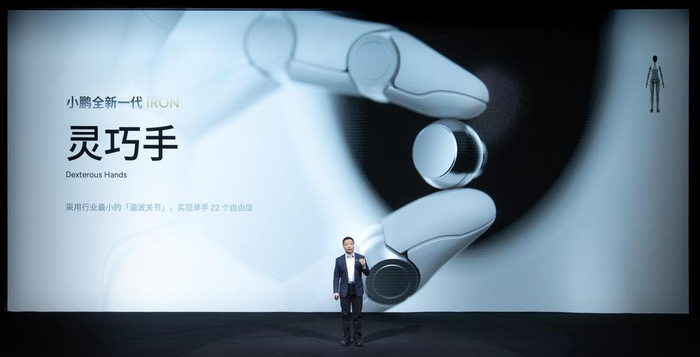
At present, it seems XPeng is going the furthest. Its robotics business has completed its first round of financing of more than $900 million, and its post-investment valuation exceeds $6.3 billion (about RMB 43 billion). IDG Capital leads the round, with Tencent and Alibaba also joining in. The IRON humanoid robot plan is to enter scaled mass production by the end of 2026, and in 2027 it will officially be sold to retail and service industry customers.
NIO follows a route of “an independent company plus strategic investment.” The embodied intelligence company founded by Ren Shaoqing, head of smart driving, has a valuation already at the unicorn level. NIO, as a strategic shareholder, invests and carries out cooperation. The team’s core members mostly come from the University of Science and Technology of China, and it currently has a size of nearly 30 people.
Li Auto has essentially bet everything on it. The company has completed an organizational restructuring, adding three secondary departments: embodied engineering, embodied interaction, and embodied behavior. The humanoid robot project, code-named “Nexus,” has already produced a wheeled robot prototype. For 2026, total R&D spending is expected to reach as much as 12 billion yuan, with AI-related investments accounting for about 50%. Li Xiang’s judgment: “Over the next 3–5 years, the competitive essence of mid-to-high-end intelligent vehicles will fundamentally be competition in embodied intelligence.”
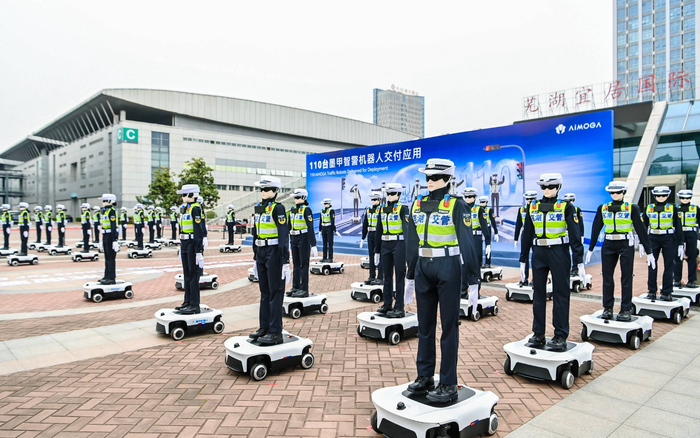
In addition, BYD had already set up a embodied intelligence research team in 2022, with the project code “Yao Shun Yu.” GAC incubated and established Huilun Technology in February 2026. Leapmotor has confirmed its plans for robotics business. In 2026, automakers including FAW, Dongfeng, Seres, SAIC, Geely, Great Wall, and others have all moved in densely.
However, automakers must face a lingering question: when automakers “build people” (robots), is it poison or a cure?
Judging from the lineup, automakers have natural advantages in building embodied intelligence.
The supply chain is highly transferable. More than 85% of IRON’s supply-chain partners overlap with XPeng’s auto business. The capabilities used in building cars—motors, sensors, battery management, and precision machining—can be directly migrated to robots. Precision supply-chain management in the auto industry can also support mass production of robots, significantly lowering marginal R&D costs.
Application scenarios come with built-in data. Automakers’ own factories provide real scenarios such as stamping, welding, and final assembly. They can record the operations of skilled workers, along with success and failure data, and form a data loop—these data come with complete context, which external companies have difficulty obtaining.
Money and talent pool. In the first half of 2026, global financing related to humanoid robots reached RMB 104.1 billion, exceeding the total for all of 2025. Automakers’ R&D spending often reaches billions, and their engineering teams number in the thousands—resources that most robot start-ups can hardly match.
But if you want to gain the upper hand in a fight against companies like Unitree—pure robotics firms—it may not be that simple.
The biggest challenge still lies in the “brain.” Smart-driving algorithms from automakers can be reused for robots, but autonomous driving operates in a relatively rule-based driving environment. Robots, on the other hand, face a constantly changing physical environment, making R&D far more difficult than autonomous driving.
Challenge three: the timeline for commercialization is unclear. The timeline for large-scale commercialization of embodied intelligence is still unknown, and there are major differences between lab environments and real scenarios. From prototype to production-line deployment, multiple challenges must be overcome.
Challenge four: burning money in the short term drags down the core business. Robotics R&D requires high investment, and key components are expensive. It needs the auto core business to keep “feeding blood.” In XPeng’s second quarter, R&D expenses were 2.91 billion yuan, up 32.1% year over year. In 2026, physical AI-related R&D investment is expected to further increase to 7.0 billion yuan. With the auto core business itself still unprofitable, using cash to fund a short-term business that only burns money without making profits tests a company’s capital reserves and strategic resolve.
IDG Capital’s stance is indeed fairly optimistic. It believes humanoid robots are moving from the technological exploration stage to the stage of scaled applications. But one fact that cannot be ignored is this: when automakers build robots, the real competitors may not be each other, but companies like Unitree and Unitmind—professional players who went all-in on robots from day one. Automakers have scenarios, money, and supply chains, but in core areas such as robot body design, motion control, and dexterous operation, their accumulated advantages may not be deeper than those of specialized companies.
He Xiaopeng said in an internal letter: “In 2026, we need to mass-produce our dreams.”
Mass production is only the starting point. The real question is: when IRON leaves the factory and enters stores and homes—when NIO’s strategic investment, Li Auto’s Nexus, and Chery’s MoMoJia (墨甲) all move into the market—can automakers truly run faster than professional players along the path of embodied intelligence? This cross-industry high-stakes gamble—will it be poison or a cure?
The answer might be revealed as early as 2027.
Source: Xinghe Business Observation